
F-House: Glass Between Transparency and Reflection

Glass as a Perceptual Condition in Architecture
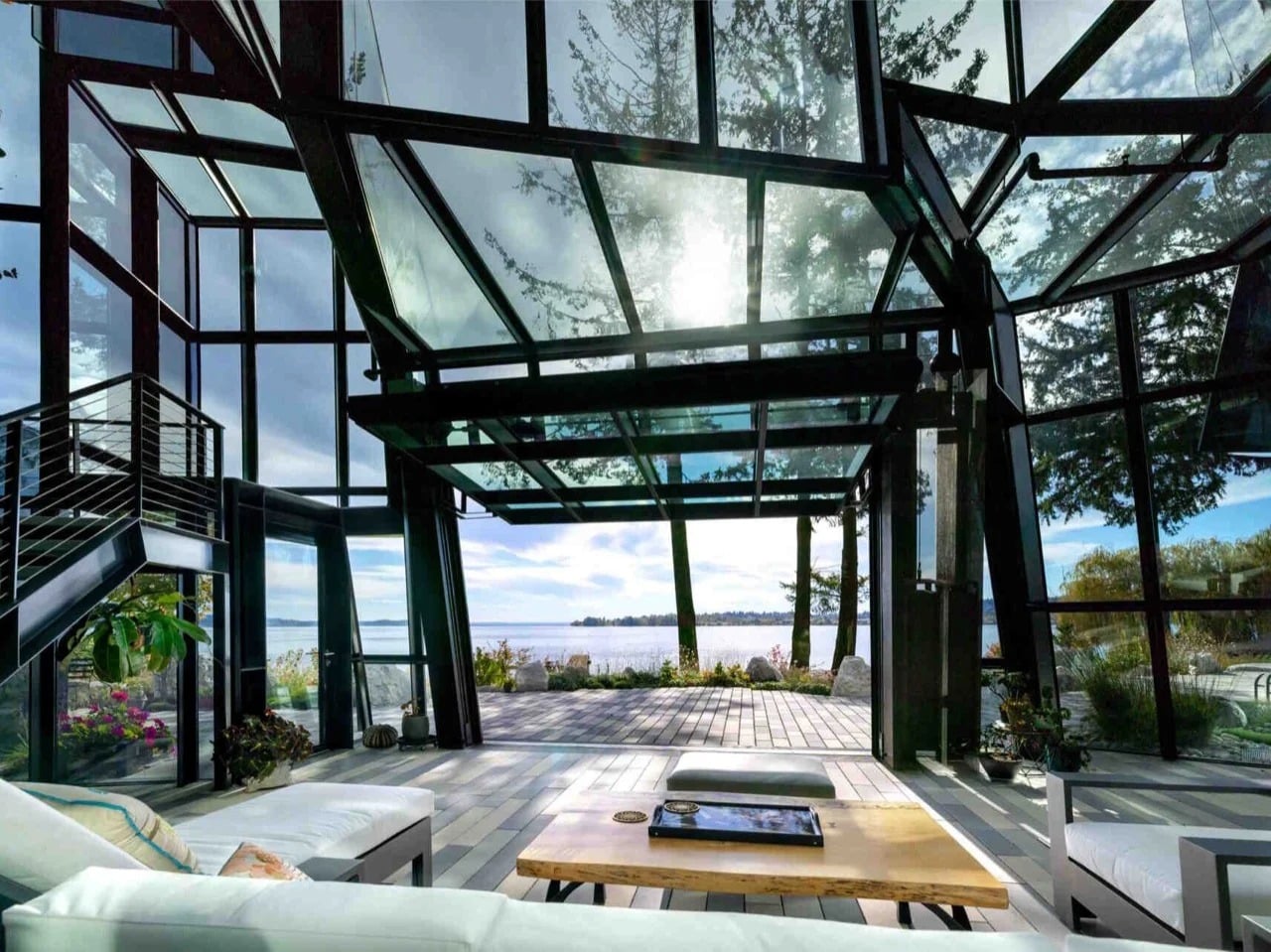
Glass is one of the most perceptually charged materials in Architecture. On one hand, it suggests transparency, while in practice it produces layers of visual ambiguity. It appears visually lightweight, yet requires complex structural solutions to ensure stability. As a result, a Buildings can seem both present and absent at the same time, depending on the viewing angle and lighting conditions. Since the Crystal Palace in 1851, these contradictions have served as a continuous subject of architectural experimentation, clearly evident in the case of the F-House, overlooking Lake Washington in Kirkland, which represents an extreme realization of this concept within a residential context.
Project Configuration and Structural Logic
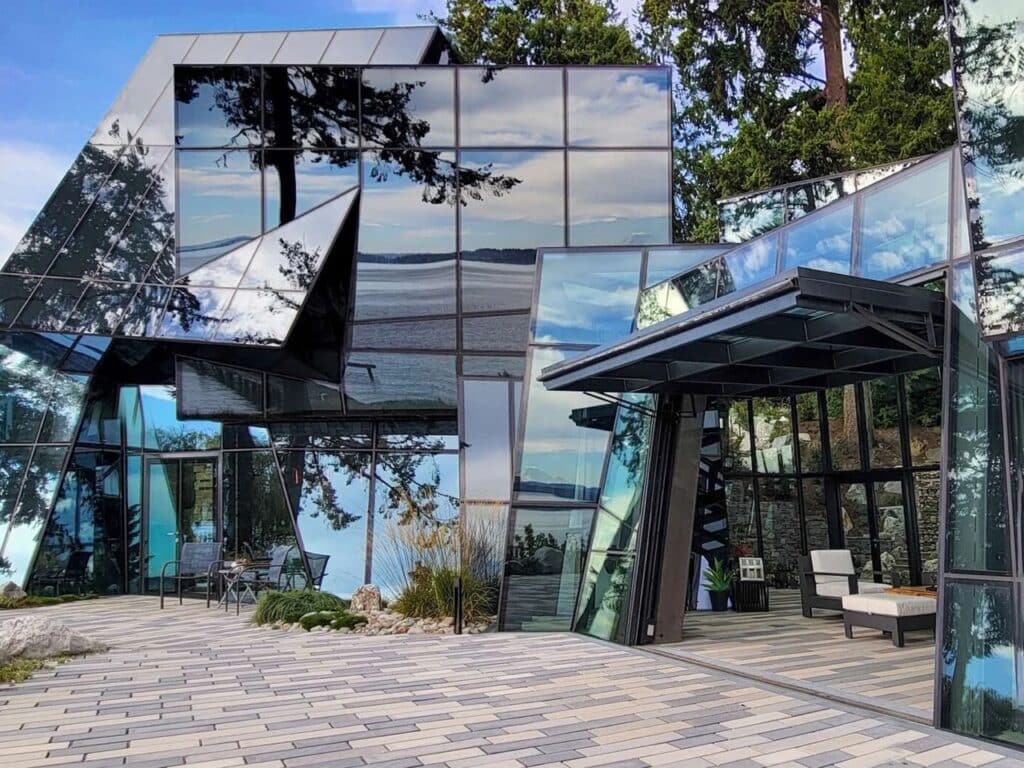
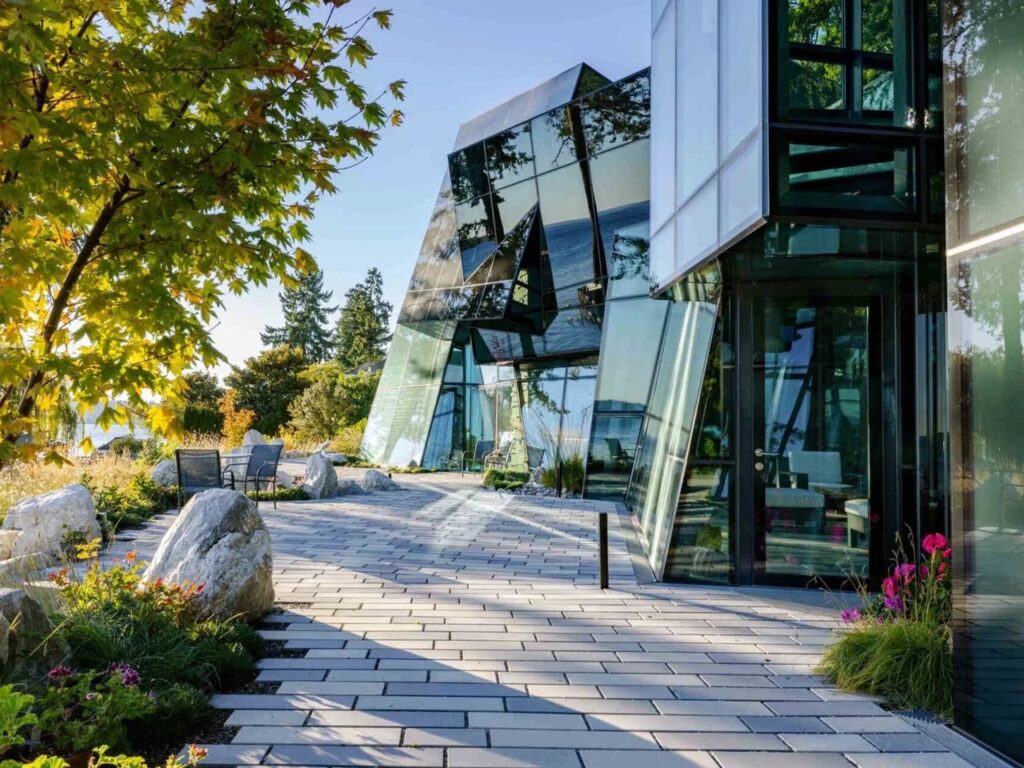
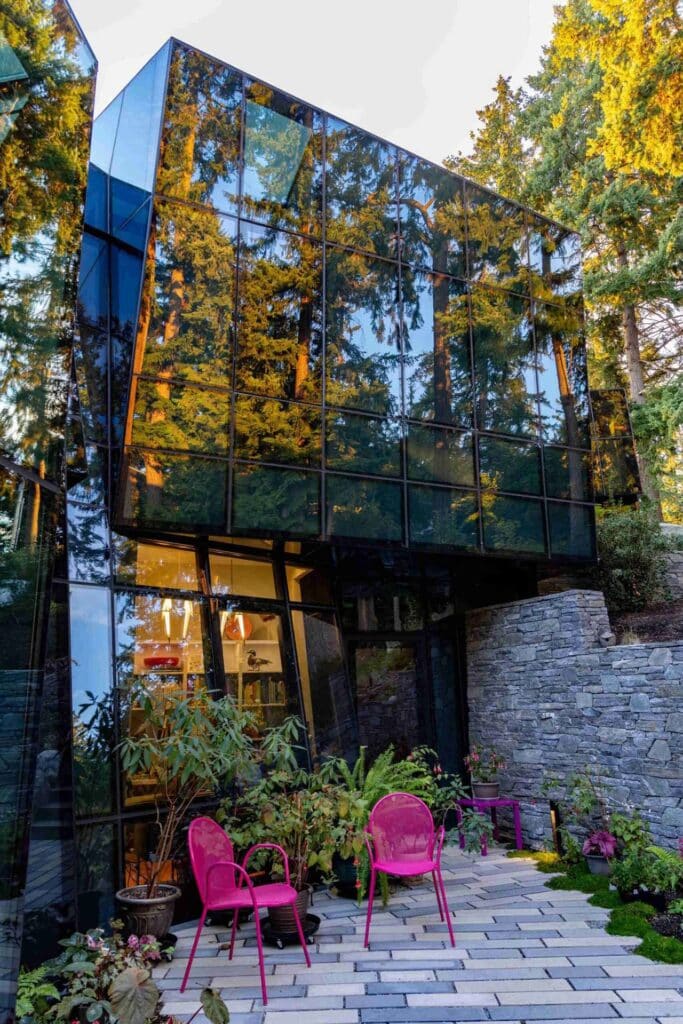
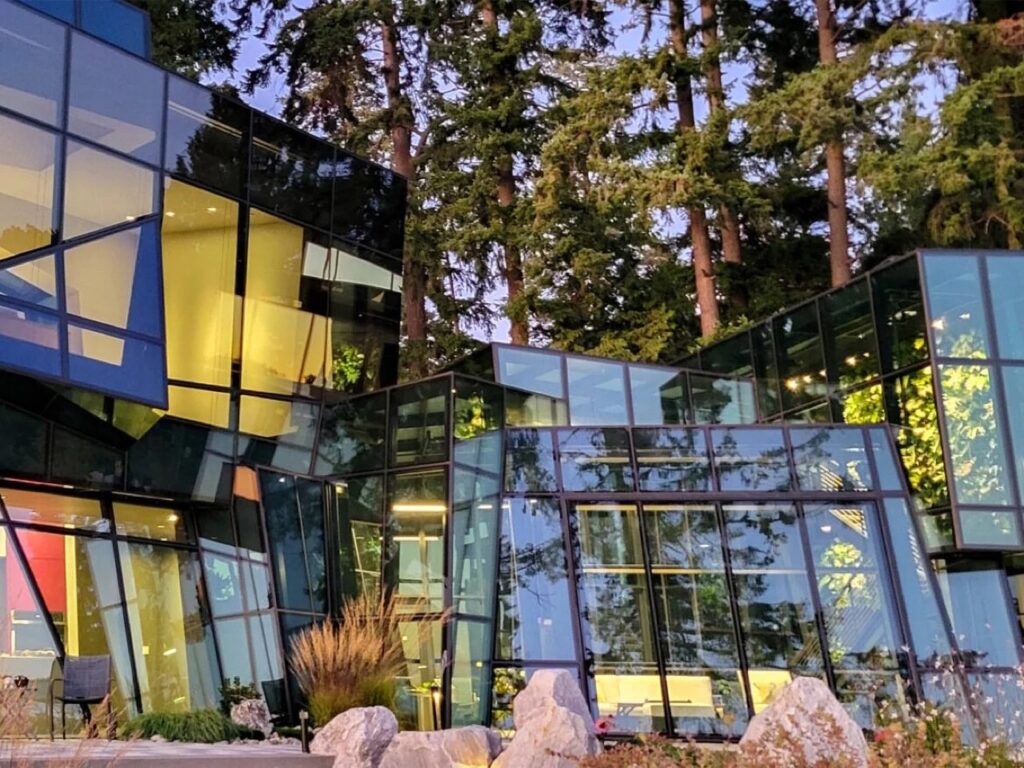
The project originated from a direct client request, a professional in the video game industry, to create a fully glass house. The Design later evolved over years of engineering coordination and custom fabrication, aiming to achieve an architectural mass without conventional cladding. All exterior surfaces are composed of glass panels cut at irregular angles, forming a multifaceted composition resembling fractured ice volumes. In contrast, the supporting steel structure is entirely concealed, along with all fixing elements. Even the drainage systems are not exposed; instead, they are integrated into printed details on the glass surface, preserving visual continuity without interruption.
Execution Background and Design Thinking Approach
The nature of this project is tied to professional backgrounds that combine large-scale urban development with advanced façade engineering. One of the founders previously worked on major urban development projects in Asia, while the other was associated with specialized façade consultancy firms collaborating with leading international architecture offices. This professional composition is reflected in the treatment of the F-House, where the external envelope is approached as an independent engineering system, closer to institutional façade projects than to private residential Interior Design. As a result, the perception of the glass mass continuously shifts between reflection and transparency depending on light conditions, reinforcing its role as a dynamic visual element rather than a static building envelope.
Relationship to Site and Visual Reading
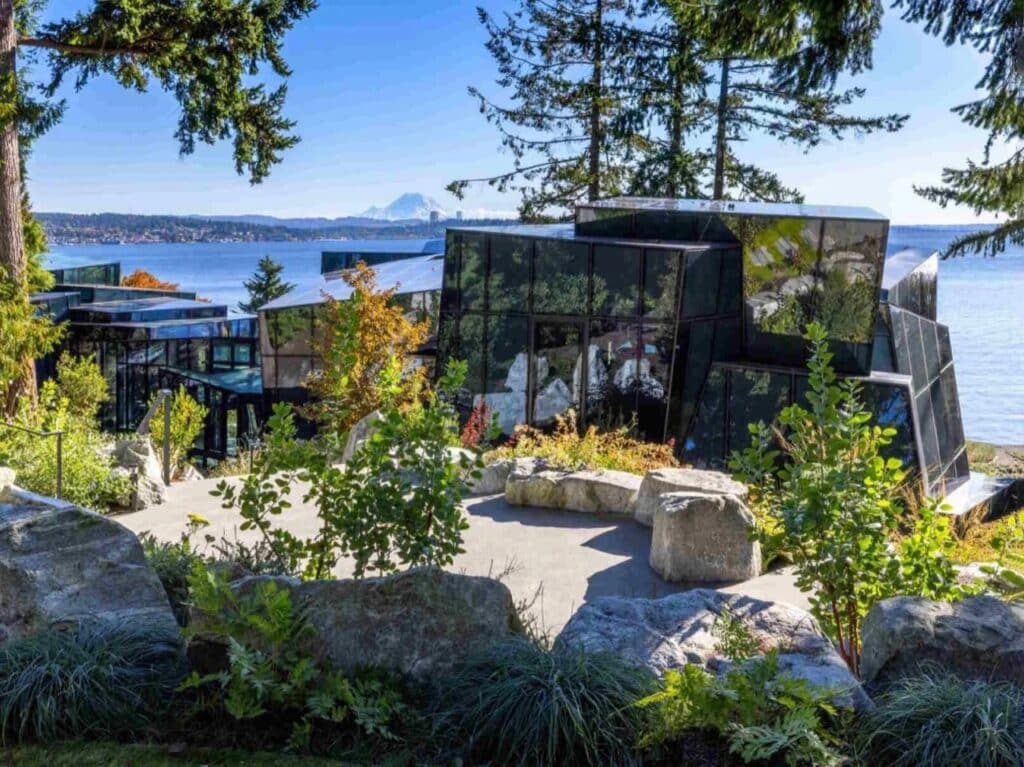
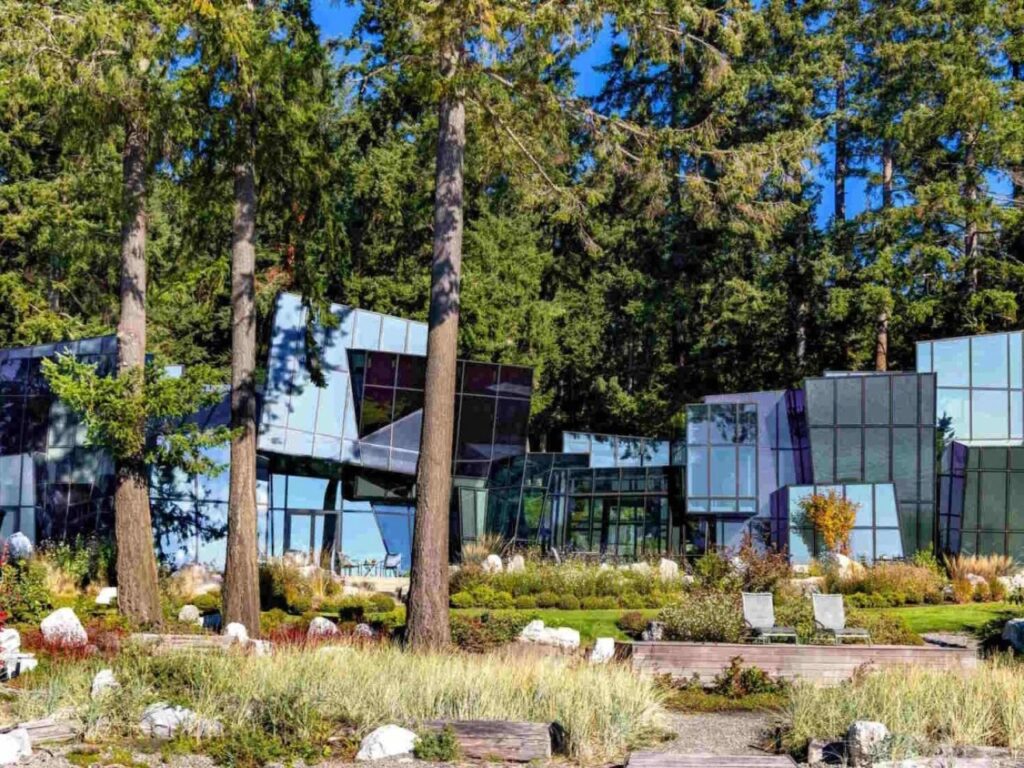
The house extends over approximately 7,300 square feet and is situated within a natural environment composed of dense rock formations and the forests of the Pacific Northwest, with a direct view of Mount Rainier across the water. This natural context does not function as a neutral backdrop; rather, it actively participates in shaping the architectural image. Within this framework, the faceted glass envelope emerges as a visually contrasting element against the softness of the surrounding trees and rocks. This contrast is intentional, relying on a logic similar to displaying mineral crystals alongside organic Building Materials to emphasize their visual sharpness. As such, the building does not seek to blend into its surroundings but instead positions itself as a visually independent element within the natural landscape.
Glass Envelope System and Environmental Performance
The viability of the house as a fully glazed volume depends on thermal performance solutions and privacy control technologies. Double silver-coated glass is used in the primary spaces, while solar-controlled glazing is employed in the winter garden to regulate heat exposure. Low-emissivity coatings further contribute to temperature regulation across the external envelope. In addition, custom fritted shading patterns are applied to enhance energy performance without introducing external visual elements such as curtains. Each glass unit consists of multiple layers with an air gap and internal Saflex interlayers that allow a transition from transparency to opacity for privacy control. Material Datasheets for these components were carefully evaluated during the design phase. Construction of such an envelope required close coordination between engineers and fabricators. The result is an envelope that appears visually uniform while operating as a multi-layered structural and environmental system.
For further reading, you can explore related Projects, review the full Archive, or check the latest Architectural News on glass innovation. Additionally, Research into perceptual materials continues to evolve within contemporary practice.
Interior Organization and Spatial Structure
The interior space is organized around a winter garden that functions as a central dividing element, separating the main residential area on one side from the studio and garage on the other. The garage includes a barn-style glazed door, integrating the service function into the building’s overall visual language. This approach to Interior Design emphasizes fluidity and visual connectivity throughout the house.
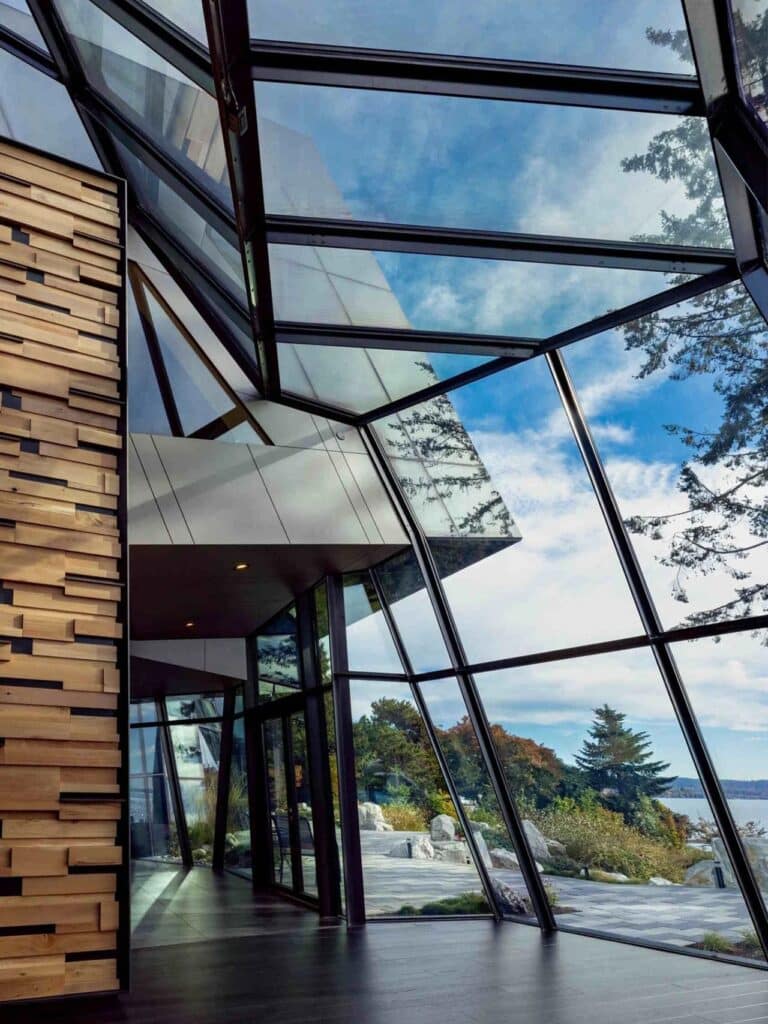
A continuous glass roof extends from the entrance through the dining spaces, terraces, and garden areas, reinforcing spatial continuity. A glazed bridge also connects the main volume to the master bedroom wing, transforming what would typically be a corridor into a suspended, visually illuminated element. In this way, movement within the house is redefined as a visual extension rather than a purely functional transition.
Digital Design Tools and Pre-Construction Experience
The execution of the project relied on a unified 3D model shared across all consultants and contractors, enabling full coordination between all parties involved. In parallel, the homeowner used virtual reality technologies to navigate the Design long before Construction began.
This early use of immersive visualization made the architectural space familiar to the client upon completion, significantly reducing the gap between design intent and lived experience. As a result, the project operates as a case in which the building is mentally tested before its physical realization. Detailed Material Datasheets and digital simulations ensured every component performed as intended.
Architectural Context and Formal References
The project belongs to a historical lineage of glass Architecture that includes works such as the Farnsworth House by Mies van der Rohe and the Glass House by Philip Johnson, as well as contemporary parametric façade approaches. Reviewing the Archive of similar works reveals a rich tradition of transparency experiments.
What distinguishes it, however, is its departure from the logic of orthogonal geometry and flat surface systems. Each glass panel is treated as an independently formed element, producing a façade that behaves visually more like a crystalline mass than a conventional structural envelope. Consequently, the perception of the Buildings shifts between a literal response to the client’s brief and a conceptual reinterpretation of domestic glass architecture, depending on light conditions and viewing angle.
✦ ArchUp Editorial Insight
The F-House project can be read as a direct outcome of the intersection between high-risk private capital and an advanced façade economy driven by customized supply chains and digital fabrication models. In this context, the client’s request for a fully glazed house operates as an exceptional commission that justifies a high engineering cost within a real estate market capable of absorbing such expenditure. Similar innovative Projects have explored these tensions between vision and practicality.
Regulatory constraints related to thermal insulation, privacy, and environmental risk insurance imposed complex technical layers within the envelope, transforming transparency into a multi-level compliance system. The result is not so much a design expression as it is a spatial settlement between performance requirements, risk management, and market differentiation. Ongoing Research into high-performance glazing continues to address such challenges.
Within this framework, the crystalline façade operates as an added value mechanism that legitimizes the asset’s stratified positioning within a competitive market geography, while concealing behind it a conventional structural system governed by efficiency and compliance logic. For more insights, explore the latest Architectural News on glass innovation or browse Building Materials used in contemporary façades.

★ ArchUp Technical Analysis
Technical and Documentary Analysis of the F-House Project – Kirkland, Washington, USA:
This article presents an architectural analysis of the F-House project as a case study in redefining the perception of the glass envelope between transparency and reflection. To enhance its archival value, we would like to present the following key technical and design data.
The house spans approximately 7,300 square feet and is located in Kirkland on Lake Washington, with a direct view of Mount Rainier across the water within a natural environment of rock formations and Pacific Northwest forests. The project features all exterior surfaces composed of glass panels cut at irregular angles to form a multifaceted composition, concealing the supporting steel structure, fastening elements, and drainage systems within details printed on the glass surface.
Silver-coated double-pane glass is used in the main spaces, with sun-protected glass in the winter garden, low-emissivity coatings for temperature regulation, custom dot-pattern shading, internal Saflex layers that allow transition from transparency to opacity for privacy, and spandrel panels to handle transition areas.
The interior space is organized around a winter garden separating the main living area from the studio and garage (with a barn-style glass door), with a continuous glass roof from the entrance through to the dining spaces and balconies, and a glass bridge connecting the main space to the bedroom wing. Execution relied on a unified 3D model shared among all consultants and contractors, utilizing virtual reality techniques to walk through the design before construction.
Related Insight: Please refer to this article to understand the context of modern architectural preservation:
The Glass Envelope in Contemporary Residential Architecture: Between Thermal Performance and Visual Perception.




✅ Official ArchUp Technical Review completed for this article.