Floating House: Mass–Topography Balance in a Forest Site

Mass Interlocking and Topographical Integration
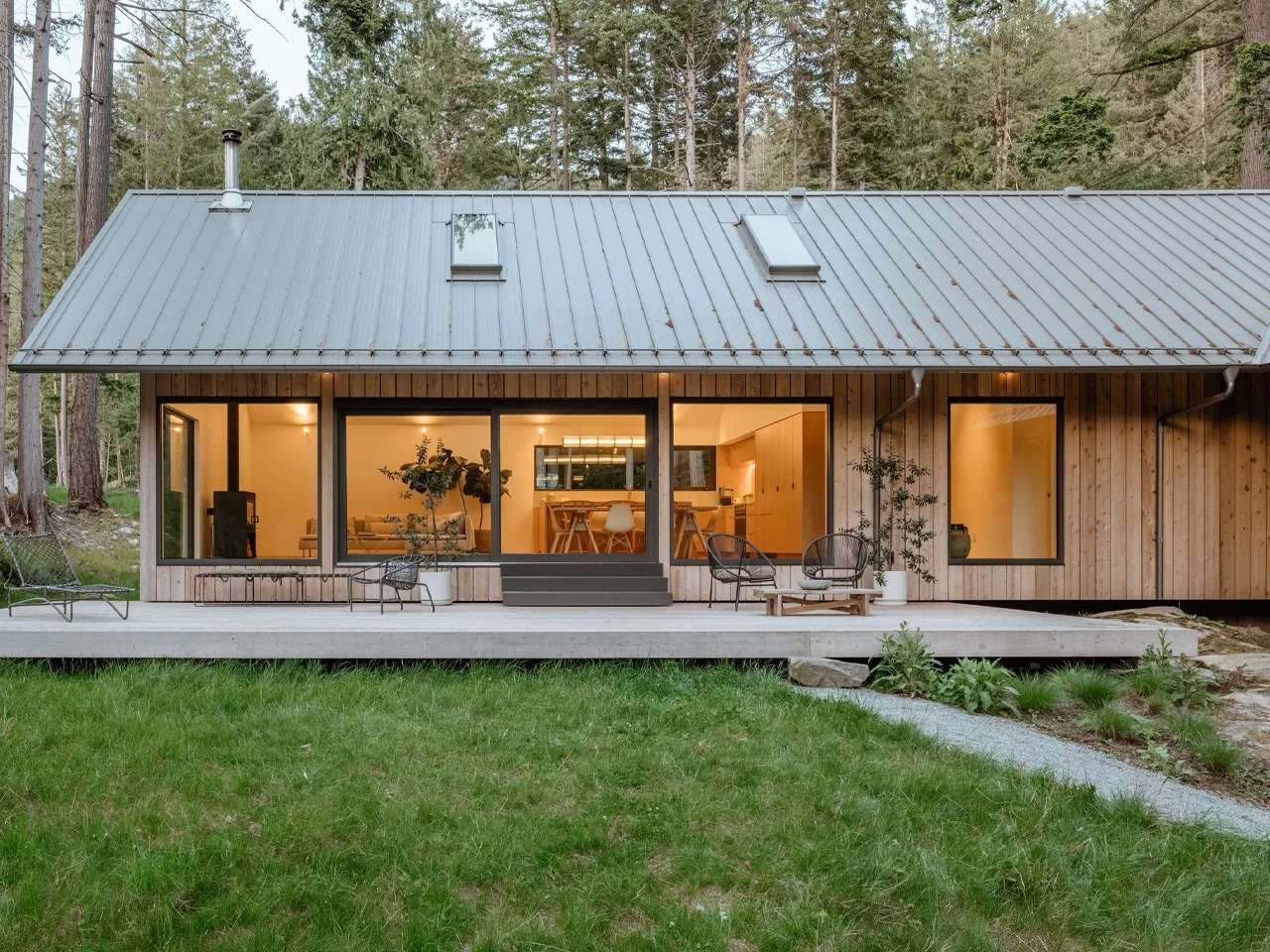
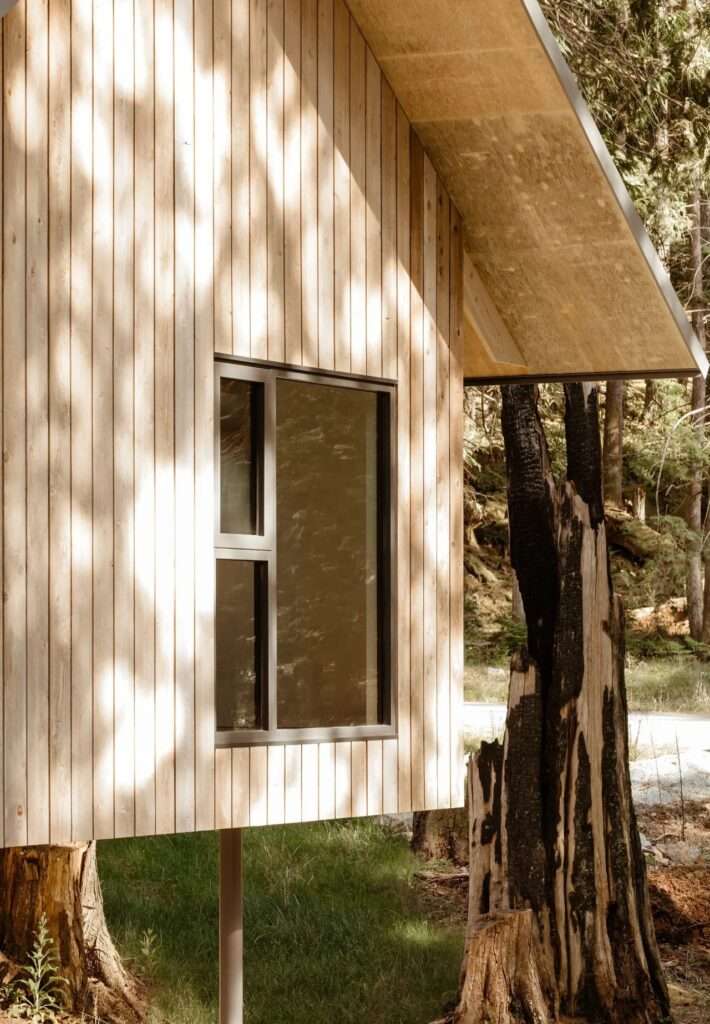
The architectural presence of the “Floating House” is expressed through a strict material relationship with the western rocky edge of Bowen Island. The building’s massing strategy does not adopt an approach of dominating the site; rather, it is founded on the concept of structural integration into nature. The presence of two ancient burnt tree trunks from an old-growth forest imposed strict spatial constraints, under which the design chose to settle directly between them, transforming them into governing elements of the entrance instead of removing or bypassing them. This positioning reinforces a sense of gradual spatial transition, where the island’s geographical remoteness from urban noise produces a physical and psychological experience of separation that begins at the moment of ferry crossing and culminates in the encounter with the architectural volume resting upon the rocky formation.
Scenographic Experience and Spatial Movement
The design language is founded on the creation of a living human experience that depends on deconstructing the relationship between interior and exterior, and on testing movement through carefully choreographed spatial paths. The moment of entry and circulation within the building is inseparable from the surrounding environment, as shadows intersecting with the architectural masses play a dynamic role that shifts with the sun’s path across the rocky edge, continuously redefining surfaces and materials throughout the day. Air movement and architectural openings contribute to a scenographic effect that connects the user to the surrounding natural phenomenon, turning the building’s walls and masses into a material medium that translates variations of light and shadow, and offering the inhabitant a deep spatial experience that goes beyond mere residential function toward an interactive engagement with the site’s geological and botanical layers.
Mass Formation and Structural Perspective
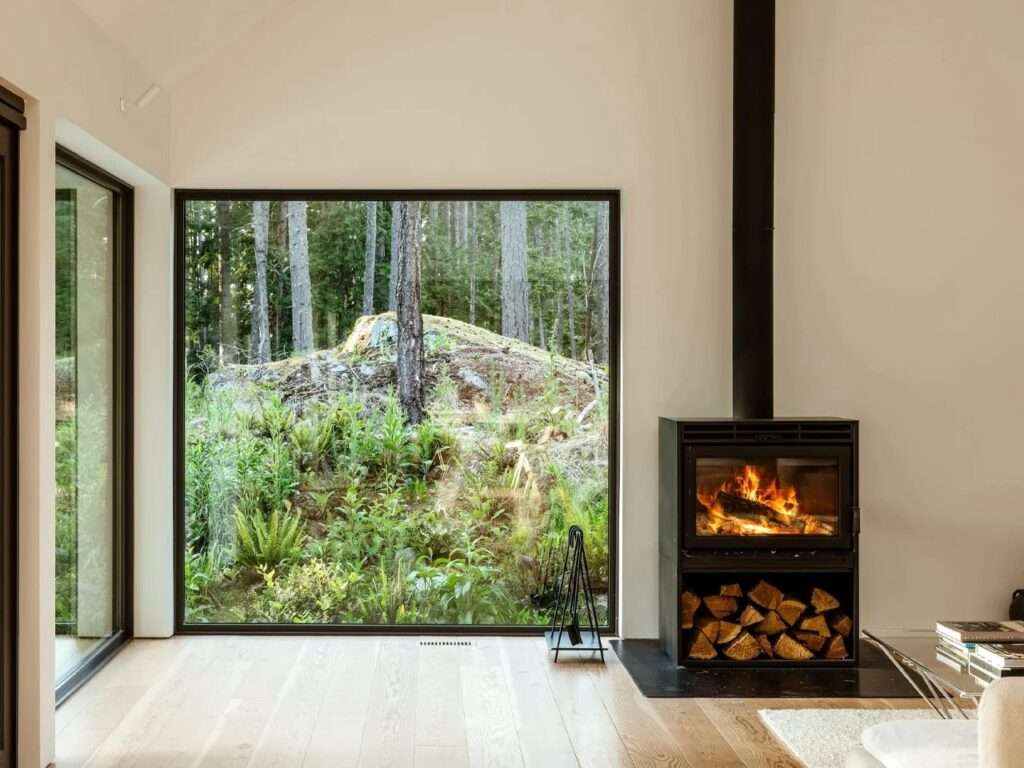
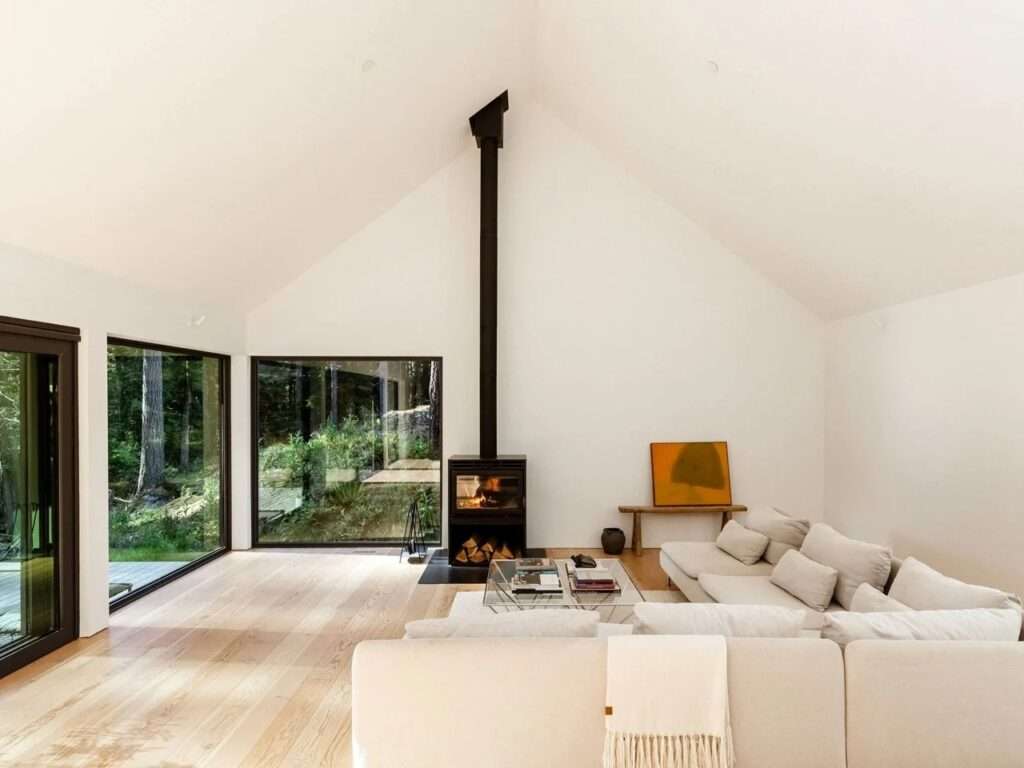
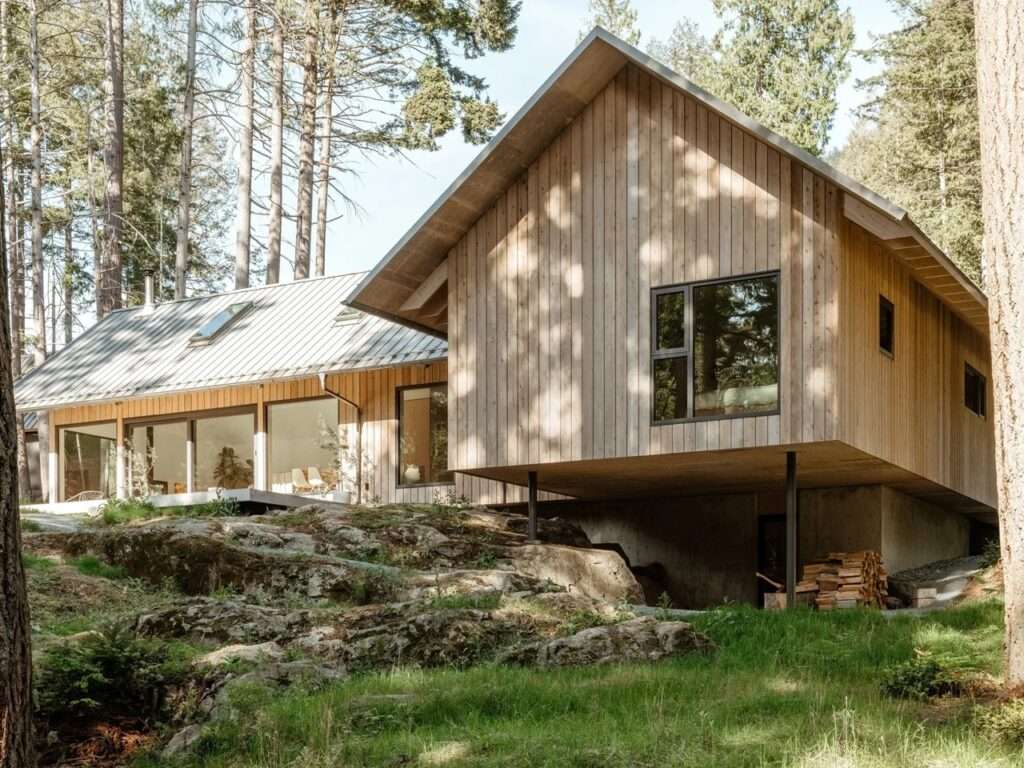
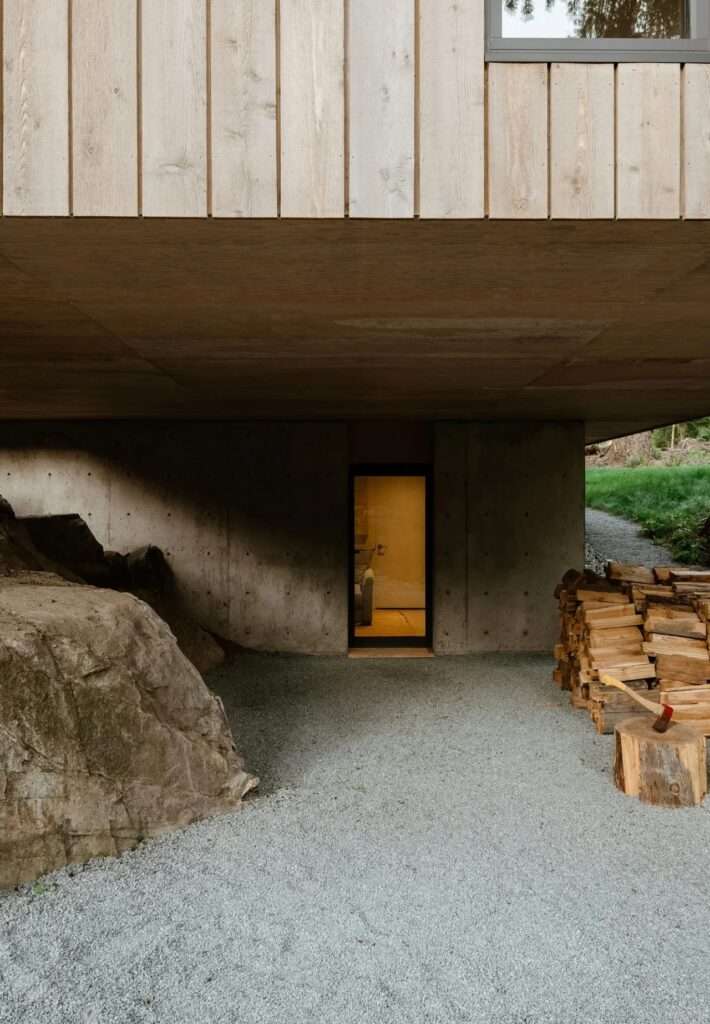
The sculptural presence of the building is based on a structural cantilever that lifts the volume at a measured distance above the bedrock, leaving a deliberate shaded void at the base that redefines the relationship between mass and ground. This structural gesture, inspired by Japanese philosophical thought in the perception of emptiness, creates a sense of visual detachment and levitation, where the relationship between solid and void is treated with ritual precision that distills the balance of physical forces. This reduction aligns with a simple and asymmetrical floor plan, divided into two functional wings that respond to different topographical levels; one rests on an elevated forest platform, while the other extends downward toward a slope opening visually toward the horizontal tree line and the open horizon.
Materiality and Spatial Scenography
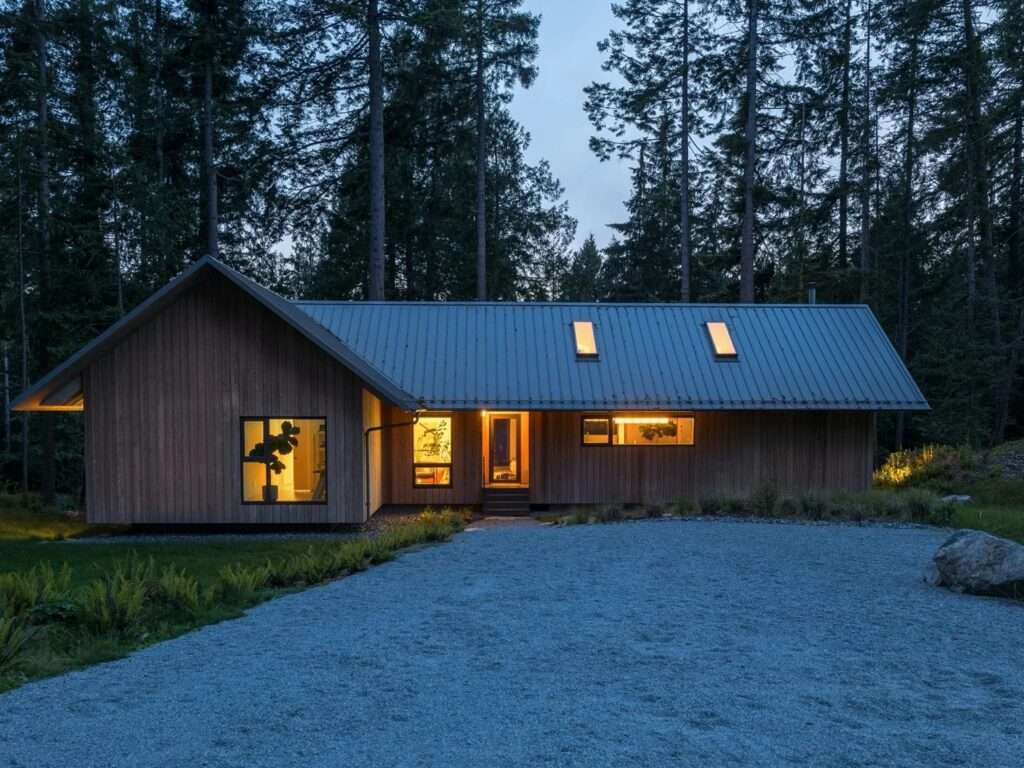
The building’s exterior envelope operates within a material language approaching a pure sculptural form devoid of ornamentation, where the sharply pitched gable roof clad in standing seam steel panels integrates with cedar wood walls left to natural weathering. These materials become a living scenographic medium that interacts with environmental phenomena, as the color and texture of the wood evolve through humidity and time, fully merging with the surrounding forest palette. Human movement within this composition experiences continuous visual transformations generated by the interplay of light and shadow across steel and timber surfaces, intensifying the psychological effect of space and transforming dry structural decisions into a tangible sensory experience that connects the user to climate variations and air movement.
Interior Scenography and Light Control
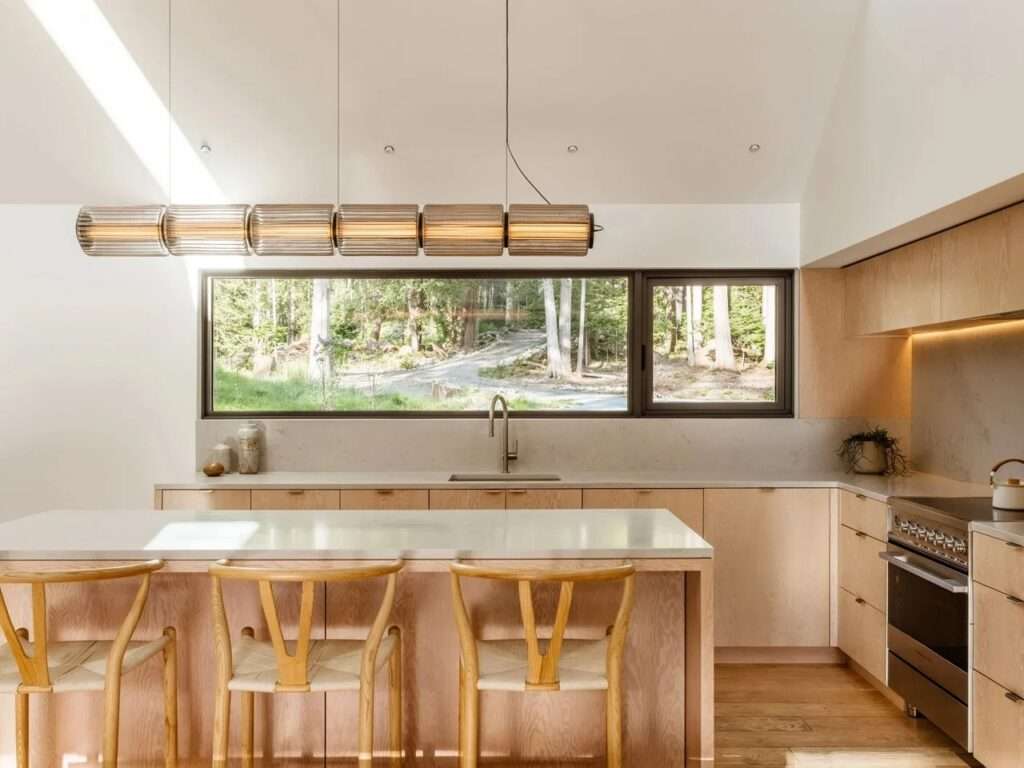
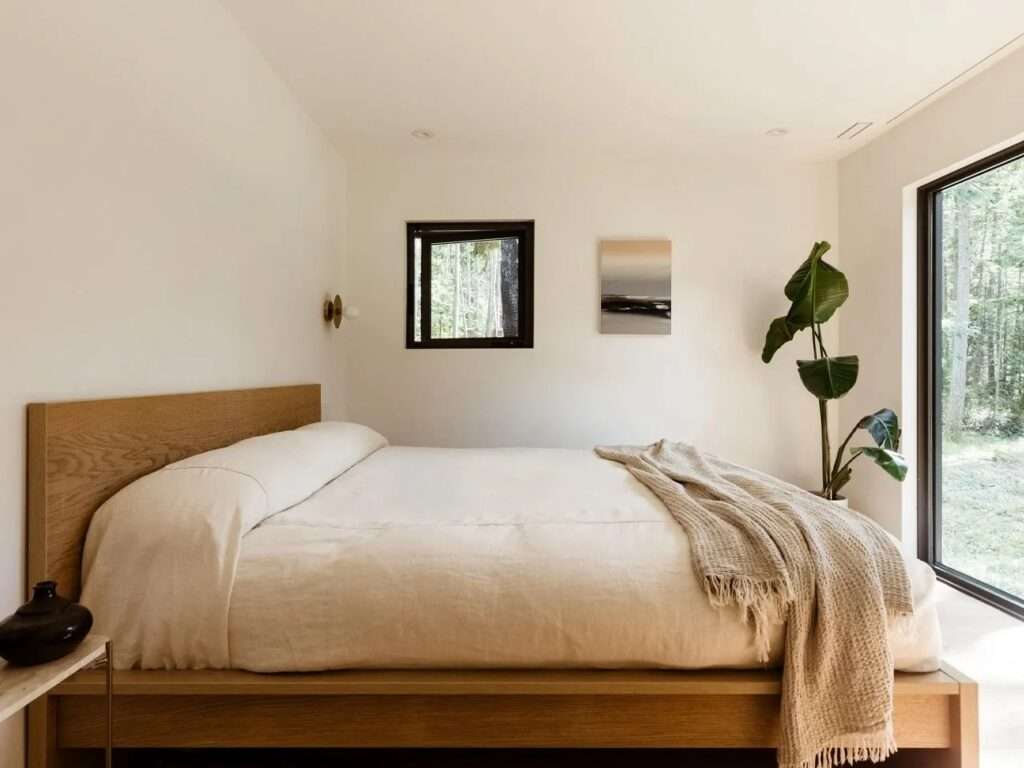
The living experience transitions into the interior space through a balanced material dialogue, where Douglas fir surfaces introduce a tangible warmth that contrasts visually and sensorially with the cooler cedar envelope of the exterior. The design is grounded in a deliberate and controlled management of natural light, where openings are oriented to filter external illumination and allow the forest to permeate inward as a living, dynamic backdrop without imposing a disruptive visual presence. This orchestration enhances the psychological effect of space, as the inhabitant experiences the quality of incoming light and shifting shadows on wooden surfaces as a dominant spatial element that precedes the perception of furnished components, giving circulation and movement a heightened sensory depth that enriches human spatial experience and awareness.
Mass Discipline and Environmental Containment
The architectural value of the building emerges through the discipline of its formal language and its avoidance of mass spectacle or compositional excess, allowing the structure to amplify the topographical qualities of the exceptional site rather than compete with them. This restrained articulation expresses an architectural modesty that treats the surrounding environment as a reference frame, positioning the building as an instrument for observing nature rather than controlling it. This restraint is manifested in the use of materiality and massing to serve spatial phenomena, transforming the structural system into a quiet medium that passively interacts with the movement of air, light, and seasonal change.
✦ ArchUp Editorial Insight
The text positions the “Floating House” as an ideal model of spatial discipline, where minimal spatial allocation and structural height resist the tendencies of overdesign and speculative development. By inserting a site-responsive cantilevered volume between remnants of the historic forest, the studio adopts an architectural language defined by environmental humility, framing the dwelling not as a consumer commodity but as a calm sensory channel that engages with the western coastal topography.
However, this romantic idealization of structural austerity overlooks the harsh material realities of highly exclusive natural sites. Raising a luxury cabin on a steel structure designed to achieve the illusion of zero impact relies on capital-intensive materials and high-carbon specialized transportation. Ultimately, this refined preservation of nature becomes a form of aestheticized luxury commodified for the high-end real estate market rather than a response to broader environmental crises.