Dashaway ECT: Compact Electric Camping Trailers

Integrated Camping Solutions as a Mobile Design Model
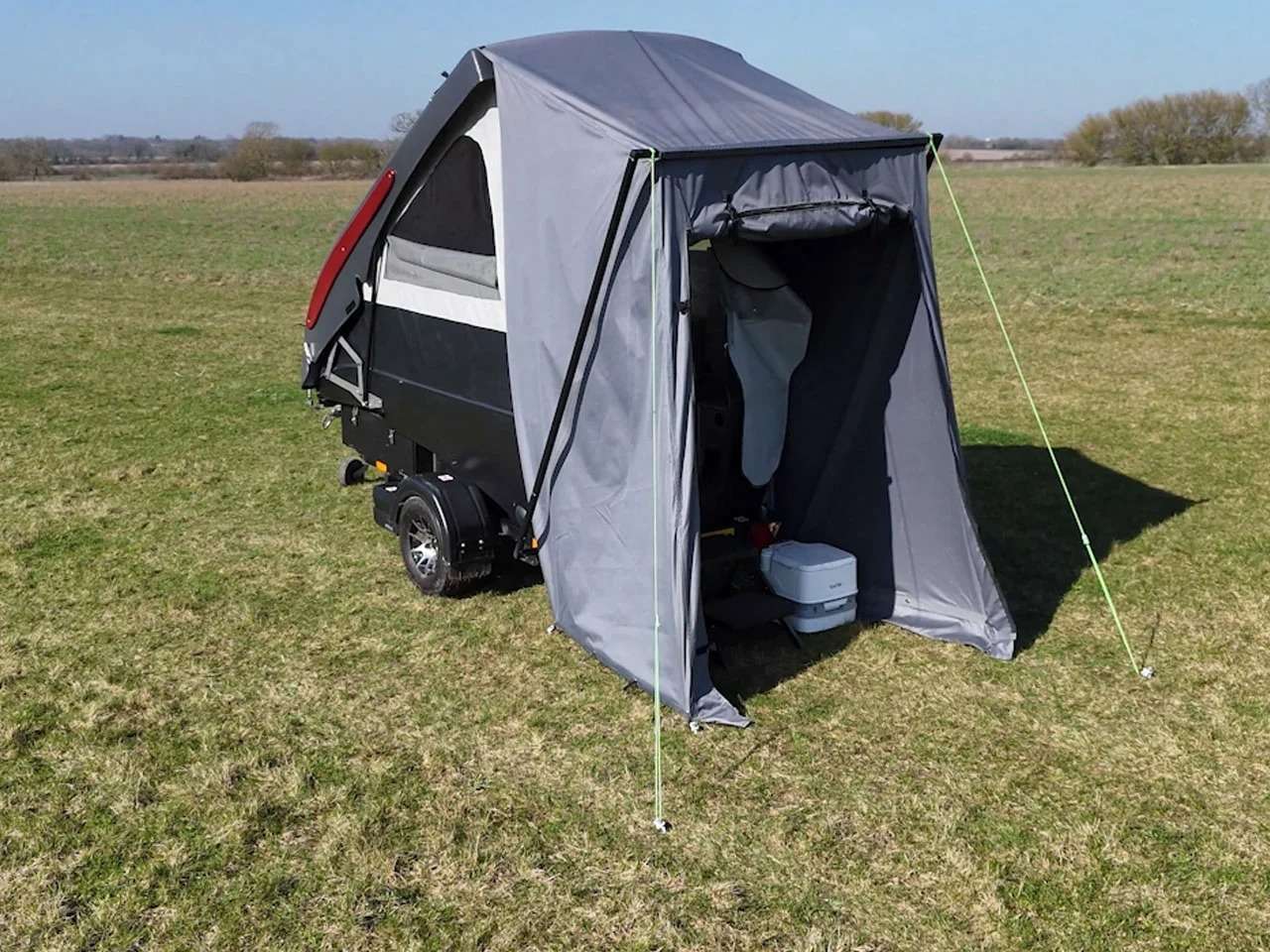
Wheelhome is presented as an example of UK-based startups working in the field of developing integrated camping solutions. This type of product focuses on rethinking the camping experience by merging it with electric transportation systems, making usage more adaptable to modern travel patterns. The company’s direction also shows a focus on developing lightweight trailers compatible with different vehicles, with an emphasis on single-user or two-person usage.
Internal Organization and Living Functions
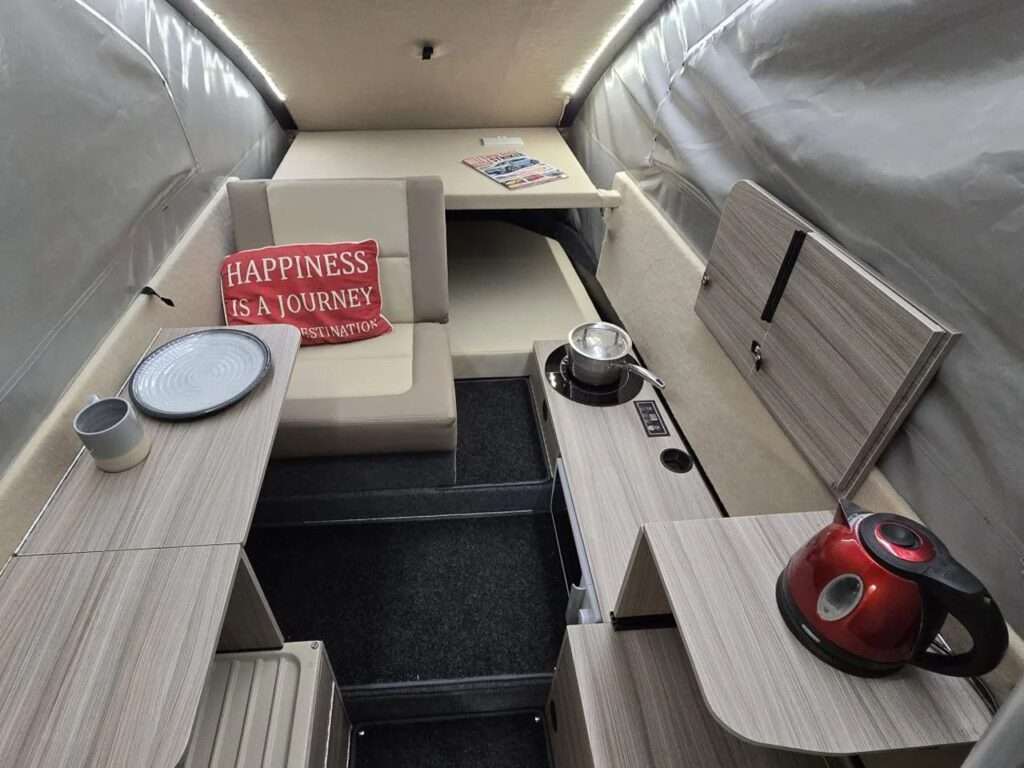
The Dashaway ECT trailer relies on an integrated functional distribution of interior spaces, including essential elements such as a seating area, beds, a bathroom, and a kitchen. This organization aims to consolidate basic living needs within a compact volume, enabling direct usability during travel. The trailer is offered in two variants to meet single or dual occupancy requirements without altering the core idea of functional integration.
The Awning as a Transformable Spatial Extension
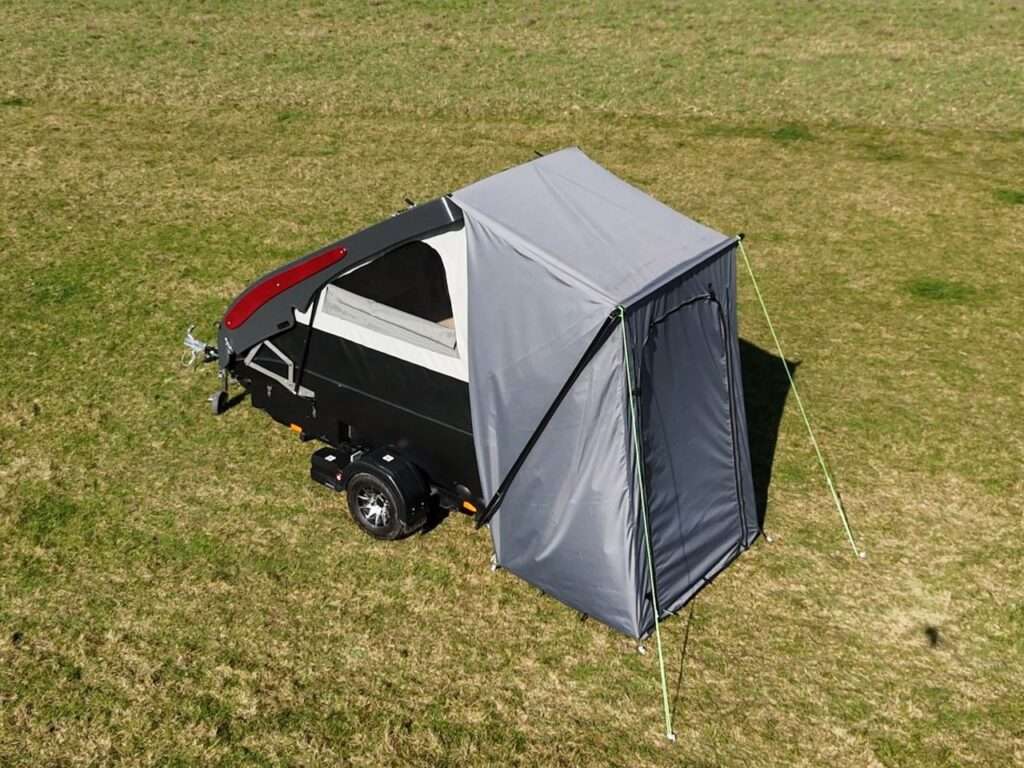
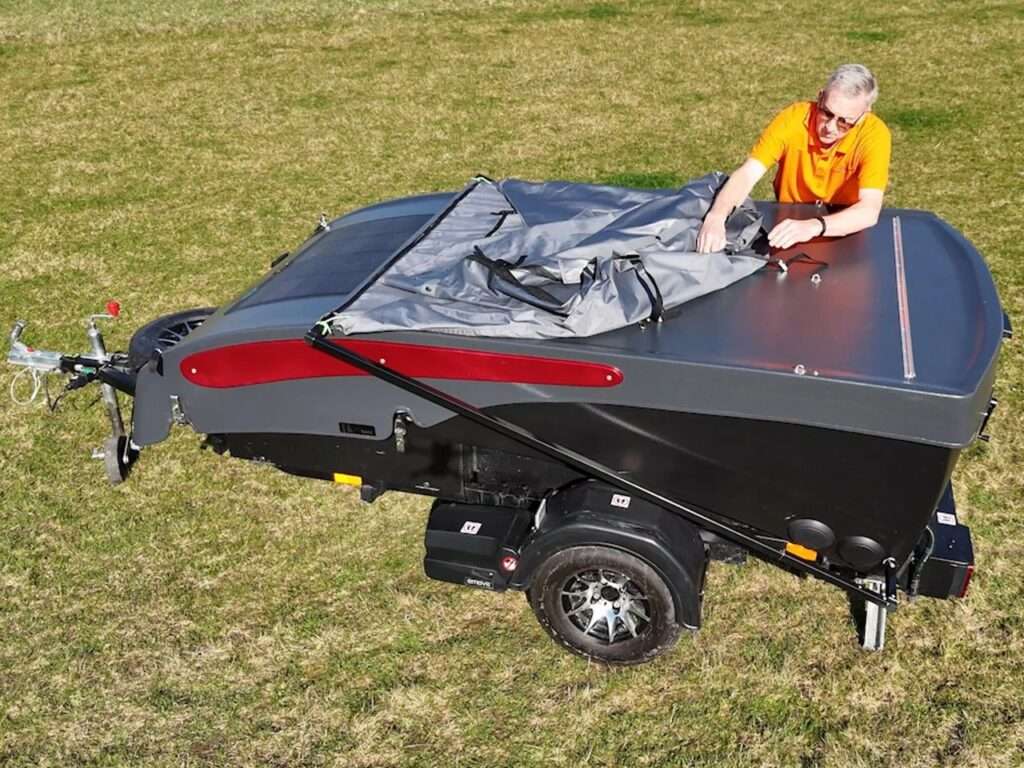
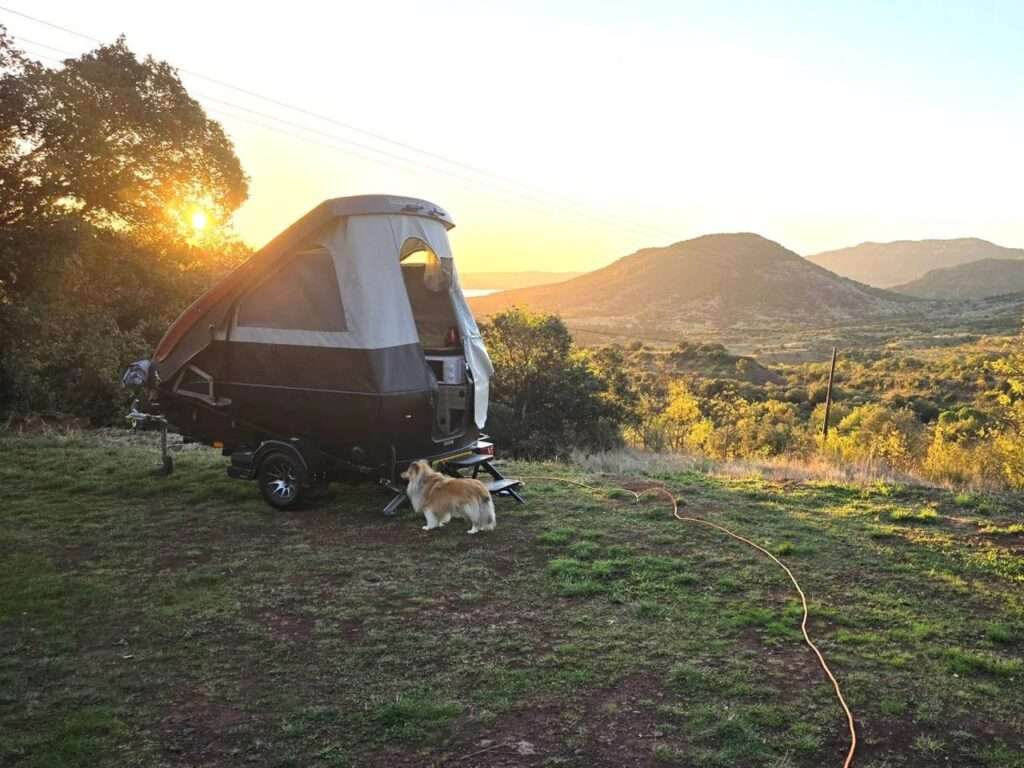
The awning serves as an additional Design element that introduces a transformable spatial dimension. It provides an external area that can be used for multiple purposes, such as accommodating lightweight equipment. When extended and supported by side poles, it becomes a direct extension of the interior space, while it is folded during movement to maintain the trailer’s aerodynamic efficiency. In this way, it operates as an intermediary layer between enclosed space and the outdoor environment within the context of mobile camping.
Height Adjustment System Between Driving and Camping Modes
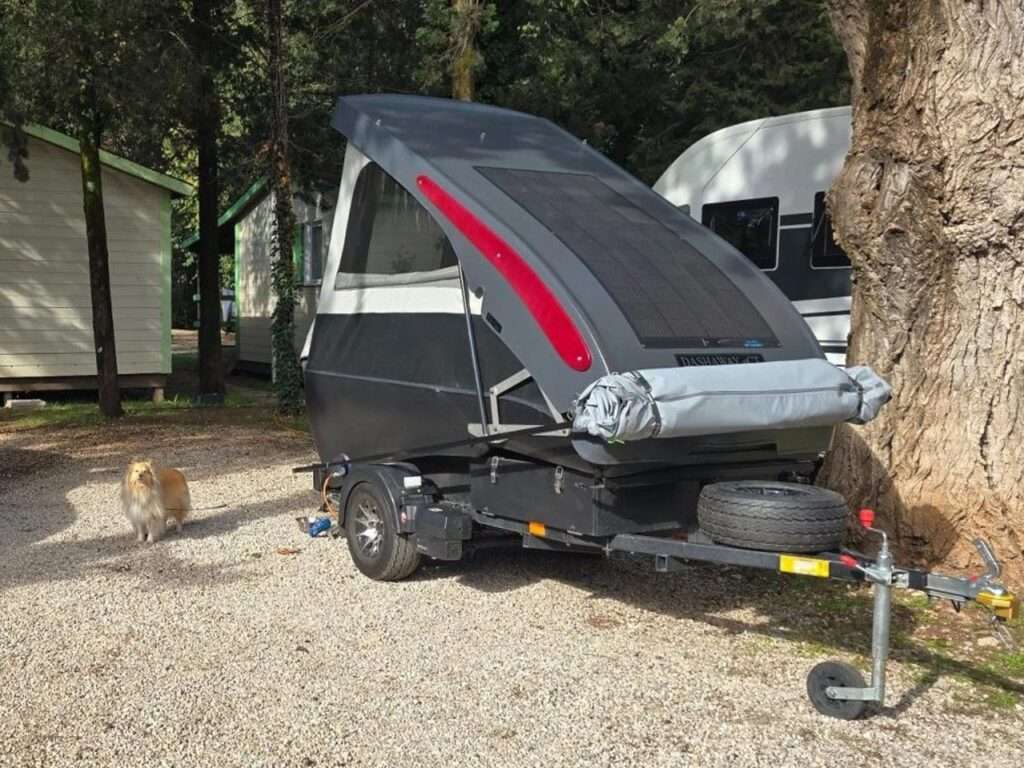
The Dashaway ECTS (single) and ECT2 (double) trailers rely on a height-adjustment mechanism between two functional modes. In driving mode, the structure is lowered to approximately 3.8 feet, while in camping mode it rises to around 6 feet. The transition process requires no additional tools or specialized training and takes only a few minutes, reflecting a simplified mechanical system for switching between mobility and habitation states.
Setup Mechanism and Interior Distribution
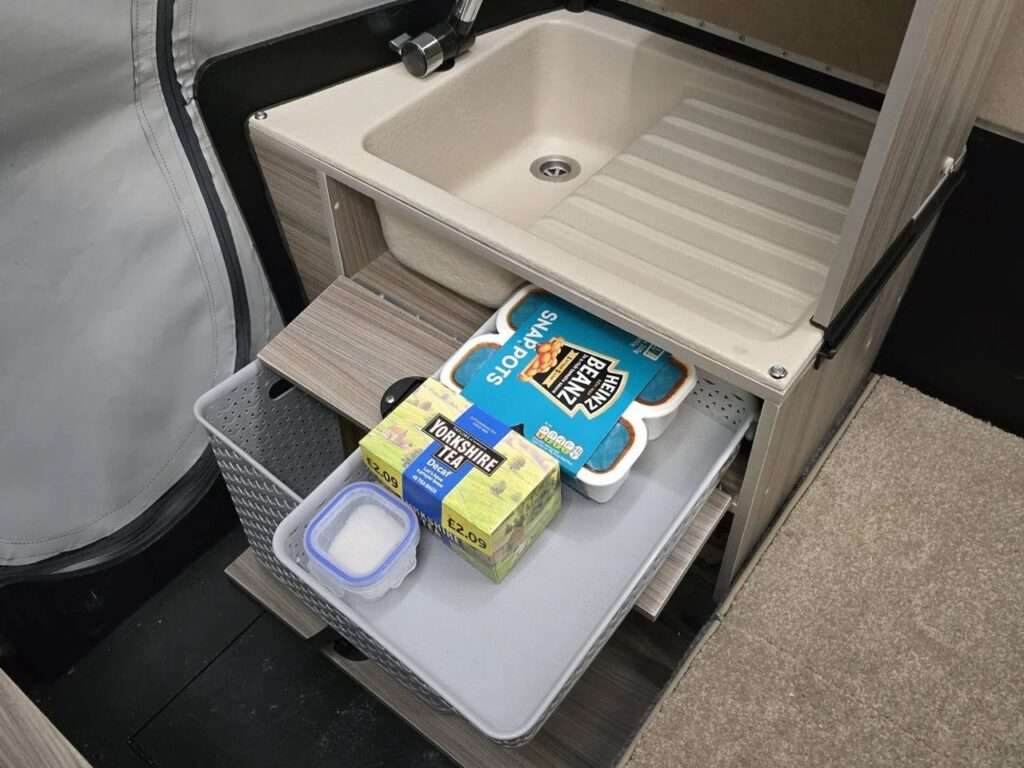
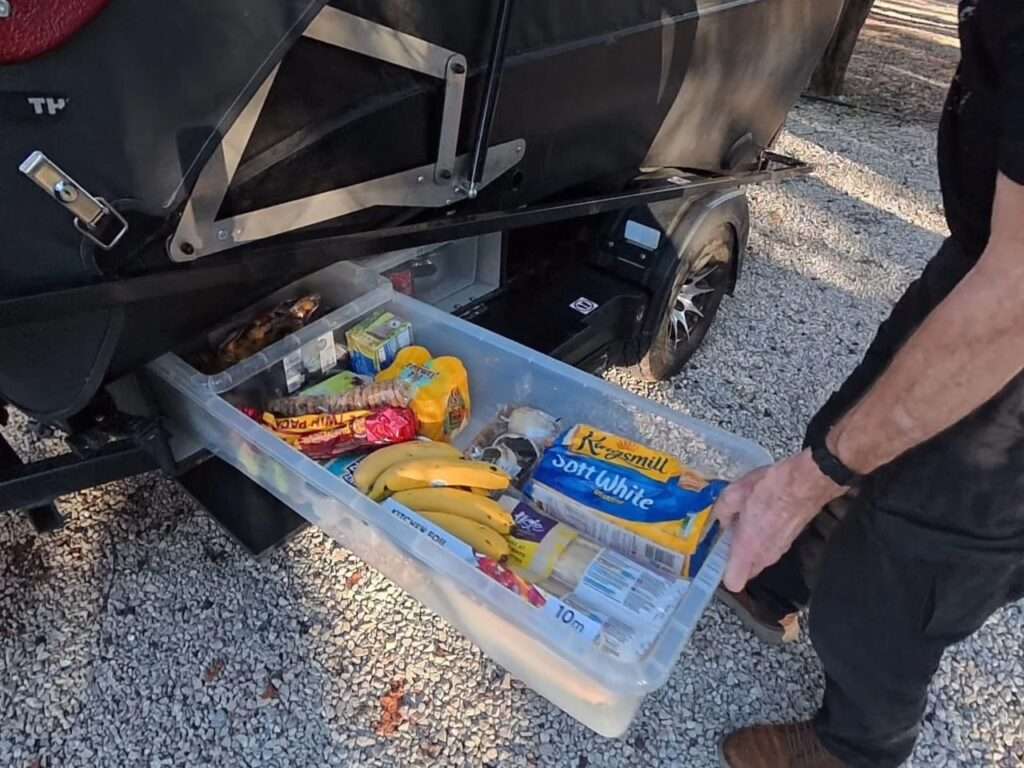
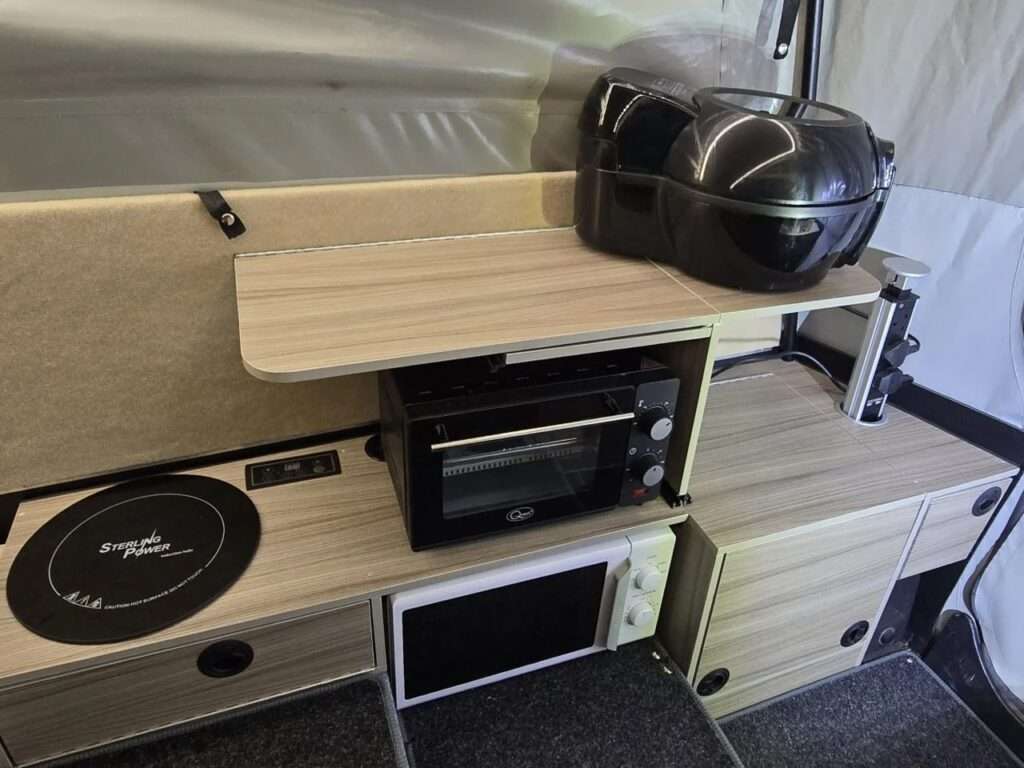
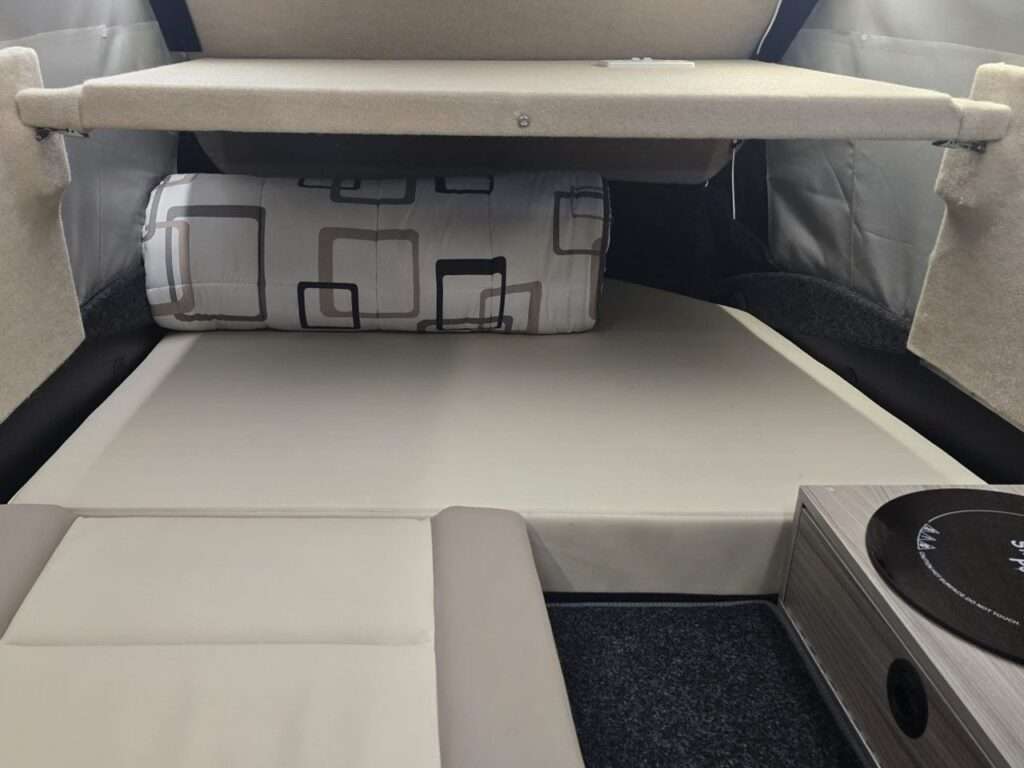
The trailer setup process follows a sequential operation starting with positioning the unit on-site using a motorized mover controlled remotely, without relying on the towing vehicle. After positioning, the support legs are deployed and the roof is raised using a crank assisted by gas struts, enabling the side fabric structure to be formed. Internally, the layout includes a kitchen at the entrance equipped with basic cooking appliances, followed by a seating area oriented outward. Storage units and a refrigerator are integrated beneath the seats, with the seating convertible into single or double beds depending on the model.
External Shell and Supporting Systems
The trailer features large side openings covered with mesh, allowing natural light penetration and enhancing visual ventilation within the space. Storage units are distributed beneath seating areas to improve spatial efficiency. In terms of systems, the trailer includes a 3 kWh lithium battery and a 200-watt solar panel mounted on the roof, connected to a 3000-watt inverter, enabling independent operation of electrical equipment during use.
✦ ArchUp Editorial Insight
Dashaway ECT trailers represent a functional redistribution resulting from the intersection of three non-architectural determinants: startup financing models in the electric mobility sector, pressures to reduce reliance on heavy vehicles under urban sustainability policies, and the rising cost of temporary living spaces in the domestic travel market. The final form is not produced as an autonomous design decision but as a negotiated solution between lightweight manufacturing constraints and compliance requirements for safety and mobility. The integrated interior organization reflects pressure to reduce setup time and minimize dependence on labor or expertise, while the height-transition mechanism operates as a direct response to road regulations and aerodynamic limits. The awning and solar systems are not merely functional additions but compensatory tools addressing the lack of infrastructure in undeveloped camping sites, transforming the trailer into a low-capacity self-sufficient unit within a fragile mobility economy based on minimizing operational risk.