The Samuel Project: Redefining Non-Towable Tiny Houses

Reframing the Concept of Space in Tiny Houses
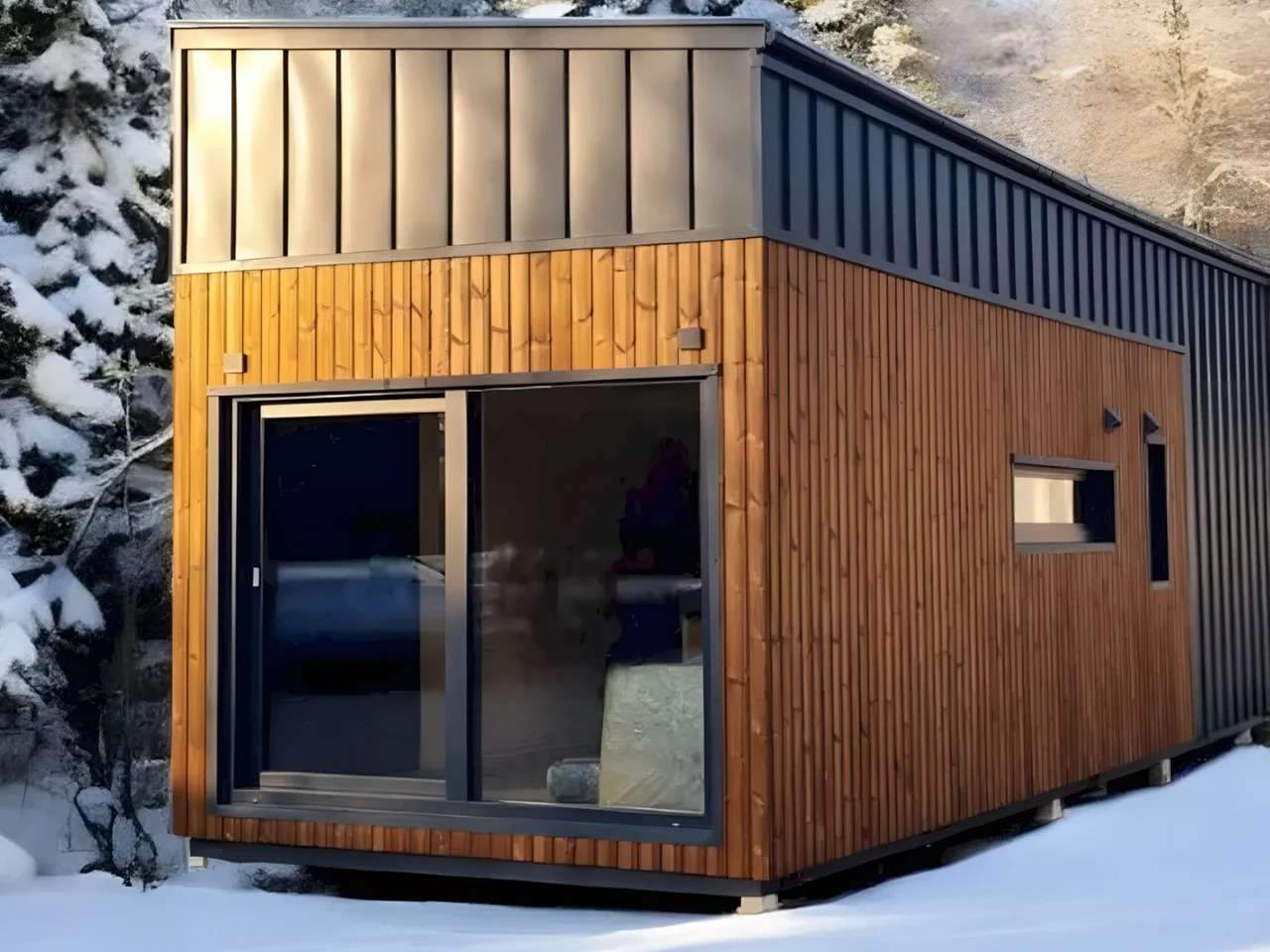
Most tiny houses are built on the idea of sacrificing spatial comfort in favor of compact living. However, this Architecture model appears as a case that reconsiders this equation, focusing on providing a more spacious living experience rather than merely maximizing the appeal of small size. Thus, attention is shifted from the idea of “mobility” toward the quality of permanent residence within a fixed space.
Dimensions as a Defining Element of the Interior Experience
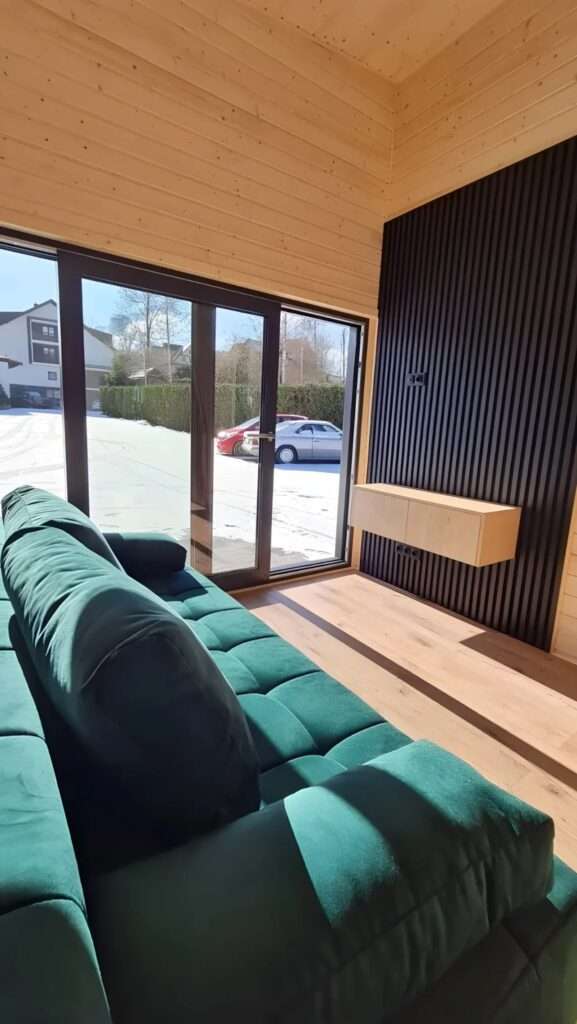
The unit measures ten meters in length with a width of up to 3.2 meters, a dimension that exceeds the norm in the European tiny house category. This increase in width is not a superficial addition, but a functional element that allows for a more flexible redistribution of movement within the interior space. As a result, the interior layout does not feel confined within a closed volume, but rather resembles a compact residential unit with a clear Design organization.
Interior Formation and Material Identity
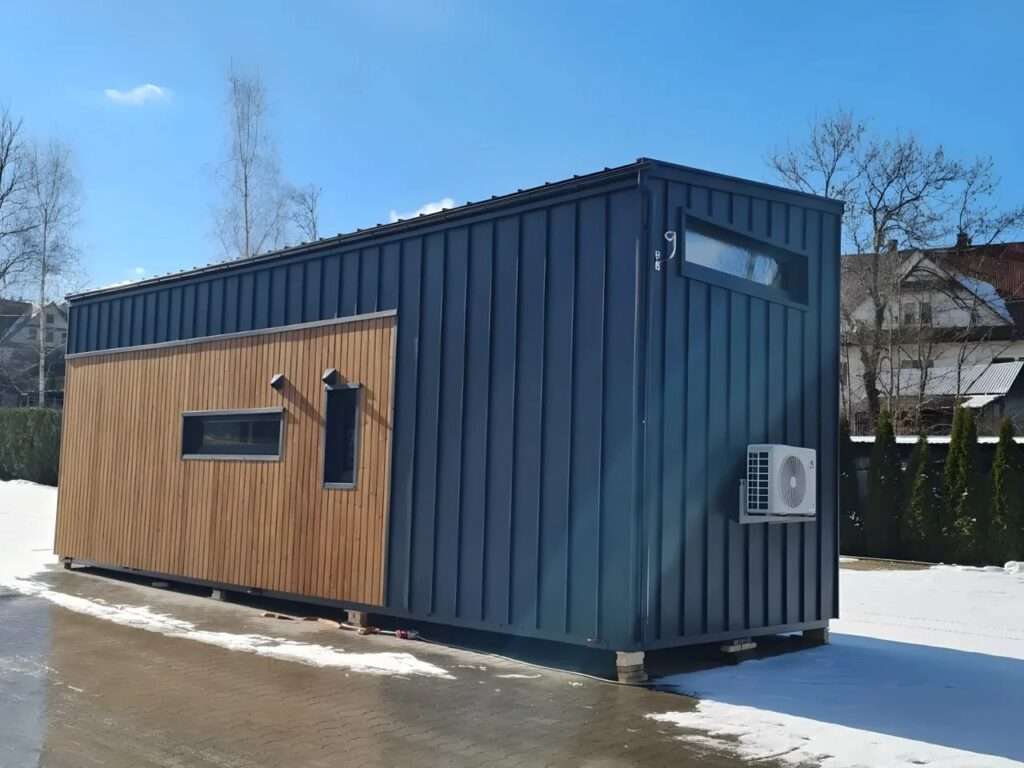
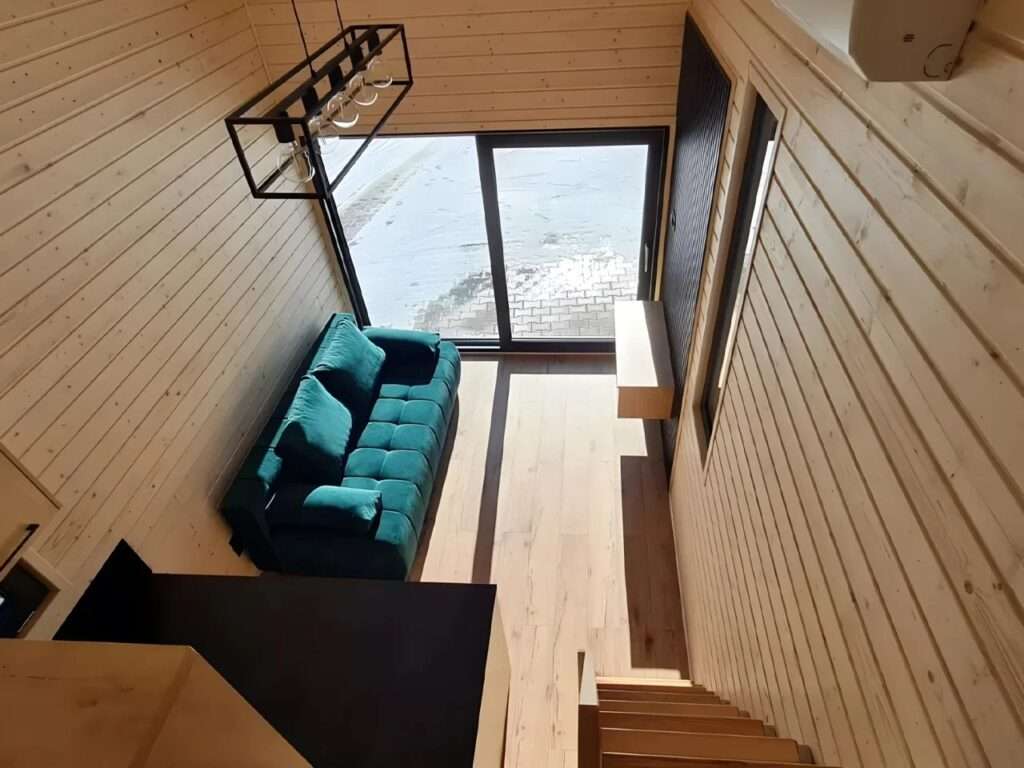
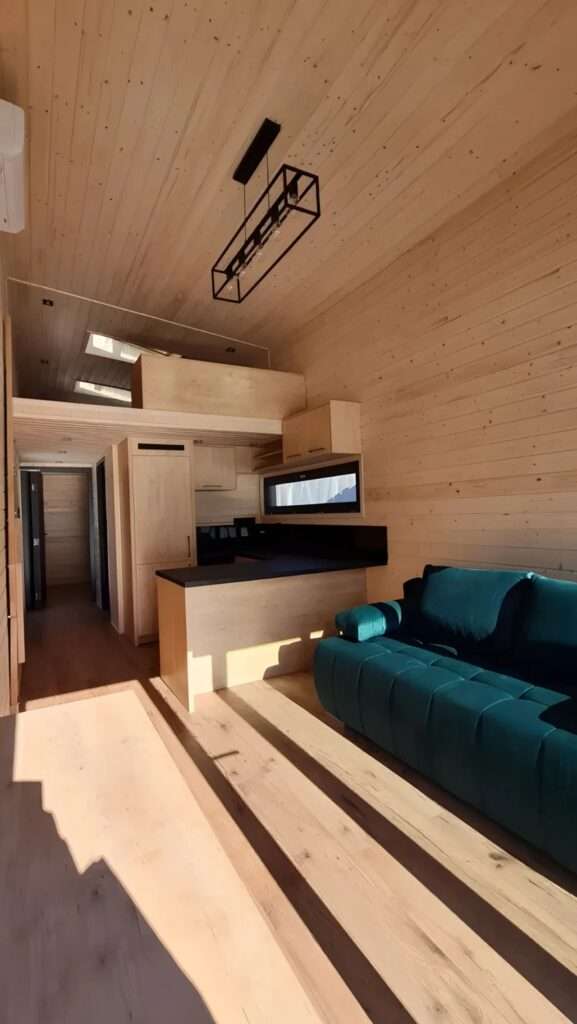
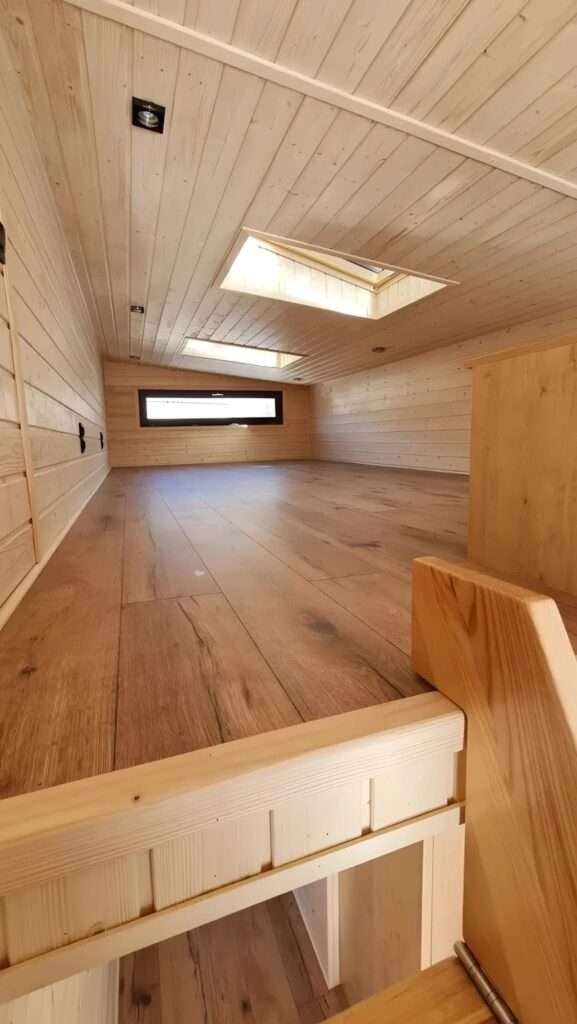
The Design relies on a single-sloped roof reaching a height of 4.1 meters at its highest point, adding a clear vertical dimension to the interior experience. In addition, the structure combines engineered wood and metal in the finishes, creating a visual balance between industrial character and material warmth. Consequently, the interior space is shaped not by ornamentation, but by the clarity of Building Materials and their relationship with light and volume.
Internal Organization and Spatial Distribution
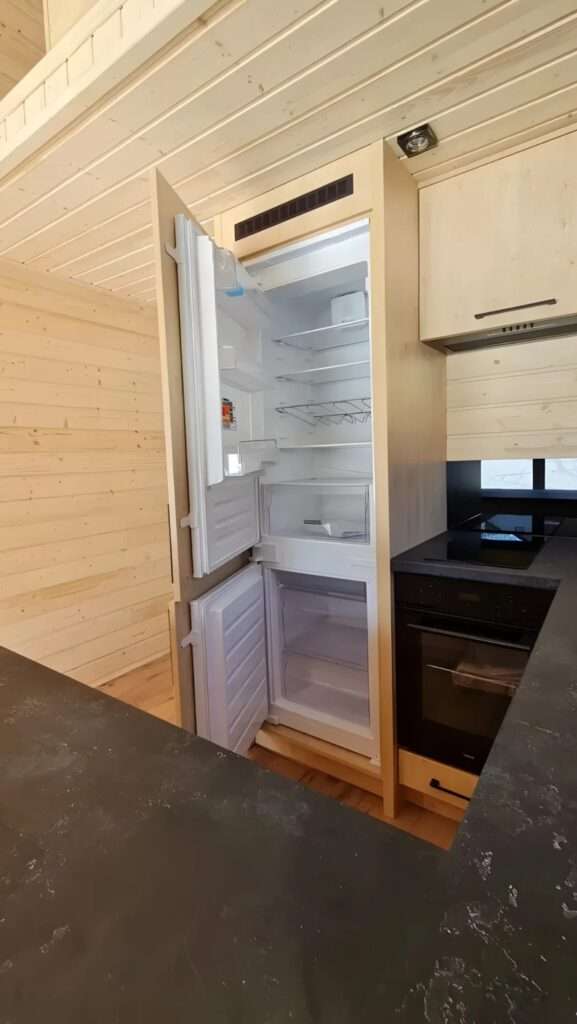
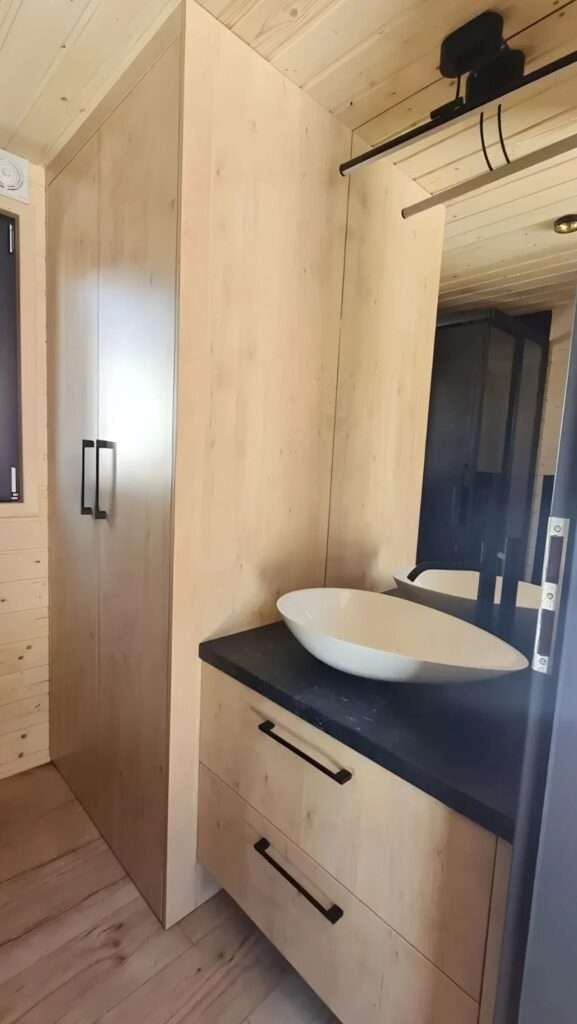
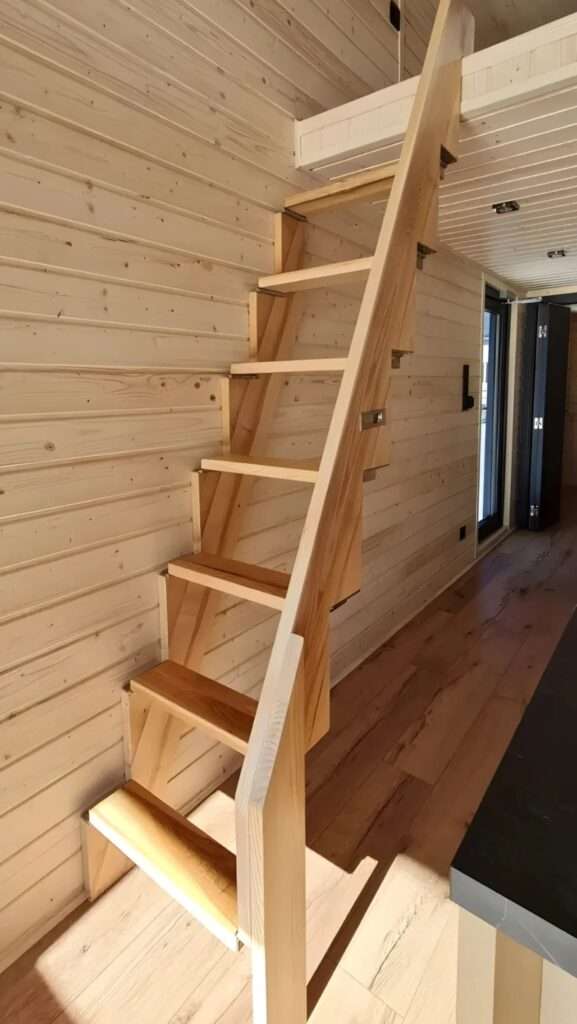
The interior plan consists of a 26-square-meter ground floor, topped by a 13-square-meter mezzanine, in addition to a 4.3-square-meter bathroom. This distribution enables a clear functional separation between usage zones, including two independent sleeping areas. The sloped roof height further enhances the vertical perception of the space, giving the mezzanine level a loft-like character. For similar innovative Projects, the use of vertical space is a key strategy.
Diverging Usage Models in the Tiny House Market
From a planning perspective, this type of unit reflects a clear division within the tiny house market. One category is based on towable, continuously mobile units, while another seeks a fixed residential unit with a carefully considered design that does not depend on mobility. In this context, the “Samuel” model is positioned as a solution directed toward the second category, emphasizing spatial stability over physical flexibility. This approach aligns with broader trends in Cities facing housing density challenges.
Structural Stability and the Redefinition of Residential Density
The design is based on a fixed, non-towable structure, allowing for a different redistribution of mass and space compared to mobile models. In addition, off-grid systems can be integrated, expanding its usability in locations far from urban infrastructure. As a result, the model appears as a mid-range housing option in some European markets, emphasizing that spatial efficiency is not defined by large area, but by the quality of internal organization. The Construction approach prioritizes stability and long-term residency.
✦ ArchUp Editorial Insight
The Samuel model emerges as a direct spatial response to medium-density housing pressures in Europe and the reclassification of small housing units as long-term investment assets rather than mobile living products. The primary driver is not design ambition but land scarcity and standardized permitting frameworks that tend to favor fixed, insurable Buildings over mobile units due to liability considerations and infrastructure simplicity. Regulatory constraints related to transport standards and energy efficiency contribute to fixing the structure within a 10-meter construction envelope, enabling financing simplification and smoother insurance processes. The organization of the mezzanine and the expansion of width function as a programmatic solution to increase occupancy efficiency per square meter within planning constraints, where interior space becomes a mechanism for absorbing demographic pressure while maintaining compliance boundaries and enabling potential off-grid expansion. For more insights, you can browse the full Archive of case studies or read the latest Architectural News on tiny house innovations.