Rausing Science Centre: Education in Historic Contexts

Integrating Educational Buildings within Historic Contexts
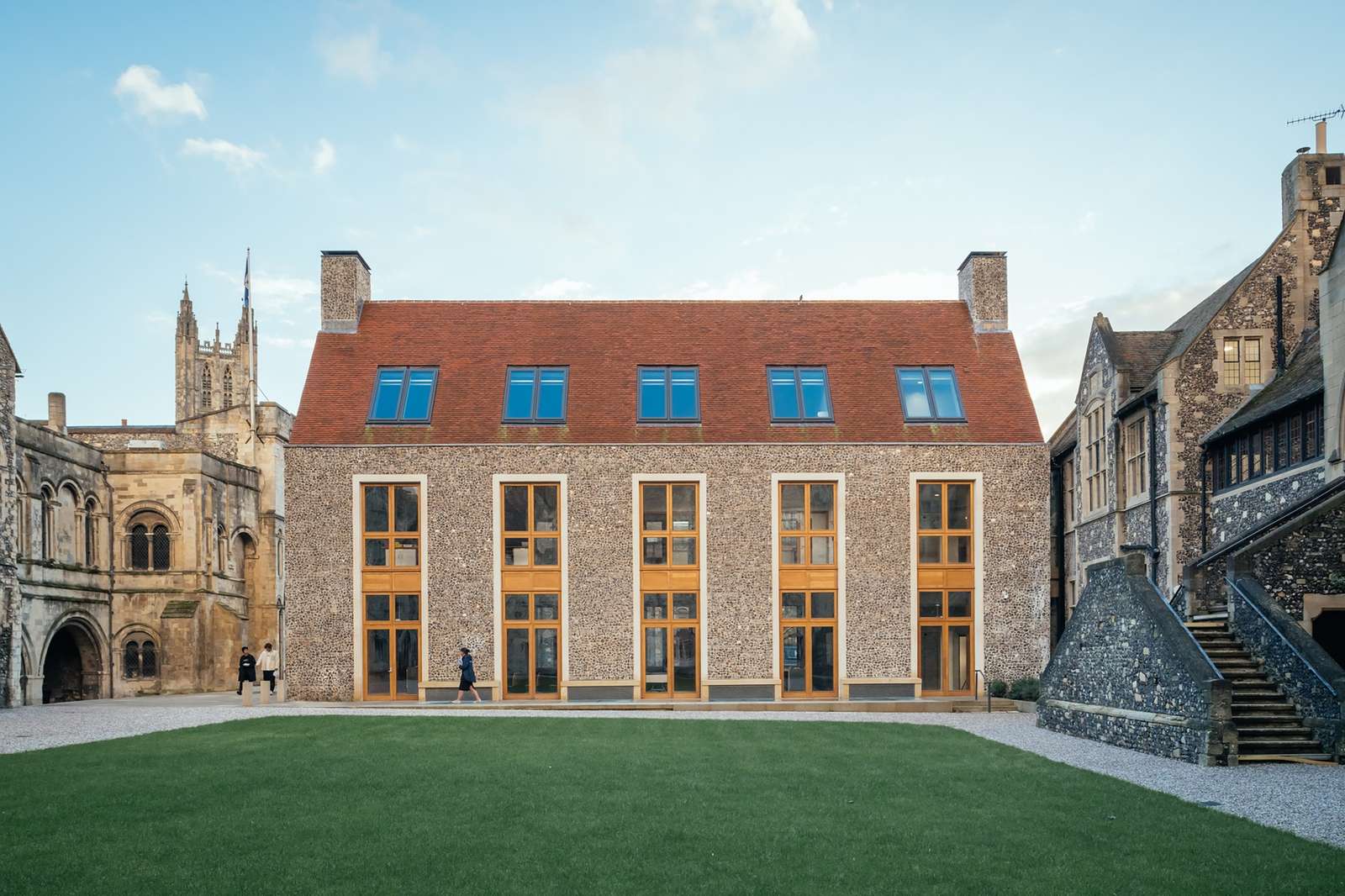
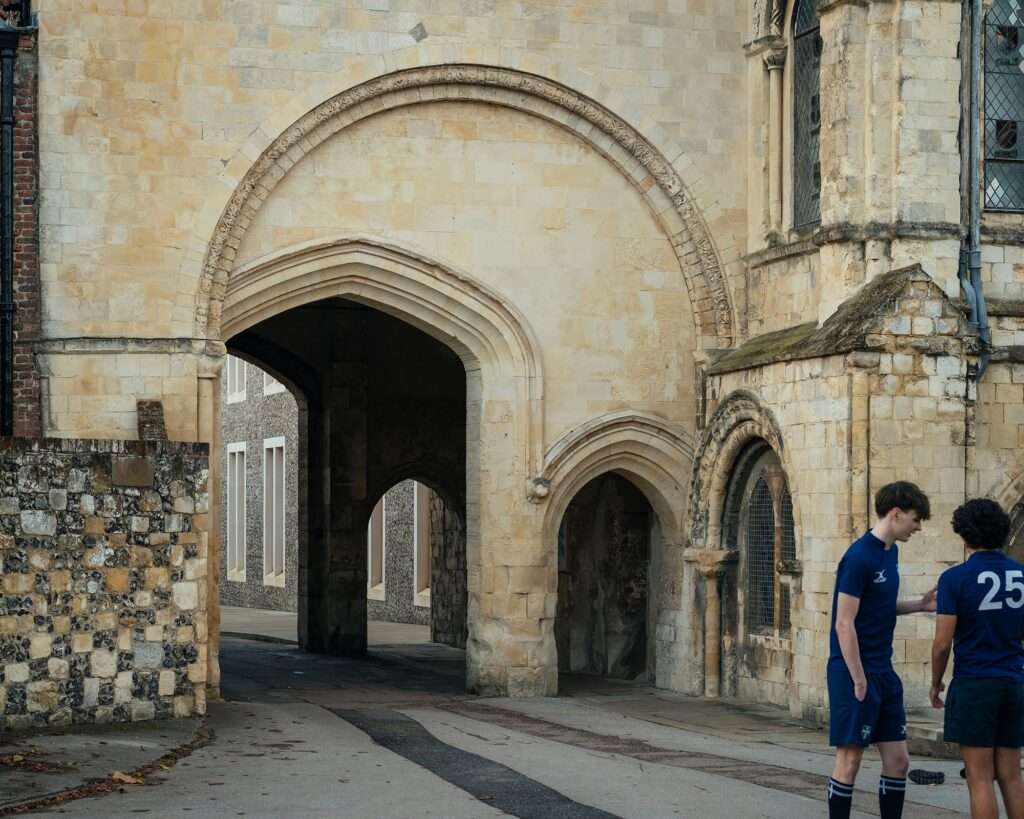
The integration of new educational buildings within historic environments represents a challenge tied to maintaining a balance between contemporary functional requirements and existing heritage constraints. In the case of the Rausing Science Centre within the King’s School campus, the project was set within a context that includes historic buildings and archaeological landmarks located inside a UNESCO World Heritage Site, which imposed the necessity of carefully considering the relationship between the new building and its surrounding context.
Coordination between Educational Requirements and Regulatory Authorities
Working within historic sites requires coordination between multiple stakeholders to ensure that the project aligns with functional requirements while preserving the historical character of the place. For this reason, heritage conservation authorities, along with the school administration, participated in reviewing the project, aiming to achieve a balance between the needs of educational use and the considerations related to the urban and historical context.
Reorganization of the Science Department Facilities
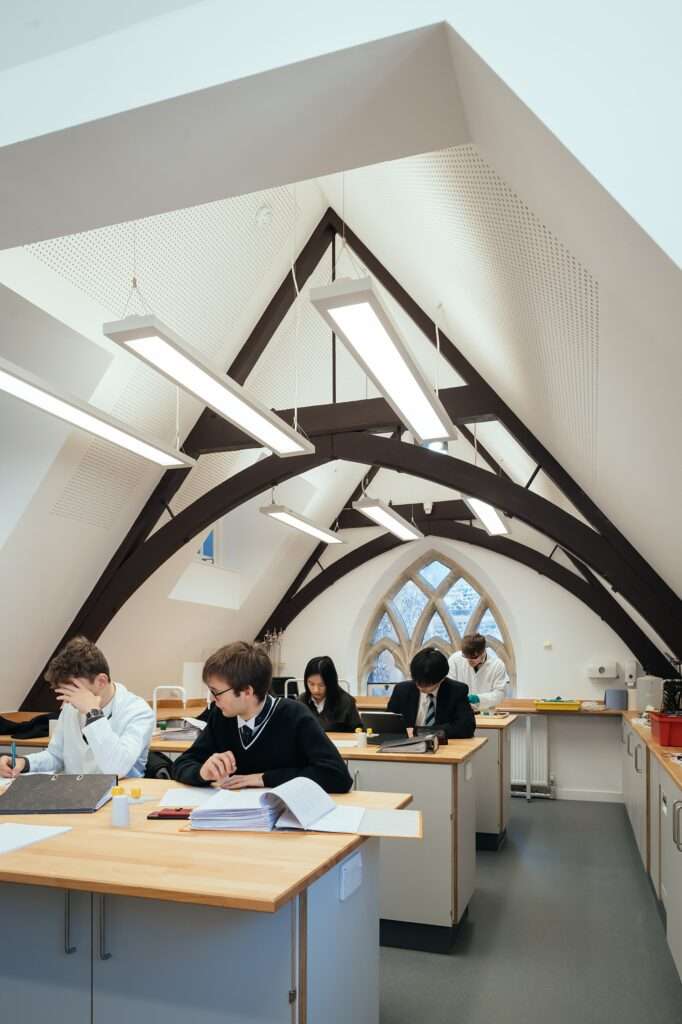
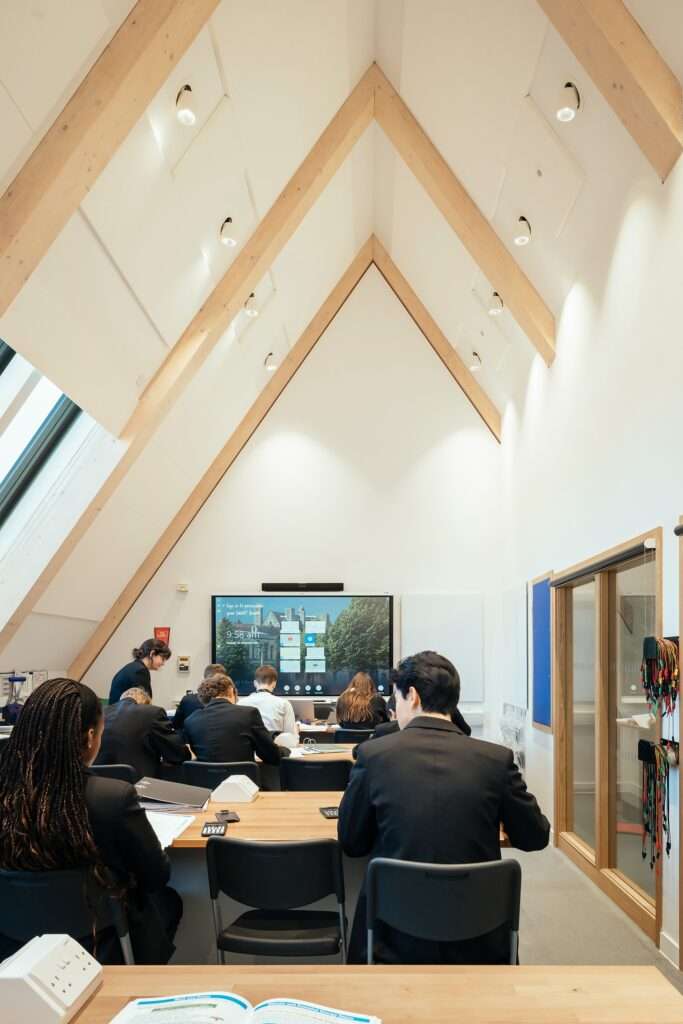
The development of the science department came in response to new educational needs identified through discussions with the school team and science teachers. The department previously occupied laboratories within the Grade II listed Barry Hall, where these spaces were refurbished to accommodate chemistry and biology departments within an updated functional layout.
Organization of Educational Functions within the New Structure
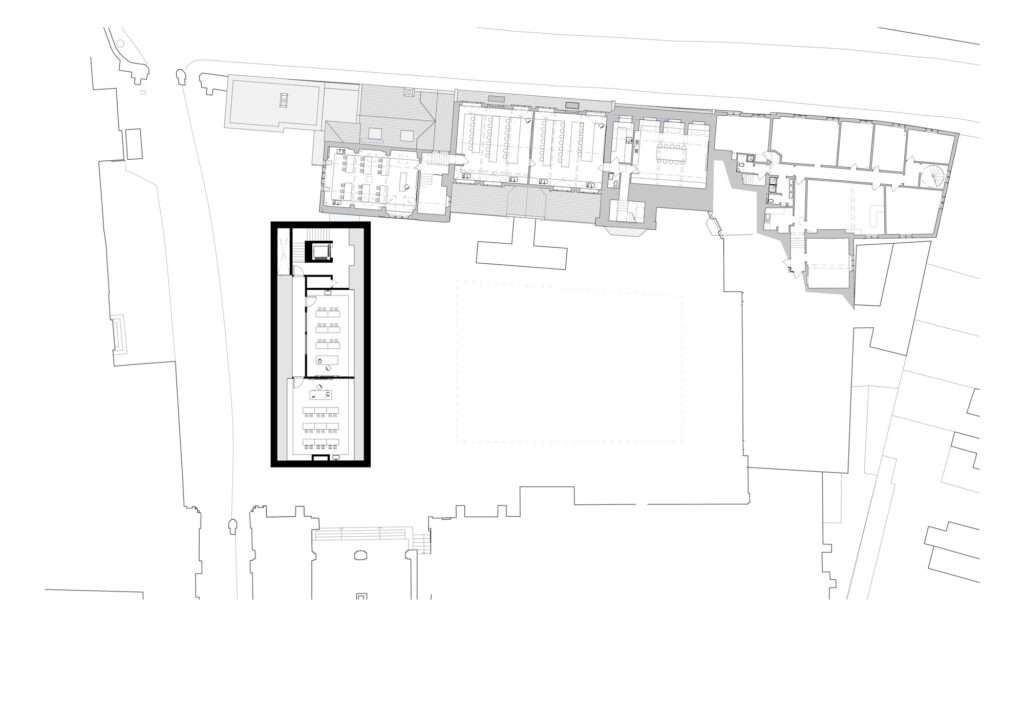
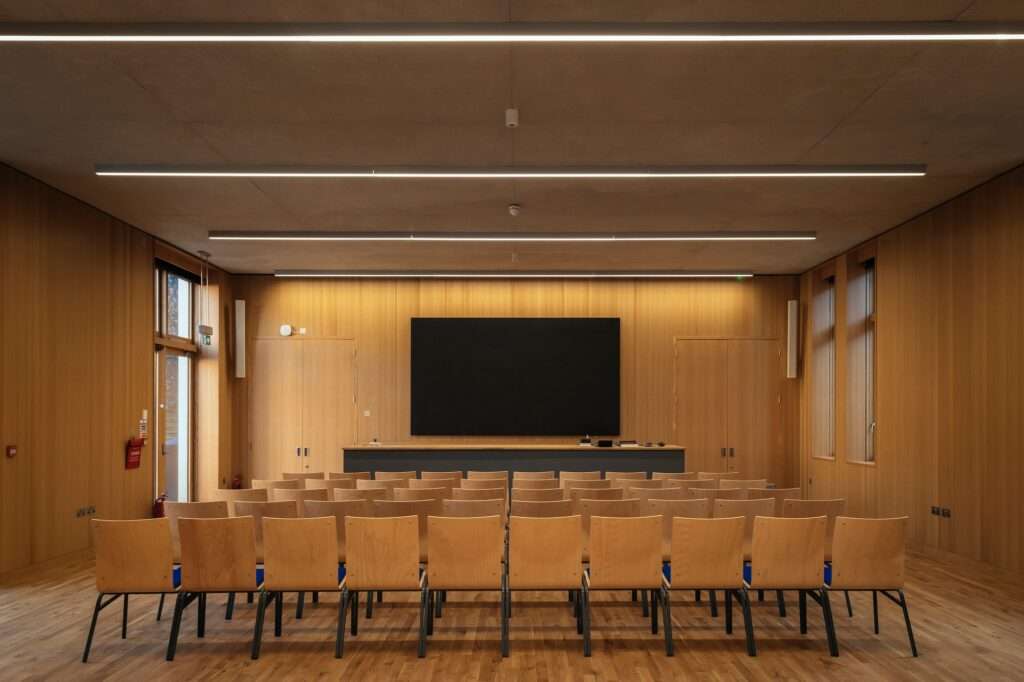
Design of educational buildings reflects the importance of achieving functional flexibility that allows for multiple patterns of use. In this project, the science centre is connected to the surrounding buildings via a lightweight glazed corridor, and it includes six physics laboratories along with a lecture hall accommodating 120 people on the ground floor. These spaces also support lectures, events, and meetings within an environment adaptable to the school’s varying needs.
Addressing the Site’s Spatial Constraints
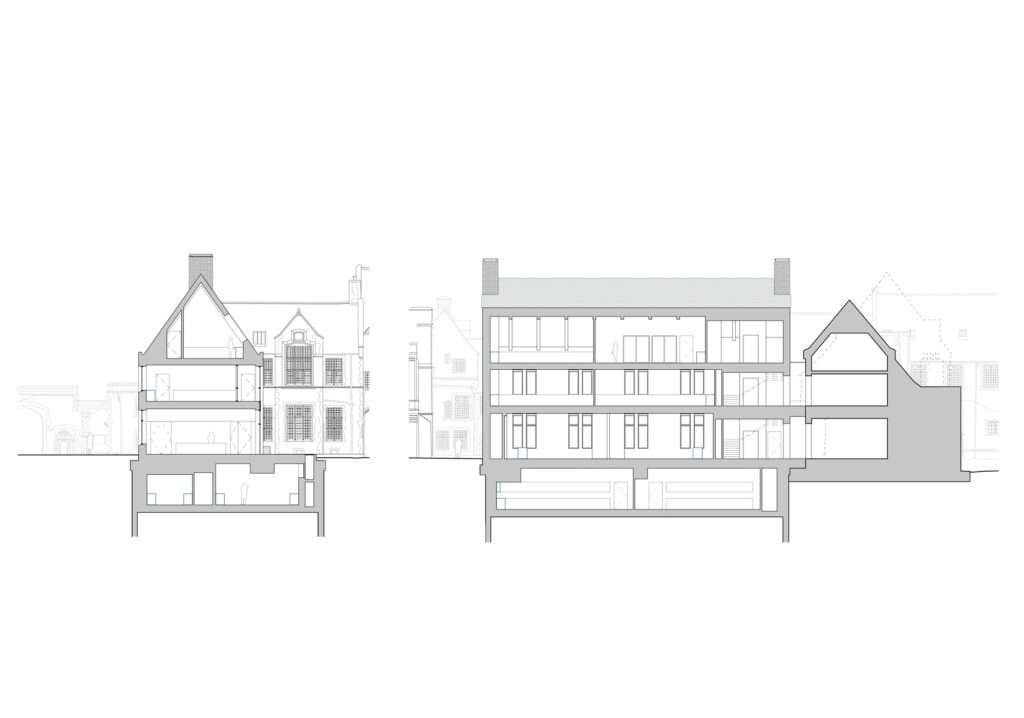
When developing new facilities within existing sites, elements of the previous building are often used as a foundation for architectural intervention. The new building replaced an outdated facility that no longer met functional requirements, while largely maintaining the original site footprint. In contrast, the basement level was deepened to achieve the required ceiling heights without significantly affecting the overall composition of the site.
Materials and the Relationship with Historic Context
Material selection in historic sites is closely linked to the attempt to achieve a balance between continuity and temporal distinction. For this reason, the same limestone used in the cathedral and its restoration works was employed, aiming to maintain material harmony with the surrounding environment. The façades also utilize flint arranged in a composition that combines random placement with intermittent horizontal bands, creating visual diversity and reinterpreting traditional elements in a contemporary manner that maintains the building’s connection to its historic context without directly imitating it. For more information on material specifications, you can refer to specialized Material Datasheets and explore various Building Materials.
✦ ArchUp Editorial Insight
Within the intersection of heritage governance and educational capital allocation, the Rausing Science Centre emerges as a spatial outcome produced by compliance requirements within a regulatory network classified as a World Heritage Site. The primary driver is the school’s need to expand its science curriculum capacity, transforming educational demand into a capital project constrained by heritage protection rules and multiple oversight bodies. These regulatory constraints reshape Construction massing boundaries, ground footprint continuity, and material selection, turning the process from expansion into institutional negotiation. The programmatic solution is achieved through the reuse of the previous educational structure and the incorporation of six physics laboratories and a 120-seat lecture hall, with functional linkage ensuring operational continuity. Basement deepening acts as a volumetric compensatory mechanism, while the unification of limestone and flint supply sources reinforces continuity within an established restoration logic, ultimately producing a spatial settlement between educational density and heritage risk management. Similar approaches can be found in other Projects and discussed within the Architects Lobby.