Klatovy House: Sloping Terrain & Nature Integration

Site and Integration with Topography
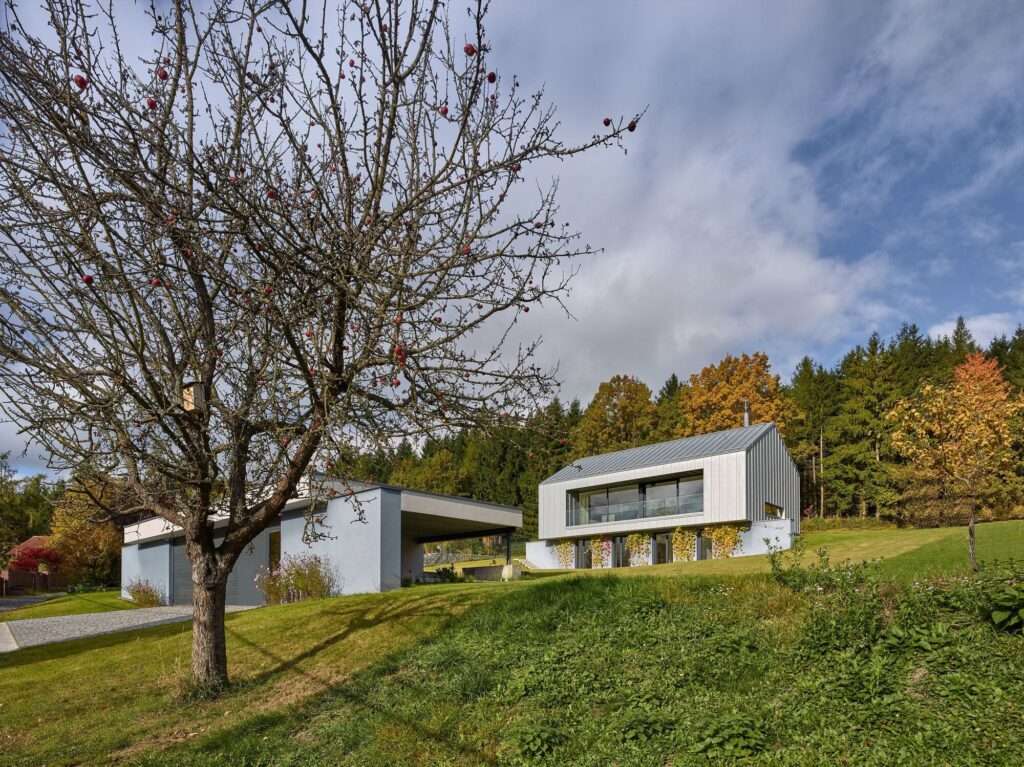
The house is located on the edge of a small village near Klatovy in the Czech Republic, adjacent to a forest overlooking a mountainous horizon. The building is embedded within a sloping terrain, which reduces its visual presence in the overall landscape and provides the basement level with natural protection. This Architecture positioning also achieves a balance between privacy and direct proximity to the surrounding natural environment.
Functional Organization and Mass Distribution
The garage and entrance area are placed on the lower level close to the access road, connected to the living area via a paved pathway. The Projects follows an inverted spatial arrangement compared to conventional layouts, where the semi-buried lower floor contains three bedrooms with associated facilities and direct access to the garden. The upper floor is connected through an internal staircase extending along the eastern wall.


Interior Space and Views
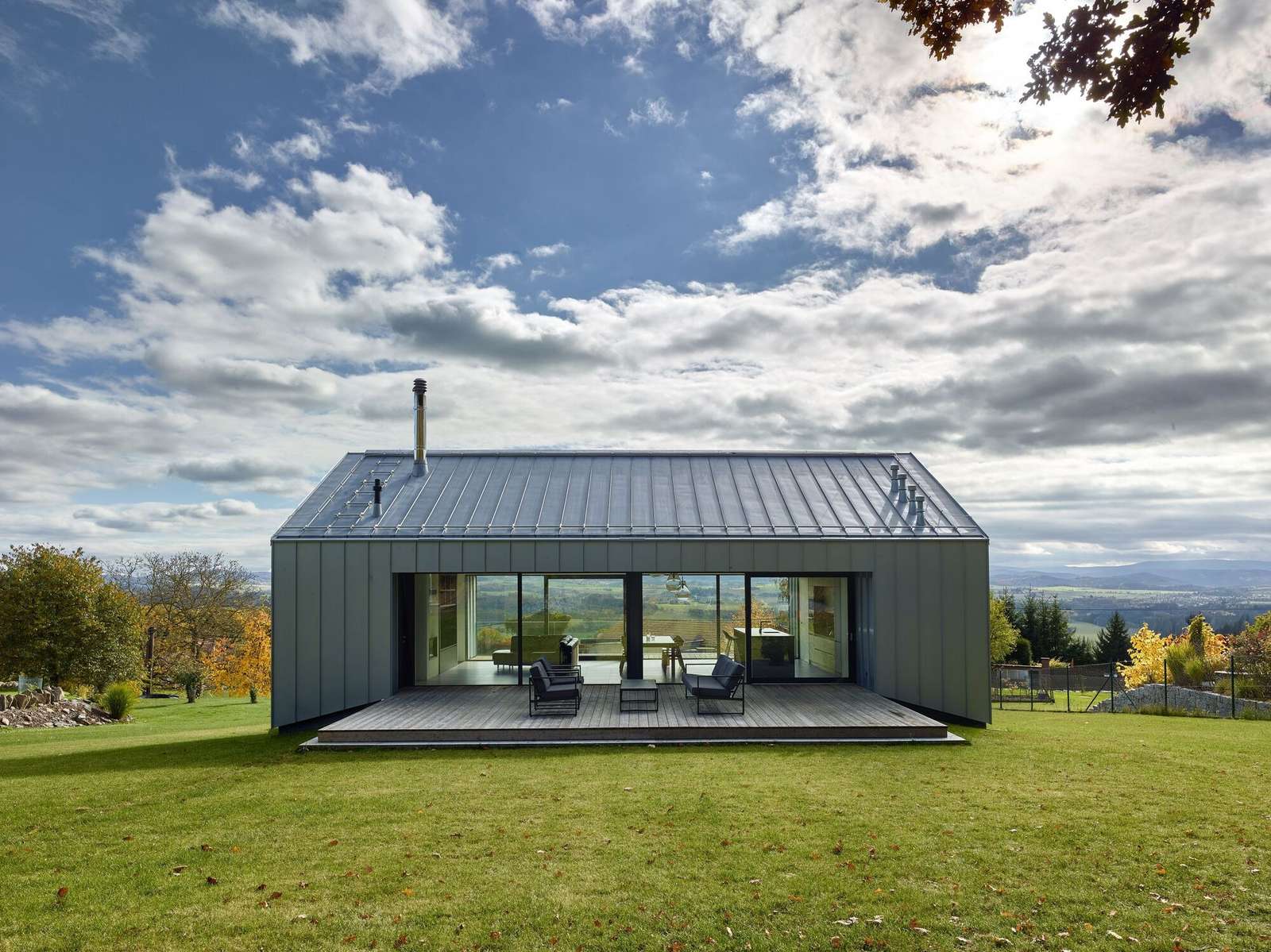
The upper floor contains an open social space characterized by glass walls extending along the northern and southern sides. This configuration enables broad panoramic visual openness. The ceiling follows the external roof line, enhancing the sense of height and giving the Interior Design a more spacious and legible character.
Connection to Outdoor Spaces
The glass walls connect to two galleries extending along the long sides of the house, accessible through sliding doors. The northern gallery opens directly toward the forest and integrates with an outdoor terrace equipped with seating under mature trees, allowing it to function as a social extension during summer. In contrast, the southern gallery acts as a transitional zone that provides greater privacy and reduces heat exposure while maintaining open views toward the countryside. These Cities and rural connections are further explored in our urban analyses.


Material Treatment and Massing Composition
The building relies on a clear material contrast between the two floors. The lower floor is constructed from ceramic blocks with earthy plaster, strengthening its connection to the terrain and giving it a sense of stability. The upper floor is clad in titanium-zinc sheets, appearing lighter and more contemporary. The reflective quality of the metal surface allows the facade to respond dynamically to changes in sky and light. For more details on material properties, check our Material Datasheets and general Building Materials resources.
Interior Organization and Spatial Identity
The interior design adopts light and neutral tones, with wood, stone, and refined ceramics used as primary materials. This choice contributes to a balanced living environment while reinforcing a visual and tactile connection to the surrounding natural landscape without introducing excessive decorative elements. Such approaches are frequently discussed in our Research and Discussion sections.

✦ ArchUp Editorial Insight
The house near Klatovy is a direct outcome of the intersection between land-use regulations and risk-reduction logic associated with sloping terrain, where the site itself becomes a structural determinant that dictates the form of the composition rather than merely accommodating it. Part of the volume is embedded into the ground as a strategy to reduce visual impact and achieve natural compliance with the constraints of the rural landscape, reflecting a priority of structural stability and cost management over formal expression. The inverted programmatic distribution emerges as a response to movement logic and access efficiency rather than a purely qualitative Design choice, while the glass facades and galleries operate as environmental regulating systems balancing privacy and exposure. The material contrast between the ceramic base and the metallic upper volume reflects a standardized structural hierarchy produced by institutional Construction logic rather than an independent architectural decision. For similar case studies, visit our Buildings and Archive sections.