Halcyon Grand: Small Living and Spatial Reconfiguration Model

Reframing the Concept of Small Living
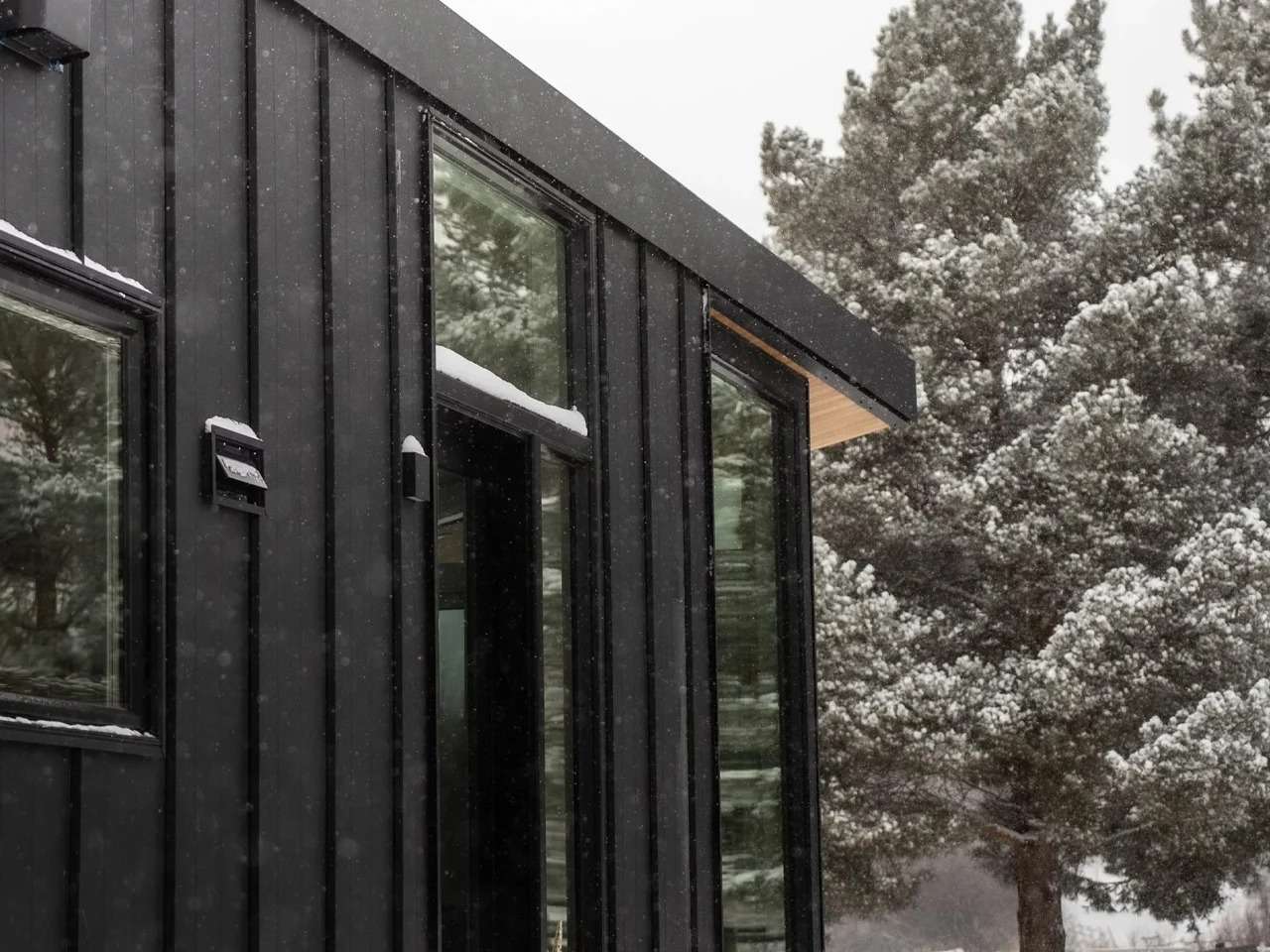
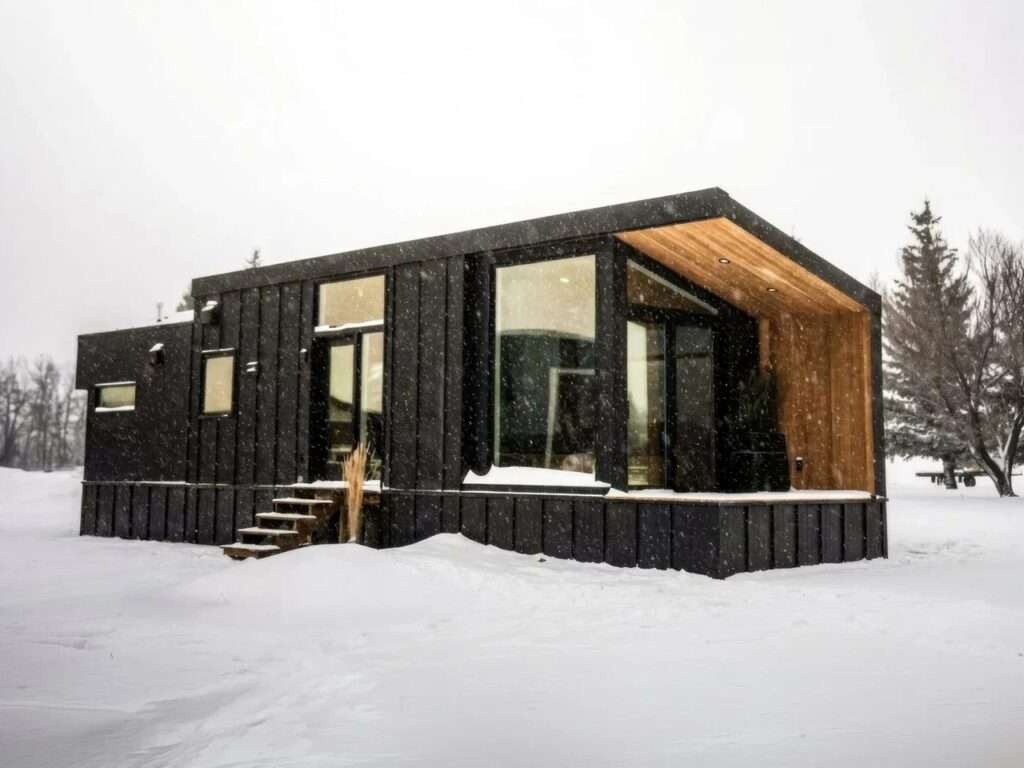
This model presents a different interpretation of small-scale housing, where the focus is not on reducing living components but rather on redistributing them within a limited footprint. This approach is viewed as a design condition aimed at minimizing the notion of “compromise” typically associated with small homes, while preserving the essential functions of the house within a single, integrated configuration.
Spatial Organization and Overall Structure
The model measures approximately 44.5 × 10.5 feet and is classified as a Park Model RV certified dwelling. This explains its reliance on wheels while maintaining a visually fixed residential character. The spatial organization of the space is distributed across roughly 350 square feet on the main level, with an additional 50-square-foot loft, resulting in a spatial arrangement that accommodates two bedrooms within the total area without clear functional complexity.
Sleeping Zoning and Use Response
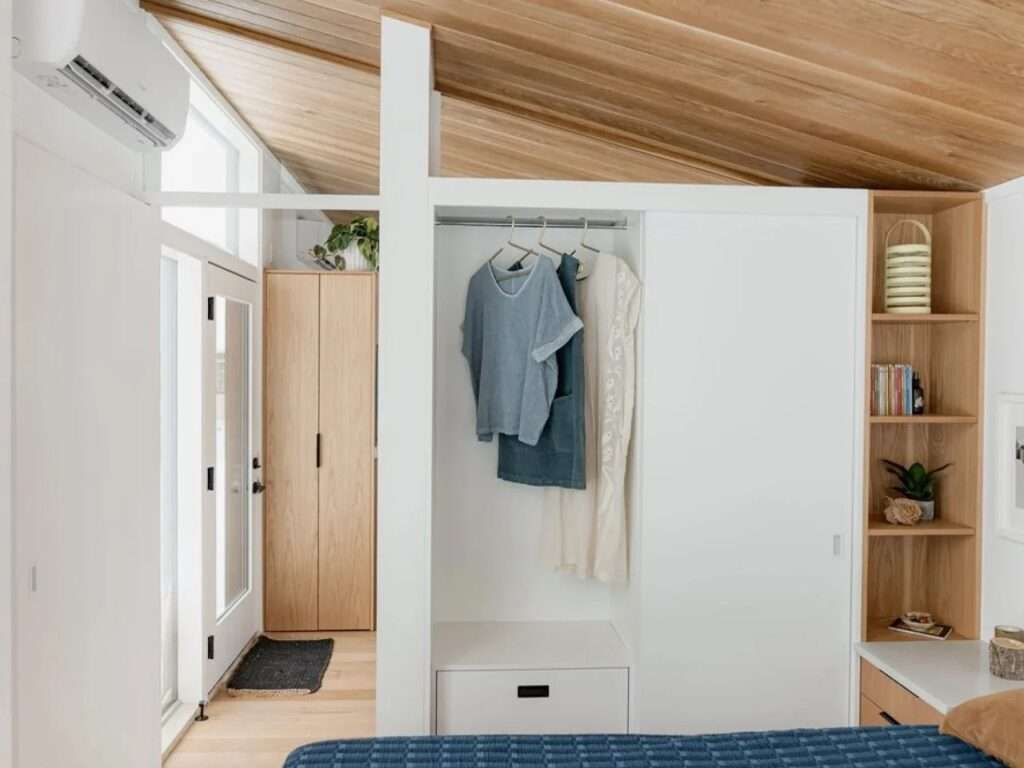
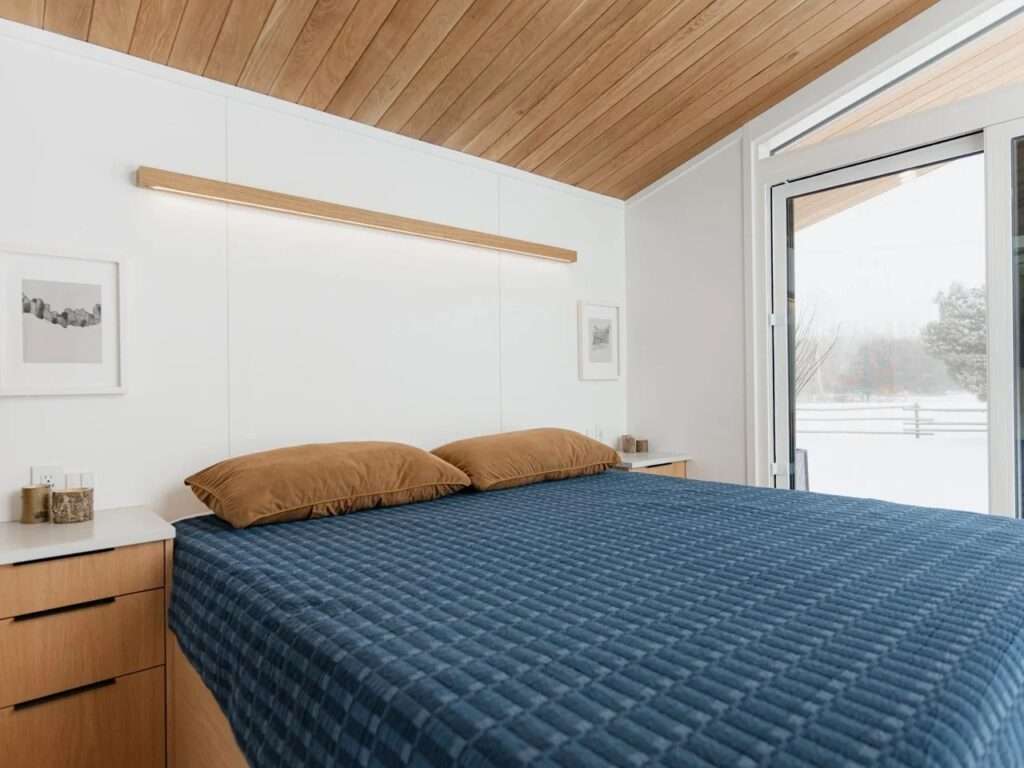
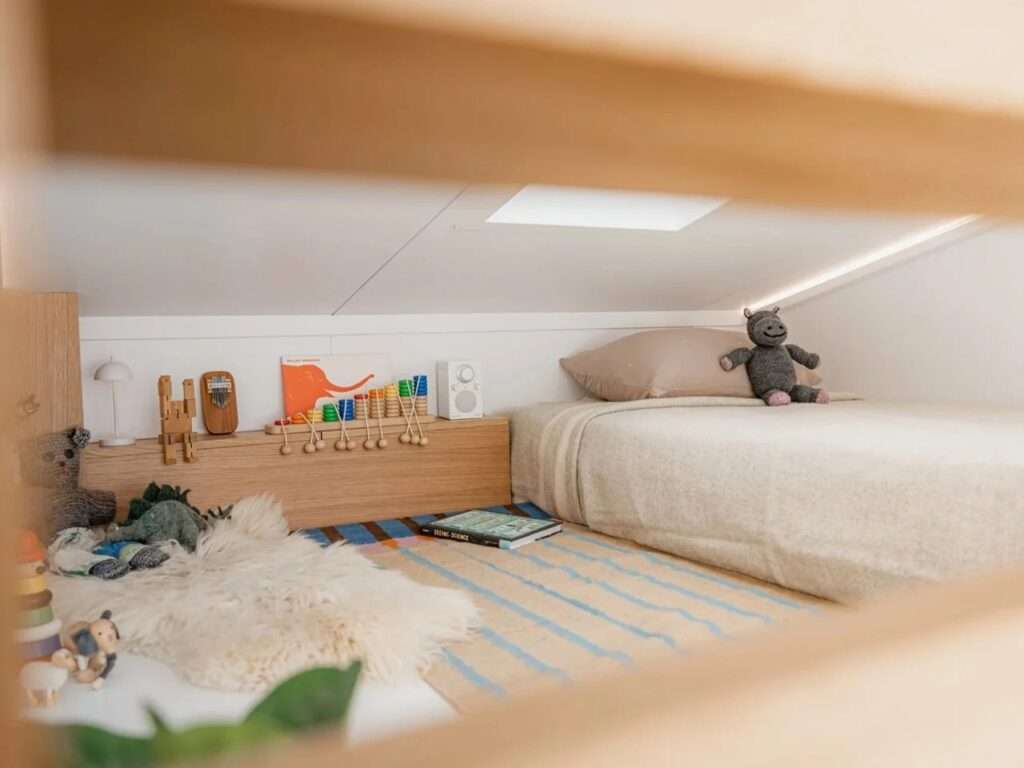
The primary bedroom suite is positioned at one end of the dwelling and relies on floor-to-ceiling glazed openings that connect it to the external environment, along with a sliding door opening onto a covered outdoor space. It also includes built-in storage units extending along the wall, integrating function into the architectural structure. The loft functions as an independent sleeping volume that can be fully isolated. This solution emerged as a direct response to repeated user behavior patterns, reflecting the role of real-life experience in shaping design decisions.
Central Spatial Organization
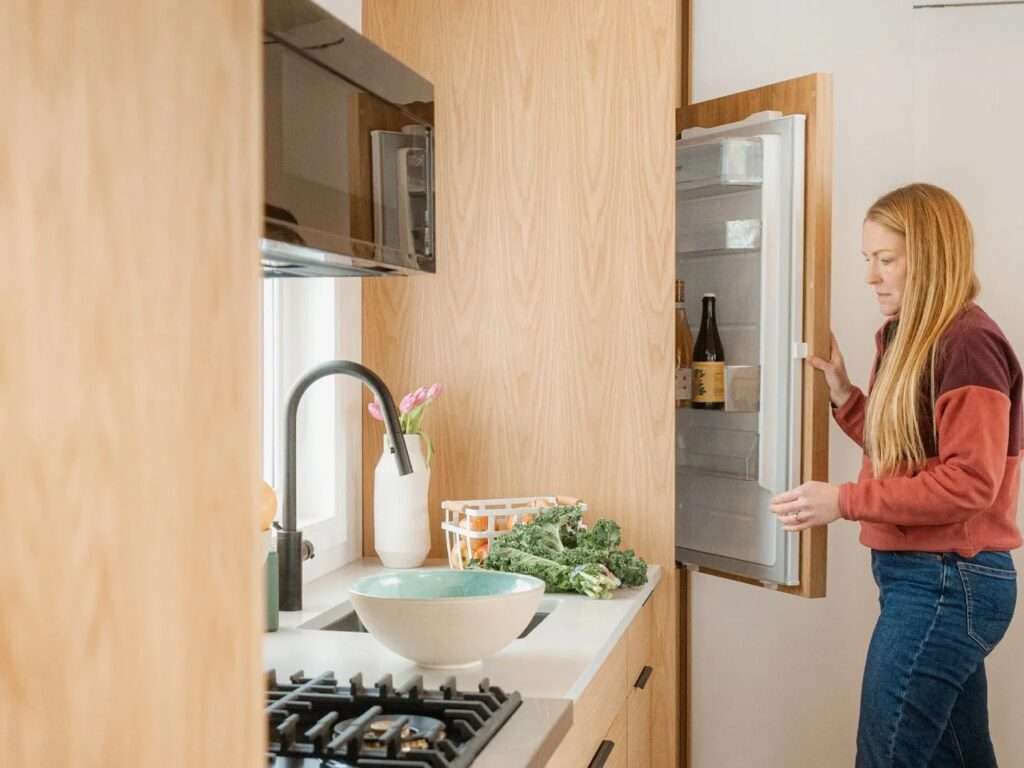
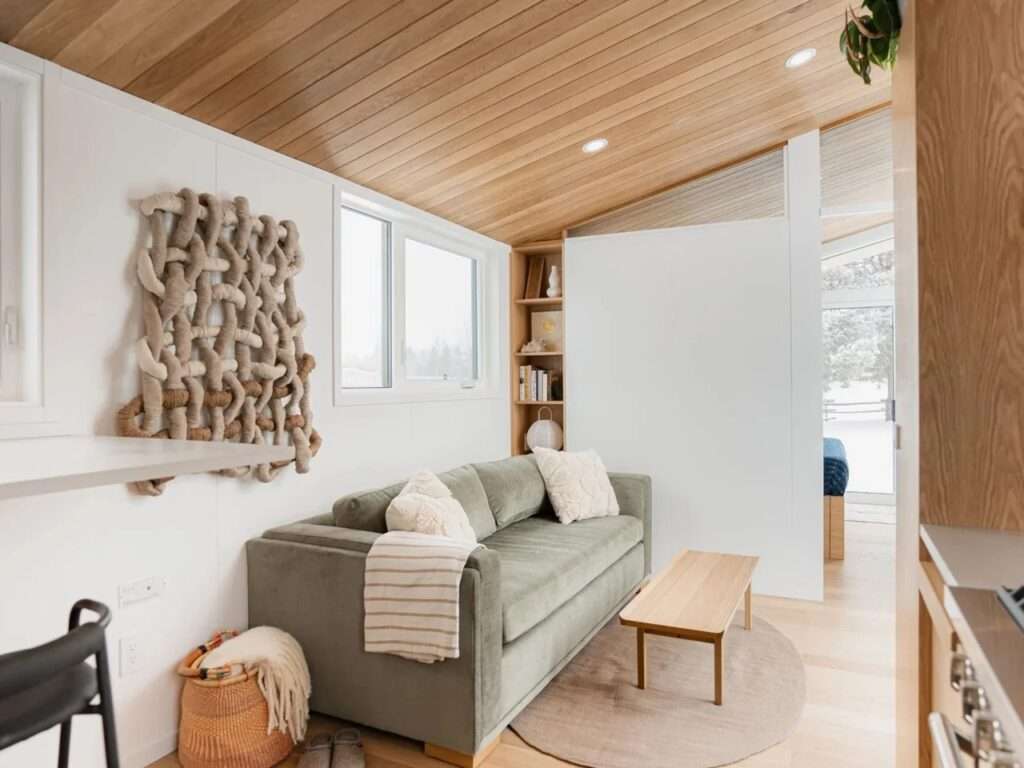
The kitchen and dining area are placed at the center of the plan, acting as the primary organizing node for movement within the dwelling. This space includes a dining table for four people with integrated storage units beneath it, along with a full-sized kitchen designed for everyday cooking use. Additionally, a storage cabinet is integrated into the corridor, enhancing spatial efficiency within tight constraints without expanding the overall footprint.
Service Zone and Bathroom
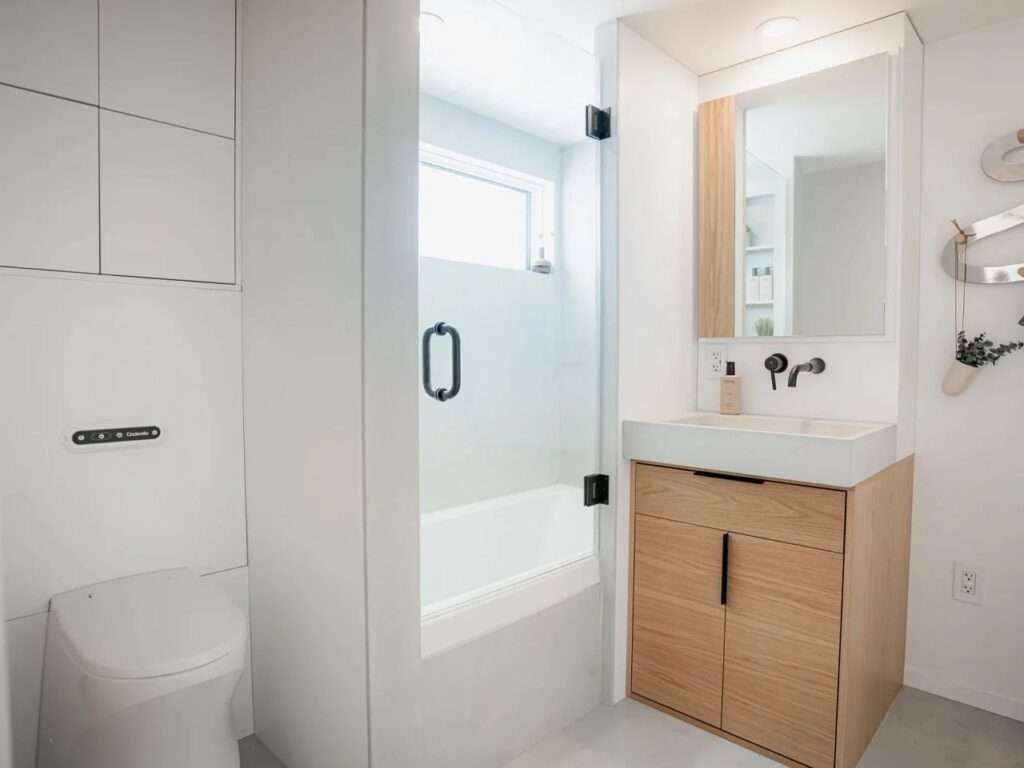
The bathroom design features a ceiling height of 6 feet 10 inches, a dimension linked to a specific usage condition based on the first user of the model, who is 6 feet 7 inches tall. The space includes a standard bathroom equipped with a deep soaking tub, with the option of replacing it with a concrete-and-glass walk-in shower. The dwelling also includes a built-in laundry unit that can be used for drying or replaced with a full-size appliance as needed, reflecting flexibility in service organization within a constrained area.
Materials, Finishes, and Execution Methodology
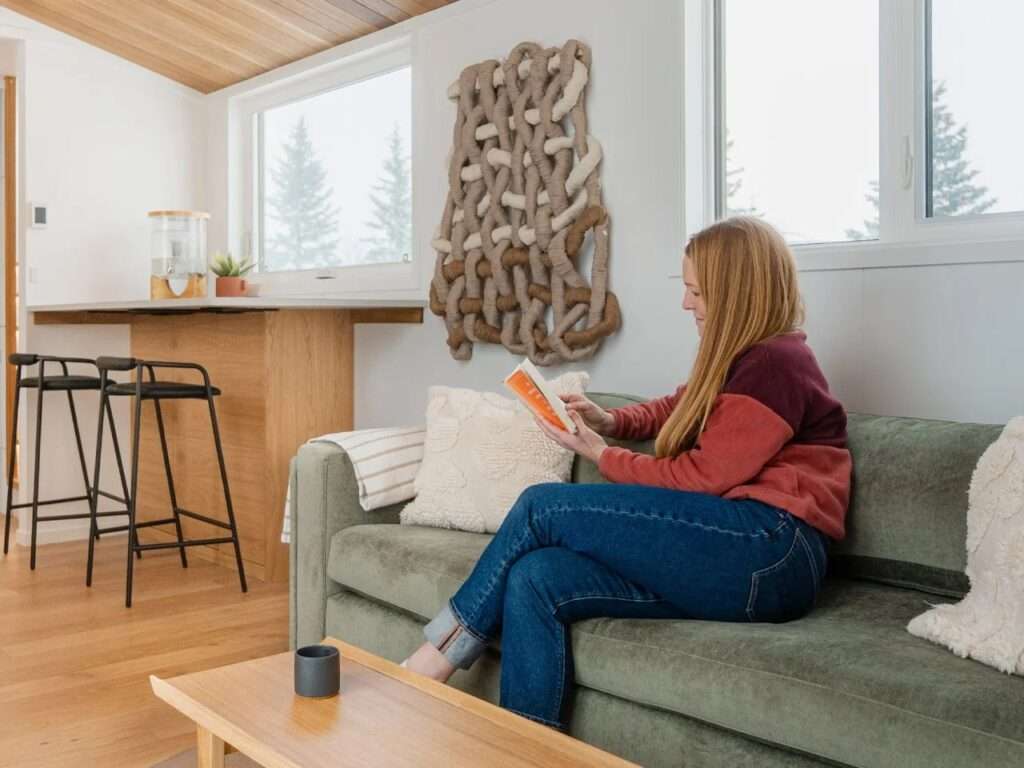
Materials, Finishes, and Execution Methodology adopt a warm material palette combining concrete tiles, hardwood flooring, and custom carpentry details, along with dimmable LED lighting to control the visual atmosphere within the space. This execution approach is part of a design methodology developed by a family workshop based in Alberta, founded by Kevin and Hayden Fritz, where projects are built to standards exceeding the typical minimum requirements for this type of housing. The Grand model stands as a clear representation of this approach.
✦ ArchUp Editorial Insight
modular housing requirements operate as a primary driving force, where capital efficiency logic intersects with regulatory gaps between mobile unit legislation and permanent housing codes. Land-use zoning frameworks and transportation standards impose dimensional constraints (44.5 × 10.5 feet), creating a functional separation between mobility status and residential permanence requirements. Meanwhile, insurance considerations and construction costs push toward compressing programmatic functions into a single envelope. As a result, the spatial solution relies on vertical stratification (sleeping loft), centralized circulation around the kitchen-dining core, and activated edges with glazed facades. Service zones are compressed into modular units to ensure manufacturability. Ultimately, the form does not emerge as an independent design choice, but rather as an operational agreement between a mobile regulatory classification and the pressures of the permanent housing market, where the designer’s role becomes secondary to compliance logic and cost minimization.