Frankfurt Airport Terminal 3 Opens with Sculptural Marketplace and Organic Circulation

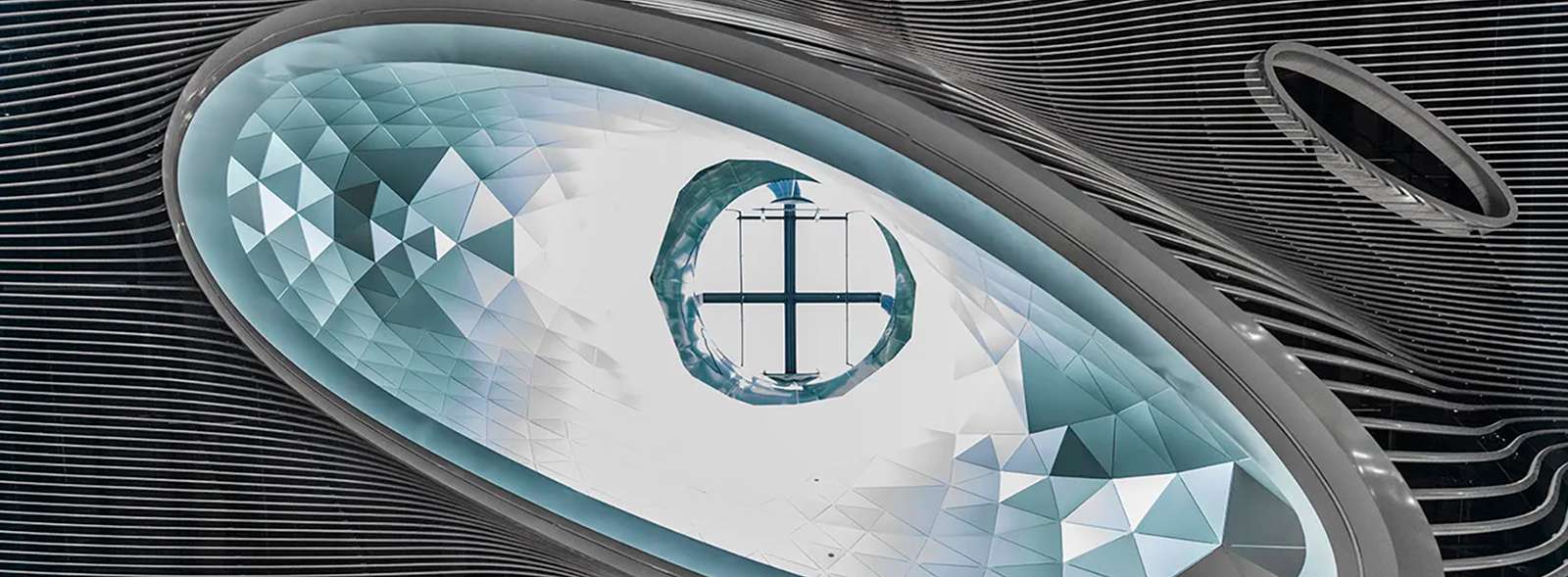
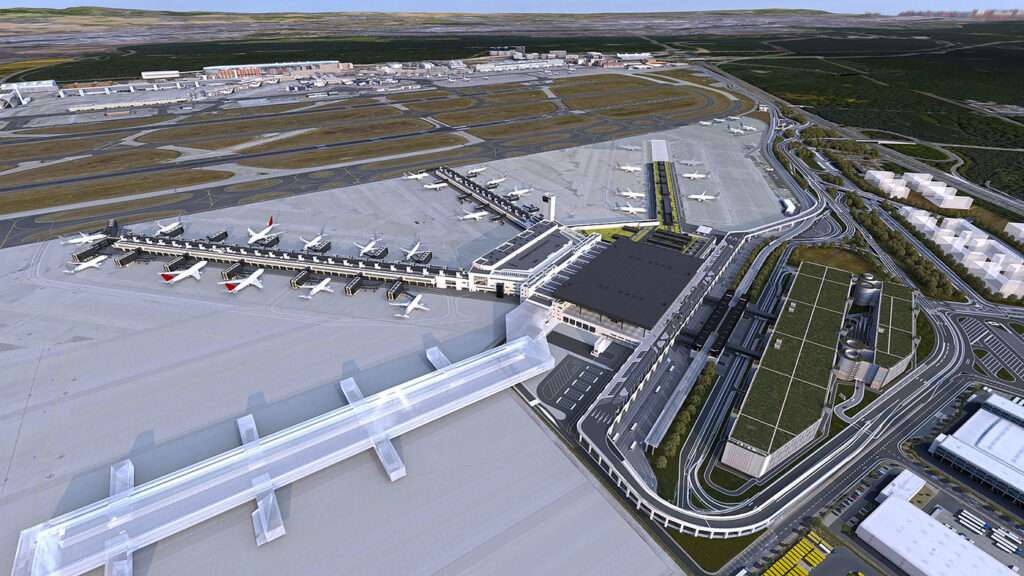
Frankfurt Airport officially opened its new Terminal 3 in April, marking the completion of a decade-long construction phase. The expansion serves as a critical gateway to the southern side of the aviation hub and provides capacity for approximately 19 million passengers annually. While architect Christoph Mäckler designed the main structural envelope of the terminal, the architectural firm LAVA delivered the 6,000-square-meter “Marketplace” within the secure zone to transform passenger transitions into a curated spatial experience.
The design team at LAVA utilized digital pedestrian simulations to analyze movement patterns before finalizing the layout of the commercial and leisure areas. This data-driven approach identified intuitive paths and potential congestion points, allowing the team to position facilities strategically. The resulting floor plan organizes the space into a series of “islands” constructed from terrazzo. These organic, circular forms host dining areas, lounges, and information desks, acting as reef-like sanctuaries that direct the flow of travelers during peak operational hours.
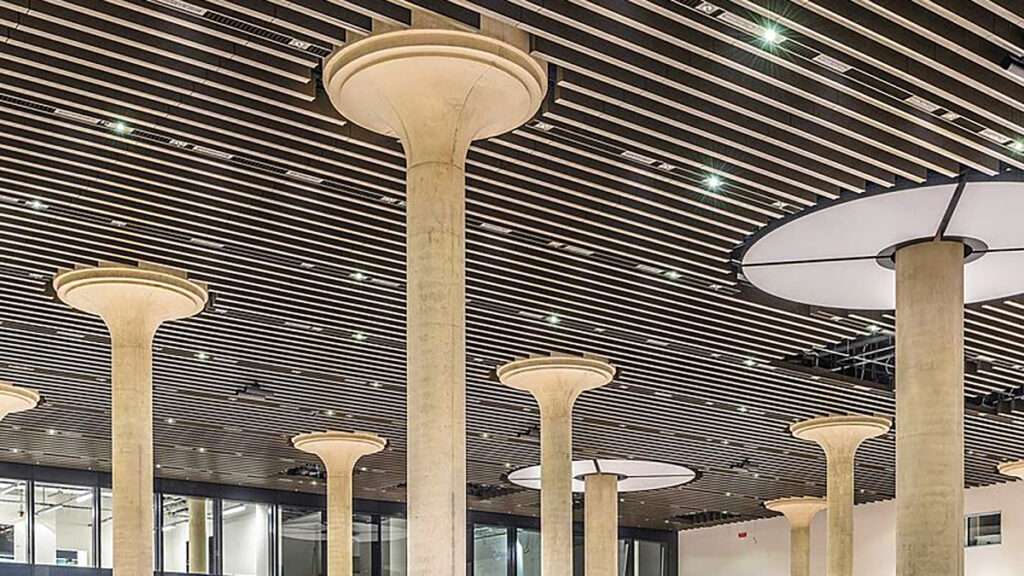
Above these islands, a complex parametric ceiling system defines the character of the interior. The installation comprises approximately 18,000 meters of aluminum tubing, which technicians bent on-site into 3,000 distinct shapes using CNC machinery. Steel rods and slats suspend this metallic cloud from the existing primary beams. The undulating surface tracks the main architecture of the movement paths below, creating a visual wayfinding system that synchronizes the overhead volume with the floor-level program.
Three massive funnel-shaped structures punctuate the ceiling and extend downward to interface with skylights. These conical geometries perform a critical technical role by harvesting and reflecting exterior sunlight into the core of the marketplace. By concentrating the full solar spectrum onto specific seating “islands” rather than providing uniform artificial illumination, the design assists passengers in regulating biological rhythms and mitigating travel-related fatigue. This integration of light and geometry reinforces the terminal’s identity as an urban-scale public square rather than a purely functional transit corridor.
LAVA partner Alexander Rieck expresses the intention to create an “unforgettable space” that calms emotions and relaxes the senses through pedestrian simulation and light guidance.

The main terminal buildings utilize an 18-meter-high glass envelope to maintain a constant visual connection with the airfield and surrounding context. This transparency supports the urban character envisioned by Christoph Mäckler, where lobbies and boarding piers function as city streets or plazas. The combination of Mäckler’s civic-minded shell and LAVA’s fluid interior interventions addresses the logistical demands of high-volume international transit while prioritizing the physiological comfort of the individual traveler.
✦ ArchUp Editorial Insight
The interior reorganization of Frankfurt Airport Terminal 3 represents a sophisticated shift in transport infrastructure design, moving away from rigid corridors toward fluid, archipelago-style layouts. By employing digital pedestrian simulation, the design team at LAVA optimizes operational efficiency while simultaneously creating decompression zones. The use of parametric modeling for the aluminum ceiling system and light-harvesting funnels demonstrates how technical materiality can serve biological needs, specifically circadian alignment for long-haul travelers. This project highlights a growing trend where major transit hubs adopt the spatial logic of the public realm, treating circulation as a civic sequence rather than a logistical necessity.
Project Team: Christoph Mäckler (Main Terminal Architect); LAVA – Laboratory for Visionary Architecture (Marketplace Interior Design); Alexander Rieck (LAVA Partner). Location: Frankfurt, Germany.
Project Notes: Terminal opened in April; construction spanned ten years; features 18,000 meters of CNC-bent aluminum tubing; serves 19 million passengers annually.