Turin’s Modern Art Museum Will Reopen Its Skylights and Expose Its Full Collection to the Public

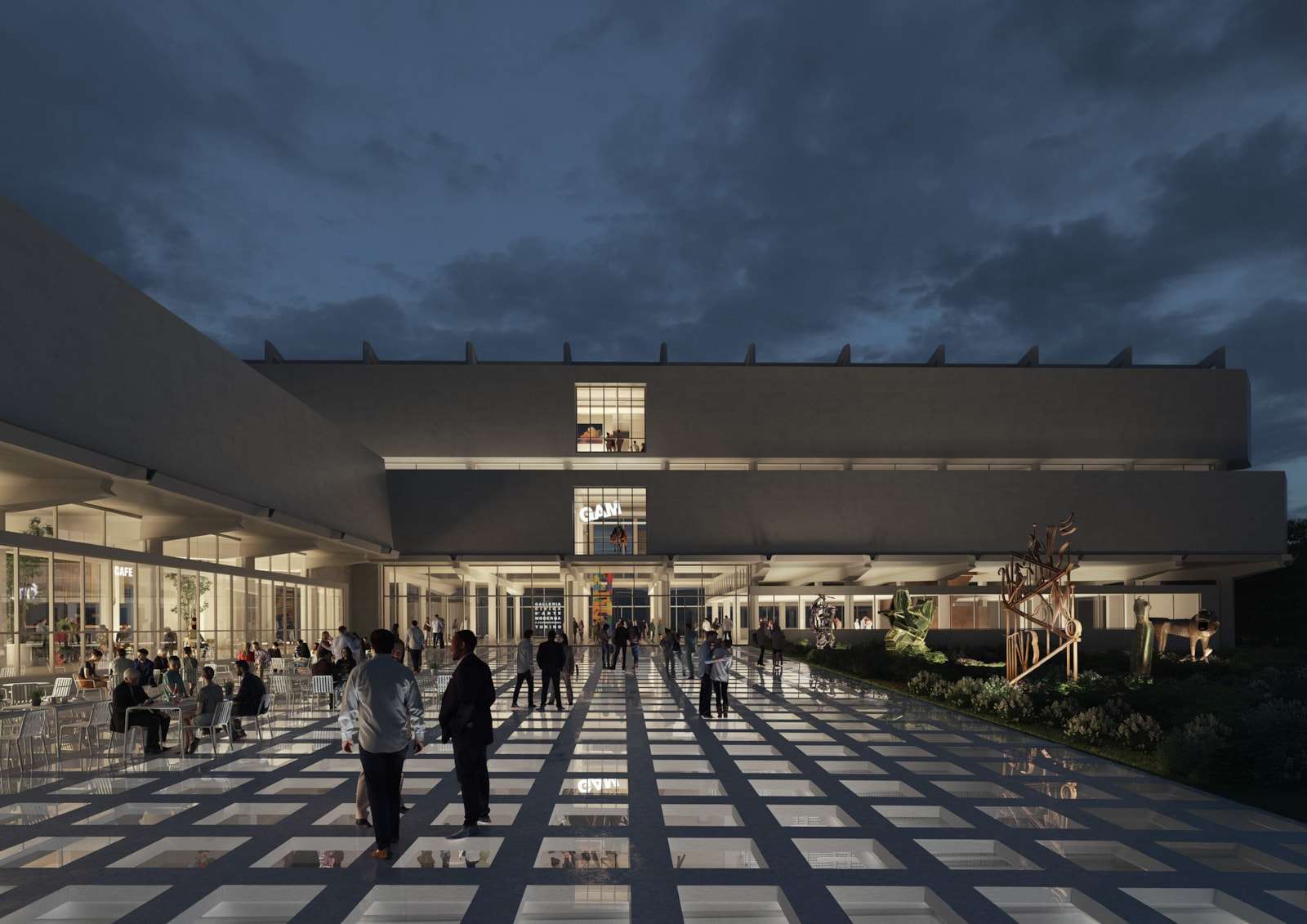
Turin’s Civic Gallery of Modern and Contemporary Art, known as GAM Torino, will undergo a major renovation that reopens its closed skylights, removes decades of internal walls, and cuts a public plaza directly through the ground floor of the building. The design also converts the basement into open storage a space where visitors can see the museum’s entire collection, not just the works chosen for display. The intervention responds to a public competition decided in December 2025.
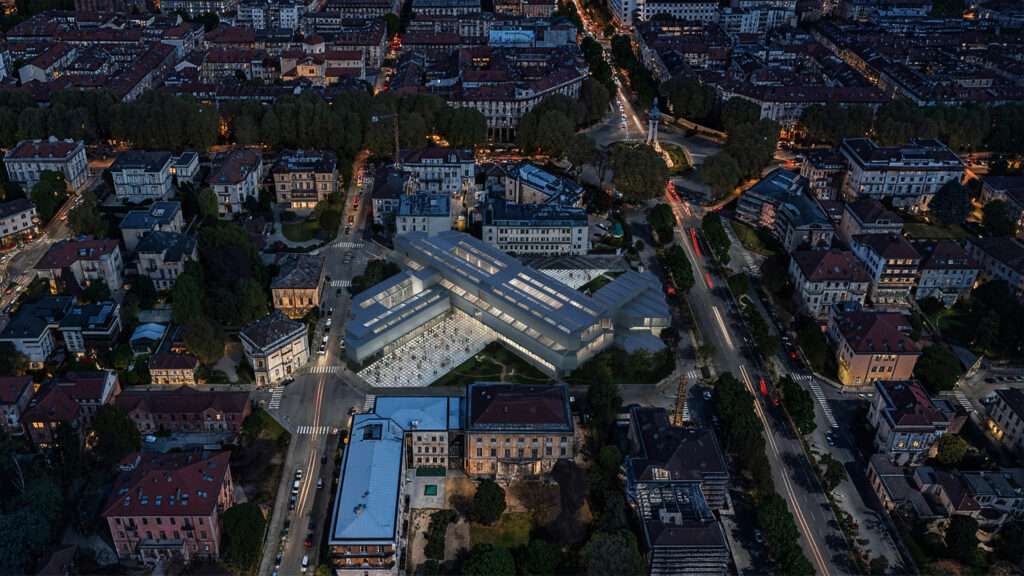
The existing building dates from 1959. Its main volume sits diagonally within the urban block, breaking with Turin’s grid of straight streets. This diagonal orientation gives the interior galleries uniform daylight throughout the day. The original design also used a free plan a layout with few fixed walls to allow exhibitions to change shape over time.
Over the decades, this clarity faded. Safety upgrades added external fire escape stairs. Skylights closed in favour of artificial lighting. Internal partitions multiplied. The surrounding gardens grew fenced-off and covered in bamboo. The building became more fragmented and more sealed off from the city around it.
Reopening the Skylights and Removing Interior Walls
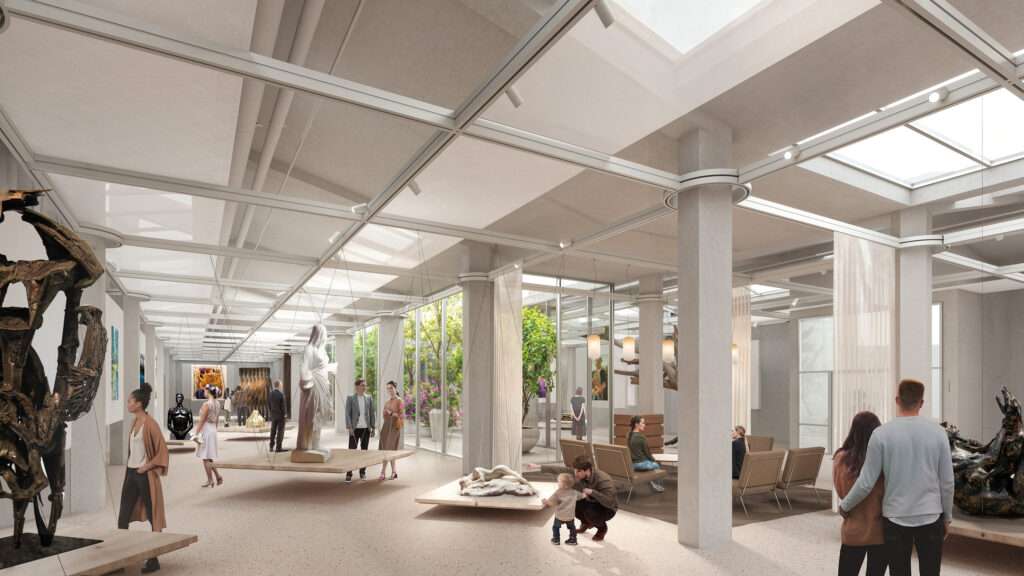
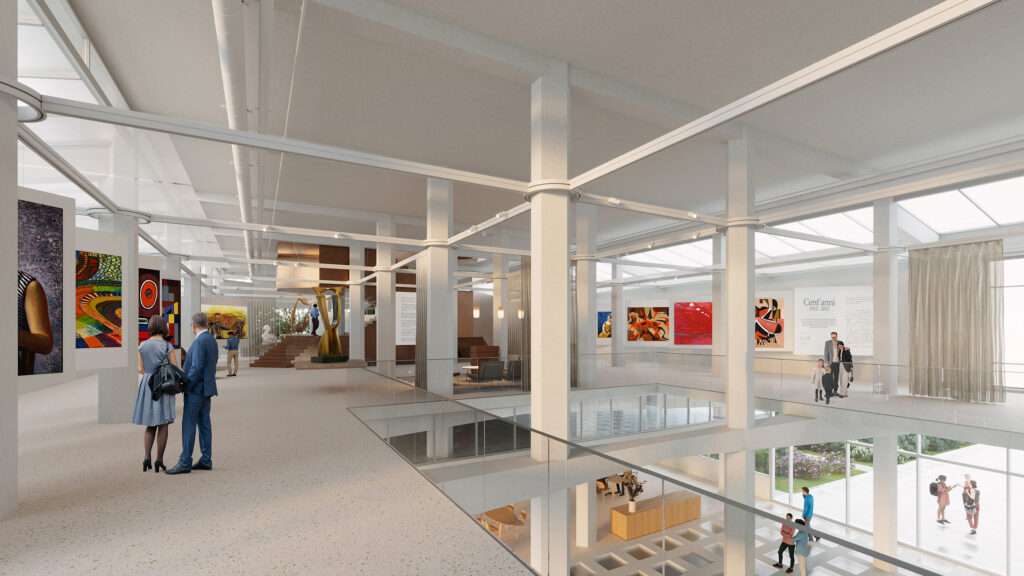
The new design reverses many of these changes. The team will reopen the skylights, discard almost all internal partitions, and restore the original openness of the galleries. The external fire escape stairs will disappear. A new escape staircase will move inside the building, mirroring the position of the original staircase in the floor plan.
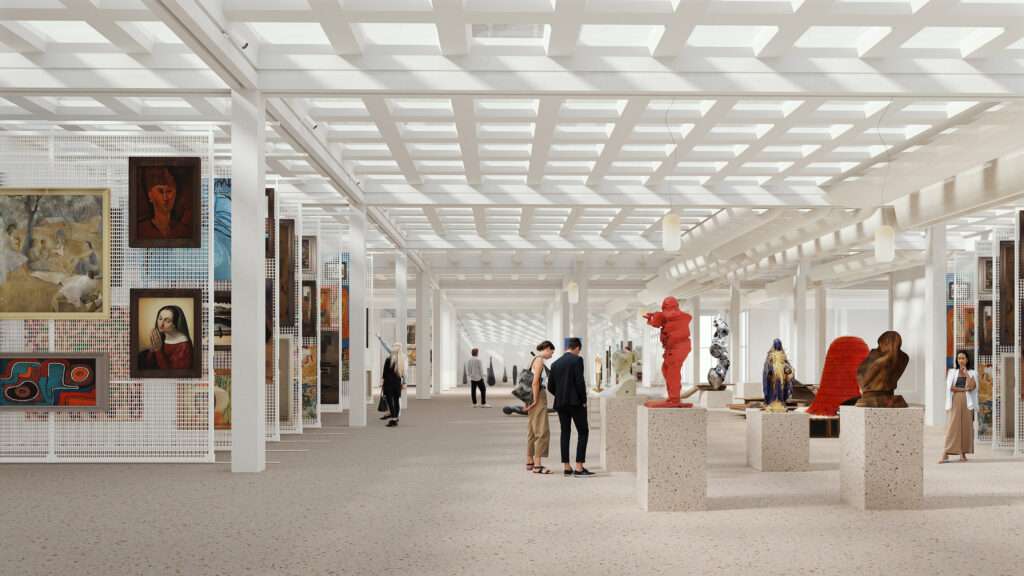
Inside the reopened galleries, a grid of railings will span between the existing structural columns. From this grid, staff can suspend display walls, dividing curtains, and other exhibition modules from above. In practice, this means the museum can reshape its rooms quickly and repeatedly without touching the floor or the ceiling. The system supports flexible curation while protecting the clarity of the original space.
Open Storage and a Diagonal Public Plaza
The most significant change will happen at ground level and below. The basement will convert into open storage. Visitors will glimpse behind the scenes of daily museum work and view the entire collection, not only the fraction typically on display. This approach follows a growing international trend in architecture for museums, alongside comparable large-scale open storage facilities in Rotterdam and London.
Above the basement, the design opens a wide diagonal passage through the museum grounds, passing directly underneath the main gallery volume. Large glazed surfaces bring daylight into the storage below and let visitors see down into it. At night, the storage lighting glows upward through the plaza floor. This passage functions as more than a shortcut it doubles as a public plaza open to a range of civic activities.
The diagonal cut also inserts the museum into the shortest pedestrian route between Turin’s city centre and both the Polytechnic University of Turin and the exhibition spaces of OGR Torino. In turn, the museum becomes a working piece of the city’s public realm rather than an isolated cultural object.
Reused Furniture and Improved Environmental Performance
Inside the building, most of the furniture will come from the original 1959 fittings. The team will restore items still in use and reintroduce pieces held in storage for decades. This choice honours the original interior and reduces the environmental cost of the renovation. The team will also upgrade the glass skylights for better thermal performance and reuse materials from demolished elements in new construction work.
Spatial Logic and Programmatic Intelligence
The intervention operates on three levels at once infrastructural, curatorial, and civic without ever adding new mass to the site. Instead, it subtracts. Removing partitions, external stairs, and closed ceiling planes recovers the free plan and the daylight logic that defined the 1959 building. The suspended railing grid is a clever compromise: it grants exhibition flexibility without inserting fixed walls that would compromise the recovered volume. The diagonal ground-level plaza is the sharpest move. It converts a museum’s most controlled zone its threshold into shared public space, and it stakes the survival of the institution on becoming a route people actually use. Whether the storage-as-spectacle model sustains scholarly access remains the open question.
✦ ArchUp Editorial Insight
The project reads as a careful act of editing rather than authorship. It trusts the 1959 building enough to strip away six decades of accumulated defensive layers, and it wagers the museum’s future relevance on porosity: a diagonal plaza, visible storage, a suspended display grid that never touches the floor. This is museum design as urban infrastructure. Yet the counter-reading is uncomfortable. Open storage risks becoming a photogenic gesture that flattens curatorial judgment into visual abundance. A public shortcut through a museum solves footfall metrics but also blurs the distinction between civic space and cultural institution a distinction that has historically protected art from the pressures of pure circulation and consumption.
Project Team: MVRDV and Balance Architettura (design), with EP&S Group (engineers) and Stratospherica (public space experts). Original 1959 building designed by Carlo Bassi and Goffredo Boschetti. Location: GAM Torino, Turin, Italy.
Project Notes: The team won the design through a public competition decided in December 2025 and revealed the full proposal at a public event and exhibition. Fondazione Torino Musei supported the project, with funding from Fondazione Compagnia di San Paolo. Renovation work is projected to begin in the second half of 2027. MVRDV founding partner Winy Maas leads the design side.