Religious Context and Environmental Performance

Spatial Orientation and Context
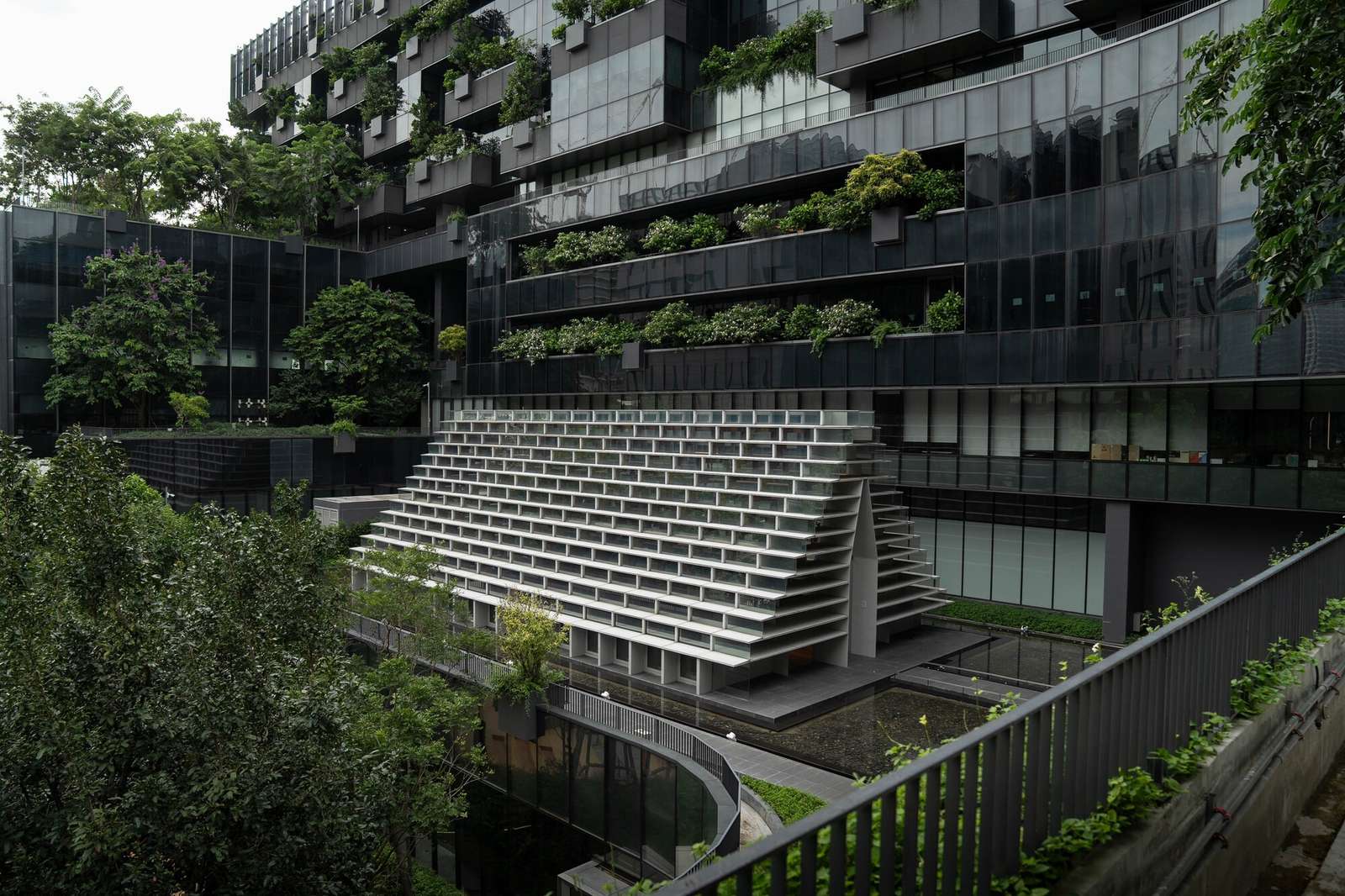
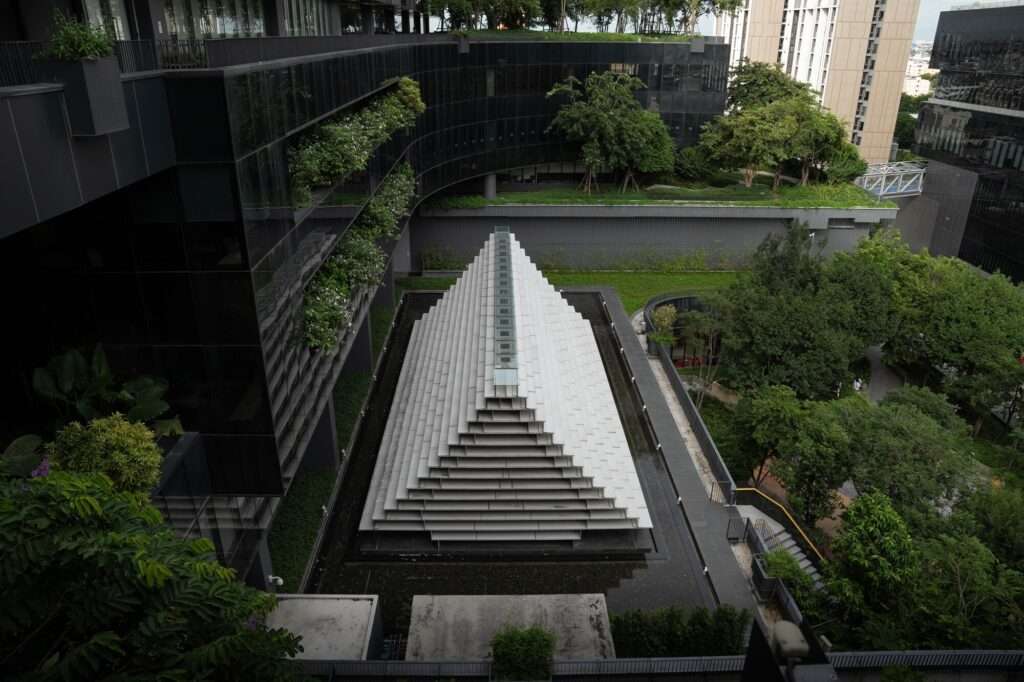
The Glass Pavilion is positioned above the garden surface, with its primary axis oriented toward the nearby Great Stupa of Wat Dhammamongkol Thawornbunyananawihan Temple. This orientation establishes a direct relationship between the building and the adjacent religious landmark, linking the architectural space to its surrounding visual context.
Architectural Composition and Internal Organization
The meditation hall is conceived as a unified spatial volume based on the simplification of fundamental architectural elements. At the same time, natural light plays a central role in shaping the interior experience by organizing the perception of space and defining its spatial character.
Historical Formal References
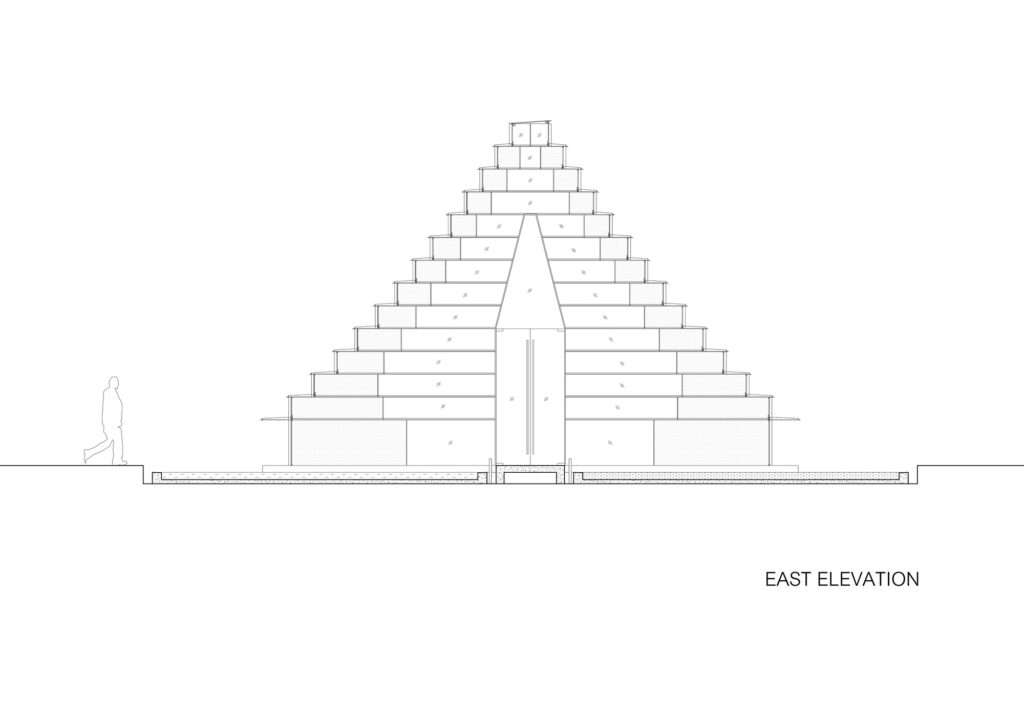
The architectural massing is derived from the integration of Vihara roof characteristics with the stepped forms of Chedis, reinterpreted through a simplified contemporary language. The proportions draw from the Vihara roof model of Wat Phra Mongkhon Bophit from the Ayutthaya period, as well as the stepped Chedis of the Phaya Mangrai era, informing both interior and exterior design compositions in an integrated manner.


Interior Organization and Material Language
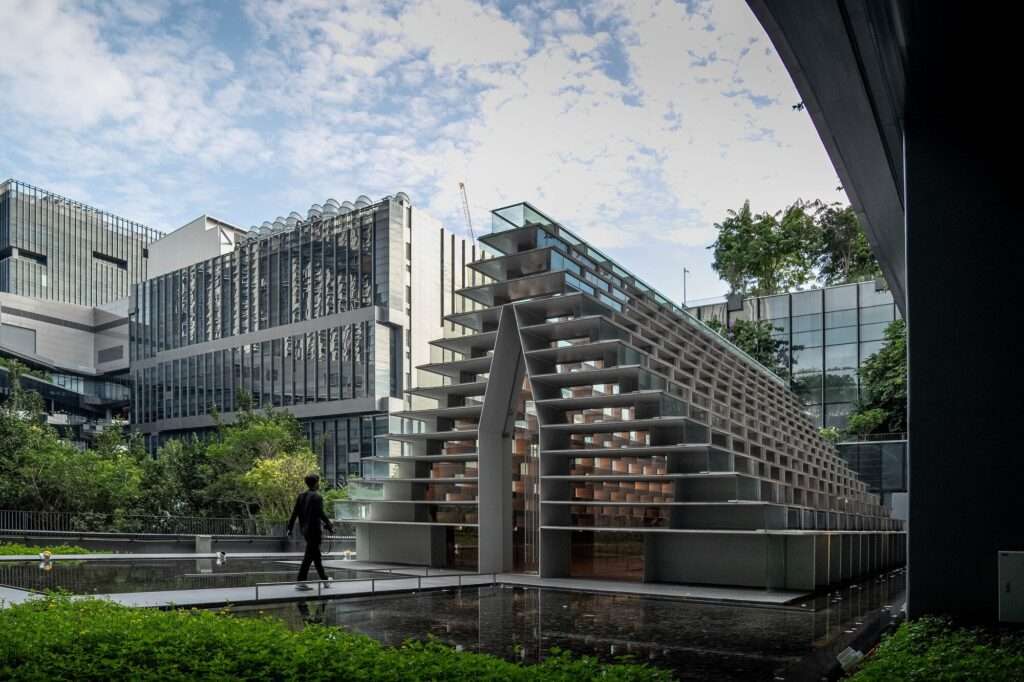
Inside, the structural planes are integrated with a lotus-bud-inspired composition, creating a visual organization of space around this referential form. The reflection of natural light across pale gray steel surfaces generates a constantly shifting perception of the interior, while these surfaces interact with the warm tones of teak wood, producing a balanced relationship between contrasting materials within the space.
Environmental Performance and Façade Orientation
The eastern façade utilizes reflective Low-E glass to reduce heat gain from direct solar exposure while maintaining visual transparency toward the garden. In contrast, the western side benefits from natural shading provided by adjacent buildings, while the multilayered glass roof contributes to minimizing heat transfer into the interior.
Passive Ventilation and Thermal Management
Operable lower glass walls enable natural ventilation throughout the pavilion, supporting direct airflow across the interior space. The air-conditioning system is designed to cool only the occupied lower zone, while warmer air naturally rises through thermal stratification. In addition, the building’s placement above a shallow water surface helps moderate the surrounding temperature during the day by reducing the impact of thermal radiation.

✦ ArchUp Editorial Insight
The Glass Meditation Pavilion can be interpreted as a regulatory negotiation between the requirements of its adjacent religious context, the programming demands of a public garden, and thermal-performance constraints within an urban environment connected to Wat Dhammamongkol Thawornbunyananawihan Temple. The primary catalyst was the transformation of a temple-civic function into a publicly accessible space elevated above the garden level while maintaining visual alignment with the stupa as a mechanism of spatial compliance. Regulatory frictions emerge from limitations on solar heat gain, glazing performance standards, and material cost constraints, resulting in the adoption of Low-E glass on the eastern façade, natural shading strategies on the western side, and multilayered roof assemblies. The resulting spatial condition operates as a synthesis of Vihara and Chedi references within a single volume, where natural ventilation, localized cooling of occupied zones, and the thermal effects of the water surface function as mechanisms of heat distribution and use management.