Grand Canal Gateway Bridge in Hangzhou A Dialogue Between Heritage and the Future

Introduction
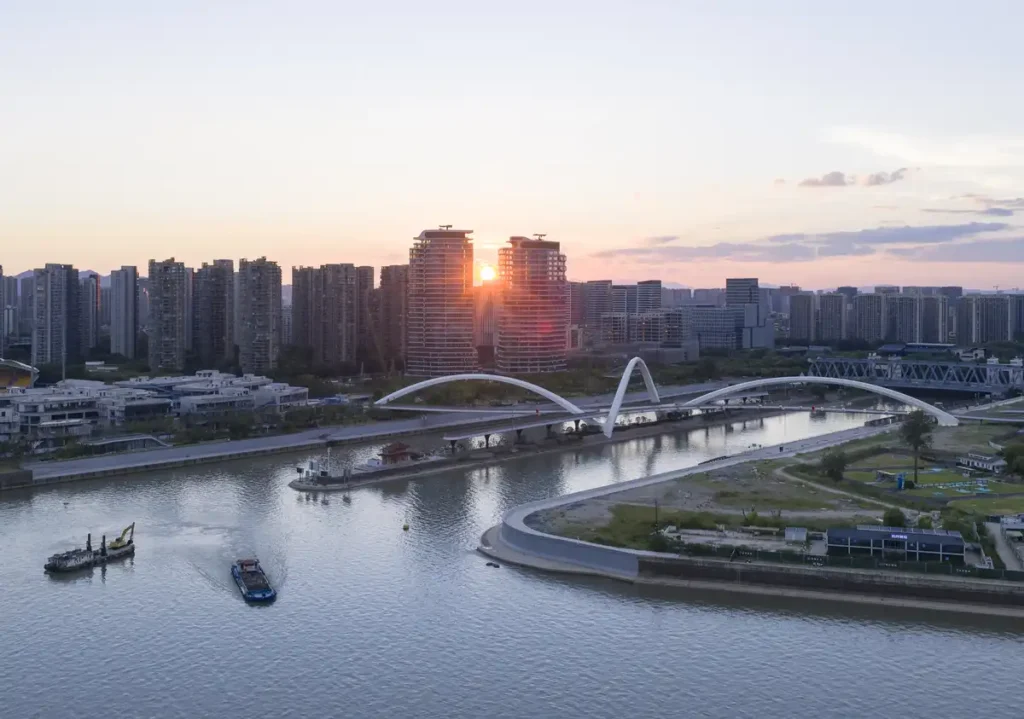
At the heart of Hangzhou, where history meets modern urban life, the Grand Canal Bridge Gateway redefines the city’s connection with water. More than a simple crossing, it serves as a civic space that brings people closer to the river. The bridge also revives the shared memory that helped shape the city’s identity.
Architectural Concept
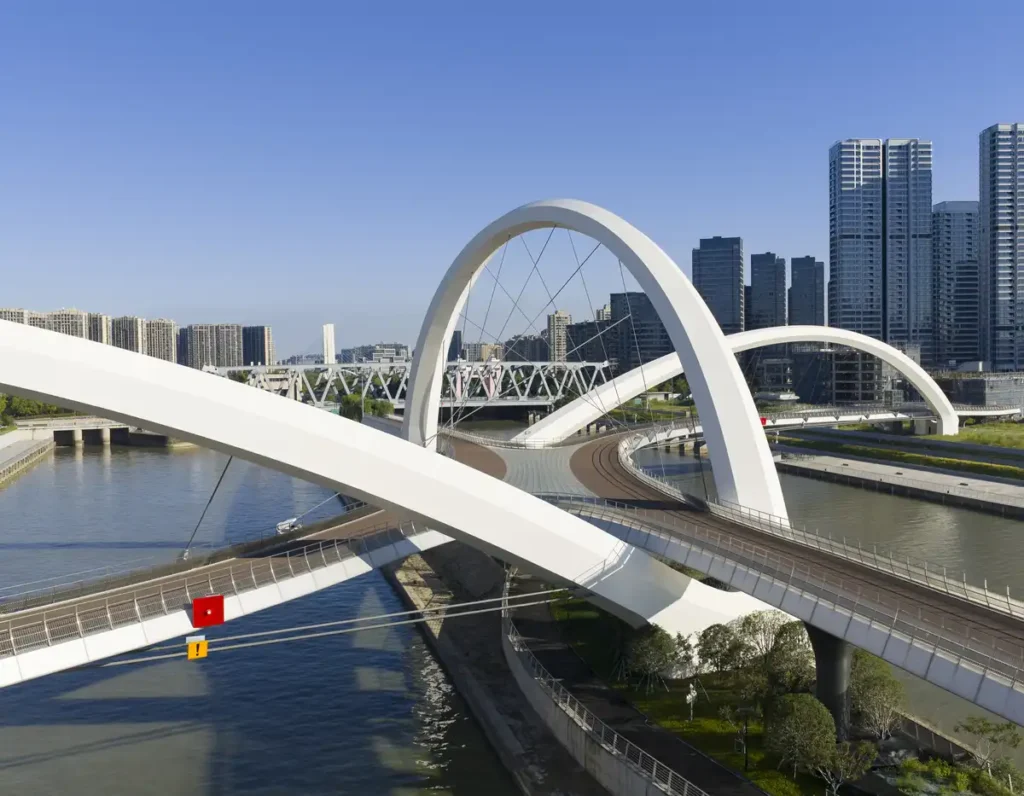
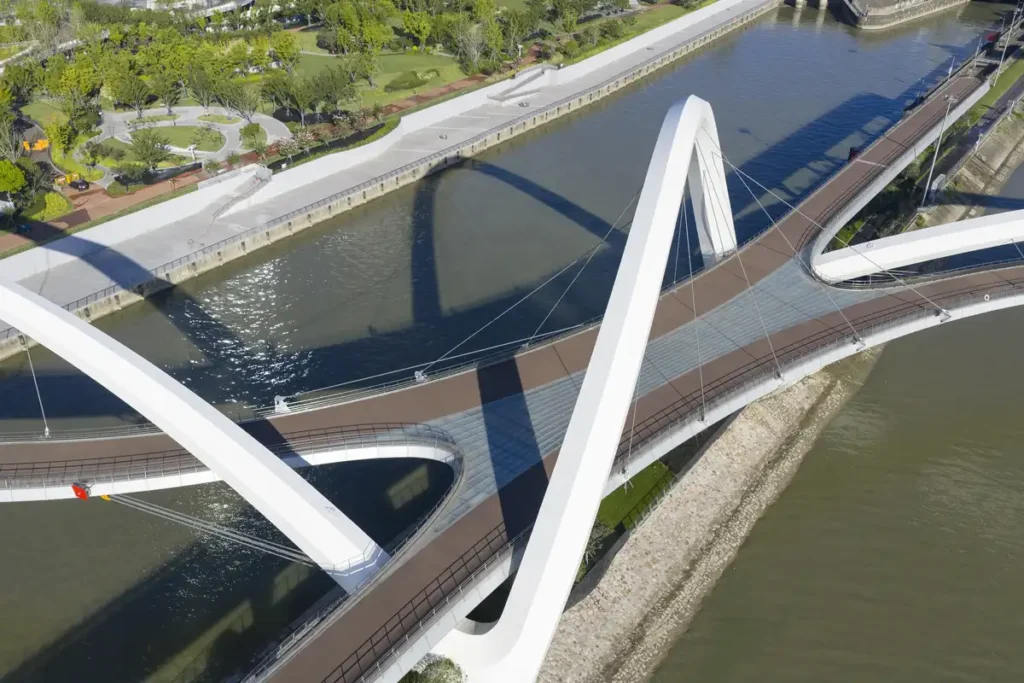
The design views the bridge as a connector rather than a divider. Inspired by the fluid motion of water and the craft of traditional Chinese silk embroidery, the structure takes shape as an interwoven metallic fabric. It links the canal’s banks, symbolically joining the past with the future.This intricate composition does not merely express engineering elegance; it reflects the interdependence of community and urban life. The bridge embodies a broader architectural philosophy connection, balance, and continuity turning structure into meaning.
Form and Spatial Expression
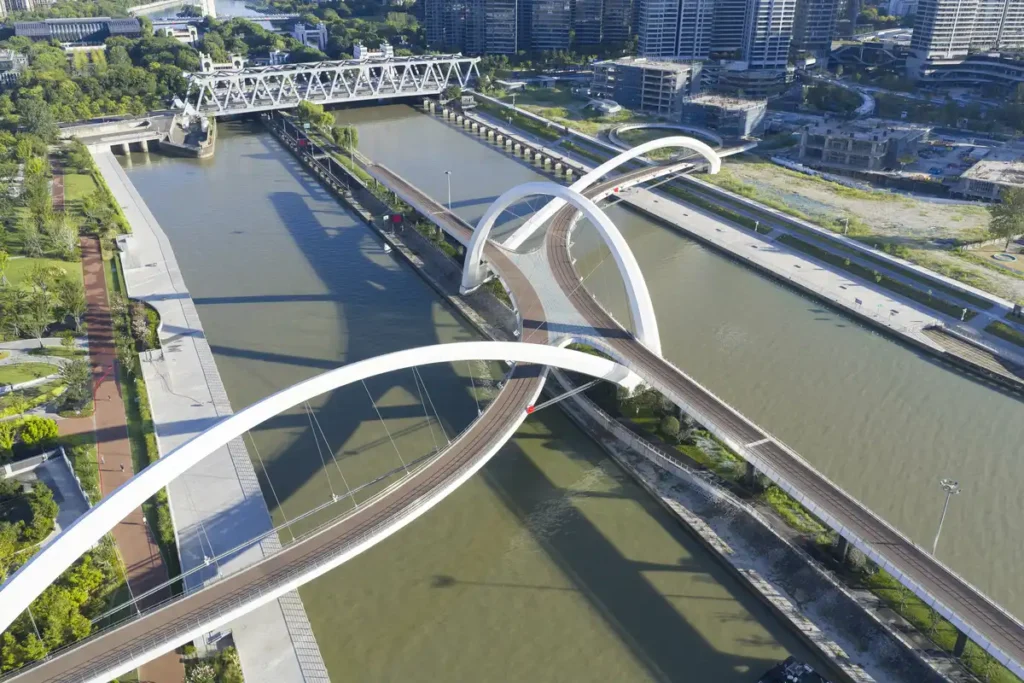
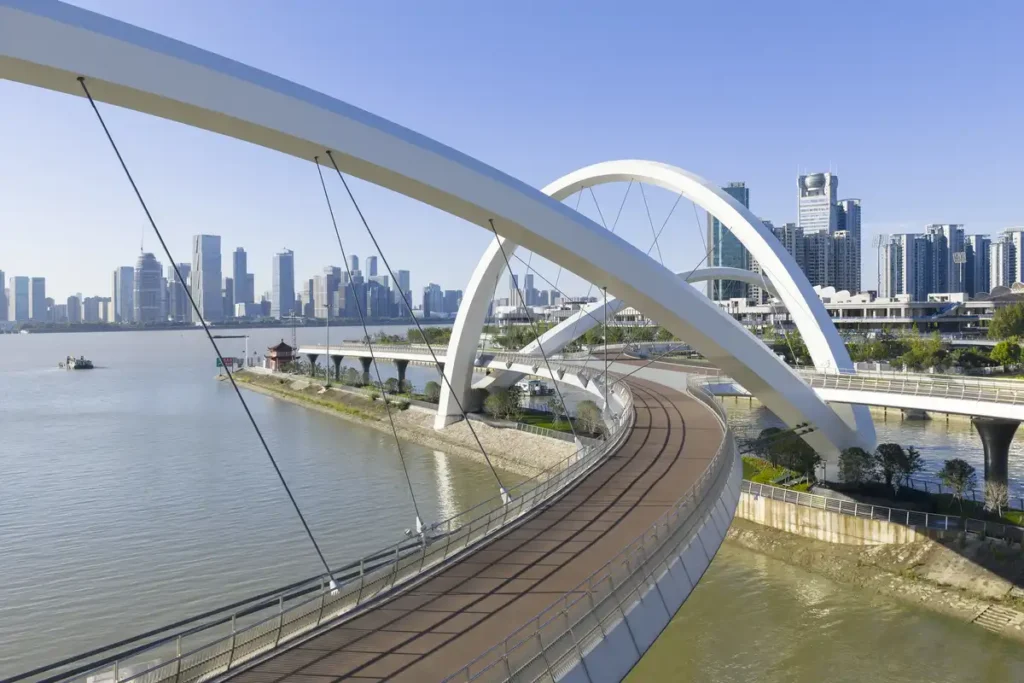
The bridge’s curvilinear geometry evokes the natural rhythm of flowing water, giving it a sense of motion even in stillness.
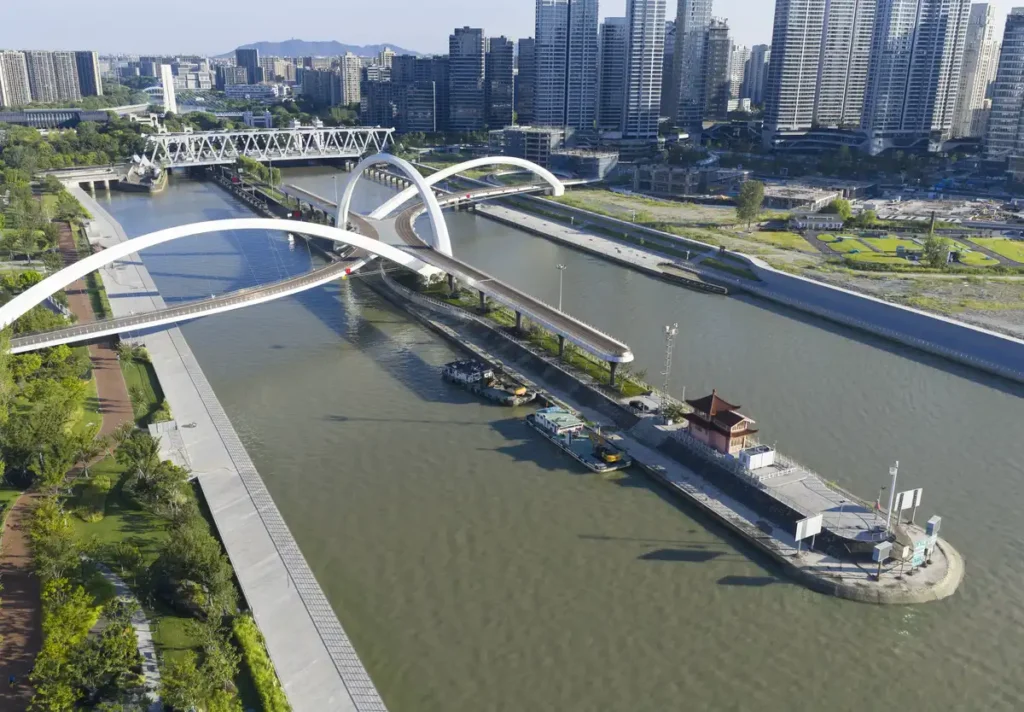
Three intersecting arches create a system that is visually light yet structurally strong, balancing transparency and stability. The interplay of material and light immerses pedestrians in the landscape, offering changing views shaped by time, weather, and illumination. Open decks and extended platforms encourage people to pause and reflect, turning a simple crossing into a contemplative journey. The bridge becomes a place of observation and connection rather than mere movement.
Environmental Integration
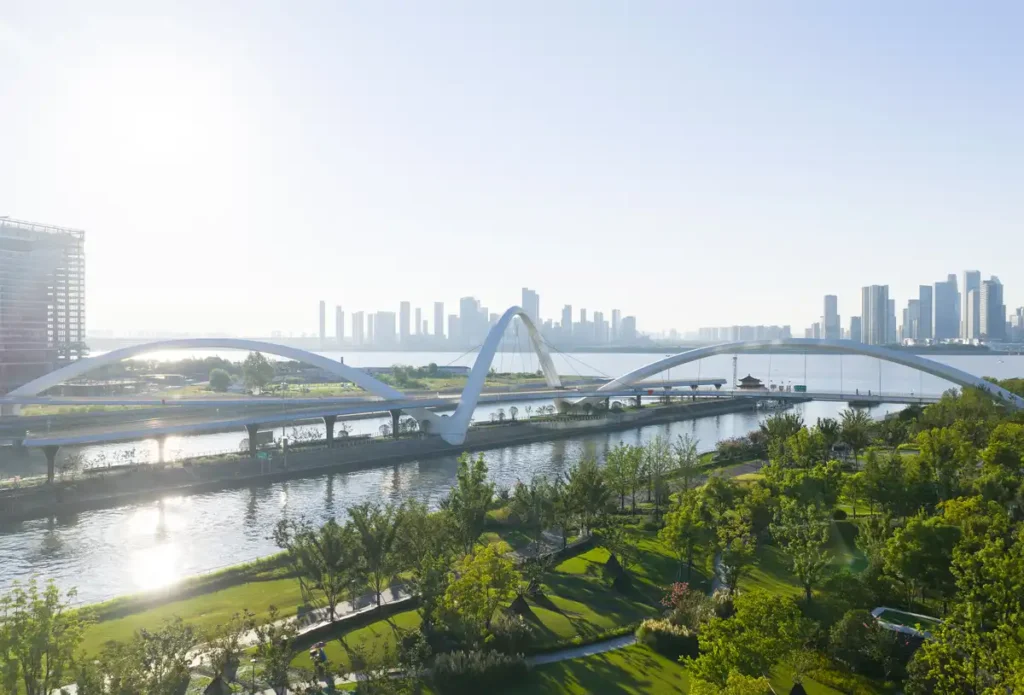
The bridge’s orientation and form were guided by the surrounding natural and climatic conditions, minimizing the impact of wind and maintaining visual harmony with the canal’s historic setting.
Locally sourced materials and renewable-powered lighting reinforce its environmental responsibility. By night, the bridge transforms into a ribbon of light, reflecting gently on the water’s surface and bringing a poetic presence to the urban nightscape.
Every element contributes to an architecture that merges sustainability with cultural continuity, emphasizing coexistence rather than dominance.
Philosophical Vision
Beyond its physical structure, the bridge carries a deeper intellectual message: it represents a symbolic passage from tradition to modernity, from engineering to art, from function to emotion.
It unites heritage and innovation, expressing how design can embody both strength and subtlety, permanence and change.
In this sense, the bridge becomes a form of urban storytelling, articulating the collective identity of Hangzhou while imagining a forward-looking architectural language rooted in its timeless landscape.
Conclusion
The Grand Canal Bridge Gateway is more than an infrastructure project it is a cultural and spatial experience. By merging form, technology, and meaning, it transforms a utilitarian function into an architectural statement that restores dialogue between people, water, and the city.
It stands as a new urban symbol of connection, reflection, and renewal, celebrating Hangzhou’s enduring relationship with its canal while looking confidently toward the future.
Project Summary
| Element | Description |
|---|---|
| Location | Hangzhou, China |
| Typology | Pedestrian and cyclist bridge |
| Architectural Character | Fluid, sculptural, inspired by the movement of water and textile craft |
| Design Intent | To reconnect both riverbanks through a human-centered and sensory experience |
| Core Idea | Transforming crossing into a cultural and reflective journey |
| Environmental Strategy | Harmony with natural topography, use of renewable energy and local materials |
| Aesthetic Outcome | A luminous, lightweight structure blending art and engineering, embodying the spirit of the city |
✦ ArchUp Editorial Insight
The project offers an architectural experience where fluid geometry meets urban functionality, forming organic bridges that link two banks through a sequence of light yet robust structures. The design employs interwoven arches as both structural and aesthetic elements, generating open spaces that strengthen the sense of connection between people and nature. It presents a critical reflection on architecture as a social bridge beyond physical passage inviting a sensory and intellectual encounter. Ultimately, the project succeeds in redefining the relationship between engineering and landscape through refined simplicity and thoughtful structural awareness.
For verified updates on global activities, visit ArchUp’s architecture events section, featuring documented coverage of leading exhibitions and conferences, along with continuously updated architecture competitions and official results.