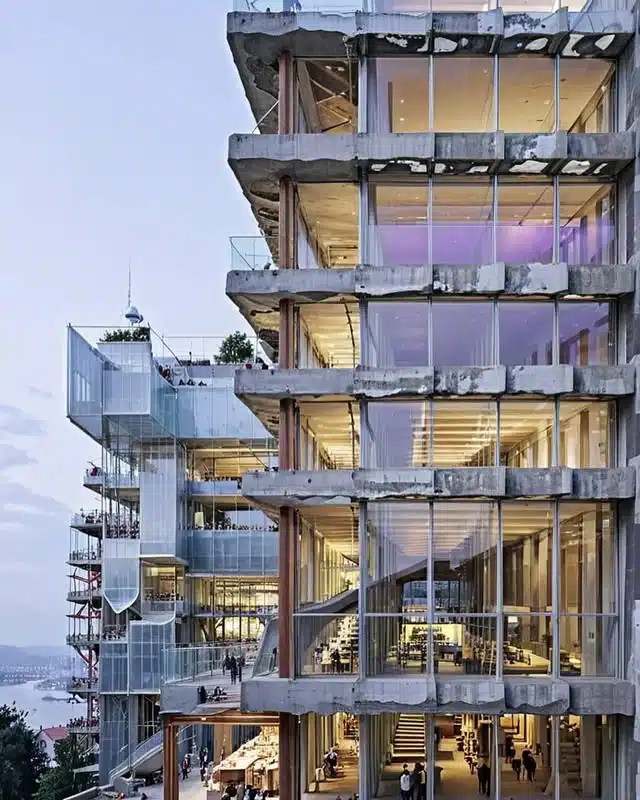
The Hangzhou Empathy Museum Project: Redefining the Relationship Between Light and Interior Space

Transforming Architectural Remnants into an Inspiring Space
Sometimes, architectural creativity emerges from designers’ refusal to settle for what previous structures have left behind. This phenomenon becomes evident when abandoned buildings or neglected architectural remnants are transformed into vibrant and expressive spaces, making the architectural experience an integral part of the place’s narrative.
Exterior Design: The Play of Light and Curves
The building’s exterior is one of the most striking features in this type of project. Using metallic materials such as stainless steel and anodized aluminum in wave-like formations creates continuous curves that infuse the building with vitality and a dynamic visual dimension. The viewing experience changes throughout the day depending on the light’s direction, making reflections an inseparable part of the interior design experience.
Breaking the Boxy Routine
Beyond aesthetics, these curves provide a visual rhythm that contrasts with the conventional boxy blocks commonly found in residential neighborhoods, creating an appealing contrast and giving the building a distinctive personality within its surroundings. Thus, the space transforms from a mere abandoned structure into a contemporary artistic experience that redefines the relationship between the building, light, and place.


Compact Design and Its Impact on the Architectural Experience
Although the project’s total area does not exceed 1,628 square meters, with only 570 square meters above ground level, this physical constraint has become one of its design strengths. The limited space necessitates that every area justifies its existence, prompting architects to think carefully about how each square meter is utilized.
Making Use of Depth Instead of Sprawl
Instead of expanding horizontally, the design emphasizes depth through two lower levels dedicated to exhibition halls, allowing for efficient space usage and adding a sense of exploration. In contrast, the upper floors are used for reception areas and more intimate gathering spaces, providing a balance between public and private functions within the building.
Design Philosophy Under Spatial Constraints
In this way, the spatial limitation becomes an integral part of the design philosophy, where every element in the building enhances the visitor’s overall experience and turns each space into an opportunity for thoughtful architectural interaction, rather than merely filling space without purpose.


Facing the Challenge of Underground Halls
One of the main issues facing most underground exhibition halls is the visitor’s sense of isolation due to shadows and the lack of natural light. Enclosed spaces without windows often create the feeling of a dark cellar, diminishing the experience of interacting with artworks and making the visitor feel disconnected from the outside world.
Strategies for Introducing Natural Light
To address this challenge, a vertical void runs through the building, gradually narrowing as it rises toward the upper floors. This construction design allows natural light to penetrate the lower exhibition halls, reducing the sense of isolation and creating a more balanced experience between interior and exterior spaces.
Enhancing the Visitor’s Sensory Experience
In this way, even two floors below street level, visitors do not feel completely cut off from daylight and the sky. This demonstrates how intelligent architectural design can transform spatial constraints into an opportunity to enhance the sensory and perceptual experience, rather than settling for the traditional appearance of underground halls.


Balancing Openness and Intimacy
Interior design plays a pivotal role in guiding the visitor’s experience, balancing open and intimate spaces. The first floor is designated for reception areas and relaxation zones, preparing visitors before they move on to the exhibition halls, enhancing their sense of comfort and setting the stage for the artistic experience.
Design Details and Functional Features
On the second floor, staircases are concealed behind decorative panels that add a visual dimension while helping diffuse natural light. These details not only enhance aesthetics but also aid in controlling lighting and smoothly directing the visitor’s movement throughout the building.
Spaces for Reflection and Calm
Upon reaching the third floor, a pier-like platform emerges, providing an ideal resting area for visitors who need a brief pause from viewing the artworks. This space encourages contemplation and reassessment of the experience, adding a psychological and emotional layer to the interaction with the place.


Material Palette: Thoughtful Restraint and Elegance
The selection of materials in the building reflects the meticulous design philosophy, combining simplicity and elegance simultaneously. Stainless steel and aluminum are used alongside aluminum meshes, stone panels, and rocks in various parts of the building, creating a cohesive and diverse material palette. See material datasheets for details.
Texture Variation and Light Interaction
Although the materials do not have a showy character, they provide subtle variations in texture and dynamic interaction with natural and artificial light. This diversity prevents spaces from falling into monotony and makes every corner of the building a distinctive visual experience.
Design as a Reward for Close Observation
This approach can be described as silent design; it does not impose itself forcefully, but it rewards visitors who spend time in the space exploring the details. Thus, every material choice becomes an element that enriches the architectural experience in a precise and thoughtful way.


Social Purpose as a Motivating Element
This project is distinguished by its clear social and cultural purpose. The museum is not created to serve personal interests or for showmanship, but is designed as a space that serves the community, focusing on contemporary art exhibitions that constantly evolve and renew. See more events and exhibitions.
Enhancing Human Connection
The museum’s name, “Empathy Museum,” reflects a clear philosophy: creating a human bond and connection between the visitor and the space, rather than merely displaying artworks behind glass. This concept highlights how architectural space can be used to enhance social interaction and the visitor’s emotional experience.
Architecture as a Cultural Medium
By combining social purpose with thoughtful design, the building becomes more than just a place for exhibition; it transforms into a cultural medium that connects people with art, allowing visitors to engage in an experience that goes beyond superficial viewing to become interactive and sensory.


The Renovation Journey: From Concept to Execution
The process of transforming the abandoned building into a fully integrated cultural space took three years, from the initial design in 2022 to its completion in 2025. This reasonable timeframe reflects the complexity involved in converting a raw, unfinished structure into a functional space for cultural and artistic use.
Multidisciplinary Collaboration
The project succeeded thanks to collaboration among experts from various fields, including curtain walls, construction, structural engineering, landscape design, lighting, and construction operations. This integration of disciplines explains the visual harmony in the final result and demonstrates how careful planning and coordination can enhance the quality of the architectural experience.
Design as a Gradual Process
The renovation can be seen as a gradual process, where every element of the building requires careful study and coordination across multiple specialties, transforming technical and structural constraints into opportunities for integrated architectural creativity.


Rethinking Abandoned Buildings
The significance of this type of architecture lies in its ability to transform unfinished or abandoned buildings from problems into opportunities. Instead of viewing them as worthless assets destined for demolition, architects can reimagine them as vibrant spaces that serve the community.
Opportunities Within Cities
Almost every city contains half-completed projects, remnants of economic plans, or market shifts, which are often demolished or left vacant. This reality challenges architects to think creatively about how to add new value to these voids.
Abandoned Buildings as Community Assets
The Hangzhou Empathy Museum demonstrates how precise design vision can turn these spaces into community assets. By integrating beauty, art, and culture, such buildings become attractions for visitors, adding aesthetic and civic value to the neighborhoods that host them.

✦ ArchUp Editorial Insight
Although the Hangzhou Empathy Museum project offers an intriguing architectural experience in terms of transforming abandoned buildings and utilizing light and interior spaces, certain aspects of the design raise questions from a practical and sustainability perspective. For instance, relying on underground halls with narrow voids may limit future flexibility and make maintenance and natural lighting an ongoing challenge. Additionally, the emphasis on curves and metallic materials adds a visual dimension but can increase costs and constrain the potential for repurposing the building for other functions.
On the other hand, the project can be regarded as a case study on how to convert unfinished buildings into usable spaces, while highlighting the need to integrate flexible strategies for future expansion or adaptation to changing cultural activities. Such a design provides an opportunity to learn how to balance aesthetic ambition with technical constraints and underscores the importance of foresight in material sustainability, circulation management within the building, and functional flexibility to avoid long-term limitations.