Uzbekistan’s Expanded Imam al-Bukhari Complex Opens With 65,000-Visitor Daily Capacity


Uzbekistan has completed a major expansion of the Imam al-Bukhari Memorial Complex near Samarkand. The redeveloped site now accommodates up to 65,000 visitors daily, a significant increase from its previous 12,000-person capacity. Located in Khartang village, the complex honors the 9th-century Islamic scholar Muhammad ibn Isma’il al-Bukhari.
Modern Islamic Architecture Meets Historical Significance
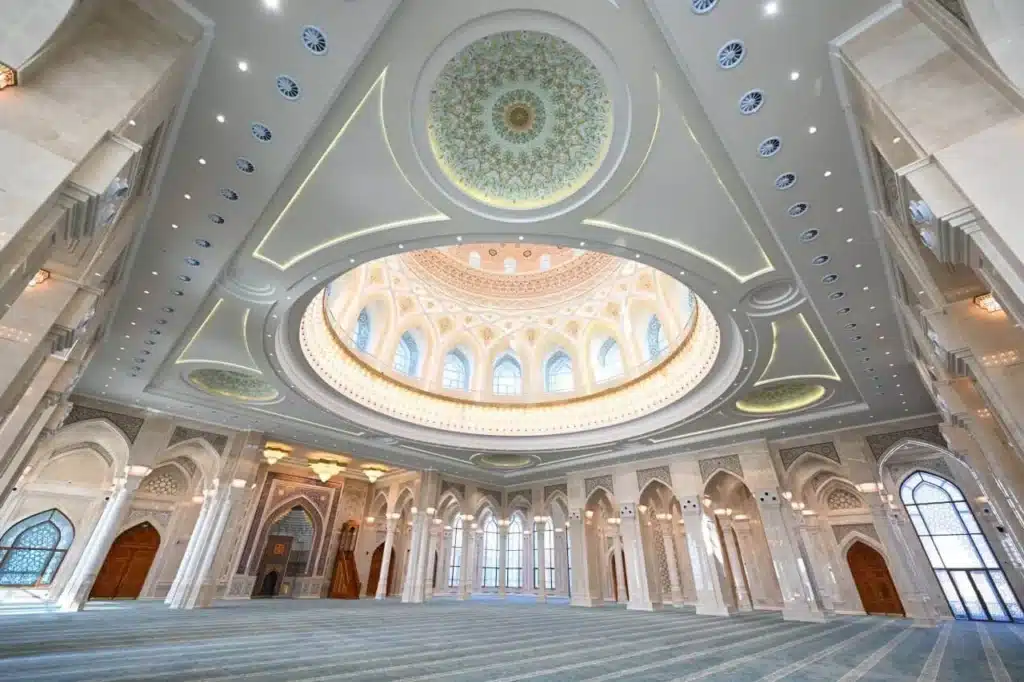
The architectural transformation combines traditional Islamic design elements with contemporary building techniques. Fourteen blue domes and 75-meter-high minarets define the skyline, creating a visual anchor for approaching pilgrims. Moreover, the central prayer space features a traditional iwan supported by 154 hand-carved columns crafted by artisans from Samarkand, Bukhara, Khiva, and Tashkent.
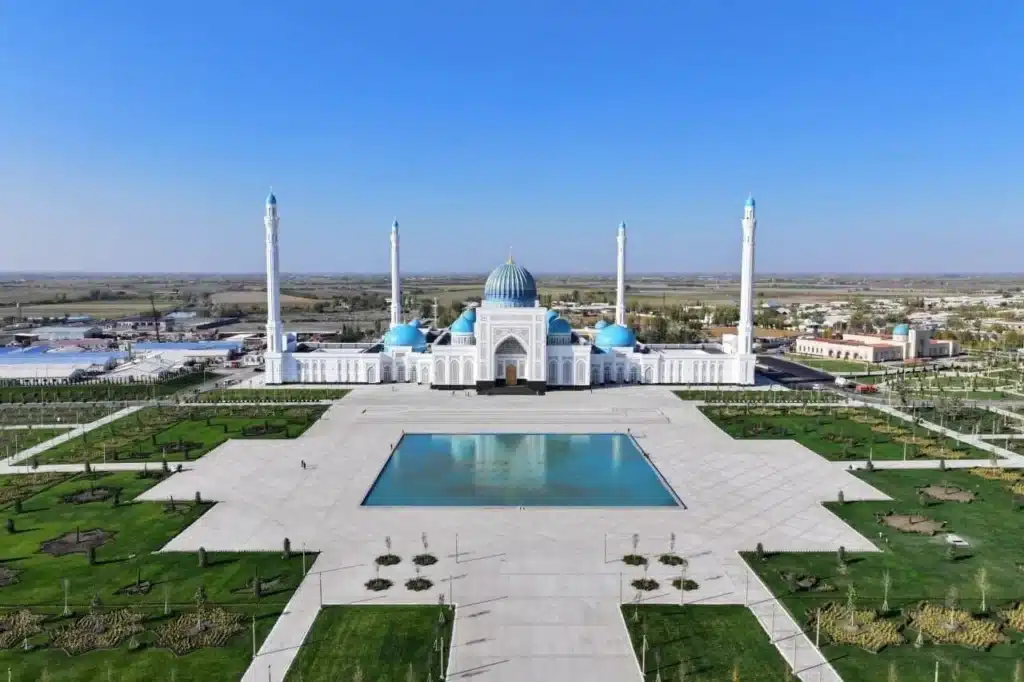
The exterior facades incorporate 18 types of natural stone sourced internationally from Turkey, Greece, Italy, and China. Meanwhile, Indian artisans contributed specialized stonework for the mausoleum itself. The building materials palette extends to the interior, where four monumental spiral staircases utilize 8-centimeter-thick slabs requiring double-sided carving. The original burial vault remains the focal point beneath a 17-meter dome decorated with intricate stucco fretwork and majolica. Therefore, the tombstone uses light-blue onyx for its translucent properties and spiritual symbolism in Central Asian tradition.
Educational Technology and Research Integration
The 2026 expansion integrates educational technology throughout the complex. A museum featuring nine interactive pavilions offers visitors an immersive experience through augmented reality and digital archives. Furthermore, the Imam Bukhari International Scientific Research Center launched its 2026 fellowship program for foreign researchers. The construction project positions the site as both a pilgrimage destination and an academic hub for Islamic scholarship.
Tourism Infrastructure Supports Expanded Capacity
A 15-hectare tourism zone supports the increased visitor capacity with comprehensive infrastructure. The development includes multiple hotels ranging from three to four stars, 22 family guesthouses with 176 beds, and dedicated dining facilities. However, the project also emphasizes sustainability through environmentally conscious materials like natural stone and traditional brickwork. Energy-saving lighting and efficient irrigation systems further reduce the complex’s environmental impact. The urban planning strategy transforms Khartang from a quiet village into a global destination for religious tourism and scholarship.


A Quick Architectural Snapshot
The Imam al-Bukhari Complex expansion represents a calculated effort to reclaim Uzbekistan’s historical role in Islamic intellectual heritage. The project blends 10th-century spiritual tradition with 21st-century architecture and technology, creating a multifunctional space for pilgrimage, research, and cultural diplomacy near historic Samarkand.
✦ ArchUp Editorial Insight
The Imam al-Bukhari Complex expansion reflects Uzbekistan’s strategic pivot toward religious tourism as an economic driver. The capacity increase from 12,000 to 65,000 daily visitors signals a calculated response to growing demand from Muslim-majority countries seeking alternative pilgrimage destinations. The integration of hotels, guesthouses, and dining facilities within a 15-hectare zone transforms a spiritual site into a self-contained economic ecosystem. Meanwhile, the fellowship program and research center serve dual purposes: legitimizing the site academically while attracting long-term international visitors. The use of imported materials from four continents demonstrates reliance on global supply chains rather than local industry development. This project is the logical outcome of post-pandemic tourism competition, Central Asian geopolitical repositioning, and state-led cultural diplomacy seeking soft power through heritage sites.