Infinitus Plaza design completed in China by Zaha Hadid Architects


Infinitus Plaza design completed in China by Zaha Hadid Architects,
The plaza will immediately begin serving as the urban gateway to the new Baiyun Central Business District in Guangzhou, China,
after the design of the Infinitus Plaza designed by Zaha Hadid Architects has been officially completed.
Design Features
Infinitus Plaza is the new global headquarters for Infinitus China,
integrating work environments designed to foster connectivity, creativity and entrepreneurship.
The new headquarters also includes the group’s herbal medicine research facilities and safety assessment laboratories as well as an education center for conferences and exhibitions.
Infinitus Plaza is 185,643 square meters and is located next to Feixiang Park Station on Line 2 of the metro.
Standing above the underground metro tunnel, the latter will divide the headquarters into two buildings that are connected again on multiple levels.
Furthermore, Zaha Hadid Architects’ Infinitus Plaza will connect the new central business district with Feixiang Gongyuan Park and new communities within the redevelopment of the former airport.

Design shape
Zaha Hadid Architects has perfected the design of the headquarters,
to provide collaborative and healthy workspaces that can adapt to the future of the workplace.
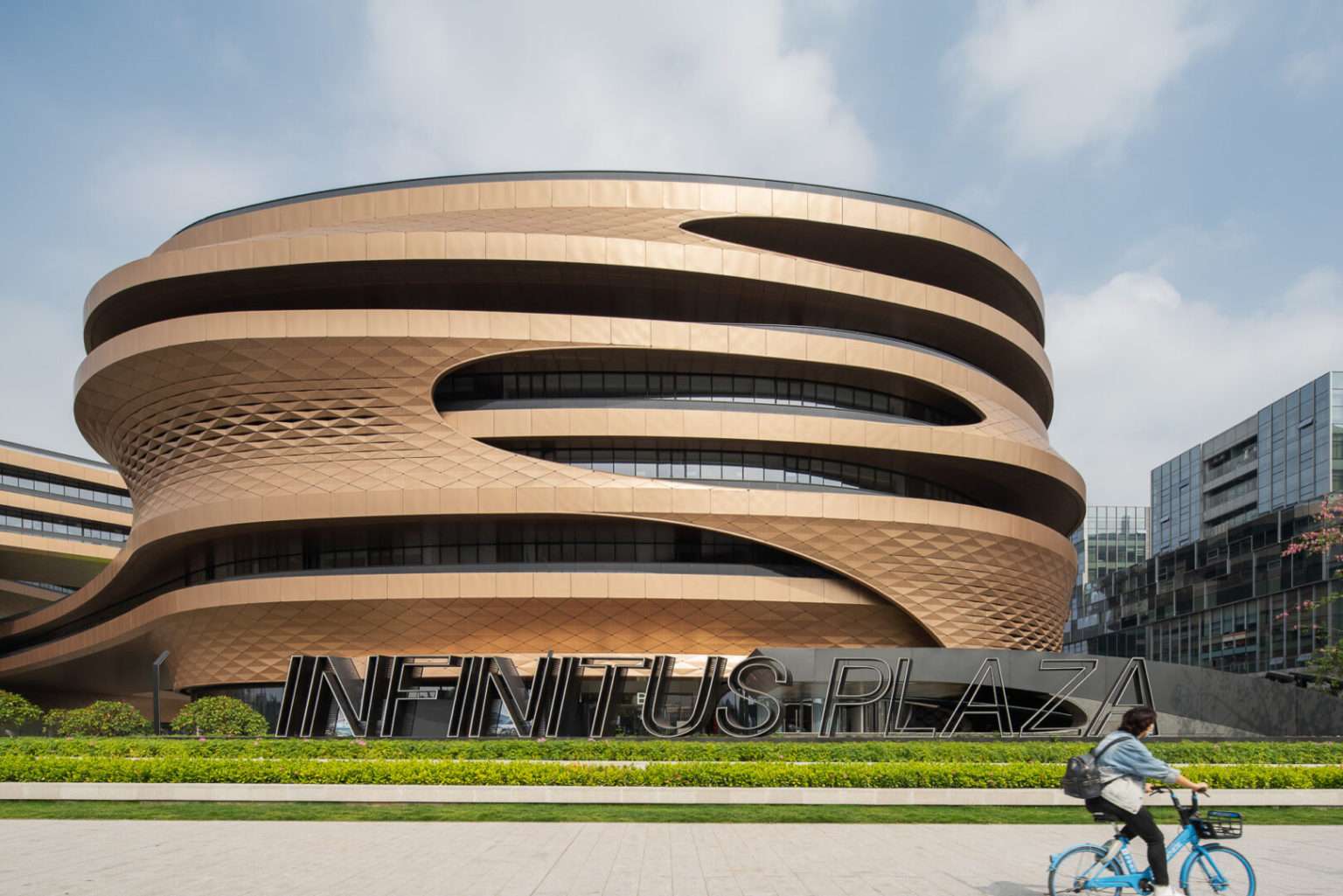
The Infinitus Plaza is 8 stories high as an “infinite series of rings” to create a physical connection between the departments, thus enhancing connectivity.
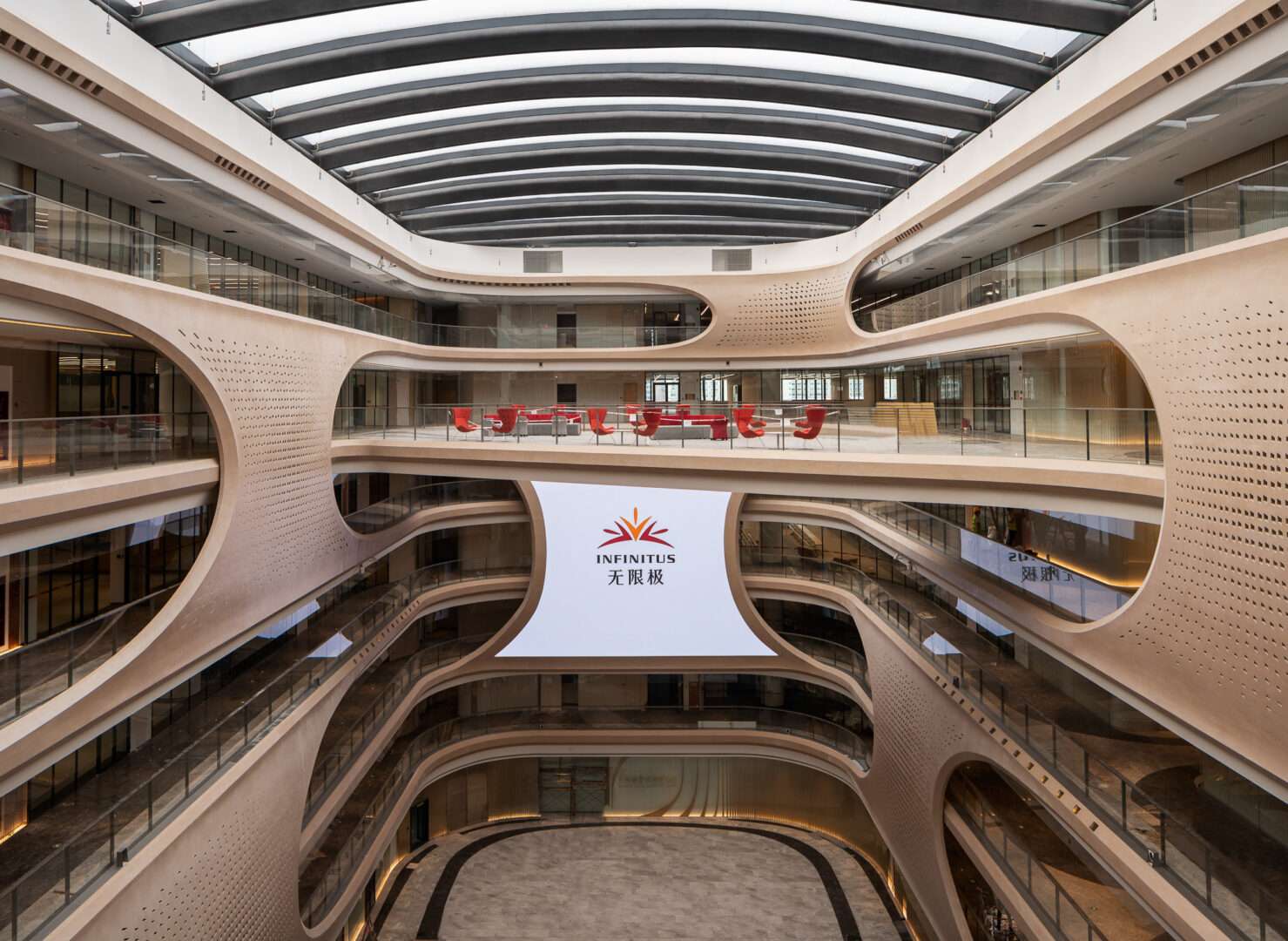
Arranged around central courtyards, echoing the symbol of infinity,
the design creates a variety of shared indoor and outdoor spaces that build a strong sense of community (Si Li Ji Ren) that defines Infinitus’ corporate culture.
More than adaptive workspaces, connected bridges are home to different spaces,
designed to be flexible and accommodate different functions.
Spaces include a gym, exercise rooms, recreation and relaxation areas, a restaurant and a café.
Bridges also connect the square’s offices to more shopping and dining areas.
Improving the energy performance of the Infinitus Plaza
Infinitus Plaza is located within the humid subtropical monsoon climate of Guangzhou – in response,
it has been designed and built to achieve LEED Gold certification and the equivalent of 3 stars from the China Green Building Program.
Also with its calculated life cycle carbon emissions of 15.3% embodied carbon and 84.7% operational carbon emissions.
Design materials
Optimizing the structure reduced the amount of concrete required and increased the proportion of recyclable content.
25,088.33 tons of recycled materials were used to build Infinitus Plaza,
mainly: steel, copper, glass, aluminum alloy, gypsum products and wood.
Infinitus Plaza design completed in China by Zaha Hadid Architects
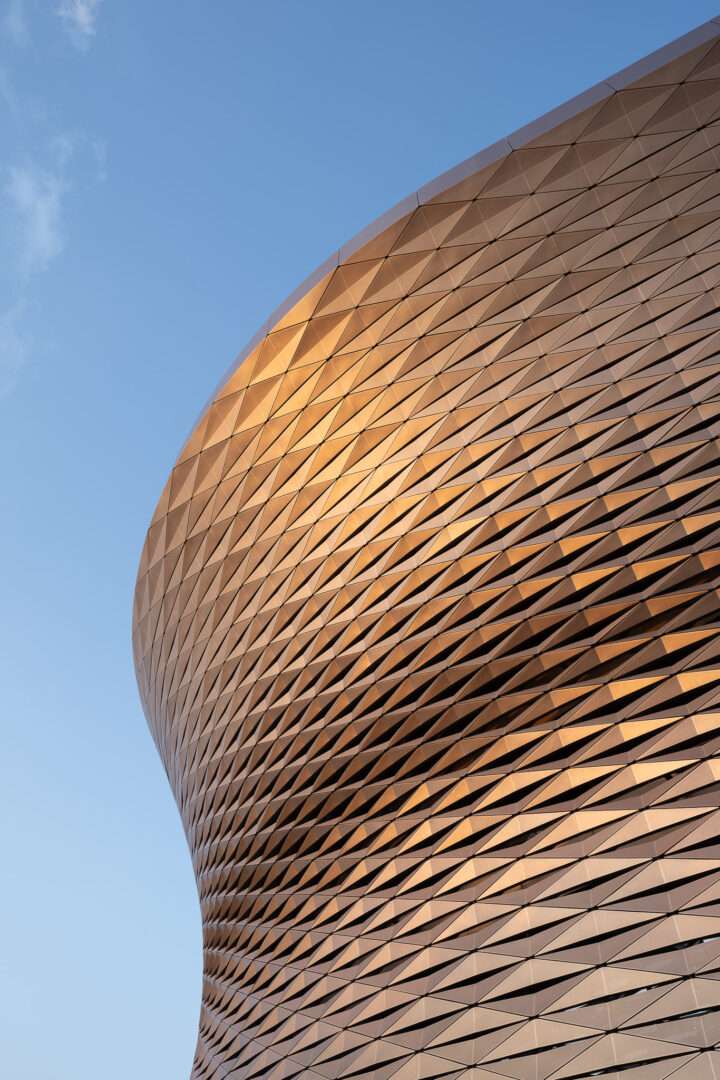
Furthermore, the team performed an annual solar radiation analysis to determine the width of the external terraces so that the building could self-shade.
This analysis also identified perforated aluminum exterior shade panels to reduce solar heat gain as much as possible.
Establishing the Baiyun New Central Business District in Guangzhou as the national hub for China’s health and wellness industries,
the new headquarters for Infinitus China combines innovative design and construction techniques with proven sustainability strategies.
This is to create new work environments that unite all departments and enhance communication across the group.
For more architectural news