JR House: Material, Light & Time in Contemporary Architecture

Architectural Concept and General Approach
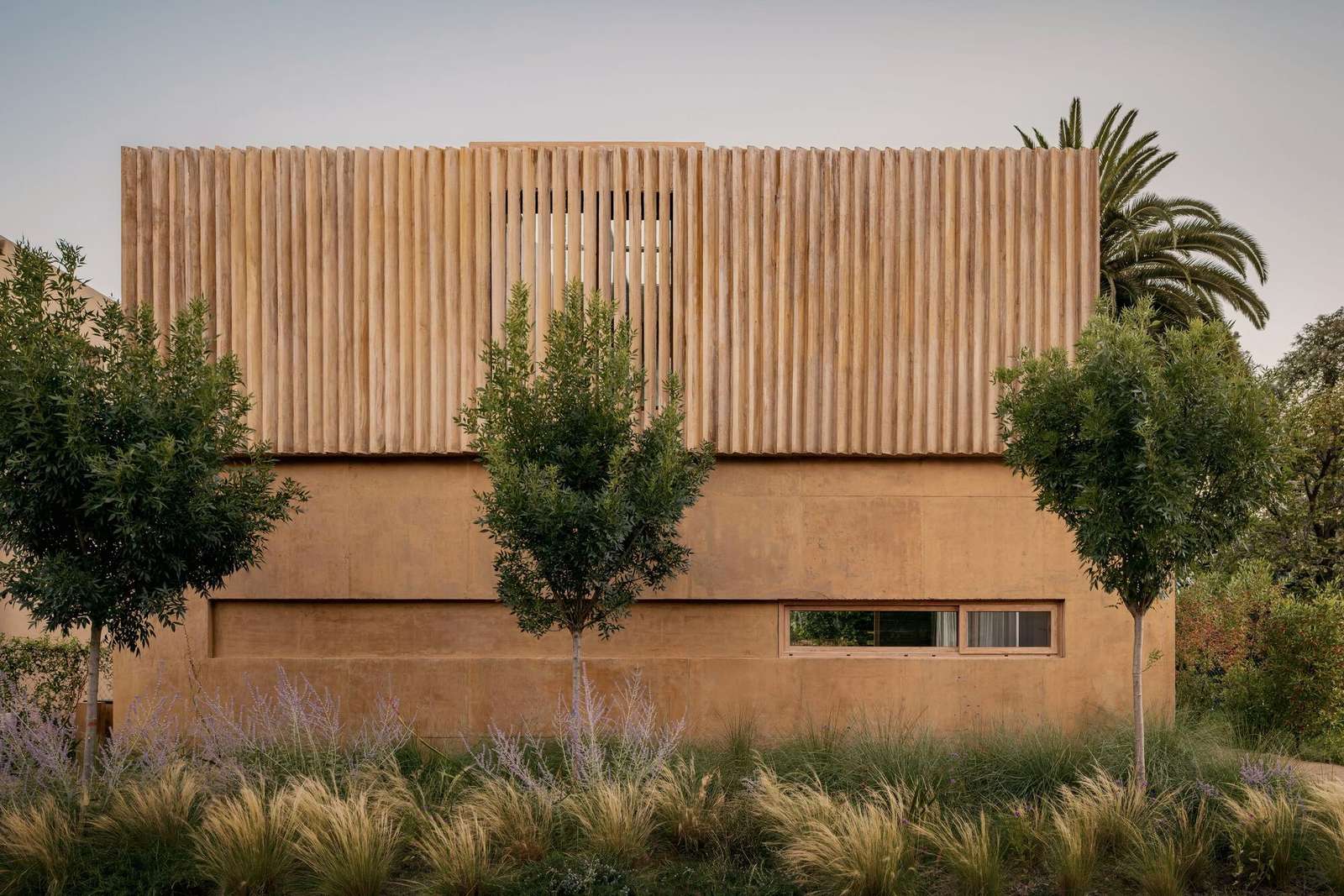
JR House is presented as a primary residence defined through materiality, light, and time. Rather than functioning as an isolated mass, the project is based on organizing a set of atmospheres that support a calm and profound daily lifestyle.
Relationship with the Site and Architectural Massing
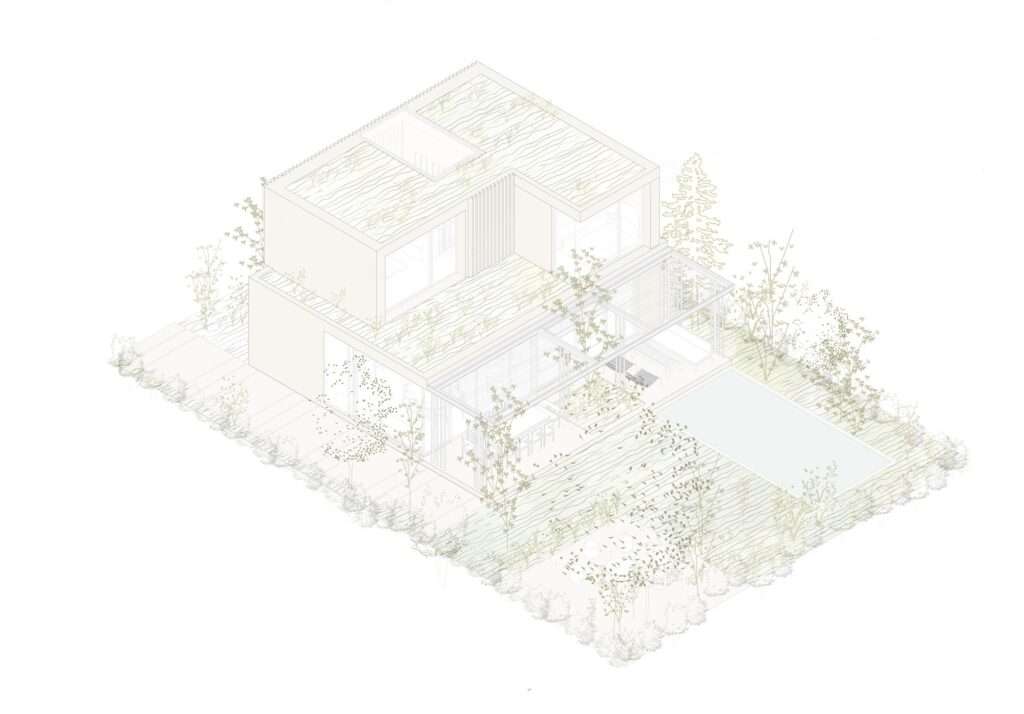
The building adopts a horizontal extension with direct contact with the ground, reinforcing its connection to the surrounding context. As a result, the Architecture experience is formed gradually through materiality, controlled visual perspectives, and the direction of light, rather than relying on direct formal expression.
Spatial Organization and Internal Gradation
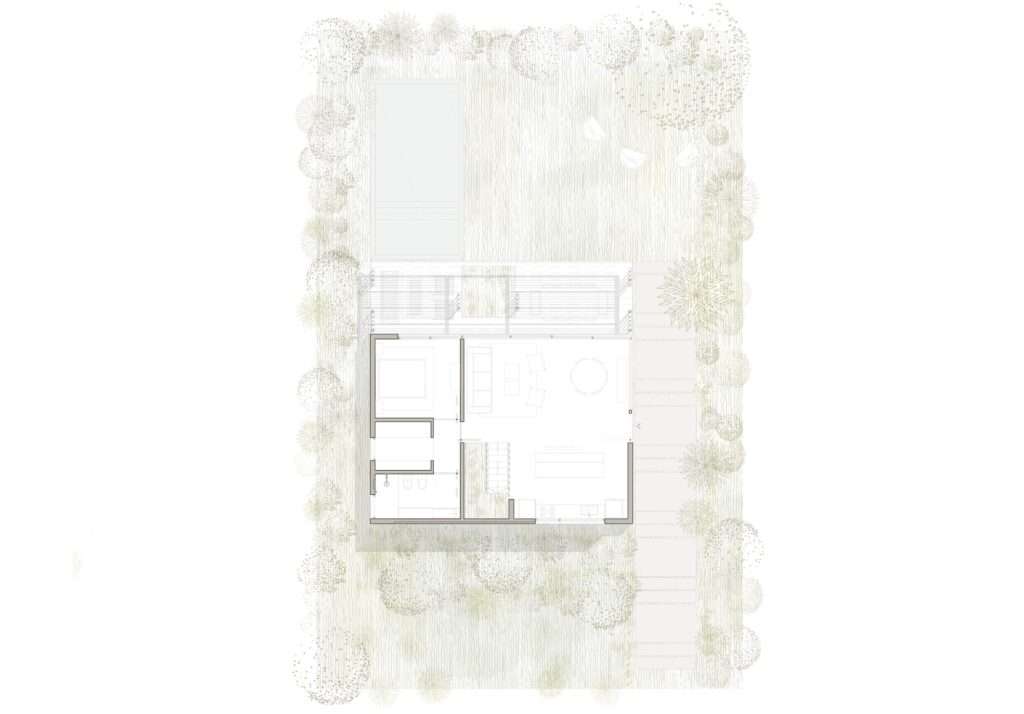
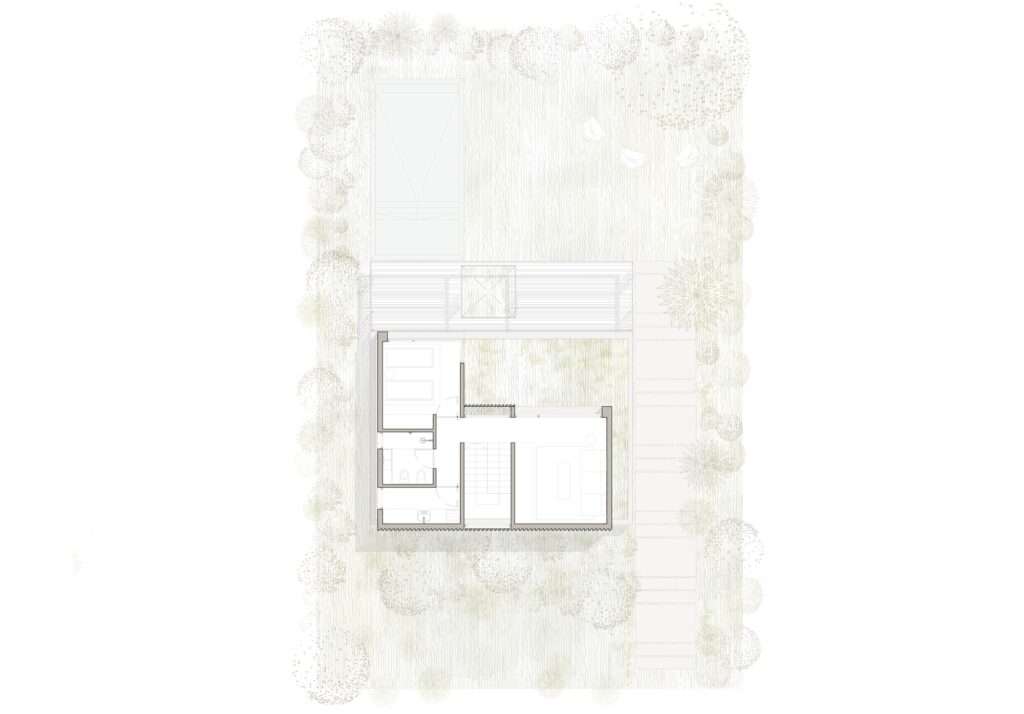
The internal composition is based on a sequence of solids and voids, where built spaces alternate with courtyards, terraces, and transitional zones. These elements function as an organizing system that defines the relationship between interior and exterior, with clearly differentiated levels of use and privacy.


Daily Organization and Its Relationship to Space
Daily life is concentrated on the ground floor, extending directly toward outdoor spaces. Rooms are arranged in flexible relationships without a rigid hierarchy, allowing diversity in patterns of use and continuous adaptability. In this way, the Design relies on continuity and spatial depth while maintaining a constant connection to the natural landscape.
Materiality and Constructive Identity
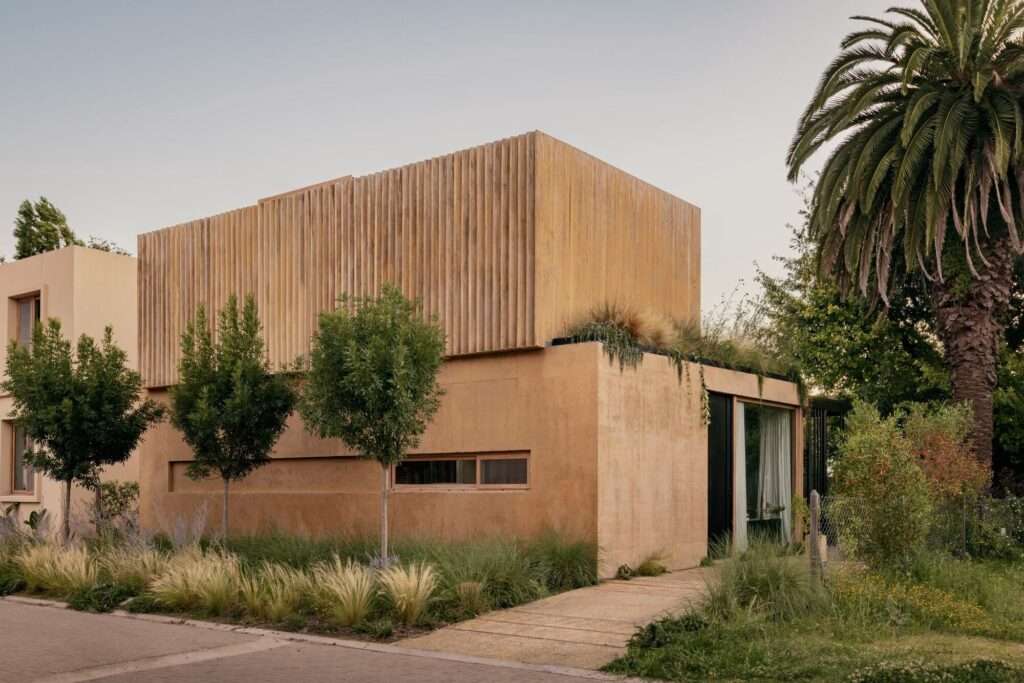
Concrete is treated as the primary material and a central research focus of the project, developed in a warm tone that harmonizes with the color of the soil and sunlight. As a result, the mass does not function as a closing element, but rather as a medium for protection, filtration, and the production of a sense of intimacy. Thick walls and filtering surfaces also contribute to controlling views and organizing the relationship between interior and exterior. Building Materials play a key role in this constructive identity.
Light and Time as Formative Elements
Light penetrates the spaces indirectly through filters, offsets in the massing, and wall thicknesses. Through this gradation, a continuous interaction between light and shadow is formed, reflecting daily changes and making time a perceivable element within the architectural experience rather than a static background.
Reduction of Material Expression
Material expression is reduced to its essential elements, where concrete, wood, and metals are carefully integrated into disciplined compositions. As a result, materiality, proportions, and light take precedence over any formal additions. The architecture avoids exaggeration and adopts the concept of aging as part of the Design process, allowing materials to gradually integrate with the built context.
Integration of Landscape as an Active System
The landscape is precisely integrated within a strategy that treats natural planting as a living system. Vegetation works to regulate views, filter light, produce shadows, and generate a variable microclimate. In this way, plant elements accompany the architecture without dominating it, enhancing seasonal variation and the relationship with the surrounding environment.
Gradation of Nature within the Architectural Space
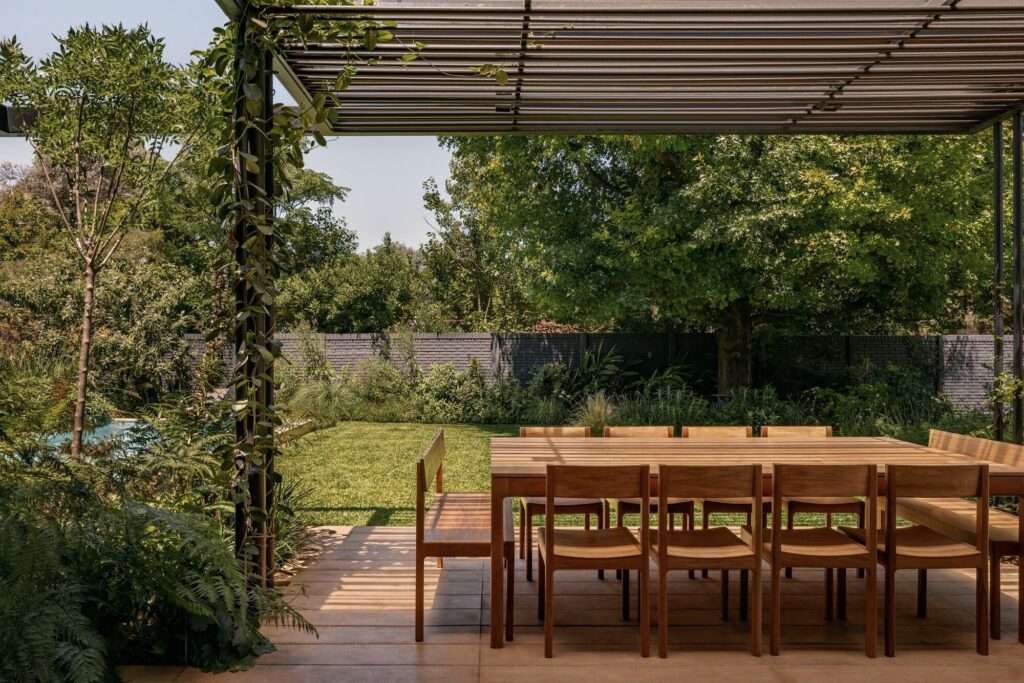
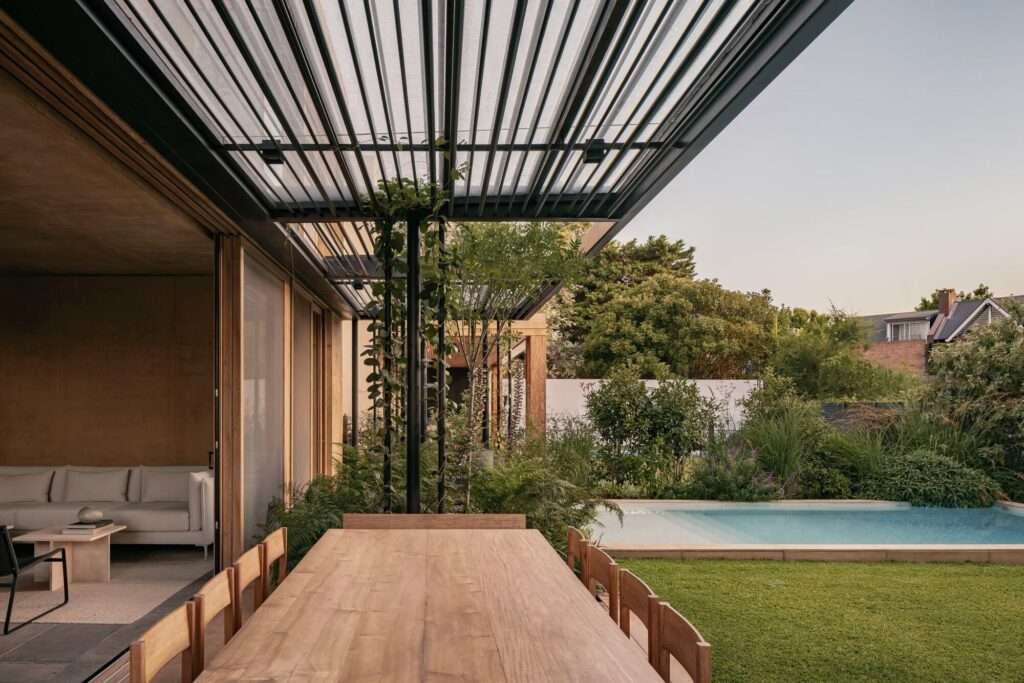
Through courtyards, terraces, and controlled vistas, nature gradually infiltrates the interior of the dwelling. Through this progression, the landscape is no longer a background element but becomes an active component that continuously reshapes spatial perception and influences it.
Light and Climate as a Generative System
The sun plays a fundamental role in shaping both interior and exterior atmospheres. Orientation elements, overhangs, Buildings massing, and vegetation work together to receive, filter, and control light. The house adapts to daily and seasonal variations, integrating climate as part of everyday life.
Architectural Idea and Residential Experience
JR House proposes an architecture open to use, climate, and the passage of time. Despite its minimal expression, the project relies on precise details that produce a residential experience formed by the relationship between materiality, light, and landscape rather than a direct formal composition.
Dwelling as a Condition and Temporal Experience
The project goes beyond the idea of a physical object to present a residential condition in which daily life unfolds quietly, while time and atmosphere emerge as essential elements of the experience. Within this vision, Architecture does not seek to impose its presence but to create conditions that allow life to emerge gradually. Concrete is used as a material that produces intimacy through filtration rather than exposure, while walls are employed to deepen spatial experience rather than enclose it. Meanwhile, the landscape operates as an organized system governing the relationship with space.
✦ ArchUp Editorial Insight
JR House can be read as a direct outcome of land-use regulation mechanisms and the economics of horizontal Construction, where low-rise building standards enforce ground-level expansion and reinforce direct engagement with the site. The selection of materials, particularly concrete, wood, and metals, is guided by a logic of minimizing maintenance costs and simplifying long-term supply chains. Projects like this demonstrate how spatial organization is shaped in response to occupancy patterns that favor the intensity of daily life on the ground floor with mobility flexibility rather than strict hierarchical compartmentalization. The architectural envelope operates through variations in opening depths, massing gradients, and vegetation as a system for thermal and visual regulation, reducing reliance on mechanical systems. The integration of landscape reflects mechanisms for stormwater management and microclimatic improvement at the plot scale, while the filtering of light translates daily time into a behavioral rhythm. Ultimately, considerations of insurance, standardized construction practices, and land-use continuity take precedence over any formal intent, making the project a negotiation within systemic pressures rather than an autonomous Design decision.