Palma and Taller TO Win Competition for New MAC Panamá

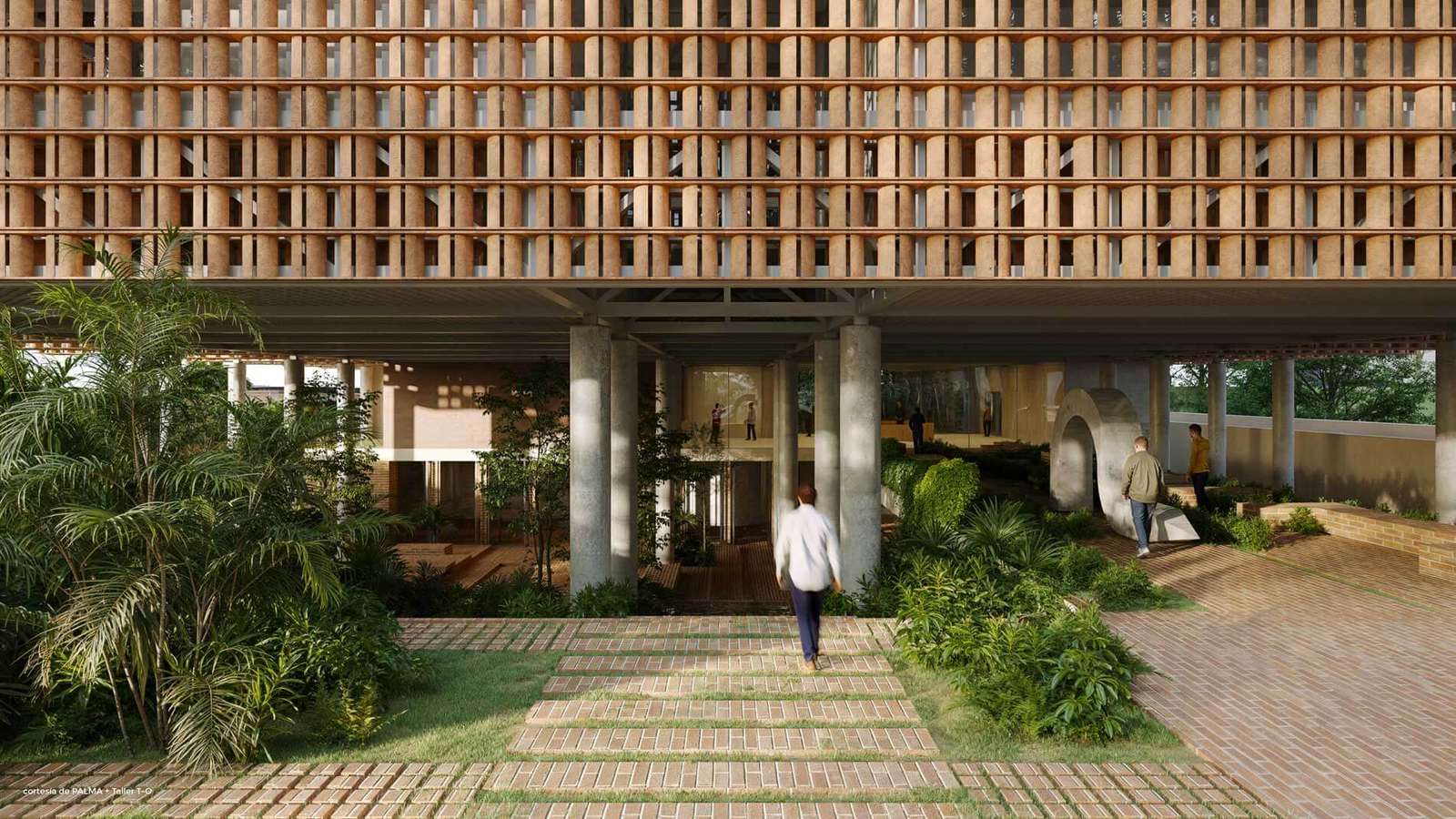
Mexico City offices Palma and Taller TO won an international design competition to create a new home for the Museum of Contemporary Art (MAC Panamá). The winning proposal reestablishes the 62-year-old institution in the San Francisco neighborhood of Panamá City. The design team surpassed 363 submissions from 56 countries to secure the commission for the new cultural facility.
The new building supports an expanded program including a conservation department, research facilities, and diverse exhibition galleries. The design emphasizes community engagement through accessible public infrastructure. The jury praised the project for its contemporary approach to democratic architecture and its roots in Panamanian identity and climate.
The ground floor plan optimizes operational flow by separating public zones from private administrative areas. One wing contains the museum offices, a storage vault, and freight elevators to ensure staff privacy and secure art handling. The opposing wing houses the public-facing archive, a print workshop, meeting rooms, and a dedicated children’s area.
Ceramic lattice screens define the building envelope
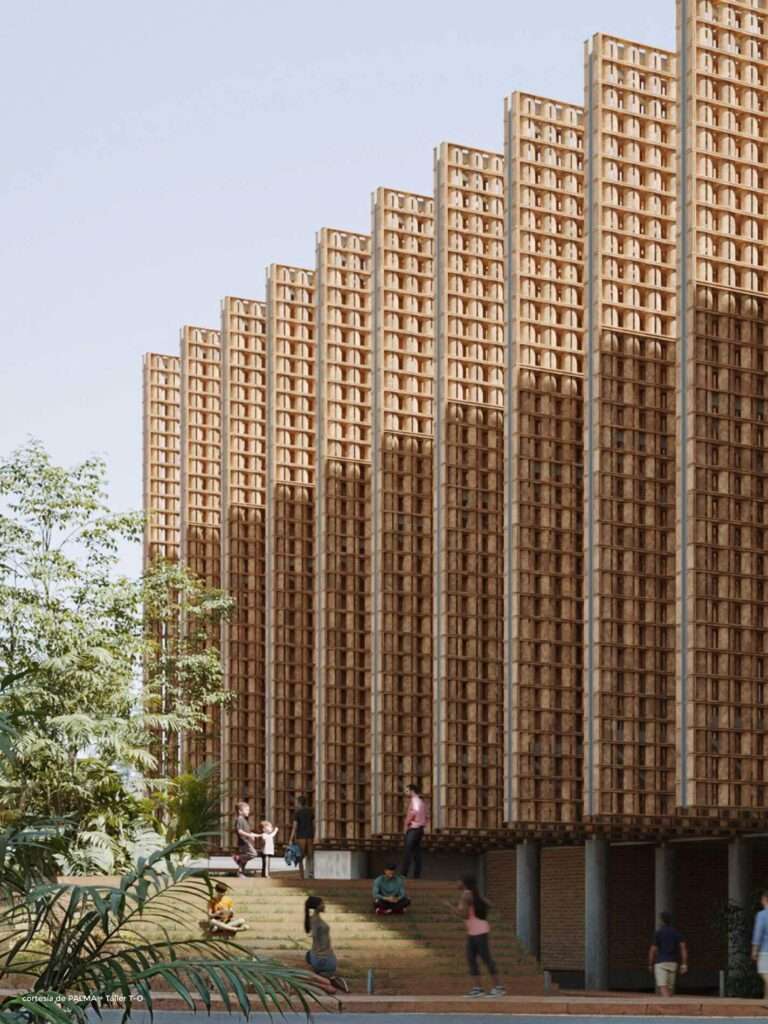
A brise-soleil composed of a ceramic lattice screen wraps the building volume to manage solar gain. This textured envelope remains visible from the interior through expansive glazing. These glass spans maintain a constant visual connection between the galleries and the landscaped grounds, which feature native vegetation and mature trees.
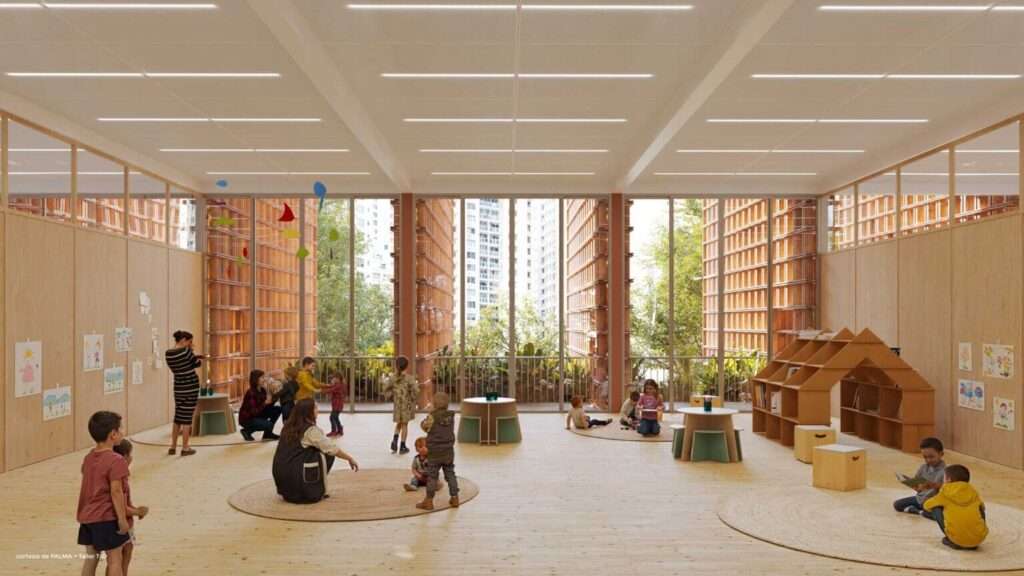
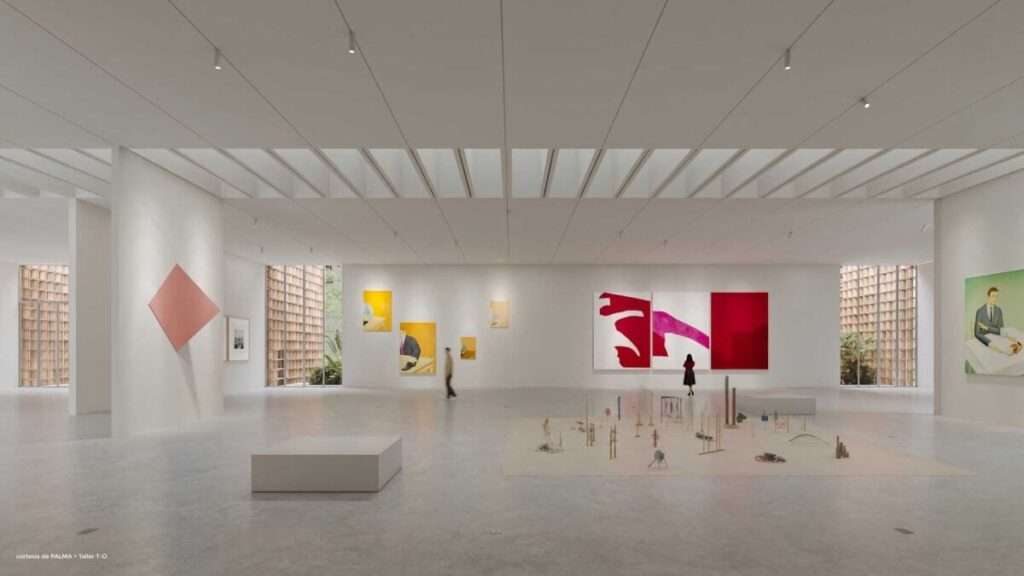
Natural light serves as a primary material within the visitor sequence. Skylights illuminate the main exhibition areas, while generous glazing washes the children’s rooms with daylight. The designers utilize these transparent thresholds to create an inviting atmosphere for play and education within the architecture.
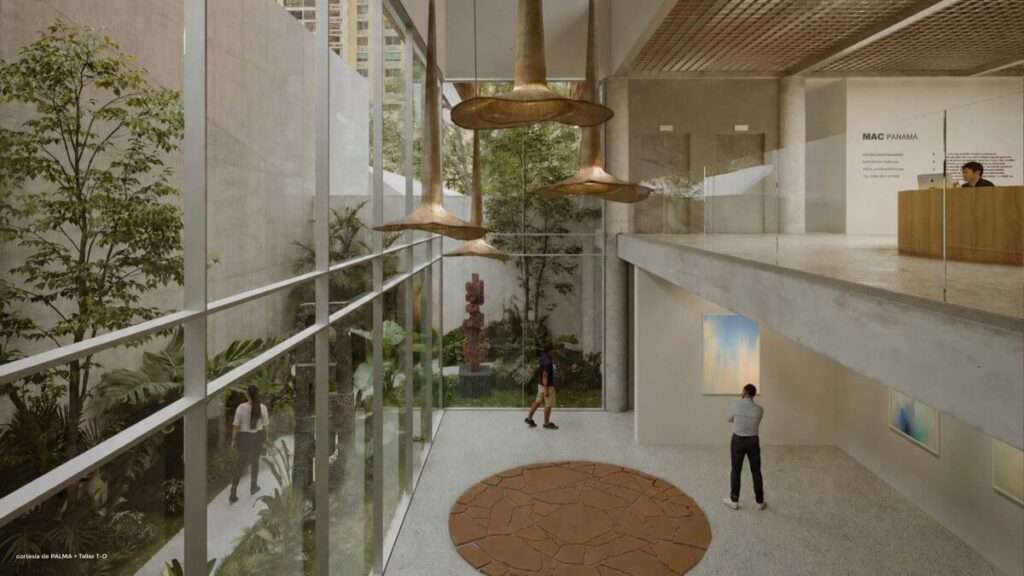
Flexible galleries and civic courtyards facilitate gathering
The interior logic prioritizes flexibility for the institution’s collection of over 1,200 artworks. Gallery spaces feature high ceilings and off-white finishes to accommodate various artistic scales and media. These neutral environments allow the museum to reconfigure displays for both 20th-century historical pieces and contemporary Panamanian works.
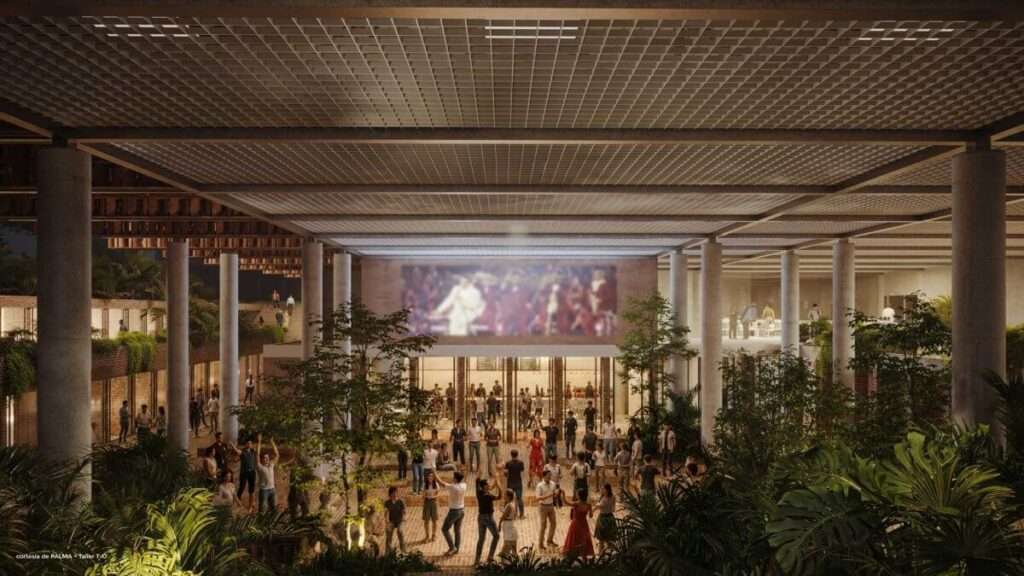
A central courtyard acts as a civic hub for large-scale festivals, film screenings, and community gatherings. Tall columns delineate this space, creating a formal rhythm reminiscent of a hypostyle hall. This monumental scale supports the museum’s mission to serve as a gathering point for urban life in cities.
“Rooted in Panamanian identity, climate, and landscape, the project proposes a contemporary, democratic, and sustainable architecture—conceived through collaboration to envision new forms of gathering, culture, and urban life.”
The design team now moves into a refinement phase with museum stakeholders. This stage involves the integration of local professionals to translate the competition proposal into a finalized construction plan. While the museum has secured the design, the board has not yet announced a specific timeline for groundbreaking or completion.
✦ ArchUp Editorial Insight
The selection of Palma and Taller TO signals a shift toward porous, infrastructure-led museum design in Central America. By utilizing a ceramic lattice brise-soleil, the architects address the tropical climate through passive cooling rather than total enclosure. The clear programmatic split on the ground floor demonstrates a sophisticated understanding of museum operations, balancing public transparency with the logistical requirements of a conservation-grade facility. This project moves beyond the “white box” archetype by integrating a hypostyle courtyard and native landscape, positioning the museum as a civic threshold that bridges the gap between the neighborhood of San Francisco and Panamá’s contemporary art discourse.
Project Team: Palma and Taller TO (Lead Architects); Ginnette Gotti (Competition Coordinator). Location: San Francisco, Panamá City, Panamá.
Project Notes: Competition won June 2026; construction timeline not specified in source; proposal includes ceramic lattice screens and native landscaping.