House in Miyakonojo: Redefining Privacy and Openness

Returning Home as a Spatial Process
Returning home is understood here as an intentional process rather than a mere spatial transition. It is tied to reconnecting with everyday life through memory, family, and the changing quality of light within a familiar space. In this sense, the project treats belonging as an experience linked simultaneously to both space and time.
Context of the House in Miyakonojo Project
The House in Miyakonojo project emerges from a reuse and renovation of a traditional timber house in southern Japan. The context began when a couple, after raising their children and shifting their careers, decided to return to live in the wife’s family home in Miyakonojo, alongside her father, within a residential structure that carries a clear historical character. Similar adaptive reuse approaches can be found in various projects documented in architectural archives.
Internal Structure Before Transformation
The house was based on a traditional room organization using sliding panels, with a dark L-shaped corridor. This layout strictly separated different living areas such as the kitchen, dining room, and bedroom, making the interior space closed in on itself and disconnected both from its users and from the external environment beyond the walls. Many traditional buildings in Japan share this introverted characteristic.

Deconstructing the Introverted Nature of the Plan
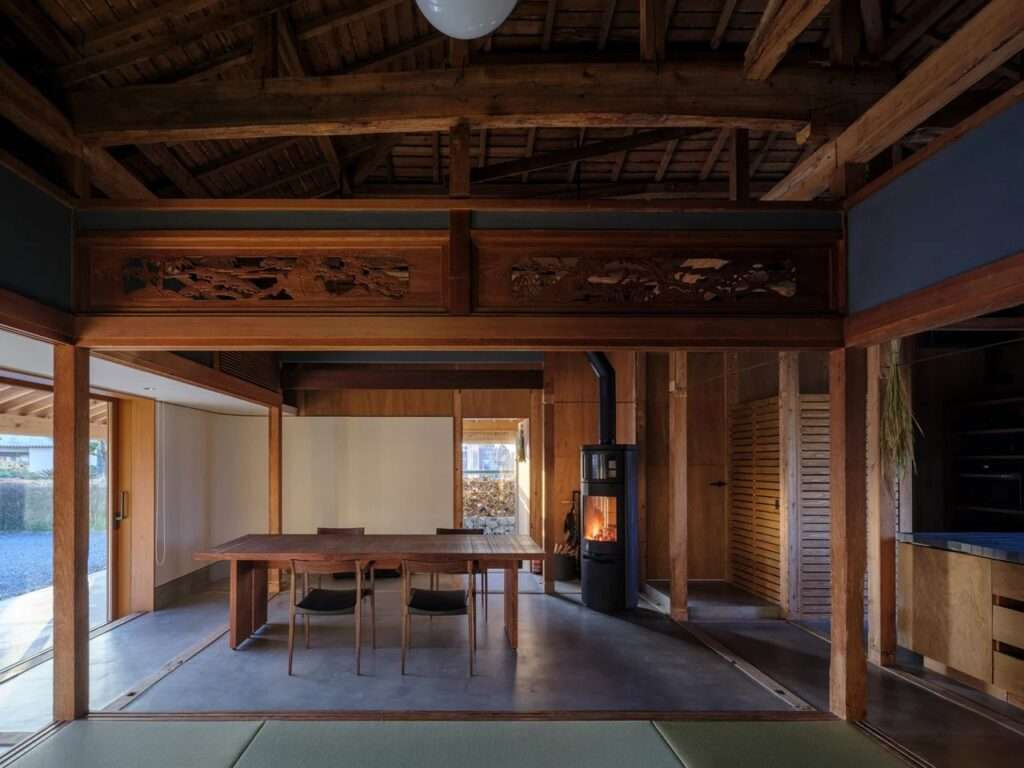
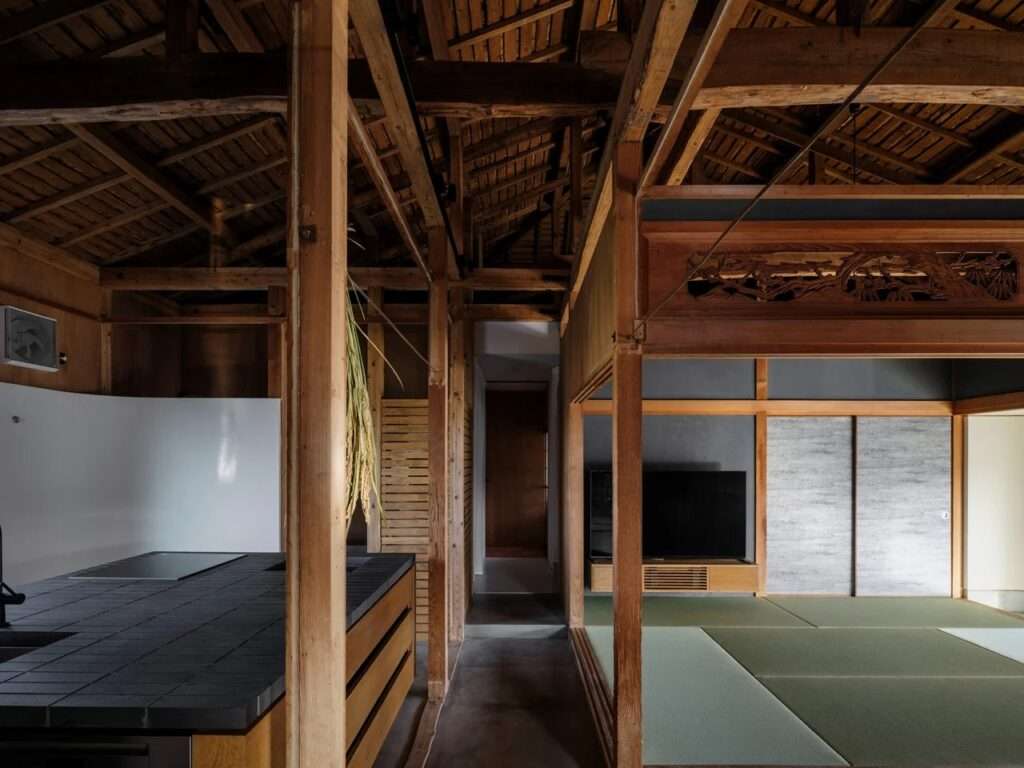
YNAS reorganized the house’s internal structure by deconstructing its introverted character. The narrow plan was opened up and rigid partitions were removed, aiming to transform the space into a more fluid and flexible environment suitable for multi-generational cohabitation. This approach reflects broader discussions in architectural research about adaptive reuse and spatial flexibility.
Redefining the Relationship Between Privacy and Openness
This transformation is not limited to the structural level but extends to a conceptual one. The design reinterprets privacy in a different way, where isolation is no longer understood as a condition of enclosure but can be achieved within an open space. Openness thus becomes part of a logic of protection rather than its opposite.
Extending Daily Life to the Exterior
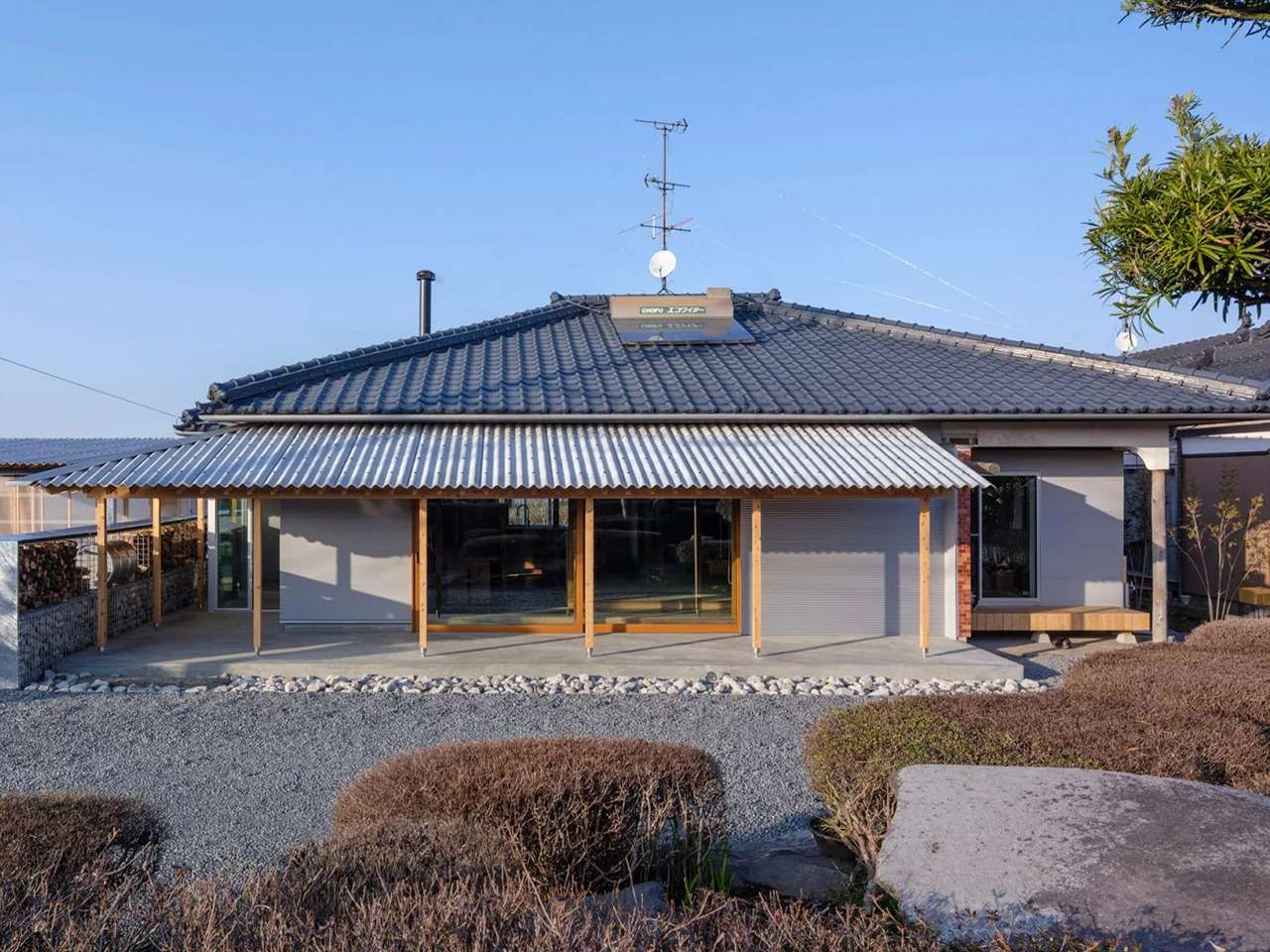
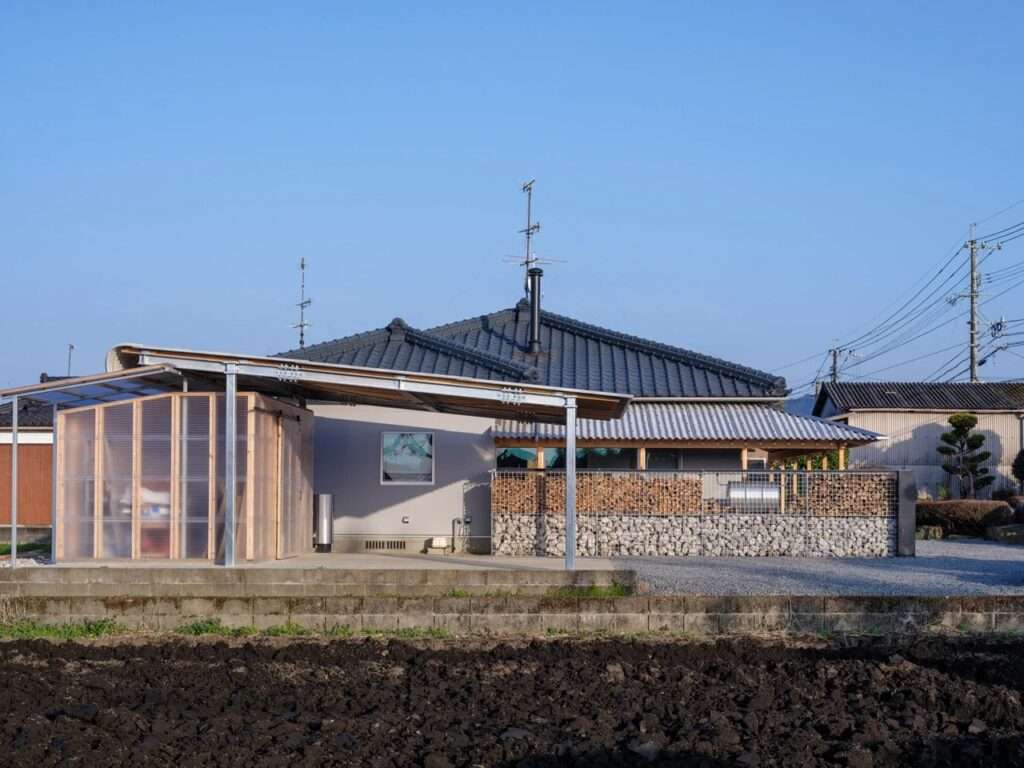
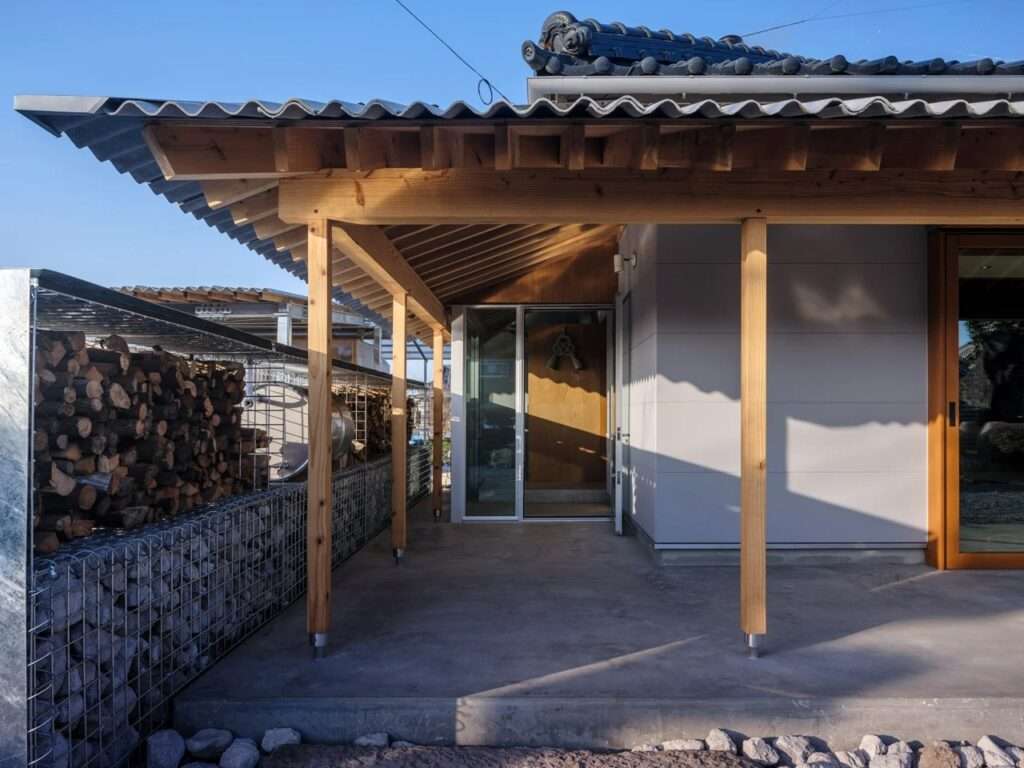
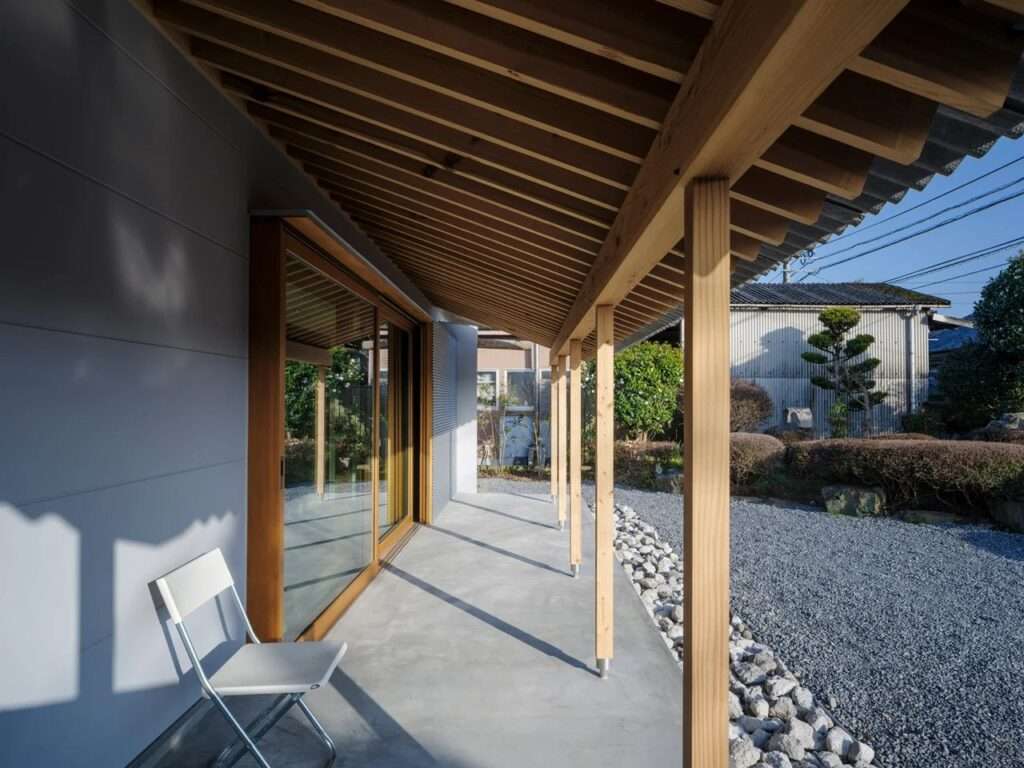
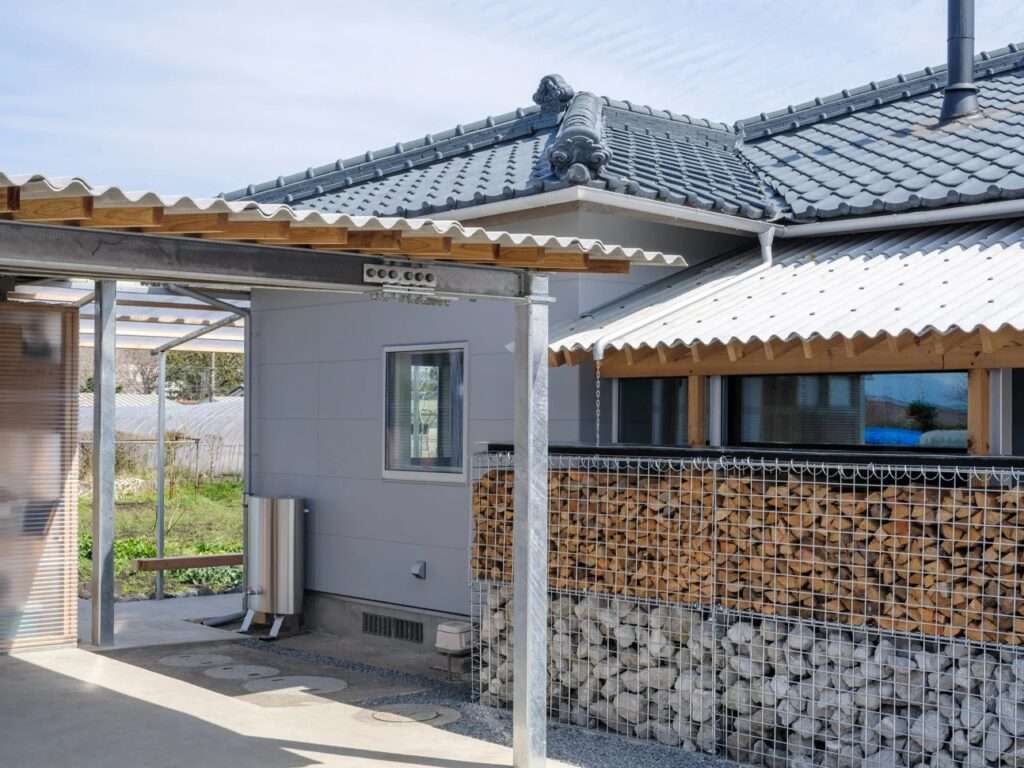
This approach is expressed through the addition of external canopies made of corrugated metal sheets, combining timber structure with an industrial character. These additions expand the scope of daily use outward through covered spaces that blur the boundary between interior and exterior. With the introduction of an outdoor kitchen and a wood-heated bath, everyday activities become partially visible to the surroundings, creating a direct relationship between the house and its social environment. The choice of corrugated metal aligns with common building materials used in contemporary renovations.
The House as Part of the Everyday Landscape
The house is redefined here as an element within the landscape through what YNAS describes as “signs of life” emitted by the building. Visibility is not understood as exposure, but as a form of social extension that reflects the presence of habitation and quietly signals that the place is lived in and connected to its environment. This relationship between dwellings and their surroundings is a recurring theme in discussions about cities and urban habitation.
Continuity of Structure and Transformation of Interior Space
The project preserves the skeletal structure of the traditional house without radical alteration, while reorganizing interior spaces to become more open and interconnected. Rooms orient toward one another, as well as toward the garden and the sky, reducing the strict separation that previously defined the original configuration. New materials such as corrugated metal coexist with the old timber without visual or structural conflict. Detailed specifications for such materials can be found in material datasheets.
Belonging as a Relationship with the Environment
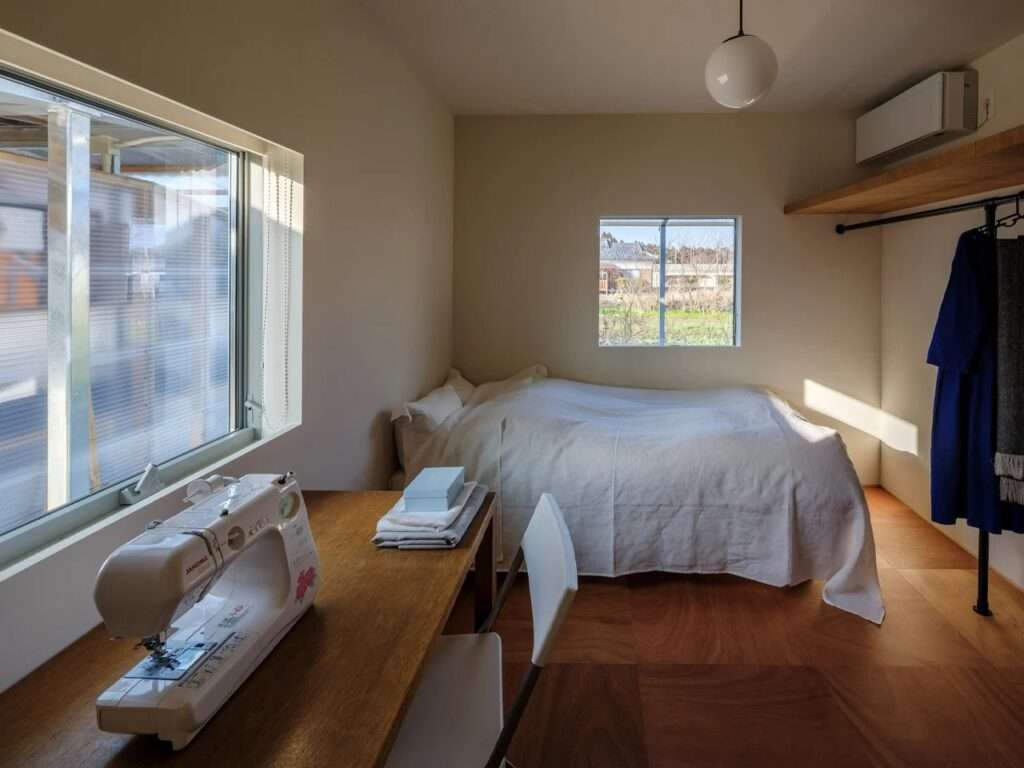
In this context, multi-generational living becomes possible under a single roof reinterpreted as a breathing element rather than a closed boundary. In this way, the project reshapes the relationship between the house and its surroundings, so that it does not withdraw from them but reclaims its position as part of the surrounding ecological and social system. Similar themes are often explored in architectural discussion forums.

✦ ArchUp Editorial Insight
The House in Miyakonojo project operates as a spatial outcome of recycling an existing family dwelling within a demographic context characterized by a return of individuals to ancestral homes in southern Japan. This shift is driven by life-cycle changes and the declining viability of urban residential expansion. The structural motivation lies in reactivating dormant family property under a logic of cost reduction and adapting housing to multi-generational living patterns in an aging society. Contemporary architectural jobs increasingly focus on such adaptive reuse strategies.
Regulatory and material constraints appear in the requirements to preserve existing timber structures, seismic resistance obligations, and the inefficiency of traditional compartmentalized layouts. The project responds by dismantling internal partition systems, redistributing circulation within a more open spatial configuration, and extending the residential program into lightweight semi-external zones clad in metal. The construction approach balances preservation with modern performance standards.
The result is not an aesthetic redesign, but a negotiated equilibrium between the pressures of aging infrastructure and contemporary patterns of use, where the dwelling becomes a visual indicator of ongoing occupation within a shrinking social fabric. This case study has been featured in various top news outlets covering innovative residential architecture.