Matanzas Beach House: Topography and Functional Flexibility

Response to Natural Topography
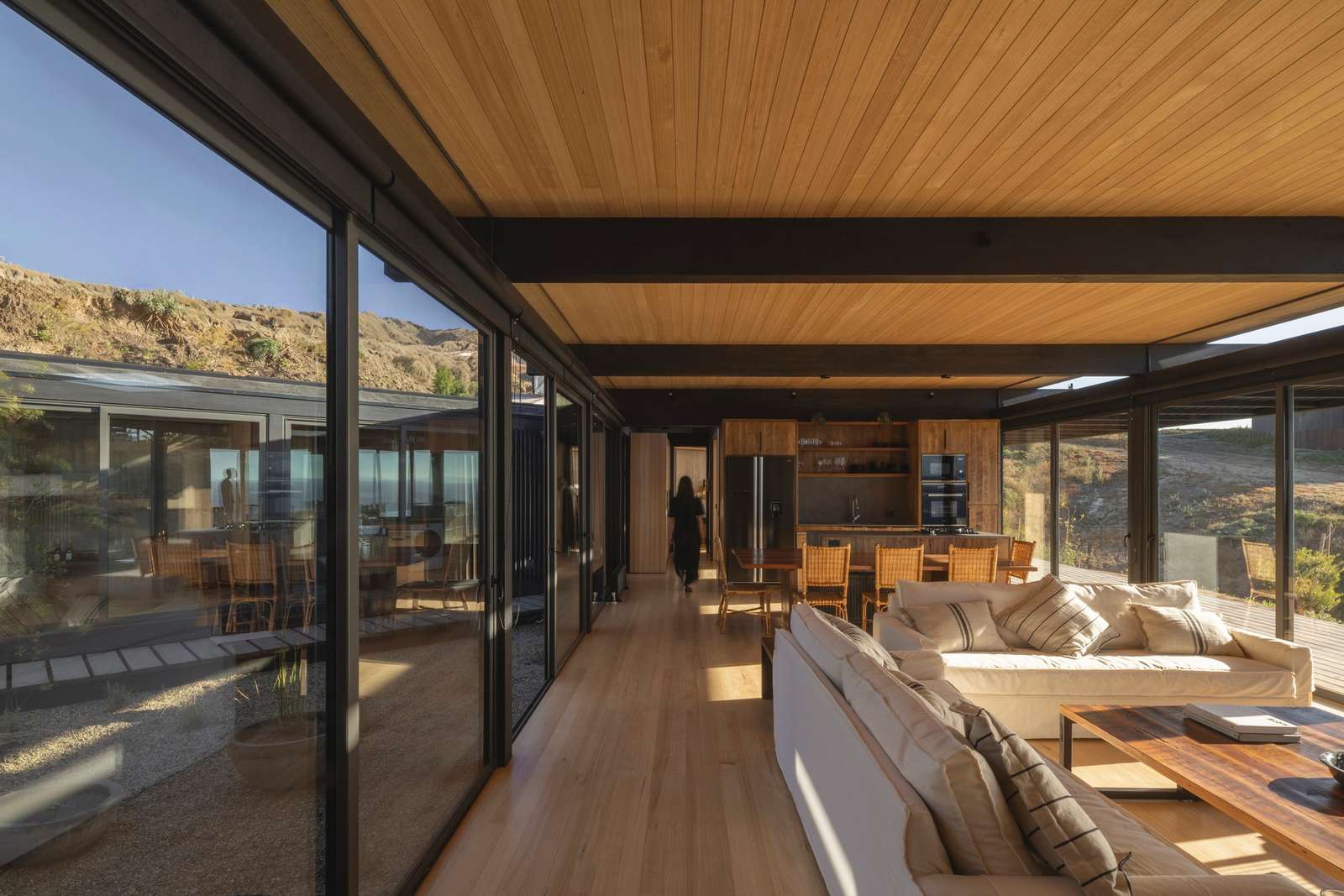
The house is located on a slope descending toward Matanzas Beach, and its design is based on a natural ravine that runs through the site. As a result, the architectural composition adopts a right-angled triangular form, with its longest side aligned along this topographical feature, allowing the main spaces to be oriented toward ocean views.
The Interior Courtyard as a Climatic Element
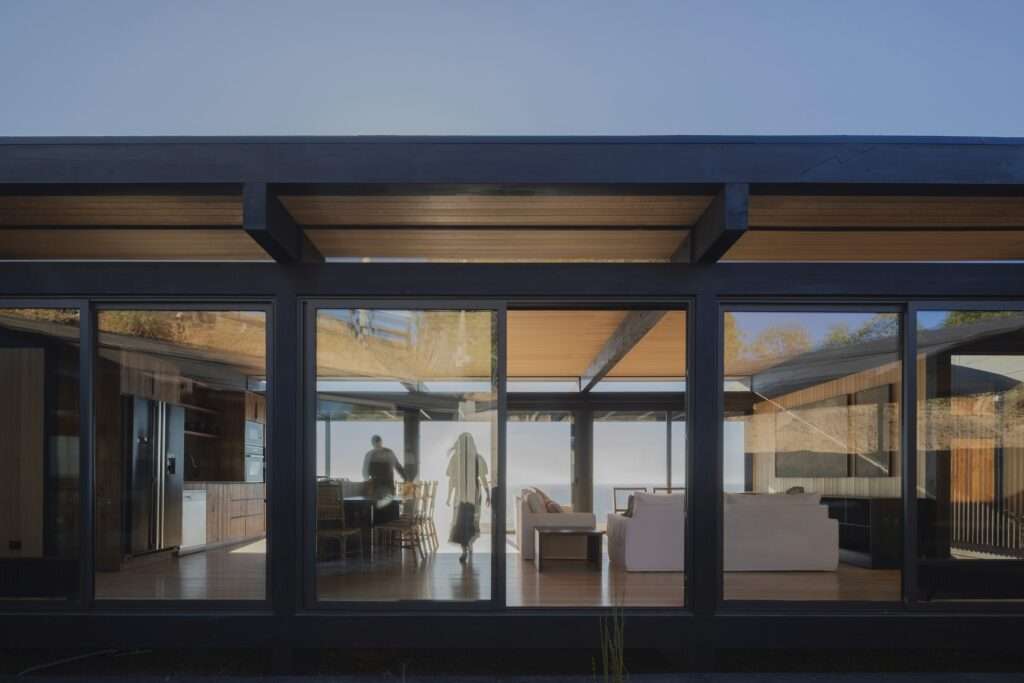
The project includes an internal courtyard that provides an outdoor space protected from the prevailing southern winds. Through this strategy, the design achieves a more comfortable environment for daily use, taking advantage of the site and its climatic conditions without the need for additional separation elements.
Functional Organization on a Single Level
The internal courtyard acts as a central organizing point for the program, connecting shared spaces, services, and bedrooms within a single horizontal level. This arrangement also strengthens the continuity between spaces and preserves the open character that defines the project.
| Item | Details |
|---|---|
| Architects | Gonzalo Rufin Arquitectos, Manuel Rufin |
| Area | 230 m² |
| Year | 2025 |
| Photographs | Pablo Casals Aguirre |
| Manufacturers | Estudio CBF, Timber |
| Category | Houses |
| Design Team | Gonzalo Rufin, Manuel Rufin |
| Builder Company | Constructora Lemad |
| Furniture & Decoration | Muebles Valterra |
| City | Matanzas |
| Country | Chile |

Material Selection in Coastal Environments
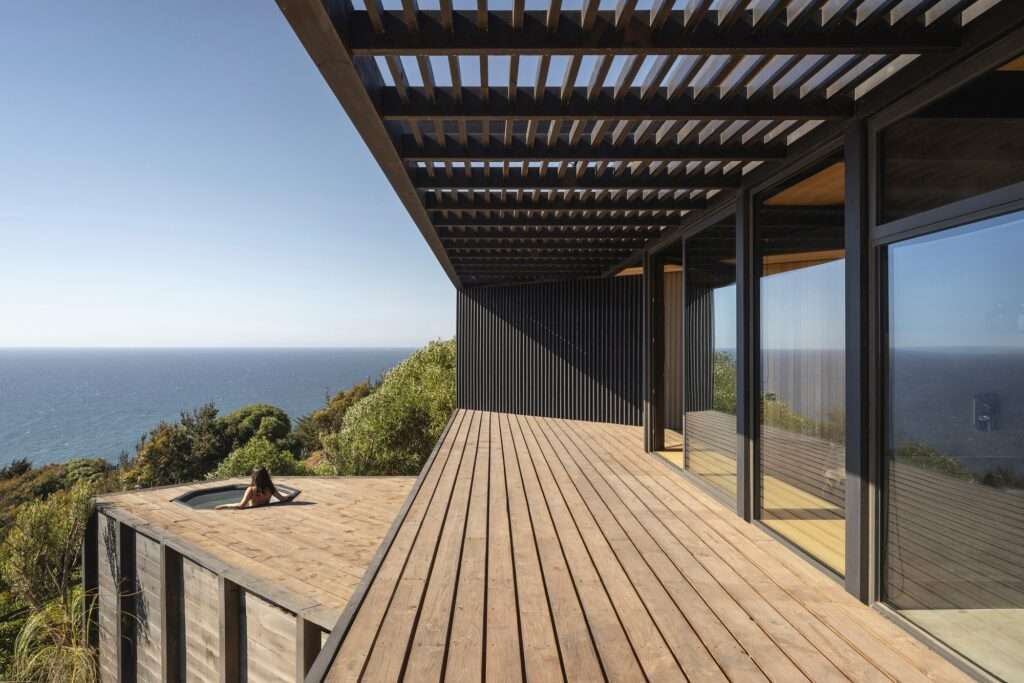
The materials used reflect a response to the coastal conditions of the site, selected to ensure durability and resistance to climatic factors, while maintaining a simple and calm architectural character that blends with the surrounding environment.
The Role of the Timber Structure in Shaping Space
The project relies on a glued laminated timber structure that enables the creation of open interior spaces without the need for intermediate vertical supports. This structural solution provides extended sightlines toward the sea while enhancing the flexibility of interior spatial organization.
The Relationship Between Interior and Exterior
Eucalyptus wood clads the interior walls and ceilings, adding a warm character and helping distribute natural light throughout the spaces. At the same time, large sliding openings strengthen the connection between the interior and the surrounding landscape, supporting continuous visual and spatial interaction with the external environment.


Flexibility and Expandability
The project is based on a gradual activation of spaces, where the house can function with only the master bedroom and shared areas. As the number of users increases, additional spaces can be progressively activated, including three extra bedrooms—two within the main volume and a third with independent access through the internal courtyard. For further insights, you can explore additional research on flexible housing models.
Access Organization and Its Relation to the Site
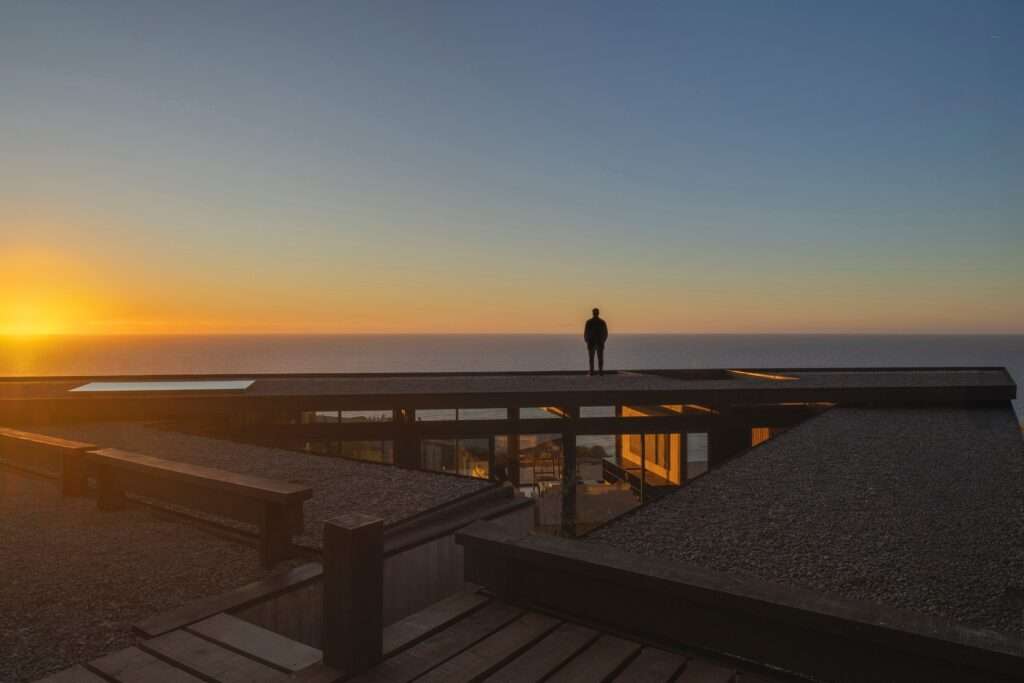
Access begins from the parking area located at roof level, after which entry into the house occurs across the roof itself. This arrangement transforms the roof into a transitional space connected to the surrounding natural landscape, while offering open views of the ocean during the approach to the building.
Integration with Natural Topography
The roof-level access route strengthens the building’s connection to the site’s natural conditions and helps reduce its visual presence within the landscape. As a result, the house appears more as part of the natural topography than as a separate constructed object. Similar strategies can be found in discussions about cities and their relationship with natural terrain.


✦ ArchUp Editorial Insight
The Matanzas Beach House operates as a direct outcome of topographical constraints and coastal exposure rather than an autonomous design gesture. The natural slope and water ravine impose a logic of formation, generating a triangular footprint that distributes the functional program along visual axes toward the ocean. The internal courtyard becomes both an organizational and climatic device, acting as a buffer against southern winds and reducing reliance on additional enclosure systems. Single-level organization integrates circulation and services around a central void that redefines relationships between dwelling units as a network of functional interdependence. Material selection and the use of eucalyptus reflect considerations of coastal degradation and long-term maintenance costs. The laminated timber structure eliminates intermediate supports and redistributes loads to enhance visual permeability. The roof-level access route reconfigures entry as an infrastructural sequence that reduces visual impact on the landscape and embeds the building within the continuity of the terrain.