Marpole Community Centre Redefines Public Building Design


The Transformation in the Concept of Public Buildings
Marpole Community Centre represents a case study of a public building that attempts to move beyond the traditional image of institutional facilities that meet sustainability standards yet remain visually and functionally detached from users. The project is located in Oak Park in Vancouver and replaces a previous facility that was beloved but no longer able to accommodate growing needs. Accordingly, the project reopens the question of the relationship between institutional efficiency and user experience in Buildings.
Reorganizing Program and Spatial Layout
The new building consists of two floors with an area of approximately 5,000 square meters, nearly double the size of the previous facility. In addition, it includes a diverse program comprising a gymnasium, a fitness center, a multi-purpose sports space, rooms dedicated to seniors and youth, as well as a daycare center accommodating 74 children. Parking has also been relocated underground, reducing the impact on the surrounding natural site and preserving the park in its original condition.
Relationship with the Site and Surrounding Environment
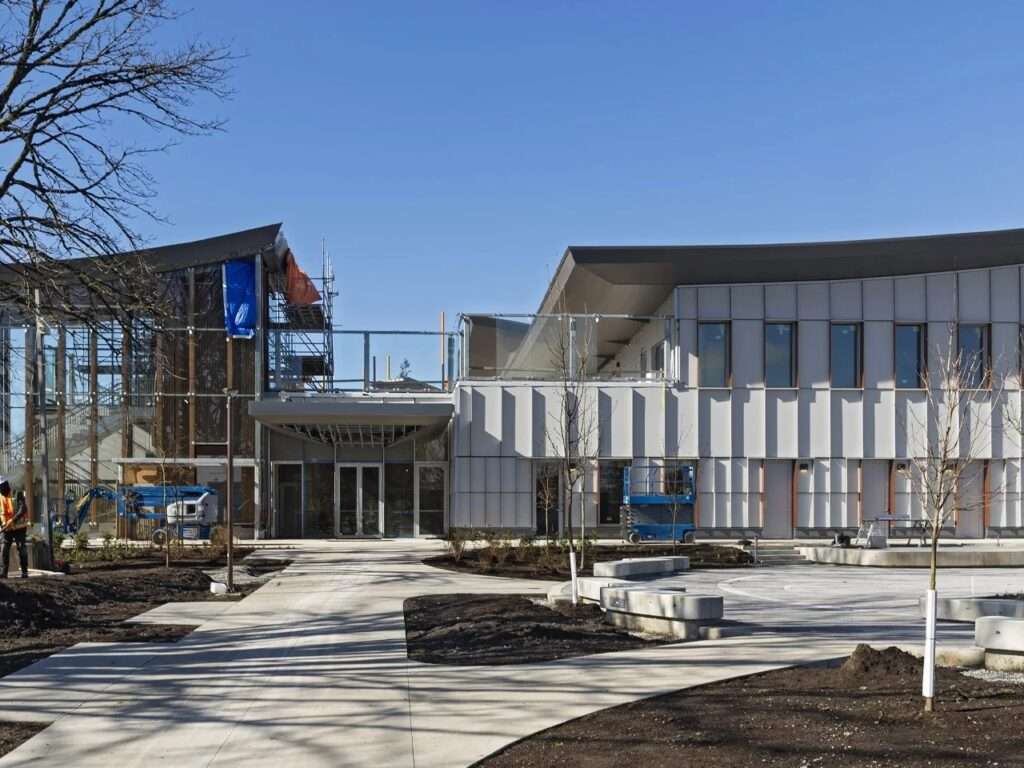
On another level, the Architecture solution focuses on minimizing intervention in the existing environment by preserving the vegetation surrounding the building. Concealing parking underground allows Oak Park to continue functioning as an open green space rather than being transformed into a dense built environment. In this way, integration with the site becomes a core Design principle rather than an additional feature.

Mass Timber Structural System and Construction Techniques
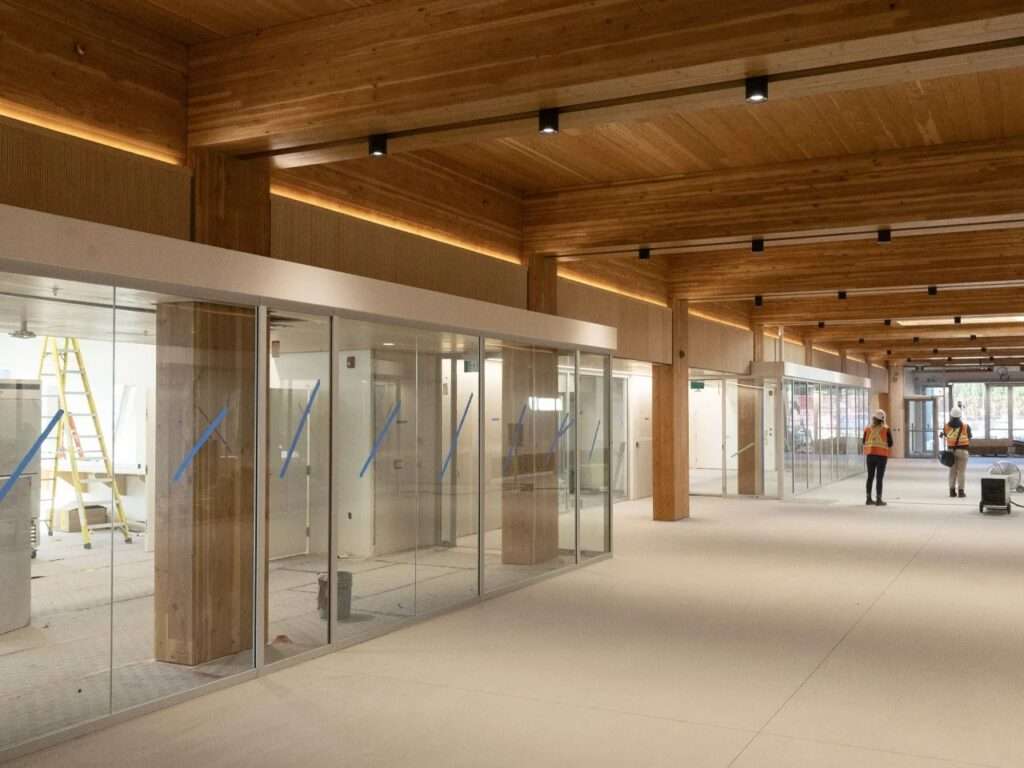
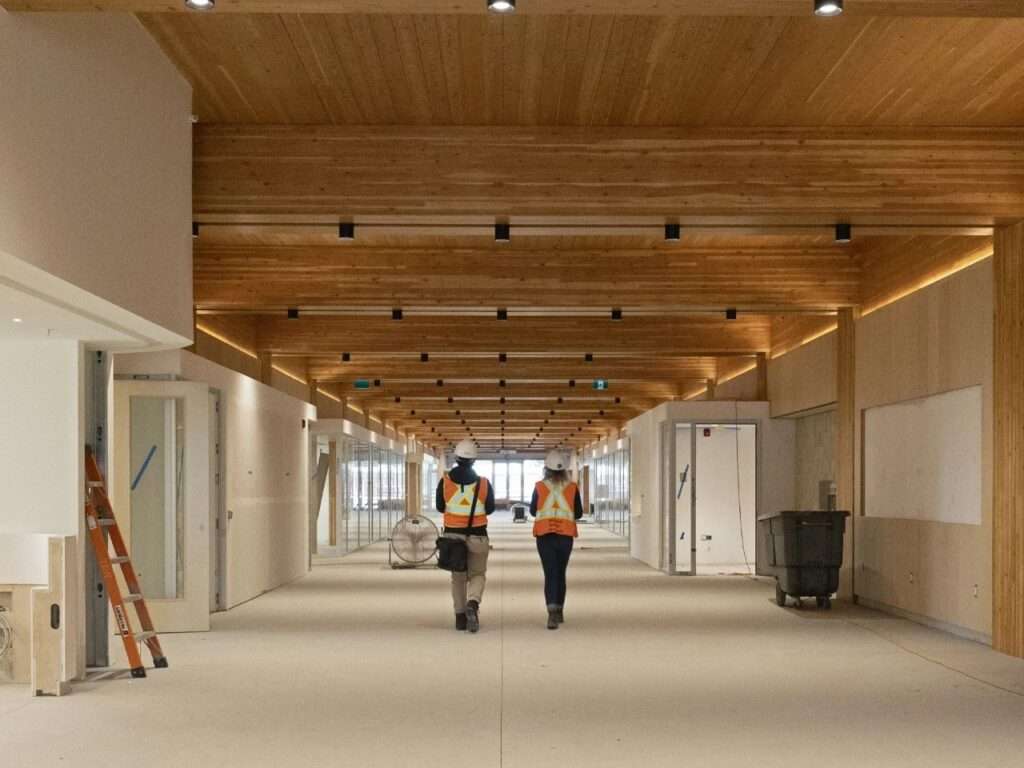
Marpole Community Centre relies on the use of mass timber as a primary structural system rather than a partial material limited to roofing, as is common in institutional buildings. The structure consists of glulam columns and beams, and a cross-laminated timber (CLT) floor system, with an upper roof supported by wide-span steel beams and CLT panels for large structural spans. As a result, the structural system appears as a unified mass rather than separate components. For more details on materials, explore our Material Datasheets.
Internal Expression of Materiality
Additionally, the timber is left exposed within interior spaces, creating a clear visual reading of the structure. This direct expression of material reduces the sense of institutional rigidity and gives the building a more human-scale character compared to conventional concrete solutions. Consequently, the structural system becomes part of the user’s visual experience rather than a hidden background element. This approach aligns with principles of Interior Design that prioritize human connection.
Roof and Relationship with the Site
On the other hand, the curved roof stands out as a key organizing element in the composition. The double-curved cantilevered form relies on long-span steel beams, requiring precise coordination among all parties involved in Construction. As a result, the roof reads as a unified visual element from the exterior, while internally it becomes part of the spatial experience. Glass openings introduce the natural landscape into the interior while maintaining energy performance efficiency and connecting users to the natural environment of Oak Park.

Environmental Performance Standards
The building aims to achieve both Passive House and LEED Gold certifications within its environmental performance framework. It has already achieved a 41% reduction in embodied carbon. In addition, it serves as a pilot project for the City of Vancouver’s embodied carbon guidelines, making its outcomes a potential reference for future civic building development. The project also seeks to meet the Zero Carbon Building Design Standard issued by the Canada Green Building Council (CAGBC). Read more Research on sustainable practices.
Social and Cultural Design Principles
On another level, the design of the center is based on principles of inclusivity, equity, and Indigenous cultural representation as integral parts of the design process rather than later additions. These considerations are embedded within the project logic from the earliest stages instead of being treated as formal requirements. Such topics are frequently discussed in Discussion forums.
The Role of the Community Center in the Urban Context
In a diverse neighborhood such as Marpole, this approach gains additional significance. Community centers are typically among the most expressive buildings of a city’s democratic character. Accordingly, this project presents a model that demonstrates the possibility of combining this social role with a higher level of architectural and organizational thinking. Explore similar examples in our Archive.


✦ ArchUp Editorial Insight
The Marpole Community Centre operates as a municipal administrative outcome shaped by the intersection of public procurement cycles, emissions reduction constraints, and the inability of aging civic infrastructure to keep pace with rising demand. The replacement decision reflects not architectural ambition as much as the accumulation of deferred maintenance risks and demographic pressure within Vancouver’s public service network. The distribution of functional programs such as daycare, fitness, and senior use reorganizes occupancy densities according to age groups rather than being a purely design-driven choice. The relocation of parking underground represents a compromise between land-use constraints and the preservation of surface green space within planning systems. The timber structure functions as an accounting tool for embodied carbon aligned with environmental reporting frameworks. Regulatory standards such as LEED and Passive House become direct drivers of spatial formation, turning the building into a negotiated outcome between cost, compliance, and public service capacity. For updates on similar civic Projects, stay informed with the latest Architectural News.