Mohammed VI Tower Rises as Morocco’s Tallest Skyscraper in Rabat

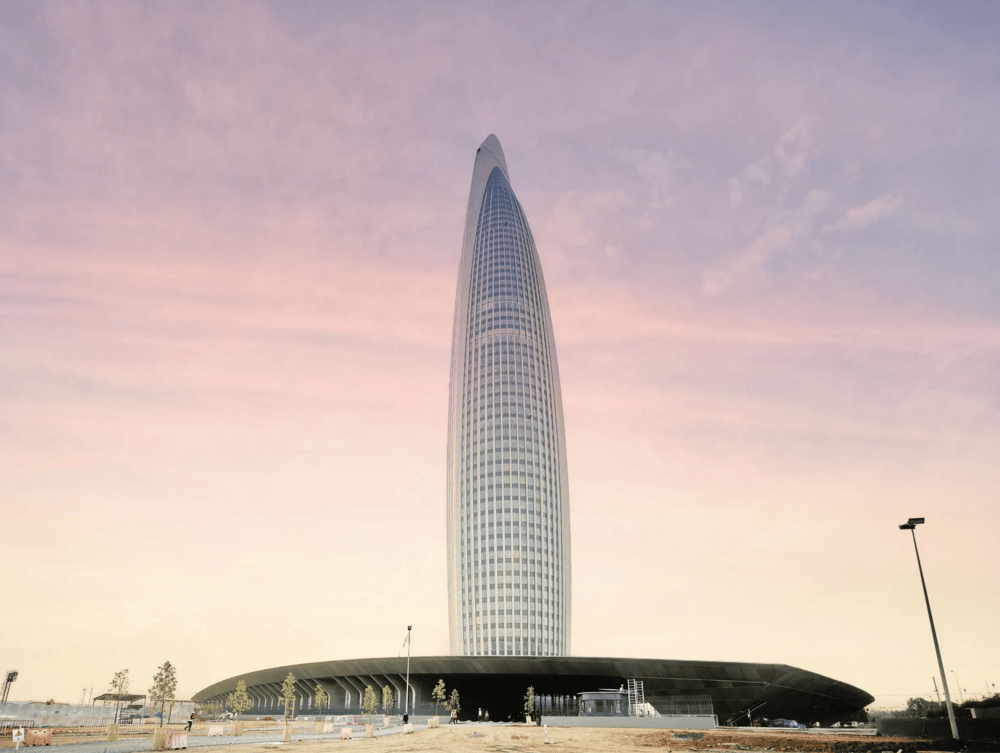
Morocco has inaugurated the 250m Mohammed VI Tower in Rabat, now the country’s tallest structure. The 55-storey skyscraper stands on the Bouregreg river’s right bank. Its silhouette remains visible from 50km away. The project strengthens Rabat’s skyline and signals a shift in national high-rise development.
A New Landmark in Morocco’s Urban Skyline
The Mohammed VI Tower introduces a new scale to Moroccan architecture and reshapes the capital’s profile. Developers positioned the tower within a broader riverfront regeneration strategy. As a result, the project connects with ongoing urban planning efforts in Rabat.
The building offers 102,800 sq m of floor space. It combines a hotel, offices, residential units, and a panoramic observation deck. Meanwhile, 36 elevators serve the complex, including 21 in the tower and 15 in the podium. This vertical mix transforms the structure into a self-contained urban hub rather than a single-use high-rise.
Engineering for Height and Resilience
Engineers anchored the tower on 60m-deep foundations using 104 concrete barrettes. These foundations protect the structure against seismic risks and potential flooding. Therefore, the project responds directly to regional environmental conditions.
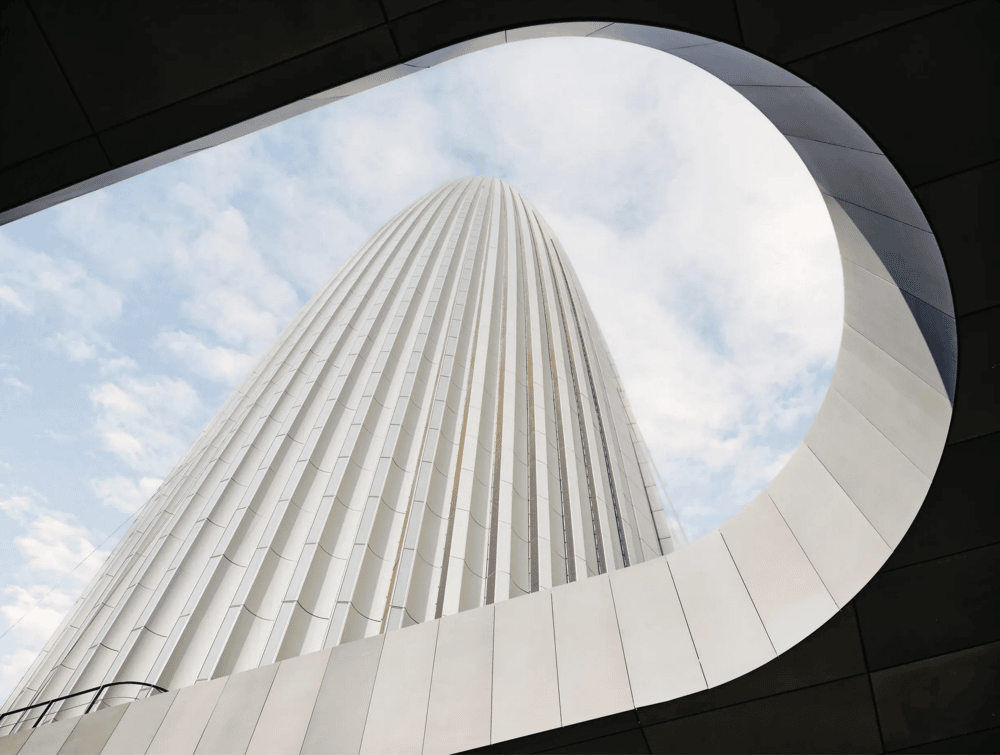
The structural system combines a high-strength concrete core with an outer steel frame. This tube-in-tube approach distributes lateral loads efficiently. Moreover, a 160-tonne mass damper at the crown reduces wind and seismic movement. These strategies place the tower among advanced high-rise buildings in North Africa.
During construction, teams deployed a BIM-guided robotic system to trace complex floor plans directly onto slabs. The technology improved precision and reduced layout errors. Consequently, digital workflows played a central role in delivering the project.
Energy Strategy and Environmental Performance
The façade minimizes solar heat gain to reduce cooling demand. This approach addresses Rabat’s warm climate and high sun exposure. In addition, the podium roof integrates 2,200 sq m of photovoltaic panels.
Another 1,800 sq m of solar panels cover the south façade. Together, these systems contribute to the tower’s on-site energy generation. The design team selected high-performance building materials to improve thermal efficiency. As a result, the project aligns with broader goals of sustainability in large-scale towers.
The mixed-use program also shapes the internal layout and interior design. Public and private functions stack vertically, while the observation deck crowns the tower with panoramic city views.
A Quick Architectural Snapshot
Mohammed VI Tower reaches 250m with 55 storeys and 102,800 sq m of mixed-use space. Deep concrete barrettes anchor the structure against seismic forces. A tube-in-tube system and 160-tonne damper ensure stability. Integrated solar panels and climate-responsive façades enhance environmental performance in Rabat’s evolving skyline.
✦ ArchUp Editorial Insight
The vertical expansion in Rabat functions as a spatial response to institutional centralization and land value intensification. This tower does not emerge from aesthetic preference but from a strategic decision to consolidate corporate and administrative functions into a singular, high-density footprint. Economic pressures within emerging markets often mandate such recognizable landmarks to secure foreign direct investment and signal market stability. The technical reliance on seismic dampers and robotic floor planning reflects a shift toward globalized construction standards that bypass local labor limitations in favor of automated precision. By concentrating luxury hospitality and commercial zones within a secured vertical envelope, the project mirrors a broader urban behavior of creating self-sufficient micro-climates. This project is the logical outcome of state-led urban branding + capital densification + the adoption of standardized international engineering protocols.