Moonrise: Lightweight Public Space Design

Mass Formation and Spatial Dynamics
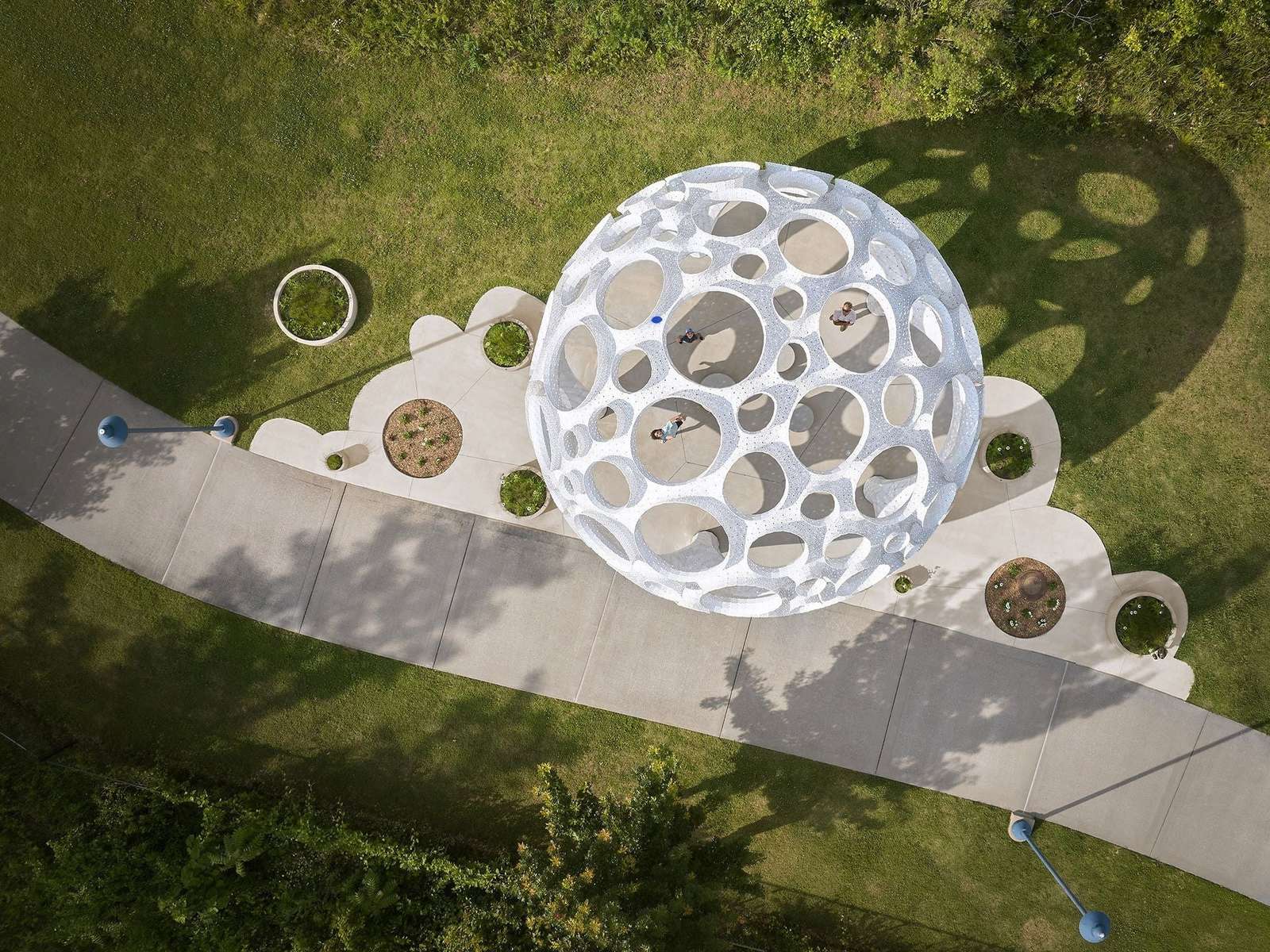
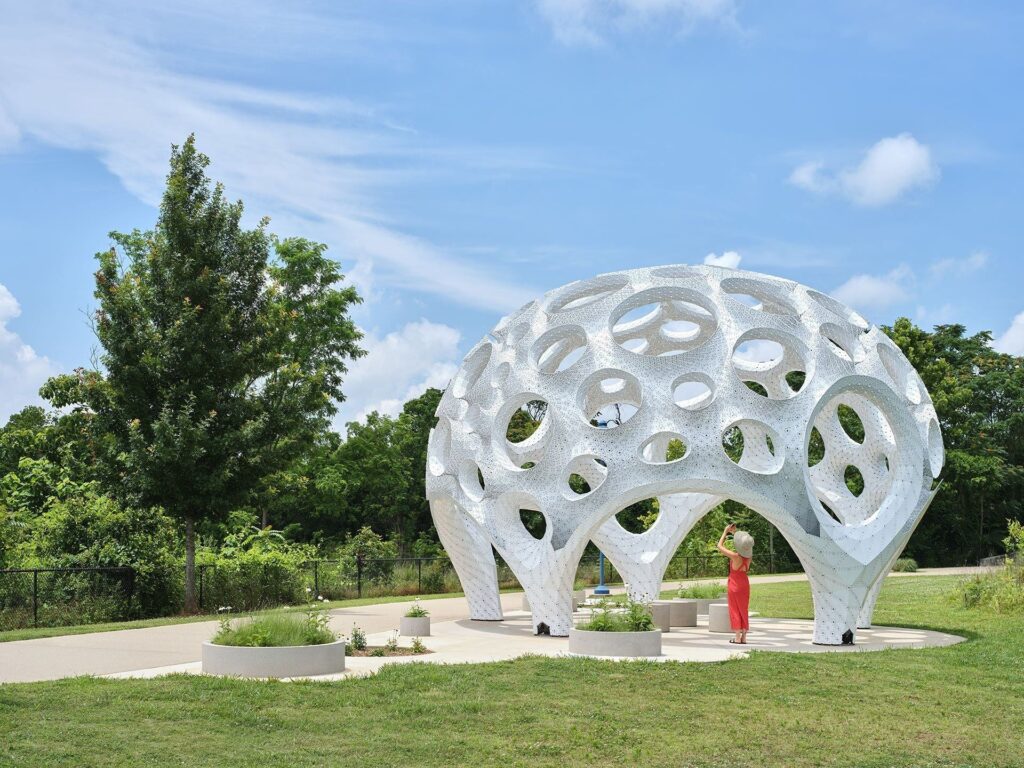
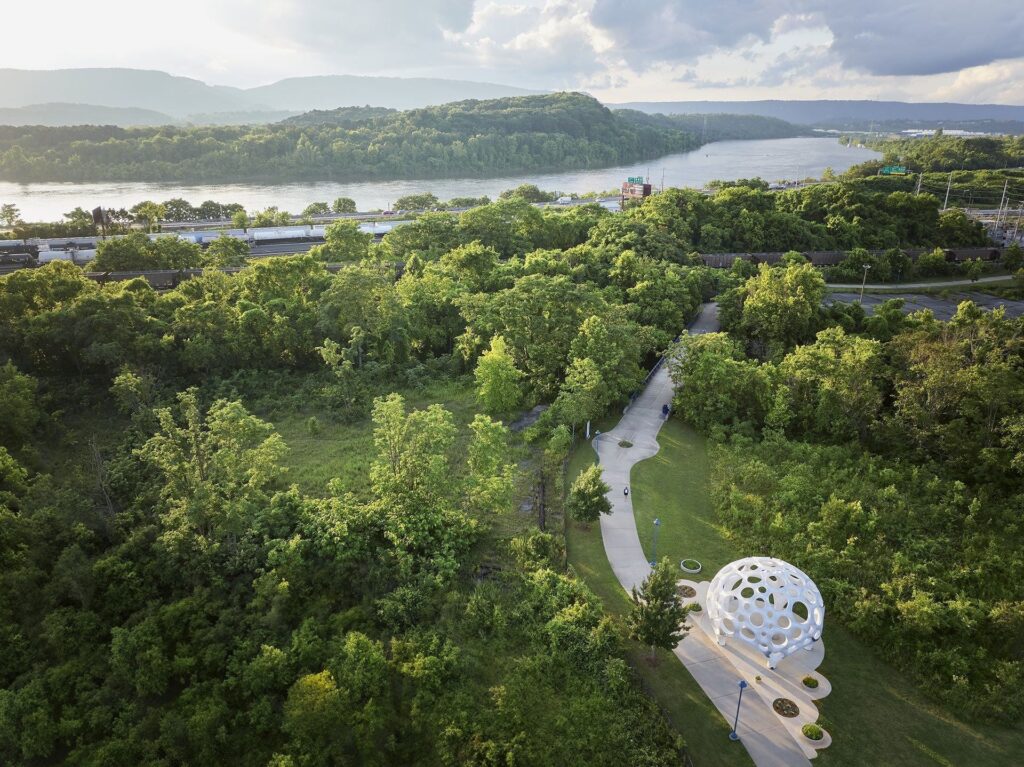
The artistic composition functions as a tool for redefining public space at the starting point of the pathway, where the architectural structure translates the scene of moonrise into a tangible spatial experience. The structure takes the form of an organically shaped dome that deconstructs the traditional notion of space and creates a qualitative gathering zone, encouraging visitors toward conscious passage and contemplation rather than transient movement. Through this formation, the work transforms from a static sculptural object into a living environment that accommodates human movement and integrates seamlessly within the natural context of the urban park.
Scenographic Interaction and Material Lightness
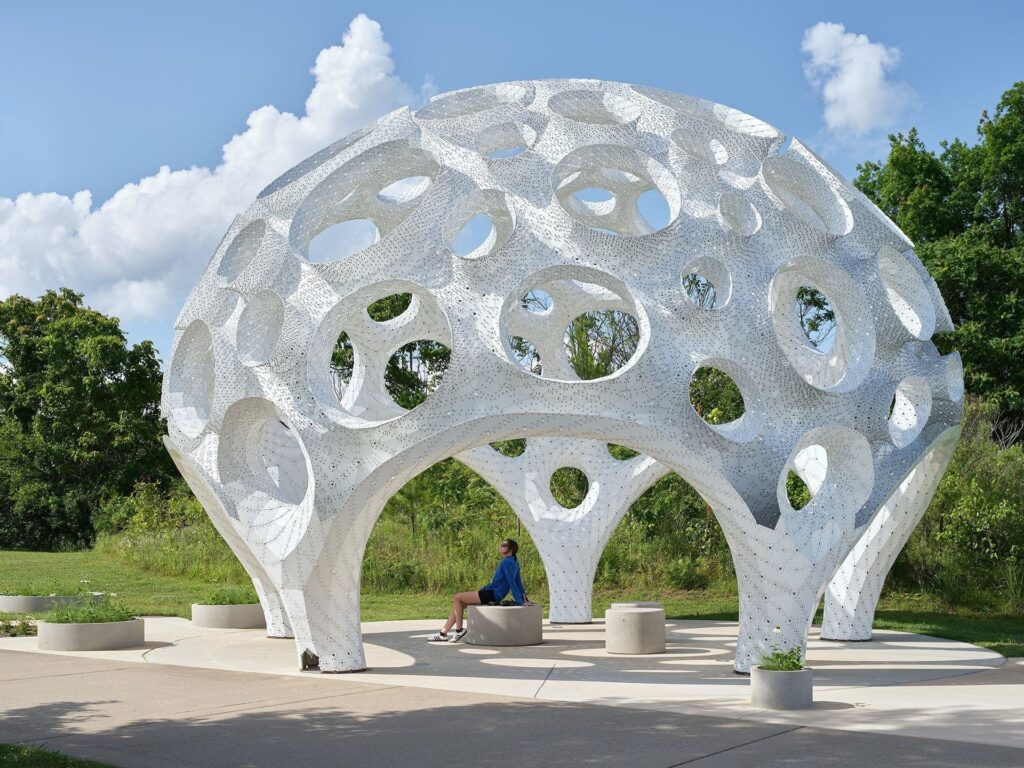
The efficiency of the structure is achieved through an engineering system based on a double-layered shell of ultra-thin aluminum strips not exceeding 3 millimeters in thickness, precisely assembled using metal bolts to form an interwoven, self-supporting network. This structural technique not only achieves sustainability and reduced material consumption, but also grants the building a dynamic scenographic character; the perforated skin acts as a dynamic filter for daylight, casting shifting patterns of light and shadow onto the ground and visitors, following the sun’s trajectory and continuously transforming the psychological and material atmosphere of the space throughout the day.
| Category | Details |
|---|---|
| Architects | Marc Fornes / THEVERYMANY |
| Photography | Keith Isaacs |
| Materials | 3-millimeter-thick aluminum structural strips, rivets |
| City | Chattanooga, Tennessee |
| Country | United States |
Human Experience and Spatial Transition
Through this structure, the space transforms from a conventional garden passage into a conscious spatial threshold separating the terrestrial horizon from the aerial realm, establishing a new kinetic rhythm that encourages visitors to pause, enter, and then direct their gaze upward. This human experience is defined by a visual dialectic that combines the intimacy of spatial enclosure within the dome with an infinite openness to the external environment, making collective imagination a means of exploring overlapping scales of the landscape and transforming celestial observation into an immersive and tangible everyday practice.
Structural Efficiency and Organic Expression
The mass formation of the structure goes beyond the conventional construction of domes by adopting the principle of material efficiency based on “maximum output with minimum input,” an extension of Buckminster Fuller’s structural theories. Through the use of contemporary computational design and precise digital fabrication technologies, the design language succeeds in adapting solid material into a fluid architectural presence of high organic expressiveness. Digital precision contributes to achieving exceptional structural strength with minimal mass, integrating material balance with the visual and environmental impact of the space.


Perceptual Gradation and Spatial Experience
The structure activates multiple perceptual levels that evolve with the distance of human approach. From a distant view, the curved formation is read as a visual landmark and urban sculpture that gives the starting point of the path a clear identity and orientation. Upon approaching and entering the space, the experience becomes more dynamic and immersive, where layered surfaces guide movement, frame external views, and the continuous variation of light and shadow establishes a slower kinetic rhythm, encouraging users to shift from mere passage to a state of awareness and conscious engagement with space.
Structural Lightness and Material Scenography
The structural solidity of the composition is achieved through a double-layered shell of ultra-thin aluminum strips not exceeding 3 millimeters in thickness, relying on the accumulation and interlocking arrangement of thin elements assembled with bolts instead of solid mass construction. This architectural technique gives the structure a near-weightless appearance, as if it floats within space, without compromising the required durability to withstand outdoor environmental conditions. It materially translates the studio’s research into complex geometries and lightweight surfaces that transform material language into a scenographic instrument interacting with air and light.


Symbolic Identity and Psychological Impact
The philosophical concept of the installation is connected to a broader state of human fascination with space exploration, embodied in the crewed Artemis II mission of the Space Launch System and Orion spacecraft, which orbited the Moon and returned to Earth. Although the project does not directly replicate this astronomical mission visually, it borrows its psychological effect based on cognitive curiosity, transforming architecture into a physical medium for framing cosmic wonder and making it a shared lived experience. The mass formation interweaves with the atmospheric presence of space to create an environment that encourages imagination, contemplation, and conscious observation.
Adaptive Space and Fabrication Scenography
The architectural structure dissolves fixed functions and programs to present a flexible civic space that allows for spontaneous local practices ranging from gathering and resting to free observation. This spatial flexibility is integrated with a design language that balances thin metal material with advanced digital fabrication techniques, producing a structure that is materially efficient and highly durable, while also carrying emotional and scenographic depth that responds to changing human movement. This enhances the role of architectural experimentation in reshaping public spaces and enriching them with sustained sensory and visual dimensions.

✦ ArchUp Editorial Insight
The project redefines public art as an ultra-light performative structural model, employing advanced computation to shape 3-millimeter aluminum panels, transforming astronomical phenomena into a tangible civic refuge. This combination transcends traditional building masses, activating a design methodology that subordinates structural engineering to elevate an overlooked pathway into a socially grounded and emotionally resonant urban anchor.
In contrast, this highly parametric digital fabrication risks romanticizing material reduction while overlooking its long-term stress performance in open public environments. Despite the formal fluidity achieved through computational processes, reliance on thousands of exposed mechanical joints generates localized stress concentration points, turning the digital abstraction into a future maintenance burden that threatens the long-term durability of the structure. For further reference, see related research on material performance and construction techniques.