Gardeners’ Shelter: Mass and Transparency in the Orchard

Dialectic of Mass and Transparency in the Orchard Context
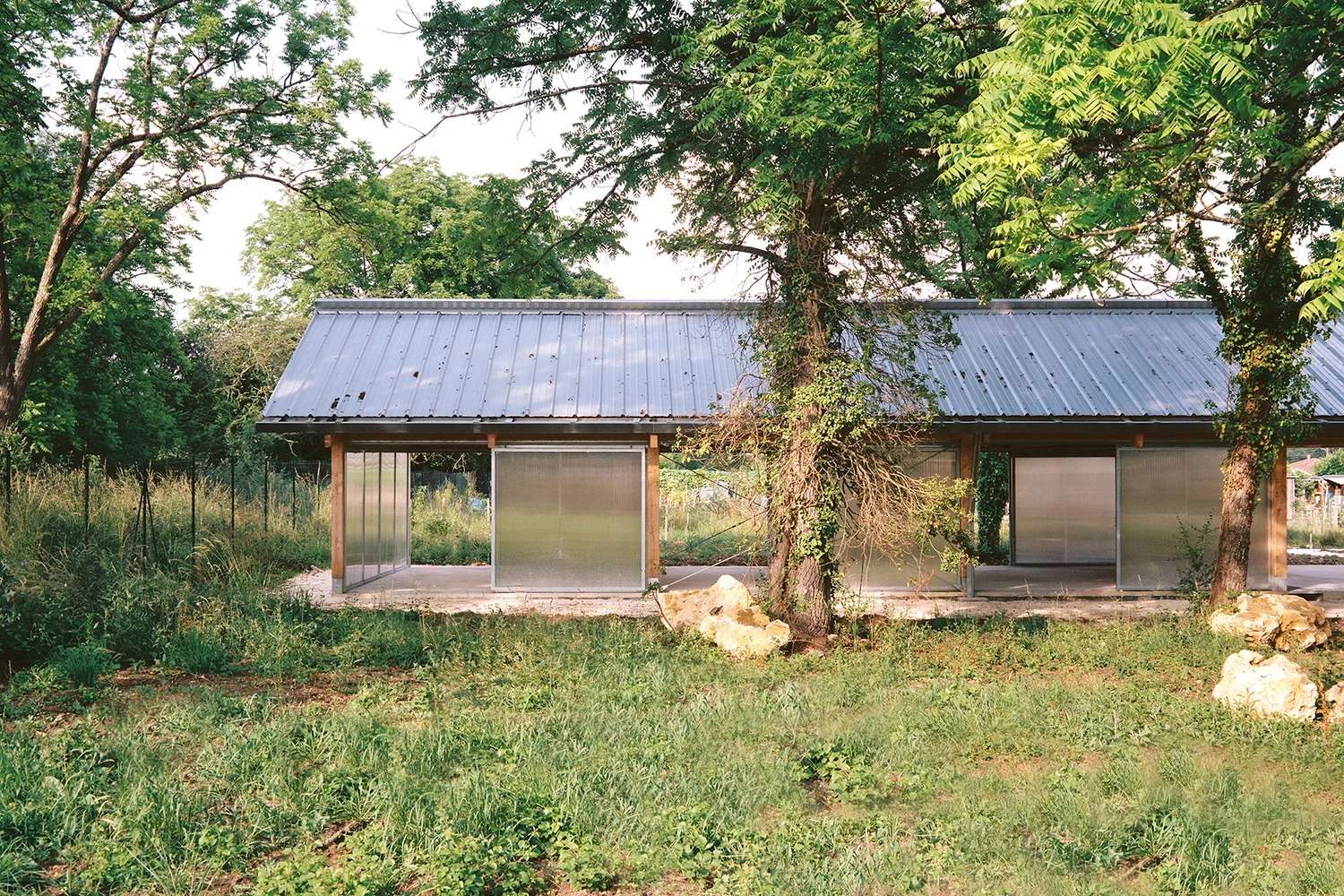
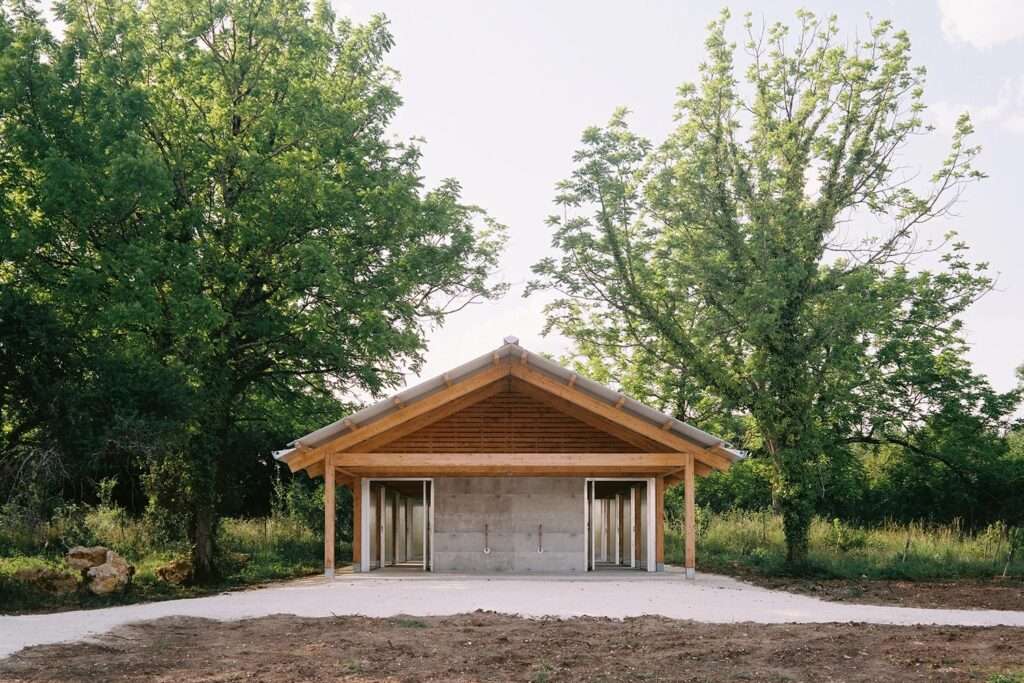
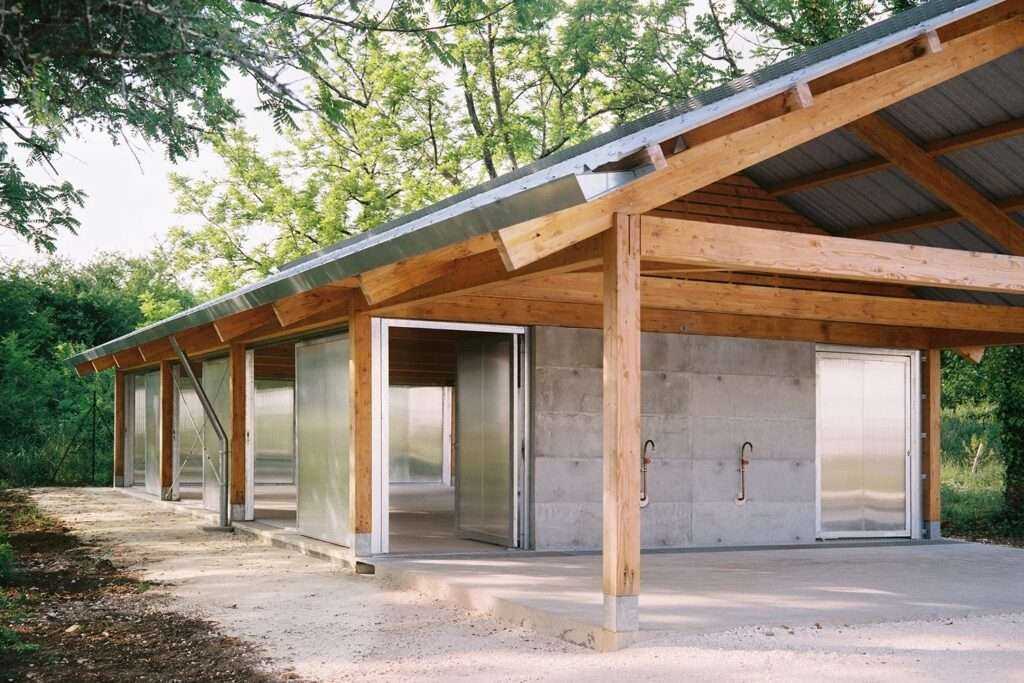
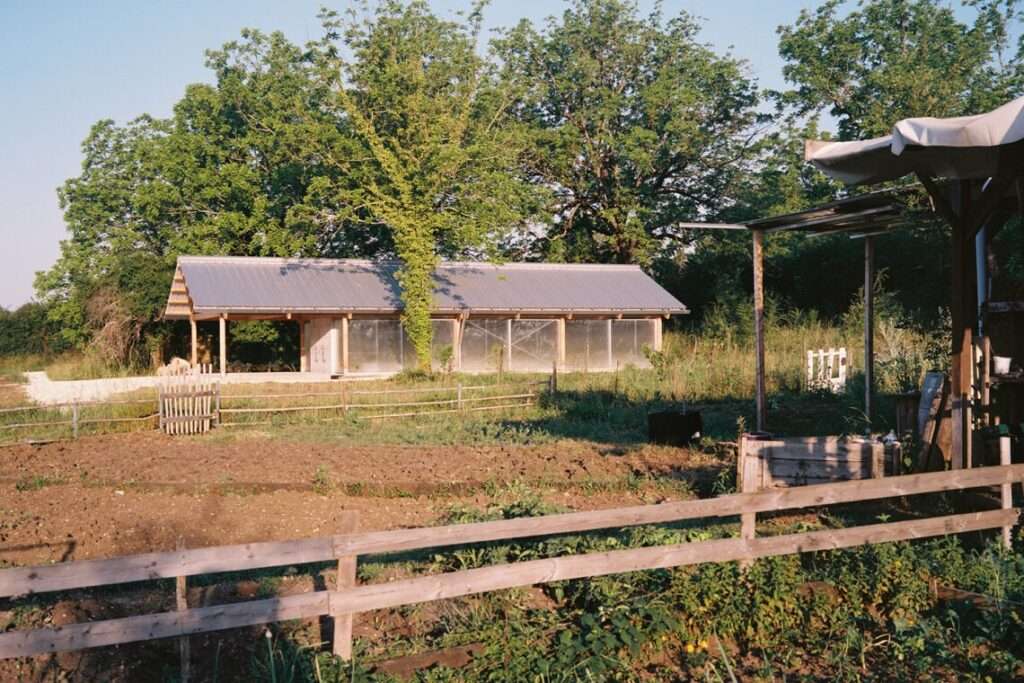
The project engages with its natural context through a conscious contrast between the solidity of materials and the lightness of space; reinforced concrete establishes a solid base that anchors the building to the ground, while the timber structure rises to visually integrate with the surrounding tree trunks. Building Materials like polycarbonate panels give the outer envelope a dynamic transparency that not only produces diffused natural light free of harsh shadows within the space, but also transforms the building at night into a glowing lantern that merges with its wooded surroundings, achieving a continuous living interaction with the sun path and air movement.
Kinetic Scenography and the Human Experience
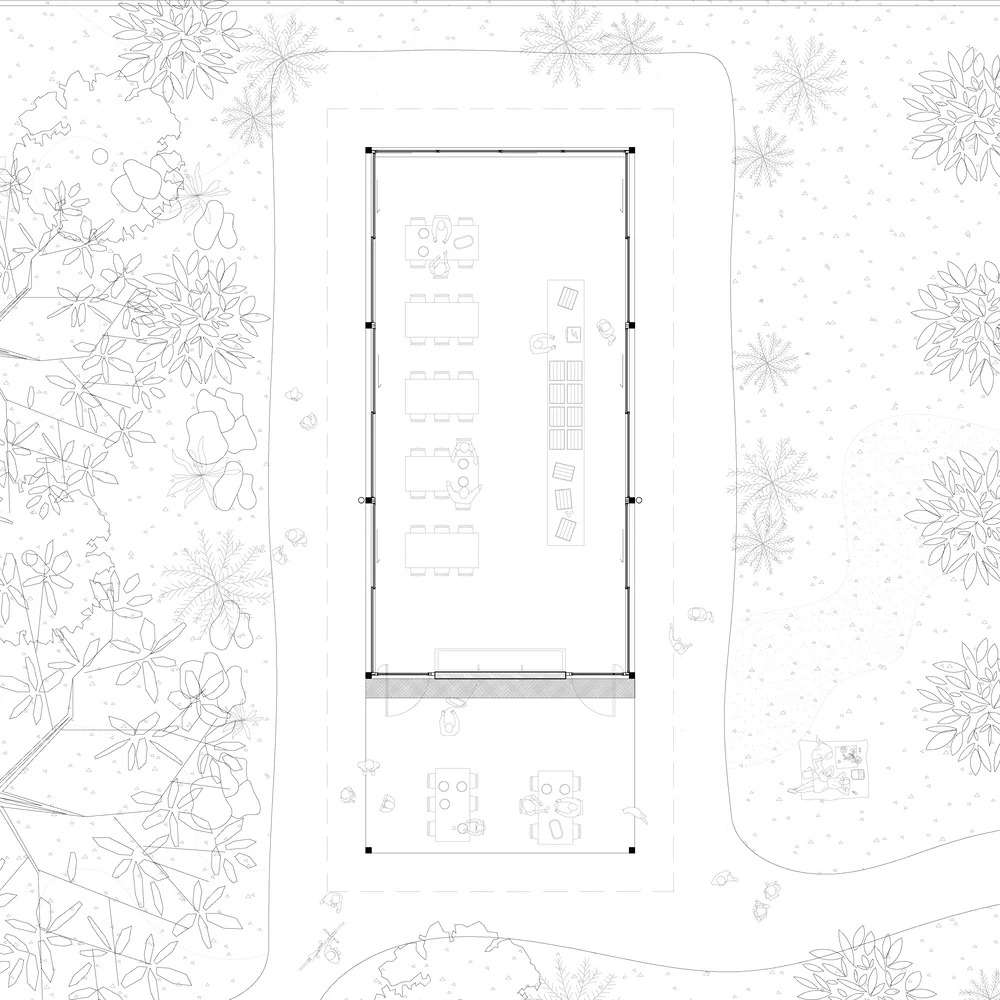
The experience of passage and movement within the “Gardeners’ Shelter” is shaped as a visual journey that redefines the relationship between interior and exterior; the user experiences entry as a transition from beneath the natural shade of the orchard into an architectural space that reconfigures that same shade through its translucent surfaces. The flexibility of the Design and its functional adaptability allow multiple community activities to occur without visual barriers, generating a sense of openness and psychological comfort, where the space shifts from a mere point of exchange and storage into a living platform that enhances everyday human interaction under a light-filtering canopy.
| Field | Details |
|---|---|
| Architects | :contentReference[oaicite:0]{index=0} |
| Area | 150 m² |
| Year | 2023 |
| Photography | Agnes Clotis |
| Lead Architects | :contentReference[oaicite:1]{index=1} |
| Program / Use / Building Function | Shelter for gardeners |
| City | Villenave-d’Ornon |
| Country | France |
Environmental Interweaving and the Formation of the Transitional Space
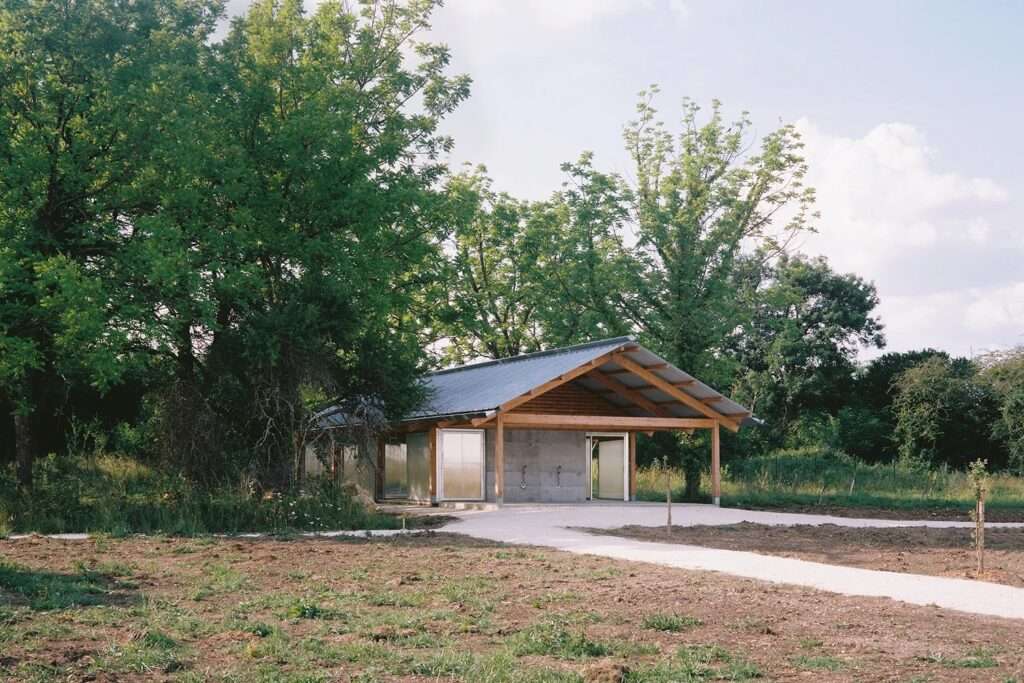
The building is rooted in its natural context as a conscious architectural response to the allotment garden environment, where the orchard is treated not as a visual backdrop but as a structural determinant that guided the massing to preserve the surrounding trees. This interweaving generates a clear kinetic scenography; the trees act as natural buffers that provide protection and climatic modulation by shaping sunlight exposure and blocking wind, producing a constantly changing natural shade that merges seamlessly with the built structure and dissolves the boundary between interior and exterior experience. Cities and their green infrastructures often inspire such integrated approaches.
Materiality of the Shelter and the Essence of Human Need
The design language centers on deconstructing the notion of shelter, reducing it to its primitive and essential elements: protection, light, and materiality. The human experience of the space is defined through a direct constructive language that responds to the sensory and material needs of the user; carefully composed masses do not only provide shelter from rain and sun, but also transform incoming light into a tool for defining circulation and movement paths. This material reduction enhances the psychological impact of the space, offering gardeners a sense of safety and connection to place, while encouraging spontaneous and vibrant community interaction within a space designed to be lived through its simple material realities. Construction techniques here emphasize honesty and accessibility.

Material Deposition and Constructive Memory in Space
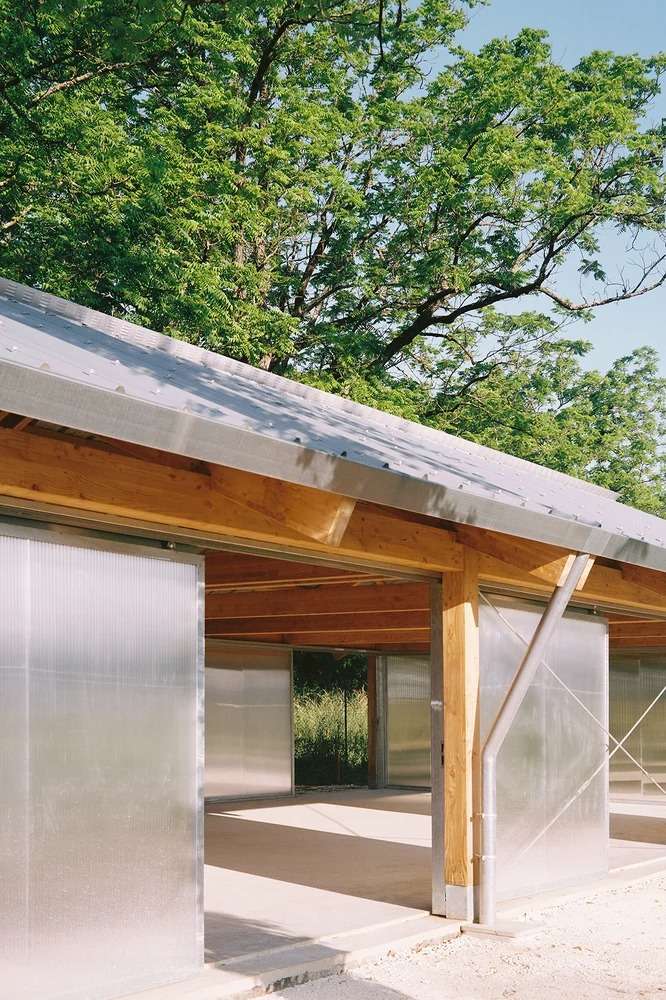
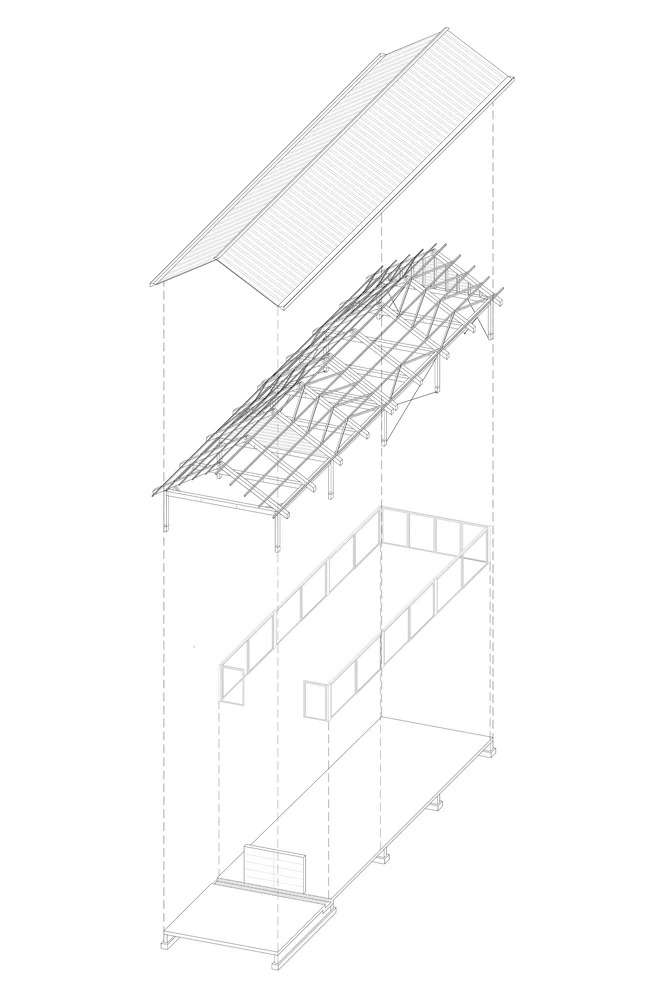
The interior space is structured around a reinforced concrete wall that functions not only as a load-bearing element, but also as a scenographic anchor that activates the collective memory of the place by integrating water points inspired by traditional regional washhouses. This solid mass is complemented by the upper timber frame and its intelligently designed lightweight cover that collects and channels rainwater, transforming the building into a living environmental device that participates in the irrigation cycle of the gardens. It also provides users with a direct material awareness of the relationship between Architecture, function, and surrounding context. Research into such integrative systems continues to inform contemporary practice.
Structural Transparency and Visual Interaction
The external façades are composed of precisely fixed polycarbonate panels within steel frames, functioning as a permeable membrane that allows filtered light to pass through while shielding wind without isolating users from their environment; these panels create a visual haze that produces a psychological atmosphere of calmness and security. The design is based on exposing structural details and assemblies, making them fully visible, allowing users during movement and passage to understand how components are constructed and interact. The structure thus becomes a clear educational experience reflecting the honest and primitive nature of shelter. Buildings that adopt this approach often redefine user engagement.
✦ ArchUp Editorial Insight
The project frames the Gardeners’ Shelter as a radical alternative to conventional municipal typologies, using exposed building materials to strip the construction process of complexity and make it accessible to users. By elevating utilitarian infrastructure, such as rainwater harvesting systems, polycarbonate membranes, and raw concrete, into performative living elements, the design transforms a small community facility into an educational statement about fundamental human shelter and collective environmental stewardship. Architects Lobby discussions frequently highlight such community-oriented models.
However, this tectonic honesty risks romanticizing the economic reality of public space management. By overemphasizing the clarity of handcrafted tectonics and local memory, the approach overlooks how underfunded municipalities rely on austere, low-maintenance structures to shift the burden of operational continuity onto volunteers, turning administrative austerity into a simplified architectural poetics. Architectural News often debates these tensions between idealism and practicality. Architecture Competitions also explore alternative solutions to such challenges, while Projects that balance innovation with maintenance realities remain critical for future resilience.