Multnomah Library Operations Center: Adaptive Reuse Model

Spatial Framing and the Experience of Passage
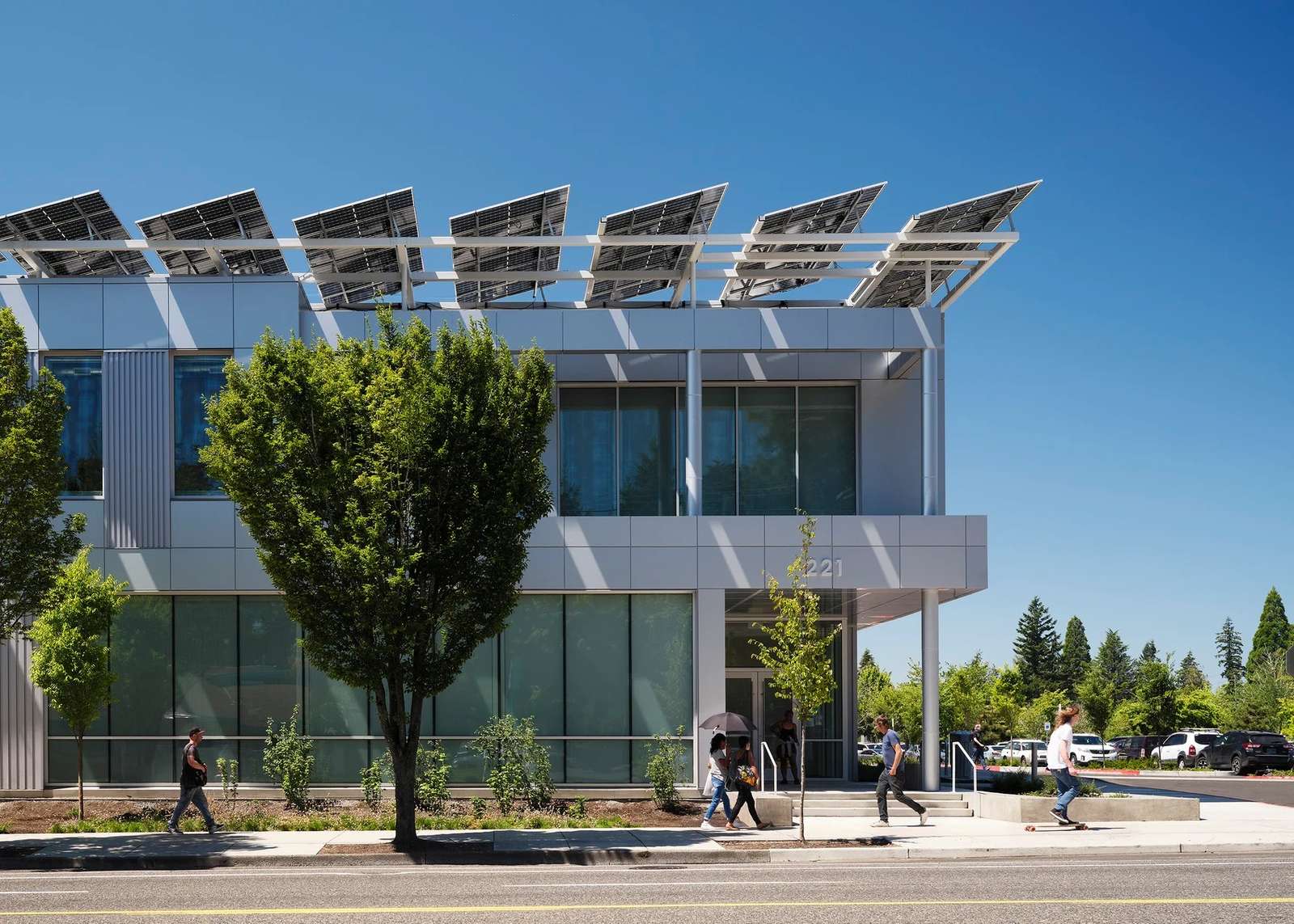
The project goes beyond the idea of structural repurposing of a former commercial facility, offering a critical reading of the reconfiguration of civic space and everyday user experience. The moment of entry and passage is transformed from a conventional consumer-driven circulation pattern into a guided movement path governed by operational efficiency and psychological comfort. The monolithic mass of the former store has been deconstructed and reorganized internally to integrate group management and logistics services within a flexible spatial flow. Users experience transitions between administrative functions and awareness programs through carefully designed circulation corridors that eliminate any sense of congestion, while providing staff with clear visual connections between different working environments and direct access to outdoor facilities. This enhances kinetic responsiveness and strengthens the connection to place.
Environmental Scenography and Living Interaction
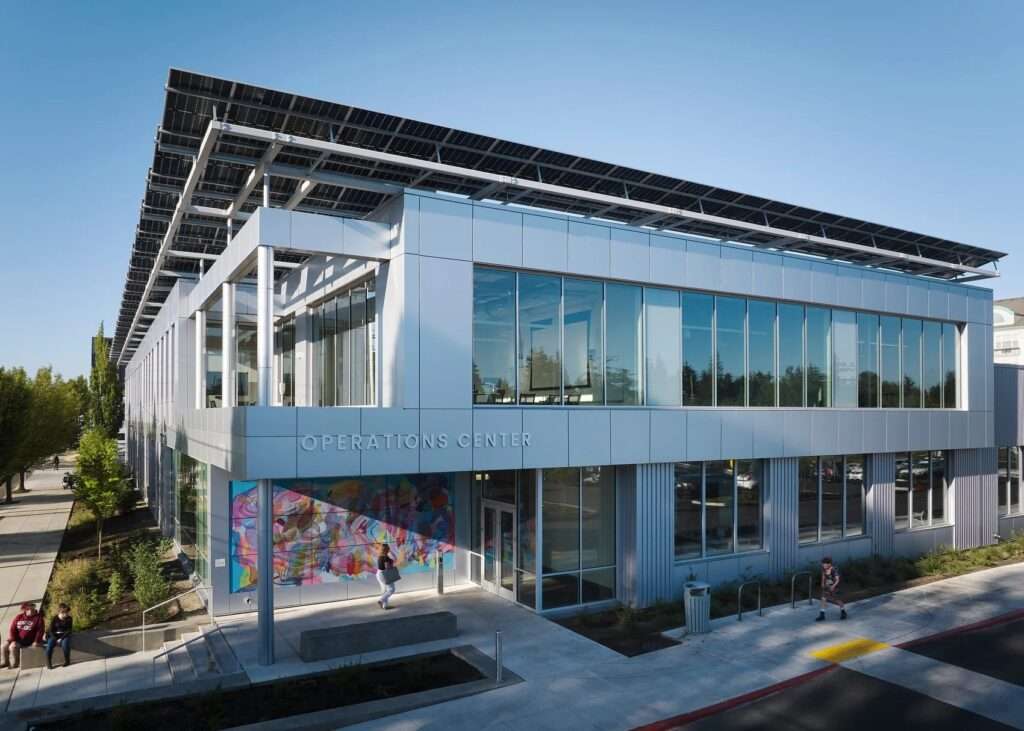
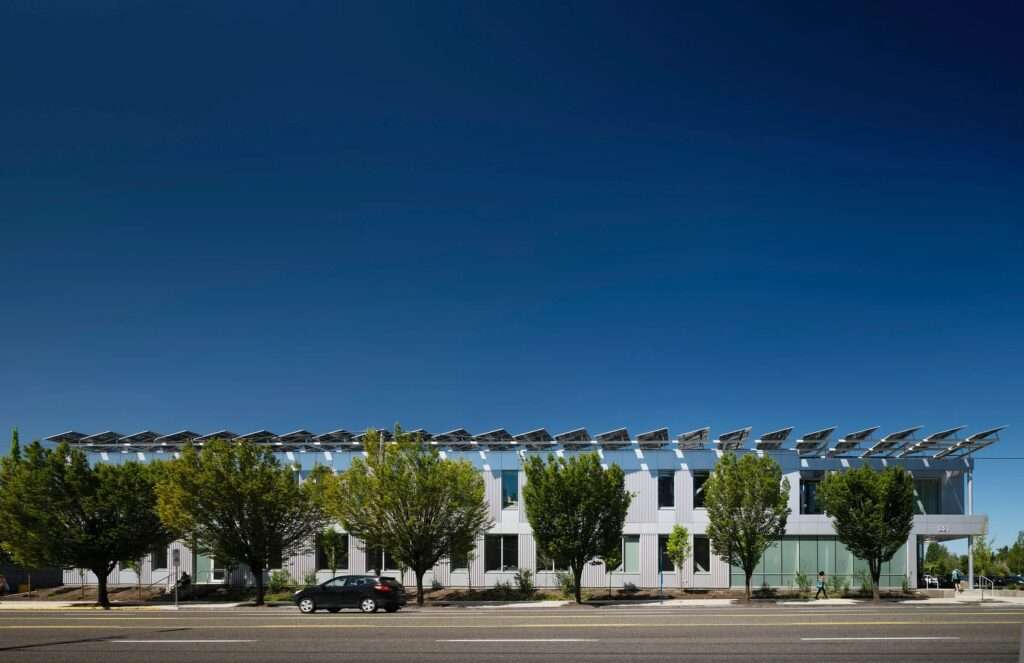
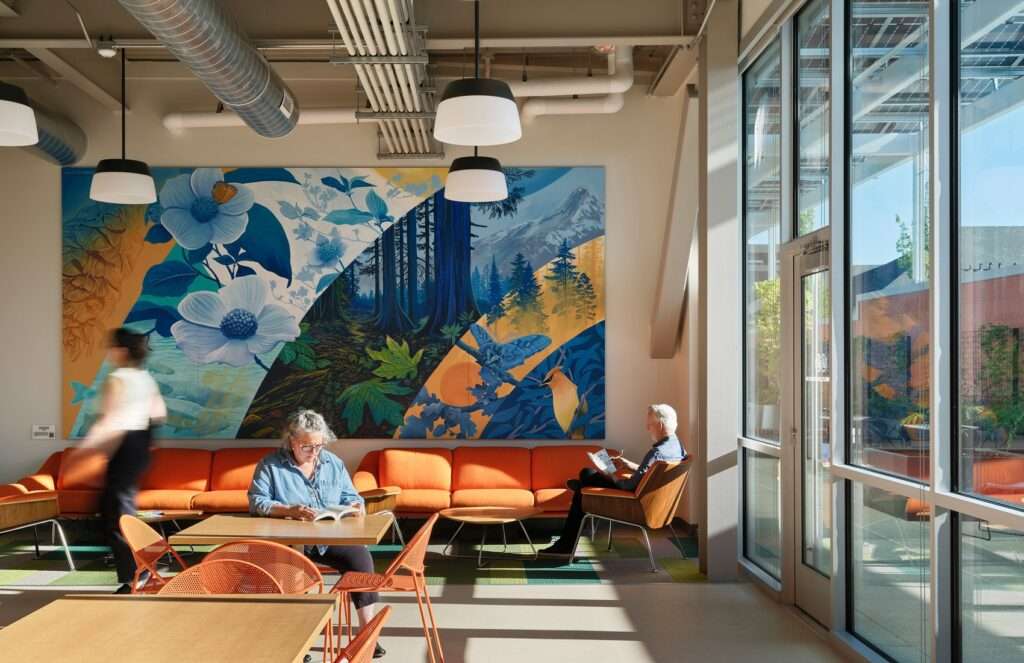
The internal structure of the building is shaped through a dynamic interaction between physical masses and natural elements, where the façades abandon their former silence to allow a continuous flow of abundant natural light penetrating deep into operational spaces. The design language reveals a living scenography through the intersection of shadows with the natural materials used in the finishes, giving the space a visual warmth that softens the rigidity of its administrative character. This deliberate modulation of solar paths extends beyond psychological and physical benefits for employee well-being, integrating functionally with the overall environmental performance. The building breathes through advanced air purification systems that emulate natural airflow, while upper volumes clad in photovoltaic cells emerge as an environmental roofscape that protects the facility and defines its sustainable identity.
Site Contextualization and Deconstruction of the Operational Mass
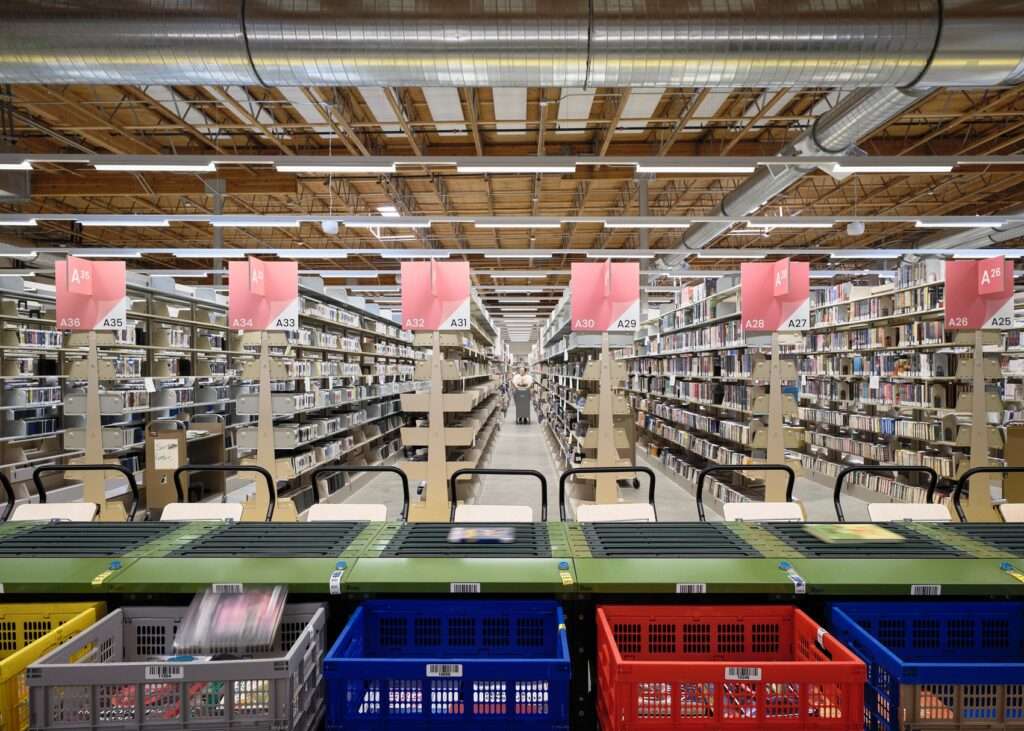
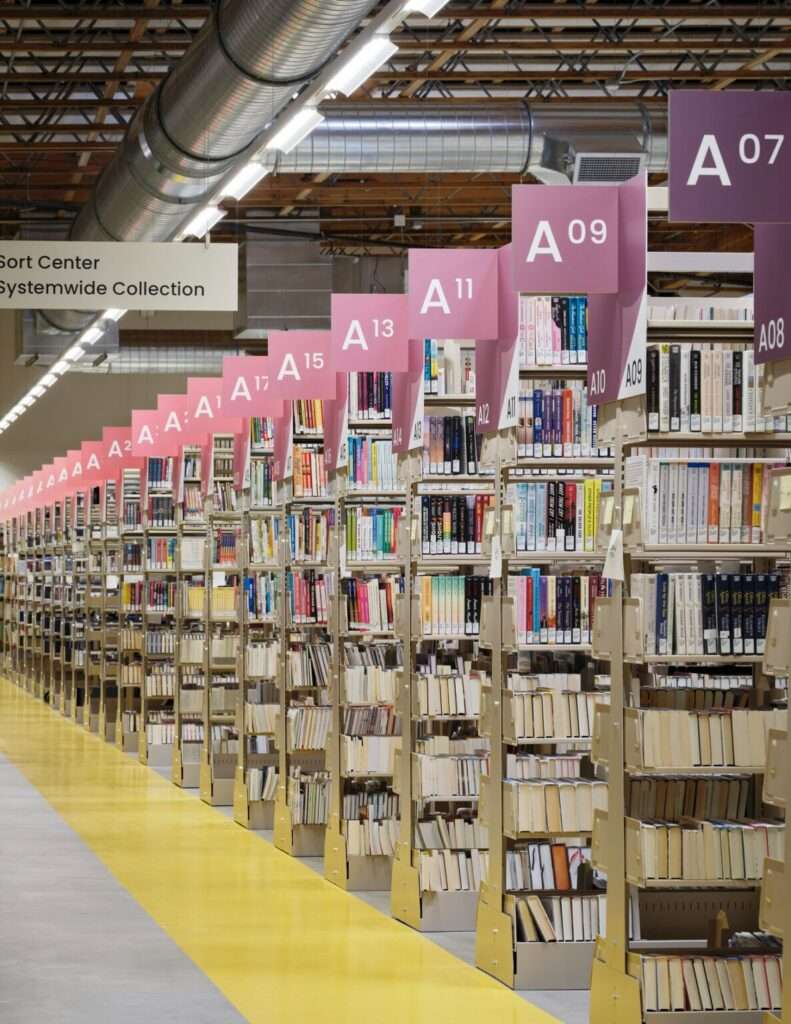
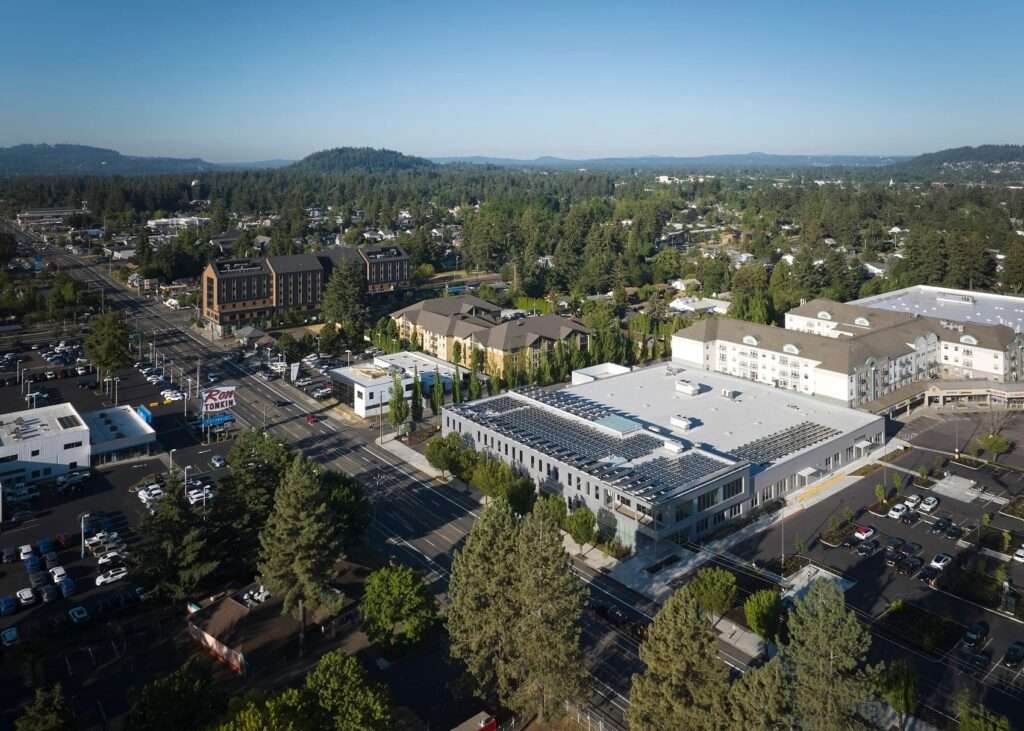
The Site Contextualization and Deconstruction of the Operational Mass shifts its architectural mass from a dormant consumer-oriented typology historically associated with vehicular movement in East Portland into a new kinetic centrality that redefines the concept of public infrastructure. The architectural depth lies in dismantling the interior space of the inactive retail store and transforming it from an open-plan consumer-oriented horizon into a complex, engineered logistics facility designed to manage the movement of physical goods. This spatial transformation forms the backbone of the office system, where circulation routes are configured to accommodate the daily flow of more than half a million indexed items. This required precise structural interventions to ensure uninterrupted material and mechanical movement without operational conflicts.
Human Experience and Spatial Scenography
The human experience within the facility unfolds through a design language that transforms the rigid logistics environment into a living and stimulating spatial experience. Workers experience entry and passage through a carefully sequenced spatial progression that balances the mechanical functionality of systems with the psychological and physical impact of the environment on users. The rigidity of the former commercial mass has been broken by introducing visual corridors that allow natural light to penetrate deep into sorting and processing zones. Material choices and spatial divisions help reduce noise generated by material movement, creating a highly efficient and specialized working environment that enhances employee well-being and reinforces their connection to the core public service role of the building.
Spatial Distribution and Natural Light Orientation
The Spatial Distribution and Natural Light Orientation design approach by Henberry Eddy Architects is based on reorganizing internal spatial relationships by distributing workstations, offices, and meeting rooms peripherally along the building’s façades. This carefully engineered orientation maximizes natural daylight penetration and provides direct visual connections to the exterior, transforming the conventional administrative spatial experience. In contrast, the darkness of deeper zones is broken up by introducing skylights that allow vertical daylight penetration directly into the central collection areas, creating a daily circulation experience defined by visual clarity and psychological and physical comfort for users during movement and work.
Visual Scenography and the Psychological Impact of Materials
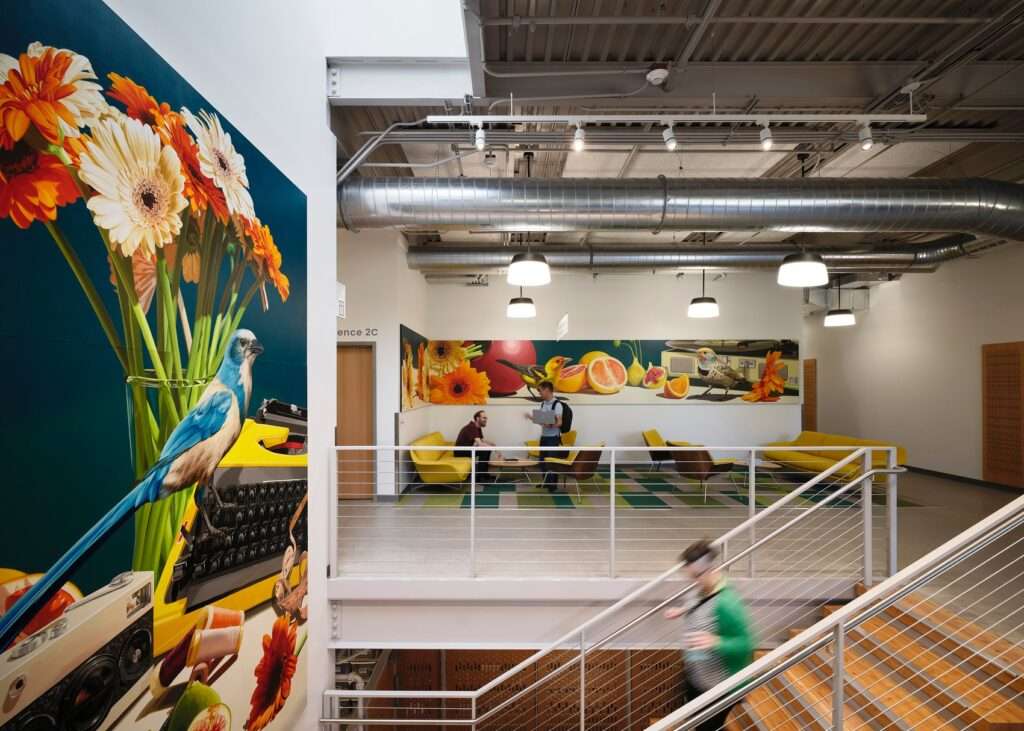
The internal spatial language is formed through a deliberate material interaction that balances strict logistical functionality with human warmth. Selected wooden finishes introduce a scenographic effect that softens the industrial character of the building, where light and shadow intersect across wooden surfaces to create a sense of openness and comfort. This material treatment merges with the visual dimension of large-scale murals developed in collaboration with the Portland Street Art Alliance and local artists, transforming the interior environment from a purely functional operational center into an expressive spatial field that emotionally connects employees to the identity of the surrounding local community.
Spatial Gradation and the Experience of Human Relaxation
The architectural design moves toward addressing the psychological and physical needs of users through a spatial sequence that balances intensive production areas with zones of isolation and restoration. This is expressed on the second floor through an outdoor terrace designed as a transitional space that allows employees to experience fresh air and maintain visual connection with the surrounding environment during breaks. In contrast, intimate interior spaces are deepened through dedicated enclosed wellness rooms that provide full privacy, personal support, and nursing functions. This carefully calibrated contrast between external openness and internal containment creates a comprehensive human experience that supports psychological balance within the workplace.
Environmental and Structural Treatment of the Architectural Mass
The engineering approach extends beyond surface aesthetics to address the material and regional challenges of the site as part of a broader scenography of safety and resilience. Advanced air purification systems are integrated into the building’s spatial structure to respond to seasonal environmental conditions such as wildfire smoke, ensuring stable and high-quality indoor air conditions. This invisible protective layer is complemented by visible structural interventions that enhance the building’s seismic resistance. The synergy between environmental technologies and structural upgrades grants the architectural mass high functional efficiency, safeguarding users and supporting their long-term health and safety.
Logistical Fluidity and Deconstruction of Operational Movement
Operational efficiency within the facility is manifested through an advanced circulation system that integrates automated material-handling technologies at the core of the architectural space. This engineered distribution enables fast and organized logistics management for books and resources, reducing wasted space associated with conventional storage while accelerating distribution across the county. This flexible automated flow also frees human movement within the building, shifting staff away from heavy manual transport toward interactive tasks and public service functions, thereby reshaping the workplace from a rigid, monotonous environment into a space that fosters communication and community engagement.
Spatial Intersection and the Scenography of Public Interface
The building moves beyond its operational isolation as a back-end service center by introducing a direct, interactive interface with the surrounding civic environment. This spatial positioning is realized through the integration of the Rose City Reads bookstore, operated by the Friends of the Multnomah County Library, which functions as a transitional gateway connecting the public to the building’s internal operational core. This material overlap creates a lived passage experience for visitors, where user circulation intersects with the cultural identity of the place, transforming the building’s commercial frontage into an active civic interface that enhances the project’s psychological and material impact on the surrounding neighborhood.
Tectonic Analysis and Embodied Carbon Reduction
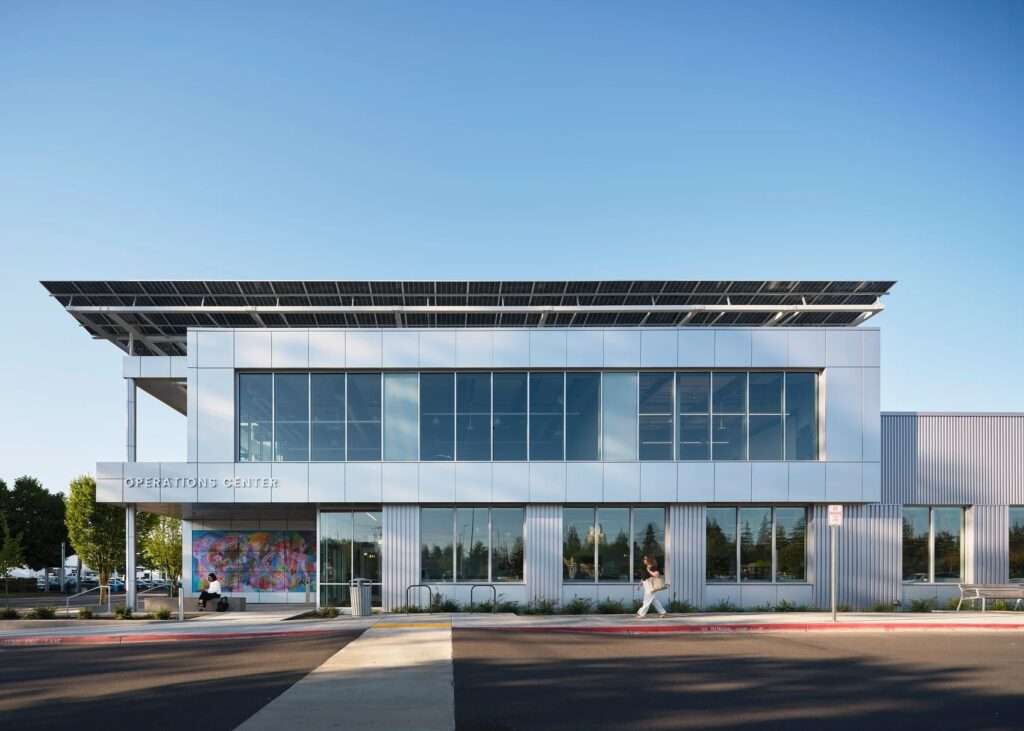
The critical value of the project lies in its tectonic strategy, which begins with retaining the existing structural frame of the former grocery store and efficiently repurposing it. This architectural decision significantly reduces embodied carbon compared to full demolition and new construction, redefining sustainability as a generative design tool rather than a purely additive mechanical solution. This strategy is further reinforced by a building envelope clad in locally fabricated metal panels containing recycled materials, giving the façades a contemporary visual texture while reducing material environmental impact. It also highlights the latent potential of large-scale adaptive reuse projects in shaping low-carbon civic architecture.
Environmental Dynamics and the Energy Performance of Massing
The architectural design integrates with environmental systems through elements that perform dual roles, combining visual expression with operational efficiency. This dynamic is evident in the incorporation of more than 600 photovoltaic panels, whose function extends beyond generating clean energy to being strategically oriented as intelligent shading devices that reduce excessive thermal gain within the interior environment. These panels operate in parallel with a high-performance building envelope and mechanical ventilation systems equipped with heat recovery technologies, ensuring continuous fresh air circulation without energy waste. This active interplay between shading systems, ventilation strategies, and responsible waste management transforms the building into a benchmark model that harnesses climatic forces to produce a balanced, healthy, and sustainable interior environment.
✦ ArchUp Editorial Insight
The strategic transformation of abandoned commercial properties into a central civic hub represents a critical functional evolution in how contemporary cities optimize the distribution of public resources. The integration of automated material-handling systems within a recycled commercial envelope demonstrates that legacy, carbon-intensive urban typologies can be successfully adapted using advanced building technologies to achieve near-zero operational carbon goals.
However, this highly exemplary architectural intervention simultaneously reveals a deeper structural paradox: by isolating the logistical backbone of the library network within the automobile-dominated suburban edges of Portland, the facility inadvertently reinforces fragmented, car-dependent suburban expansion. True sustainability cannot rely solely on localized photovoltaic envelopes while public supply chains remain embedded in high-emission transportation infrastructures.