MusicCam: Smart Camera-Equipped Earbuds Between Innovation and Practicality

The Question That Was Never Asked Earlier
This seems like one of those questions whose obviousness only becomes clear in hindsight, much like the wheels on suitcases, which weren’t adopted until the 1970s.
The Obsession with “Smart Glasses”
Over the years, the tech industry chased the dream of integrating cameras and processors into eyeglasses. The designs looked aesthetically sleek, but they were extremely limited in practical functionality.
While developers aimed to create something akin to Tony Stark’s fictional devices, they overlooked the fact that a significant portion of people don’t wear glasses at all.
Consequently, these devices attempted to solve a problem that didn’t exist, through a platform that a third of adults don’t even use.
Comparison with Headphones
In stark contrast, headphones offer ample space to conceal batteries, sensors, and processors without compromising their shape or functionality.
More importantly, people actually wear them in their daily lives:
- On the train
- At the gym
- While strolling
- Or even while working in cafés
Therefore, headphones represent a more widely wearable device than glasses, especially in activities where listening and documenting can be easily combined, such as exercising or traveling.
The Gap Between Need and Technology
Considering that roughly 36% of adults don’t wear glasses, it becomes clear that smart glasses were never a suitable option for everyone. By comparison, almost everyone listens to something daily, be it music, podcasts, or calls.
Simple Form, Different Function
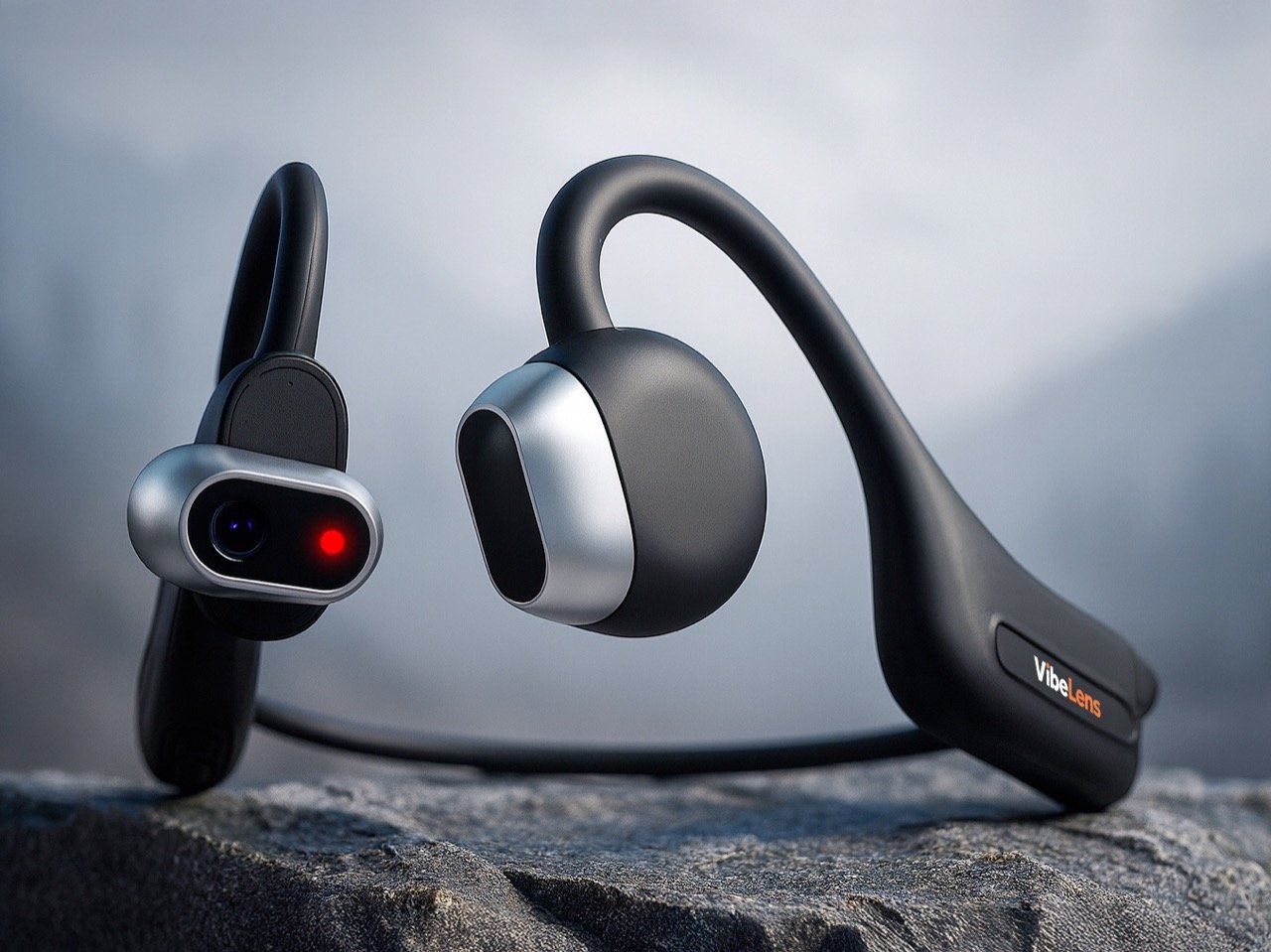
The new technology looks like a regular pair of wireless earbuds, with a small camera unit protruding from them. It doesn’t try to be sleek or hidden; instead, it presents itself directly and clearly.
Bone Conduction Technology
The main difference is that these earbuds don’t go into the ear canal. They use bone conduction technology, transmitting sound through the cheekbones instead of the inner ear.
Maintaining User Awareness of the Surroundings
This approach allows the user to stay fully connected to their environment:
- Hearing traffic on the street
- Following other people’s voices during conversations
- Staying alert to what’s happening around them
At the same time, they can listen to music or make calls without being completely isolated from the outside world.
The Camera: Between Genius and Risk
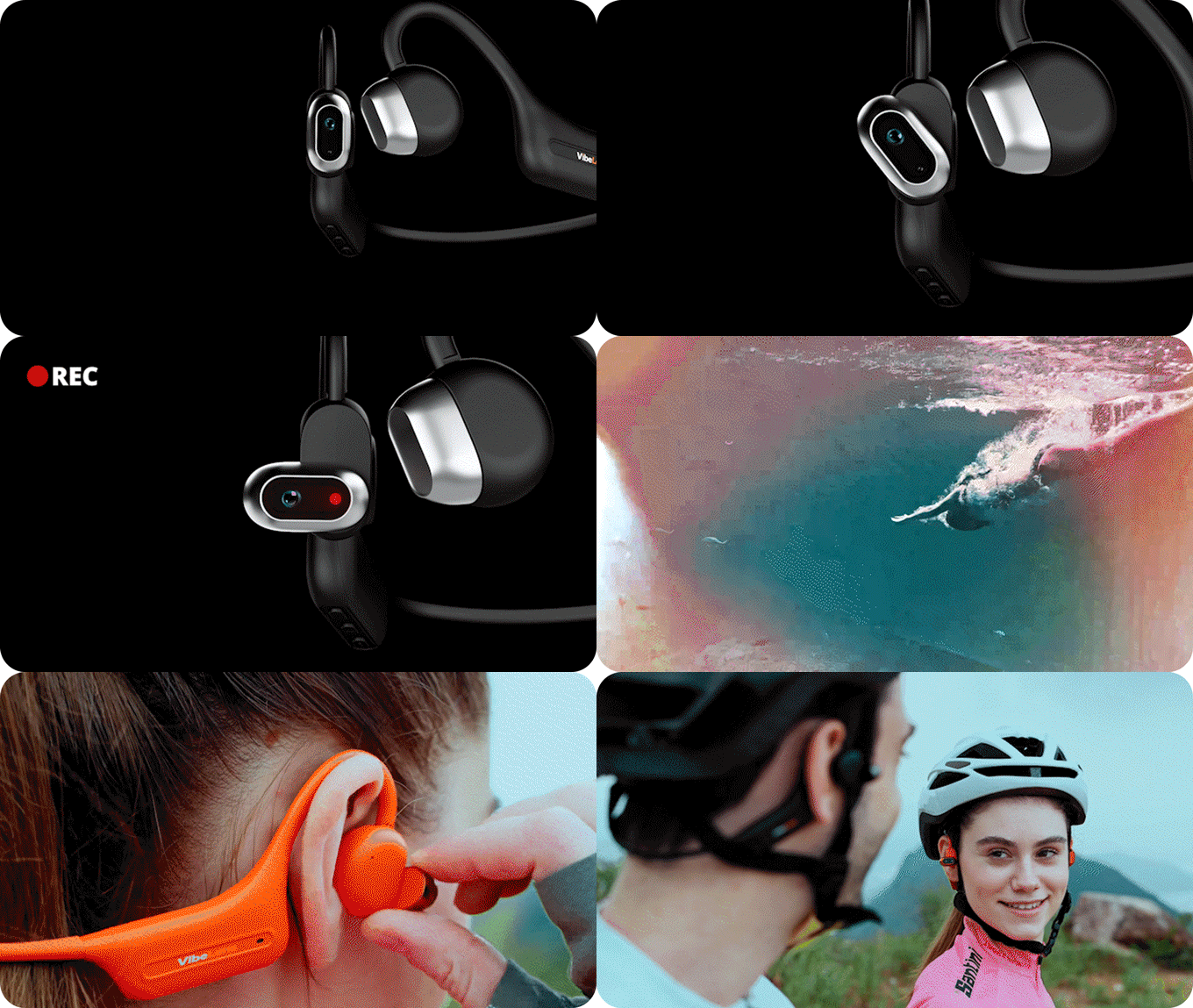
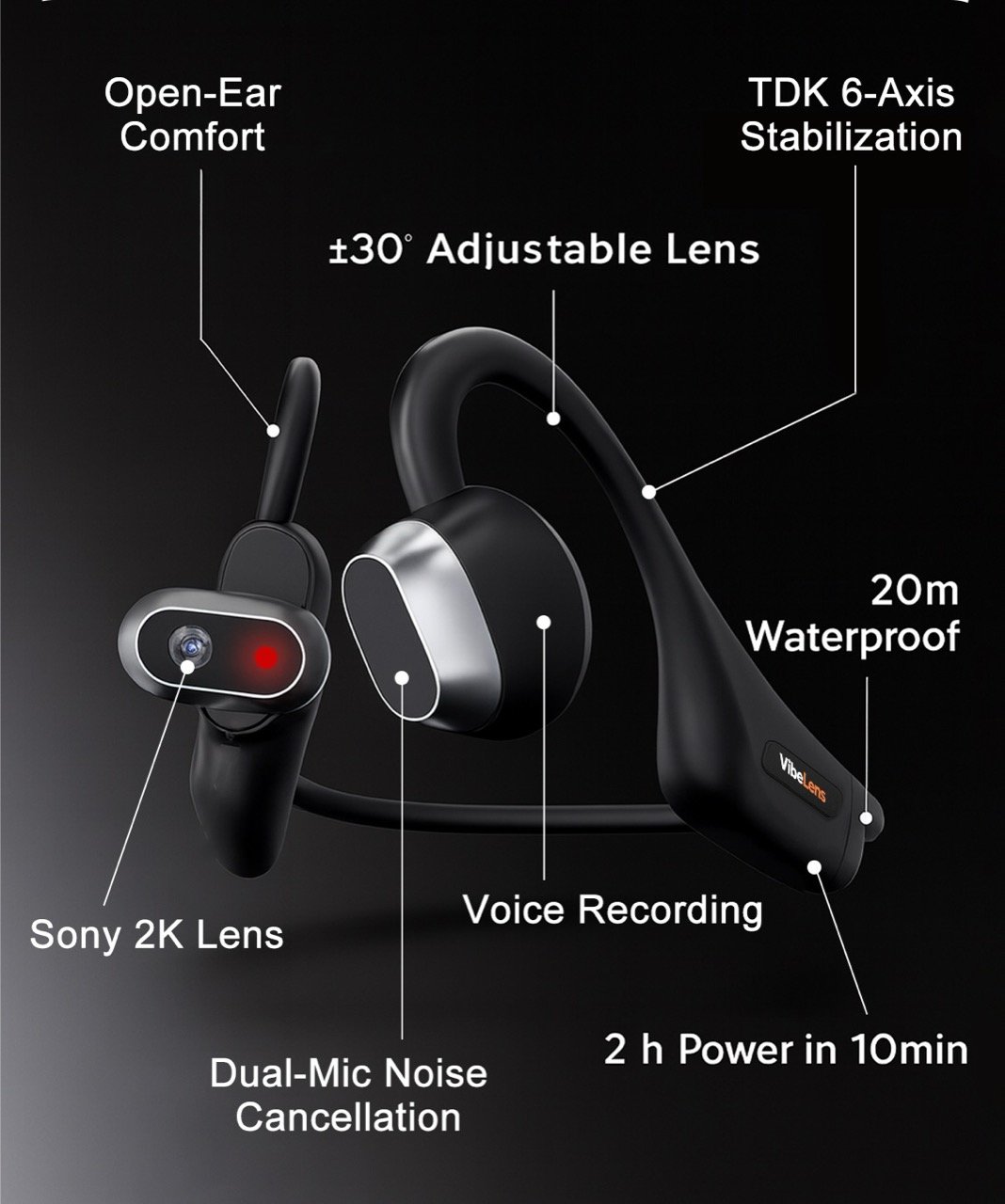
The most controversial element of this device is the camera. It’s not just a small addition; it’s a six-axis HD camera capable of recording 2K video with a wide 180-degree field of view.
The lens can also be adjusted by 30 degrees up or down, allowing precise framing of shots without exaggerated physical movements.
True Water Resistance
A standout feature here is the ability to operate underwater. The camera is not only splash- or rain-resistant, but it can withstand submersion up to 20 meters, opening the door to activities such as swimming or diving.
Battery Life
While the battery isn’t the best on the market, it offers a practical balance:
- Around 2.6 hours of continuous video recording
- Approximately 15 hours of music playback
Weight and Portability
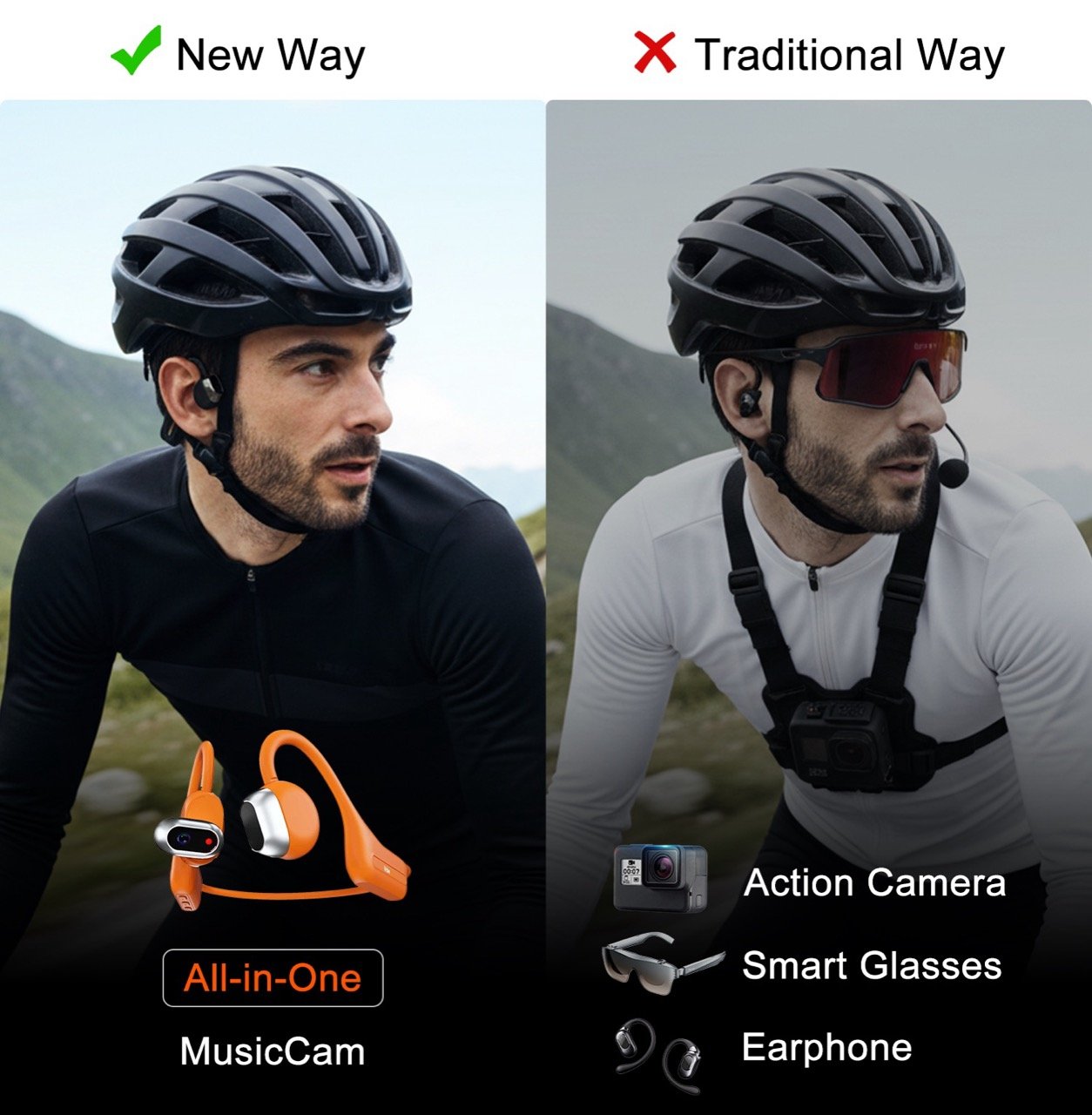
The device weighs about 50 grams, heavier than the well-known AirPods, but much lighter than traditional action cameras mounted on the head or chest.
This weight places it in a middle ground between comfort and ease of use.


Simplicity of Control
The operation mechanism is designed to be easy and quick:
- Pull to turn on
- Tap to record
- Pull to switch between modes
This way, the user doesn’t need to deal with precise buttons that could be annoying or dangerous while cycling or descending a slope.
Meanwhile, the six-axis optical stabilization handles vibrations, making shots more stable and watchable, rather than looking as if they were filmed during an earthquake.
Social Acceptance Factor
The real intelligence of the idea isn’t just in the technology, but in everyday human behavior. Wearing headphones in public spaces is common and natural:
- On trains
- Inside gyms
- While strolling in the streets
- Or when cycling
Consequently, wearing the device doesn’t attract attention or cause embarrassment, unlike smart glasses in many cases.
Compatibility with Physical Activities
Importantly, the activities that many people want to document, such as running, cycling, walking, or even swimming, are the same activities where headphone use is far more common than wearing glasses.
This alignment between natural behavior and technology makes the device feel more realistic and connected to everyday life.

Bone Conduction Audio Experience
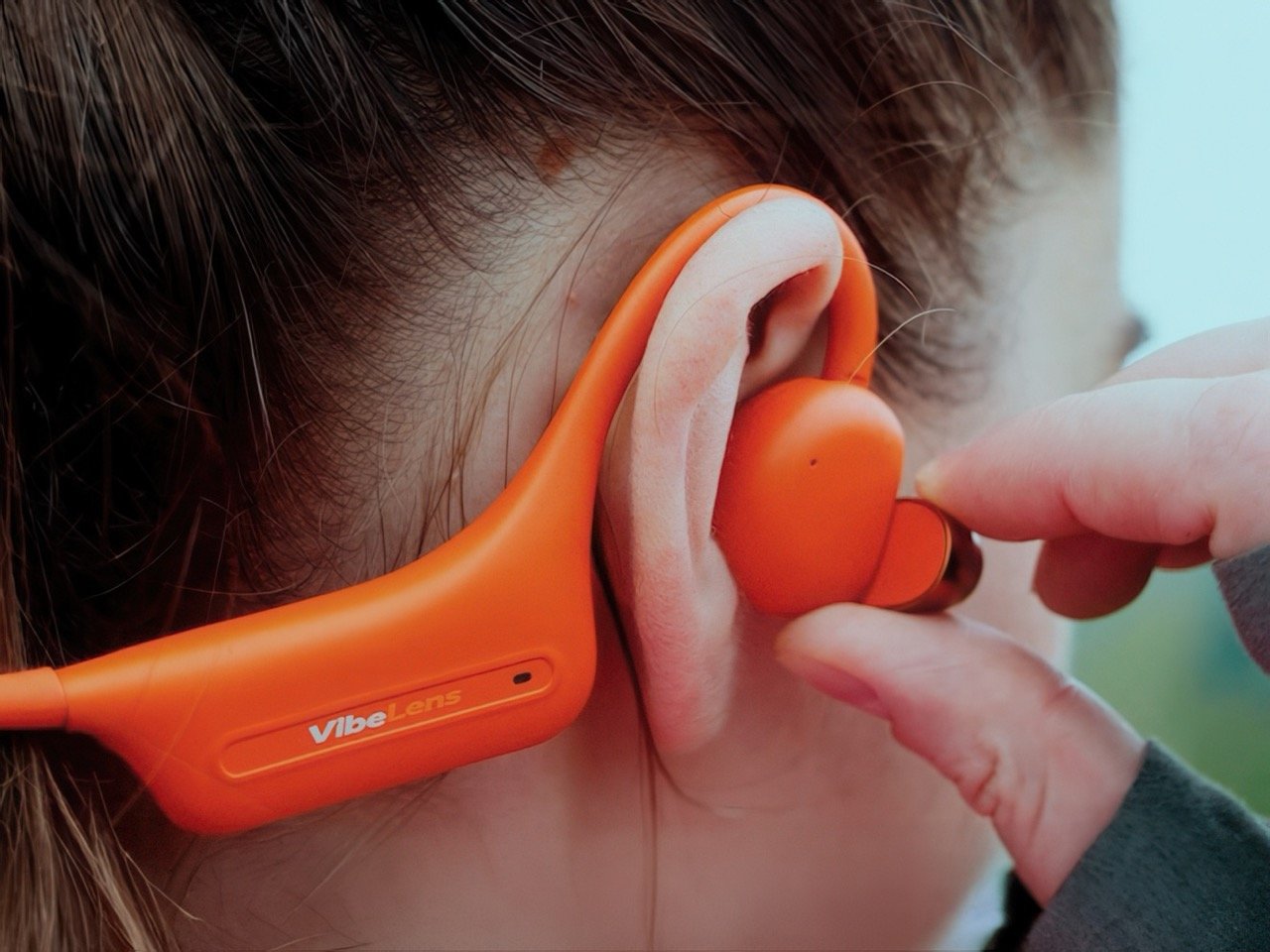
These earbuds rely on bone conduction instead of delivering sound directly into the ear canal. The result is entirely different from earbuds like the AirPods Pro or Sony’s noise-canceling headphones.
Sound travels through the cheekbones to the inner ear, which maintains your awareness of the surroundings, but at the expense of some depth and low-frequency response.
Peripheral Awareness at the Expense of Audio Quality
This technology is ideal for staying alert to your environment:
- Hearing cars on the street
- Following people’s voices
- Noticing any unexpected sounds in the natural environment
However, this comes with a clear trade-off in overall sound quality, especially for audiophiles who value fine audio details.
Call Performance
For calls, the earbuds are equipped with two microphones using ENC (Environmental Noise Cancellation) technology, reducing wind and ambient noise. The result is that your voice reaches the other side clearly, without sounding like you’re speaking in the middle of a storm.
Who Is It Really For?
If you’re looking for perfect audio clarity, this type is not the right choice.
But if your priority is safety and situational awareness while cycling or running in crowded areas, bone conduction provides a reasonable balance between listening and alertness.

The Logical Conclusion
The deeper we analyze, the clearer it becomes why the idea seems so sensible:
- The earbuds provide ample space for batteries, processors, and the camera, unlike glasses, which face significant constraints.
- Their design ensures stability during movement, making them ideal for physical activities such as running or cycling.
- There’s no need for them to be fashionable or compatible with prescription lenses, they can be larger and thicker, which is perfectly acceptable to users because it aligns with their expectations of headphones.
In short, the earbuds combine practical functionality with alignment to everyday behavior, making them a more realistic tech solution than smart glasses for a wide range of users.
Social Transparency
One of the key advantages of this design is transparency: when someone wears headphones with a visible camera, it’s clear to others that they might be recording.
This contrasts with cameras embedded in glasses, which can appear hidden or deceptive, one of the reasons projects like Google Glass failed to gain widespread acceptance.
From Strangeness to Familiarity
Still, the device may look unusual at first glance. However, history shows that some innovations that seemed strange at launch eventually become familiar over time.
A good example is AirPods, which appeared odd when first released but are now extremely common.
This demonstrates that social acceptance can grow gradually once a sufficient number of people start using an idea, even if it initially seems unusual.
Innovation That Seems Obvious in Retrospect
Even after a full decade of attempts to create smart glasses, a simpler and more practical trend has emerged: placing the camera on headphones.
This move shows that the most obvious technological solutions can go unnoticed, even though they address real user needs in a practical way.
Rethinking Wearable Devices
This doesn’t mean the device will replace smartphones or trigger an immediate revolution, but it highlights the importance of aligning design with the user’s everyday behavior.
Sometimes, true innovation isn’t about creating something entirely new, it’s about rearranging existing elements to meet people’s needs more realistically and effectively.
✦ ArchUp Editorial Insight
MusicCam can be seen as an interesting step in integrating wearable technology into daily use, especially in environments that require quick and accurate documentation. Among its limited positives, the earbuds provide practical space for the camera, battery, and processors, with a design that allows freedom of movement and situational awareness, making it a suitable choice for everyday physical activities.
However, some caveats deserve attention, particularly when considering professional or design applications such as architecture. The technology remains limited in audio quality compared to professional standards, and while the camera’s angle and wide field of view are impressive, they may not meet the demands of precise architectural photography, which requires straight horizons, extremely accurate color representation, and greater control over lighting and depth. Additionally, the device’s design makes it more visible to others, potentially reducing privacy in work sites or sensitive architectural projects.
From an architectural perspective, this technology could be used to document daily movements on construction sites or monitor project progress while moving between spaces. However, it is not a replacement for professional cameras or specialized measurement tools. Therefore, MusicCam can be considered a realistic auxiliary tool within a specific context, rather than a comprehensive solution for all architectural documentation needs.
Prepared by the ArchUp Editorial Team
Don’t miss the chance to explore more from Architecture in fields like Buildings and Building Materials on the ArchUp website.