Multi-Level Topography and Connectivity at Nagoya University

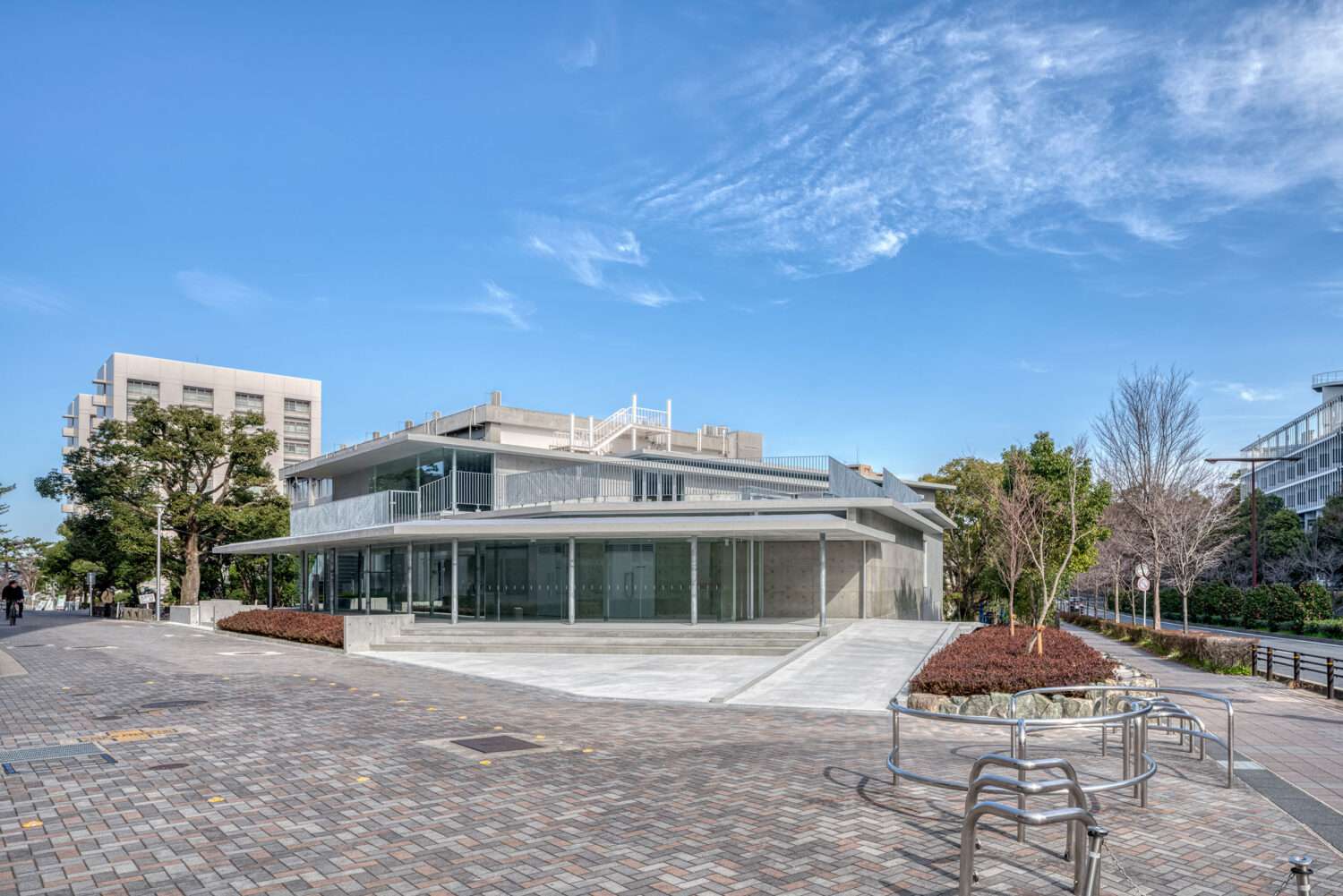
The newly completed Okuma Machine Engineering Building at Nagoya University reconfigures a critical intersection of campus circulation through a low-rise structural intervention. By integrating a public roof garden and a transparent envelope, the project transforms a technical research facility into a topographic bridge between two major university thoroughfares. The scheme prioritizes urban porosity, functioning simultaneously as a campus plaza and a pedestrian passage.
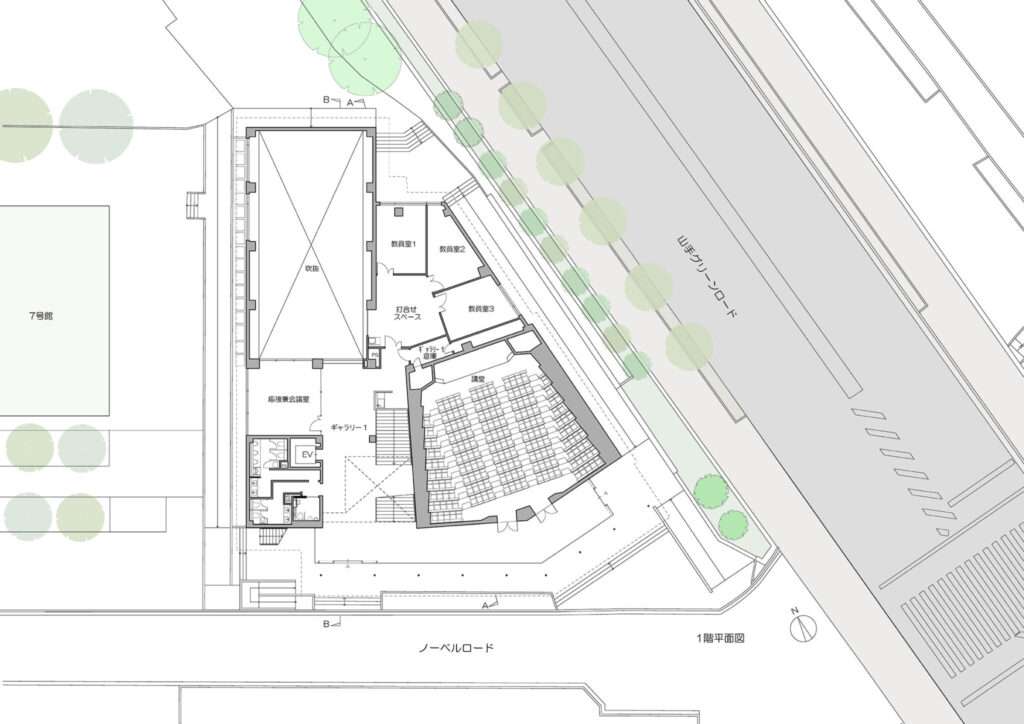
The site occupies a strategic position where Yamate Green Road meets Nobel Road, overlooking a subway station entrance. While local zoning and surrounding high-rise masterplans suggested a taller structure, the team opted for a compact footprint comprising one basement level and two floors above ground. This decision utilizes the existing north-south site elevation changes to maintain a low profile that preserves campus sightlines.
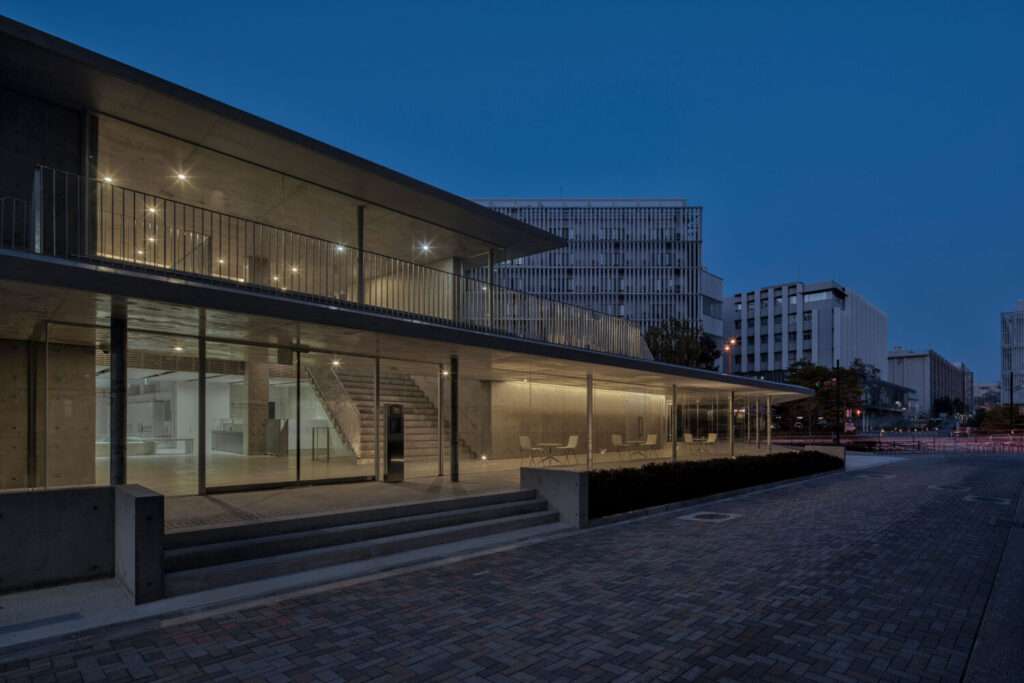
The southern elevation faces Nobel Road with an expansive canopy and a glass-walled interface, signaling a new entrance for the engineering precinct. This transparency allows visual continuity between the urban streetscape and the internal research activities. Internally, the design provides a direct pedestrian route through the building, connecting users to the newly established Engineering and Innovation building to the west.
Topographic Adaptation and Interior Organization
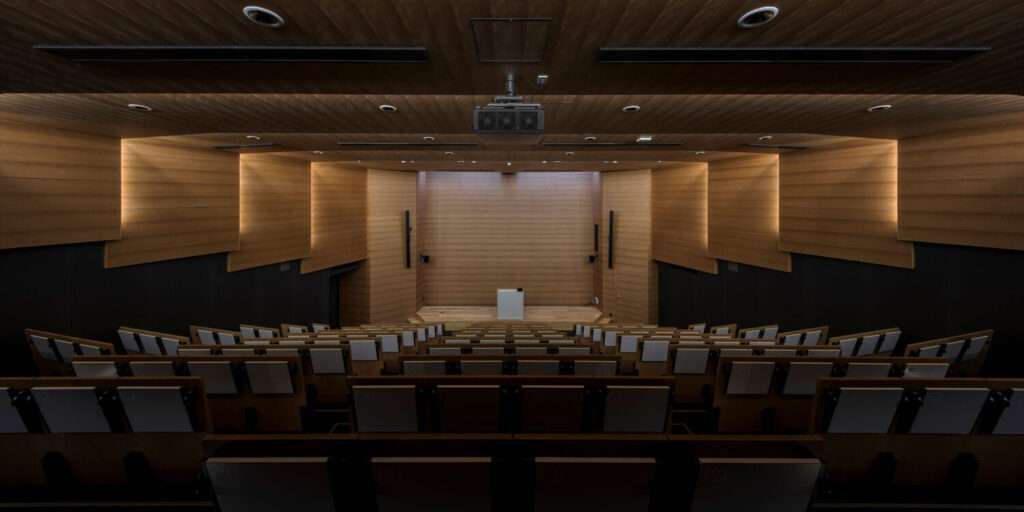
The team leveraged the natural slope of the land to organize the specialized programmatic requirements of the university. The lecture hall features tiered seating that follows the natural grade, a strategy that minimized soil excavation and optimized the acoustic environment. Meanwhile, the laboratory spaces sit at a lower elevation to facilitate the delivery of heavy machinery while allowing students on upper floors to observe experimental work from above.
The trapezoidal geometry of the site directly informs the layout of the primary assembly spaces. By aligning the auditorium with the site boundaries, the project creates a focused line of sight toward the stage. High-side windows punctuate the segmented roofscape, harvesting natural light for the deep plan of the lower levels while breaking down the massing of the large floor plates.
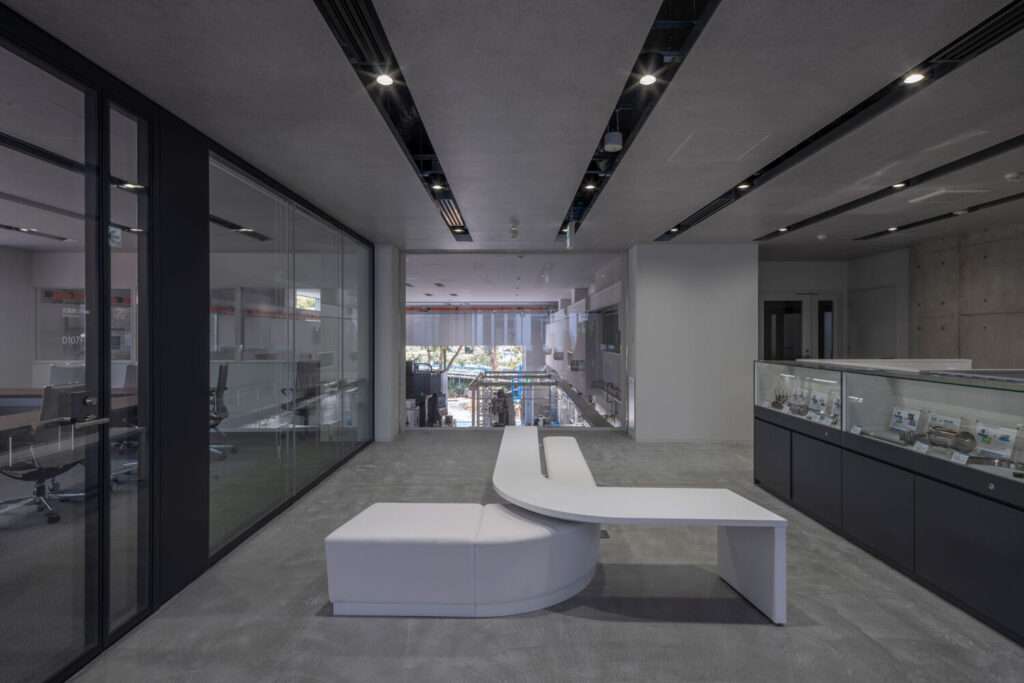
“I hope that this building will serve as a link between the two streets and become a multi-level plaza for interaction.”
The roof garden serves as the primary social catalyst for the architecture. Exterior staircases connect the street level directly to this elevated terrace, reducing the perceived vertical distance between the public realm and the academic interior. The stepped sections of the roof double as platforms for campus events, effectively turning the building’s envelope into usable social infrastructure.
Circulation Hierarchy and Programmatic Intelligence
The project demonstrates a sophisticated understanding of campus permeability by rejecting the traditional isolated laboratory typology. The intervention functions as a topographic knot, tying disparate elevations together through a series of accessible roof planes and internal passages. By submerging the heavy industrial functions and the tiered lecture hall into the slope, the design preserves the ground plane for movement and social exchange. The material contrast between the solid masonry-like base and the light, glazed upper volume reinforces this hierarchy between technical stability and public transparency. This dual-purpose strategy ensures that the building operates as a vital node in the university’s pedestrian network while maintaining the rigorous technical requirements of a machine engineering facility.
Project Team: Kazuki Moroe Architects, Akinori Yoshimura (DIG Architects), Katsutoshi Sasaki Architects, Tobata Architects & Engineers, and Nagoya University Facility Planning. Location: Furo-cho, Chikusa-ku, Nagoya City, Aichi Prefecture, Japan.
Project Notes: The team completed construction in March 2020 following a design period from 2017 to 2018. The Tokai National Higher Education and Research System acted as the client, with Matsui Construction handling the general contracting and Terado Tatsumi Structural Planning providing structural design.
✦ ArchUp Editorial Insight
The Okuma Machine Engineering Building functions as a topographic knot, utilizing the site’s natural slope to reconcile heavy industrial research with public permeability. By submerging specialized programmatic volumes into the grade, the architecture successfully maintains a low-rise profile that transforms the roof into a social connector, prioritizing pedestrian movement over the traditional isolation of laboratory typologies in complex cities.
However, this reliance on topographic porosity creates a romanticized friction between public accessibility and technical security. While the design celebrates the visual transparency of mechanical experimental work, it overlooks the long-term operational tension inherent in using a high-precision facility as a thoroughfare. Inviting constant public foot traffic above sensitive laboratories risks compromising acoustic and vibrational stability, potentially prioritizing campus theater over genuine research rigour.