Dual Towers Form an Architectural Gateway in Taipei

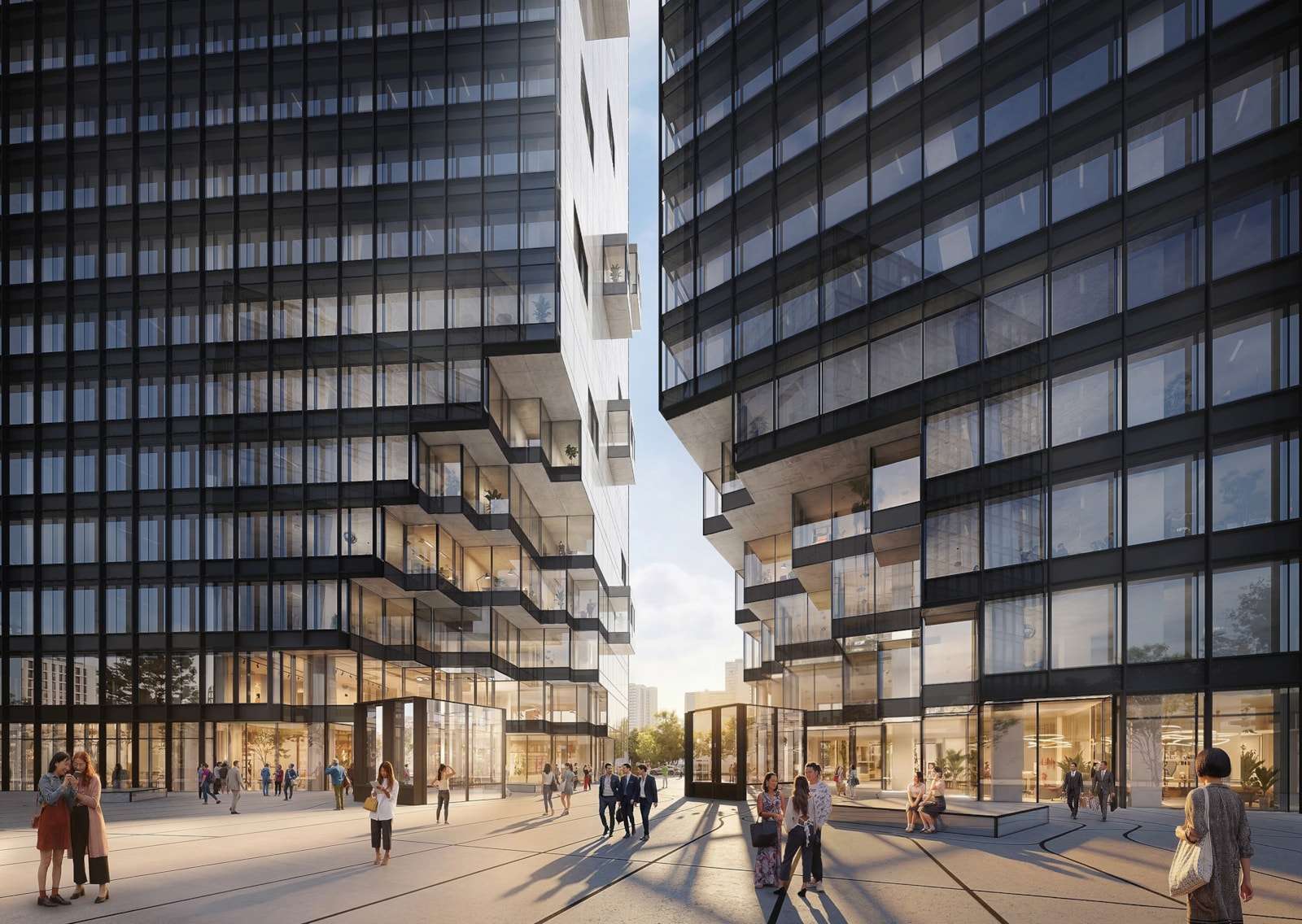
A new office development in Taipei’s Nangang district redefines the city’s eastern entrance through a strategic massing intervention that prioritizes public movement. The project replaces the traditional monolithic slab with two complementary towers that frame a primary urban axis and respond to the site’s position at a major transit interchange. This formal break establishes a clear pedestrian threshold between the regional rail network and the surrounding district.
Located directly in front of Kunyang Station, the project occupies a site where high-speed and regional rail lines converge. The design team recognized that a standard building footprint would obstruct significant pedestrian traffic generated by the transport node. Consequently, the scheme splits the required volume into two distinct elements, angling the towers to create a public plaza and generous lobby spaces that facilitate natural movement toward the city.
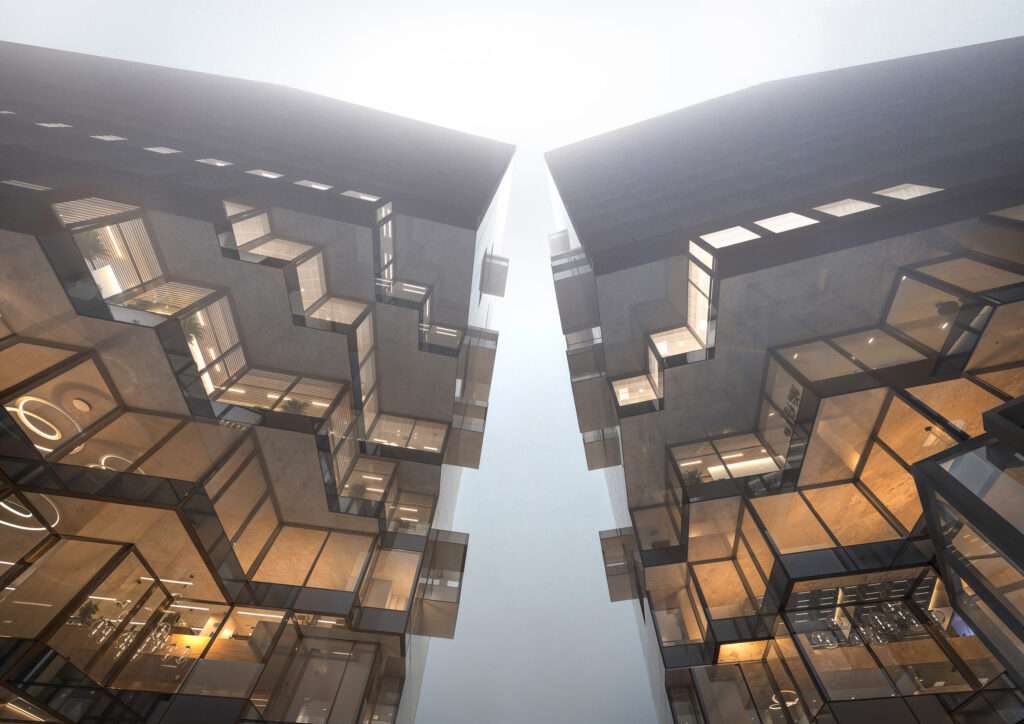
The intervention interprets the building mass as a single vertical slab undergoing a physical separation. This conceptual split produces a textured interior face where balconies emerge as “fragments” from one tower, leaving corresponding recessed cut-outs in the volume opposite. This spatial dialogue emphasizes the void between the structures, transforming the gap into a functional urban corridor rather than a mere alleyway.
Structural Logic and Material Contrast
The design reinforces the splitting gesture through a differentiated material strategy for the building envelope. A glass curtain wall with protruding mullions defines the outer perimeter of the towers, providing a disciplined texture to the urban streetscape. In contrast, the inner faces feature a finer, flush facade that draws attention to the “break” in the massing. The team extends the grid lines of the facade into the plaza paving, using a warped floor grid to visually bind the two structures together.
At the base, the project addresses seismic resilience through a specific structural solution. Tilted columns along the inner edges support grotto-like overhangs at the lobby entrances, allowing for column-free interior spaces while meeting Taiwan’s rigorous engineering requirements. These cut-away corners expand the usable public realm at ground level, providing sheltered zones for retail and cafe visitors.
“By splitting the demanded building volume, we create a gateway that directly responds to the urban flows around the station. It is a literal gesture of opening; the towers pull apart to frame the neighbourhood and invite the flow of the city through the building rather than blocking it.”
Programmatic Distribution and Environmental Integration
The internal program prioritizes community and tenant interaction through a tiered amenities strategy. The ground floor contains high-volume lobbies and commercial retail spaces, while the third level houses shared services such as video conference suites and lounges. Across the landscape, the team placed small pavilion-like objects that function as seating or kiosks, designed to appear as tectonic fragments shed from the main building volumes.
To address environmental performance, the project integrates several sustainability features into the infrastructure. Rainwater harvesting systems support the irrigation of the rooftop garden and ground-level plantings. Detention tanks within the raft foundation and at the surface level mitigate urban flood risks during heavy rainfall. Additionally, photovoltaic panels on the roof bulkheads generate power for the building’s public circulation areas.
Circulation Hierarchy and Programmatic Intelligence
The project achieves a sophisticated reading of urban movement by treating the void as a primary programmatic element. Rather than fighting the site’s density, the design employs a tectonic “pull” that reorganizes the local circulation hierarchy. The transition from the rigid exterior curtain wall to the intimate, fragmented interior faces creates a sensory cue for pedestrians entering the station precinct. This spatial sequence from the broad urban grid into the compressed “canyon” of the towers and finally out toward Hsin Hsin Park demonstrates a keen understanding of how architectural massing can direct civic energy. The structural resolution of the tilted columns further reinforces this logic, providing the necessary seismic stability without compromising the transparency of the public threshold.
Project Team: MVRDV (Lead Architect), Winy Maas (Founding Partner). Location: Nangang District, Taipei, Taiwan.
Project Notes: JUT Group serves as the developer for this office and retail scheme. The project remains in the development phase following the design reveal.
✦ ArchUp Editorial Insight
The project leverages a literal tectonic fracture to reconcile the friction between private density and public permeability. By bifurcating the traditional office slab, the design transforms a potential urban blockade into a choreographed threshold. This strategy prioritizes the “void” as an active programmatic corridor, using fragmented facades and tilted columns to invite transit flows into a previously industrialized sector of cities.
However, this formal opening risks becoming a highly managed corporate stage rather than a truly democratic commons. While the “split” invites movement, the resulting plaza remains tethered to the commercial lobbies of two private towers, potentially sanitizing the raw urban energy of the transit node. This architectural performance of openness may ultimately serve as a sophisticated branding tool, masking the relentless privatization of public space under the guise of civic permeability.