UK Housing Starts Rise, Signalling Early Signs of Market Recovery

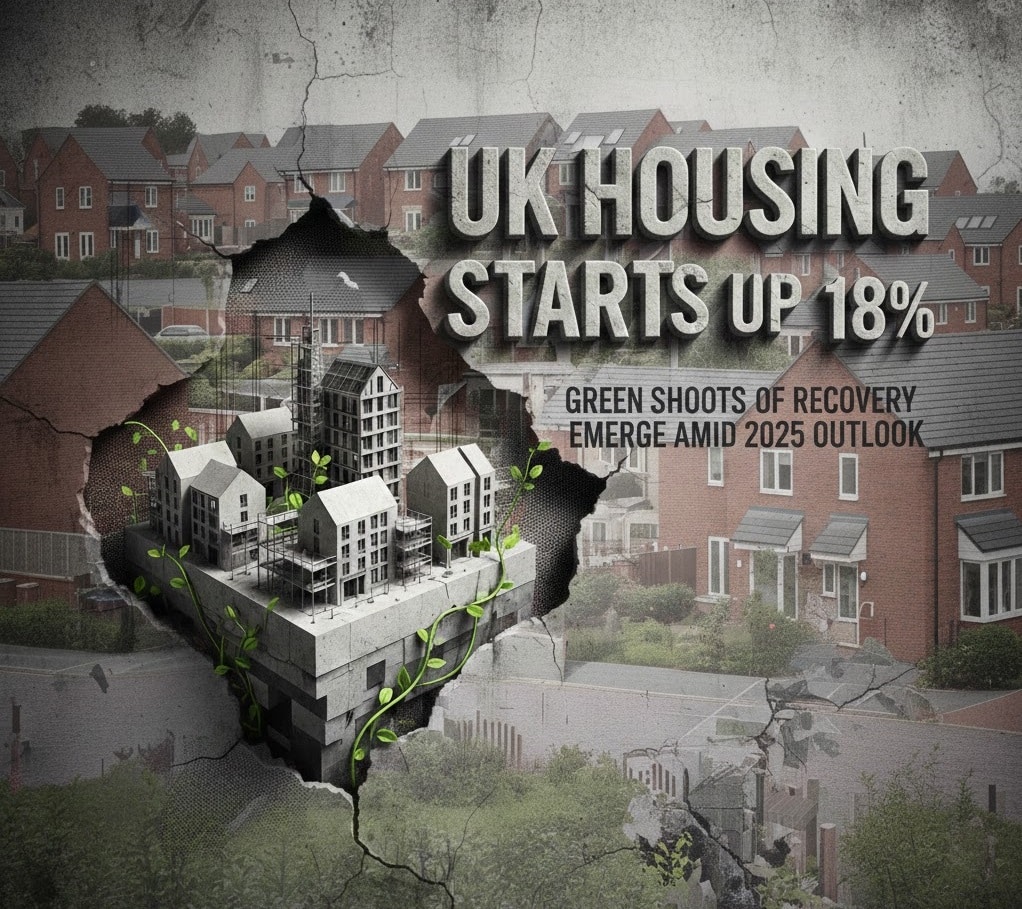
UK Housing Secretary Steve Reed has welcomed newly released figures showing an increase in housing starts over the past year, describing the rise as “green shoots of recovery” in the housing market.
Official Data Points to Increased Construction Activity
According to new data published by the Office for National Statistics (ONS), new-build housing starts rose by 18% in the year ending September 2025, compared with the previous year. The figures suggest a moderate rebound in residential construction activity across the UK.
Implications for the Architecture Sector
For architects, the data may indicate a potential shift in market momentum following a period of slowdown. Increased housing starts often translate into renewed demand for residential design services, particularly in mid-scale and affordable housing projects. The trend could also lead to the revival of paused developments, encouraging more efficient and sustainable design solutions.
Forward-Looking Outlook for Architects
While the figures are broadly positive, the long-term trajectory of the housing market remains linked to factors such as financing costs, construction material prices, and the integration of environmental sustainability into housing policy. This context positions architects to play a strategic role, not only as designers, but as key contributors to shaping resilient and adaptable housing models suited to evolving economic and environmental conditions.
✦ ArchUp Editorial Insight
The reported rise in UK housing starts positions Contemporary residential architecture within a tentative phase of post-slowdown recalibration, marked by pragmatic Modernist planning principles and efficiency-driven construction strategies. The 18% increase signals renewed confidence in standardized housing typologies, often relying on modular systems, cost-controlled material palettes, and repeatable spatial frameworks to address mid-scale and affordable demand. However, this numerical recovery raises critical questions about Contextual Relevance and Urban Fabric integration, as accelerated delivery risks prioritizing volume over place-specific design. Moreover, while sustainability is frequently cited, the extent to which environmental performance is embedded structurally rather than cosmetically remains uncertain. Architects are thus challenged to translate policy optimism into Functional Resilience, ensuring that emerging schemes respond to economic constraints without eroding spatial quality. Ultimately, the moment tests the profession’s Architectural Ambition to balance speed, responsibility, and long-term housing value.