TO and Palma reveal climatic infrastructure for Museo de Arte Contemporáneo de Panamá

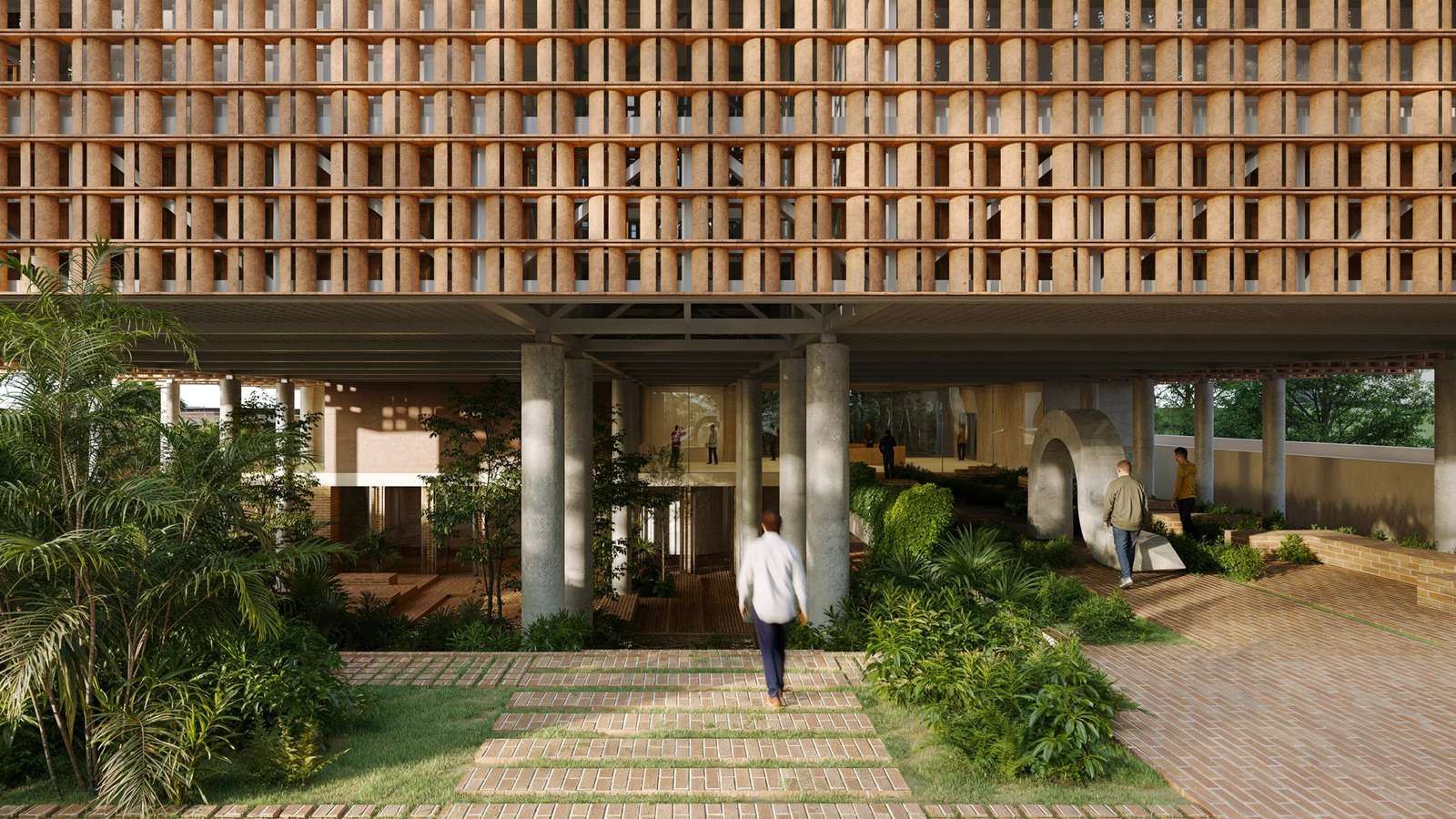
Mexico City-based studios TO and Palma won a competition to design the extension of the Museo de Arte Contemporáneo de Panamá. The proposal functions as a cultural and climatic infrastructure that connects Panama City’s commercial core with the residential Boca La Caja neighborhood. The design emphasizes Panama’s role as a site of exchange by creating a civic platform between the urban fabric and the waterfront.
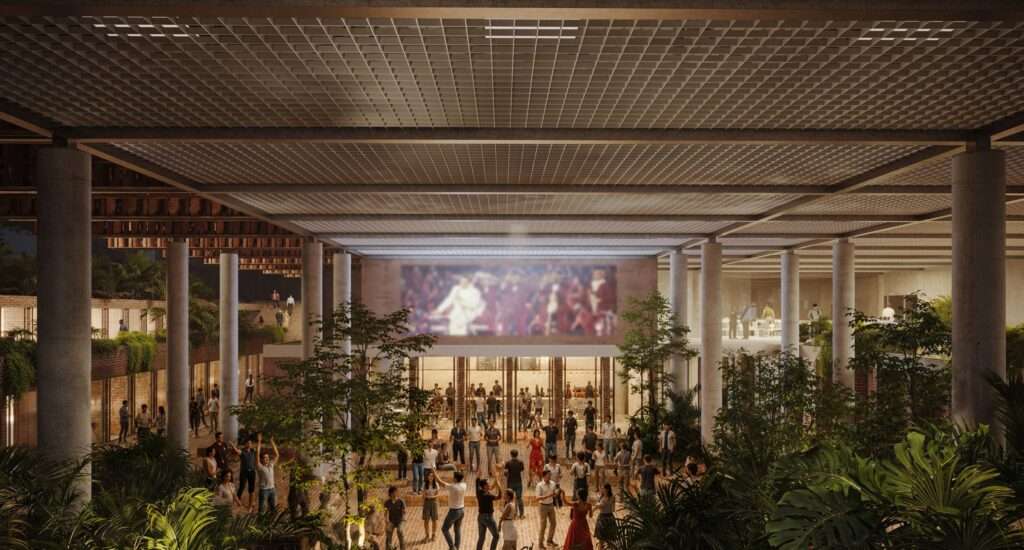
The architectural strategy centers on a shaded plaza area that integrates native vegetation and urban furniture. Porticoed commercial zones arranged into terraces frame this flexible outdoor space. The architects avoided historical references, choosing instead to respond to cultural patterns and daily life. This performance-based approach dictates how the buildings respond to the tropical climate and foster community interaction.
Ceramic lattice screens and daylight control
The building envelope features a ceramic lattice screen pattern. This system controls daylight infusion while providing a distinct architectural expression shaped by environmental conditions. This porous facade allows the ground floor to remain welcoming and accessible to the public. Meanwhile, the interior organization balances technical architecture requirements with the site’s urban context.
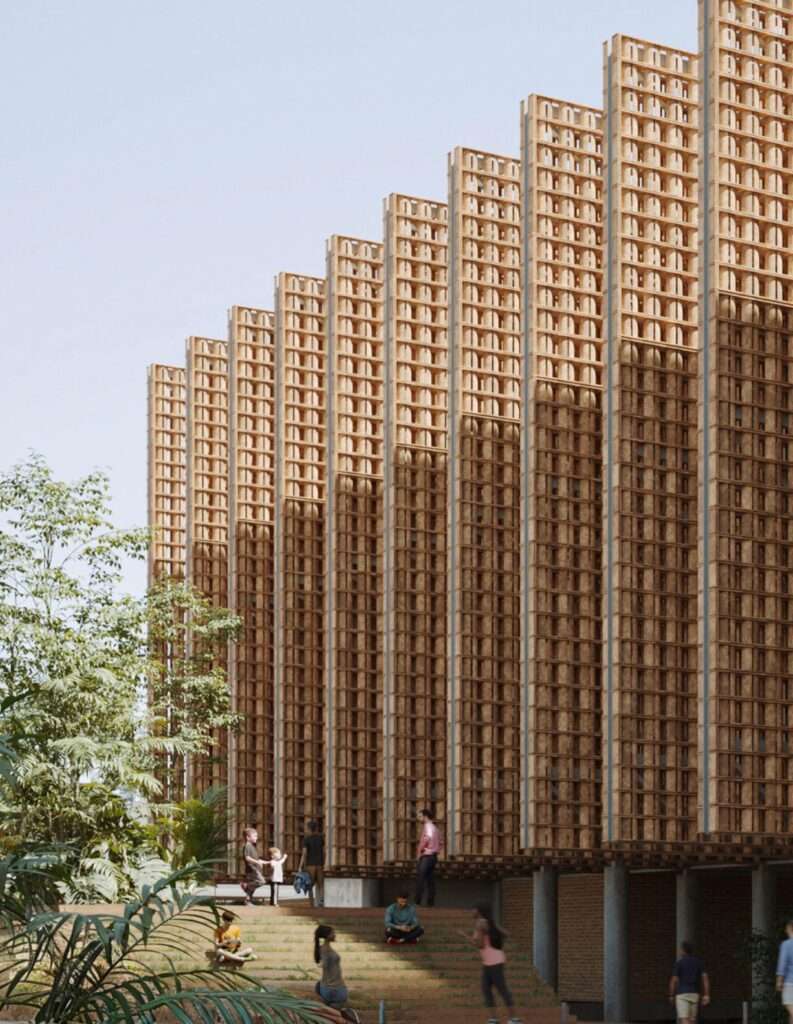
The excavated plaza area extends public use into the museum lobby. This lower level houses an events hall and a café space. A sculptural public staircase provides vertical circulation, connecting the various programmatic layers. An additional gallery space links directly to the main lobby and ground-floor events area through a triple-height volume and a sculptural courtyard.

Internal reorganization and flexible gallery plans
The first-floor plan prioritizes operational efficiency and privacy. The design team divided this level into two distinct wings. One side contains museum offices, a storage vault, service areas, and a freight lift. The opposing public wing hosts a library-like archive, a children’s room, a print workshop, and meeting spaces. Vegetated balconies finish both wings, providing outdoor relief and greenery.
The final floor utilizes a free-plan exhibition strategy. Large structural spans and specific spatial geometry allow for the configuration of up to seven independent galleries. This flexibility supports various curatorial needs and exhibition scales. The designers allow the technical and curatorial requirements to shape the institution from within, while urban conditions define the exterior form.

“The proposal is conceived as a cultural and climatic infrastructure for Panama City. Rather than treating the museum as an isolated object, we envisioned it as a civic platform capable of strengthening the relationship between the city, the neighborhood, and the waterfront.”
Diego Escamilla, Palma co-founder
✦ ArchUp Editorial Insight
The Museo de Arte Contemporáneo de Panamá expansion demonstrates a sophisticated shift from representative architecture to performative infrastructure. By prioritizing the “climatic” role of the building, TO and Palma address the specific tropical challenges of Panama City while solving a complex urban disconnection. The use of a ceramic lattice screen provides a high-performance envelope that manages solar gain without sacrificing visual porosity. Furthermore, the decision to bifurcate the first floor ensures operational privacy without disrupting the public sequence. This project succeeds by treating the museum as an extension of the public realm, transforming a cultural institution into a functional bridge between disparate urban districts.
Project Team: TO and Palma (Architects). Location: Panama City, Panama.
Project Notes: The team won the design through an international competition. The project remains in the planning and development phase.