Reframing a Fire-Damaged Site Between Rock and River

Reframing the Relationship with the Site
Most architects tend to level the entire site and start anew, but in this project a different direction was taken. The project is located on the banks of the Sázava River in the Prosečnice region of the Czech Republic, and is presented as an Architecture case emerging from a previous fire. The core idea was not to erase traces of the past, but to treat them as part of the reconstruction process.
The Stone Base as a Foundational Element
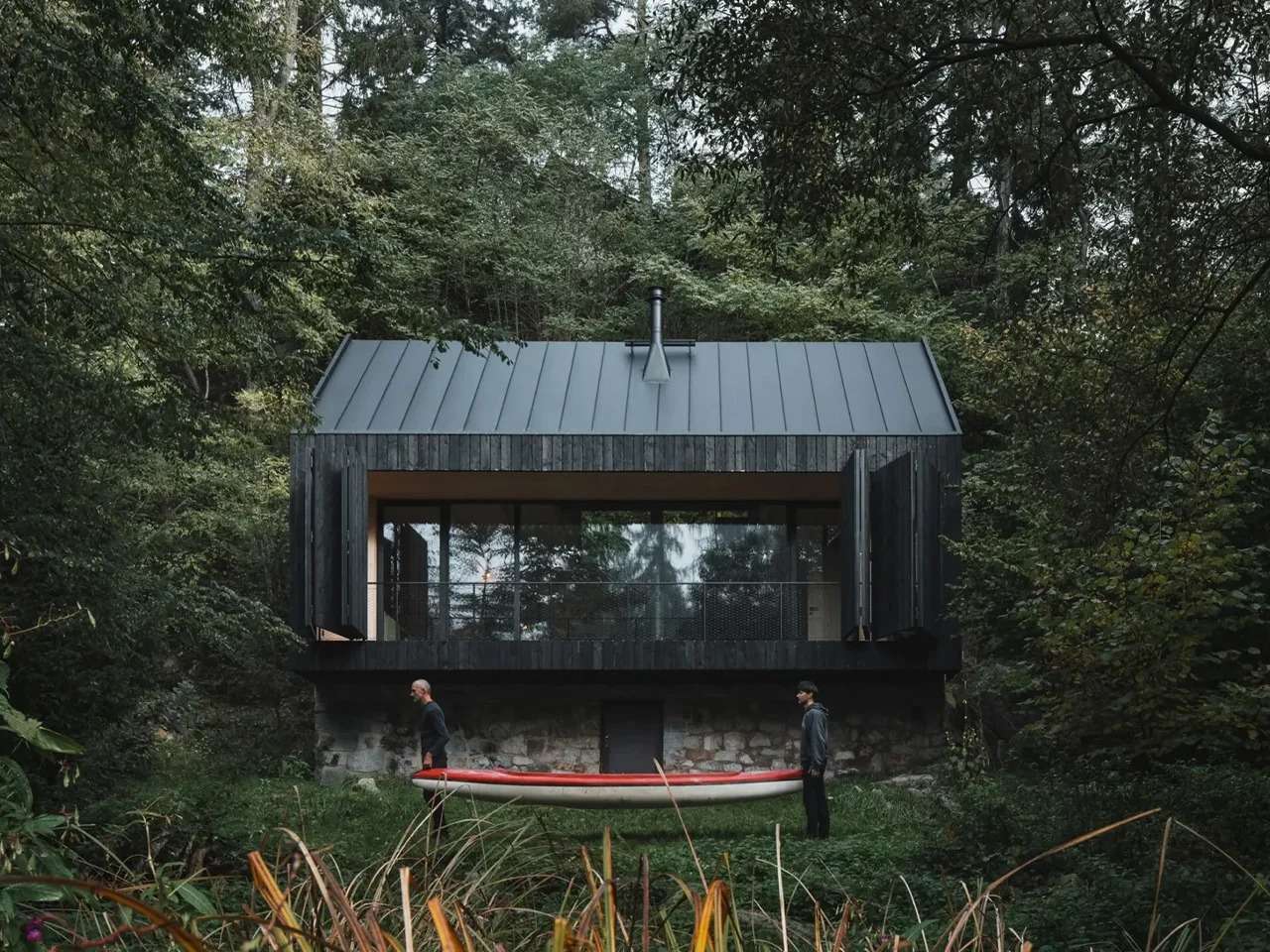
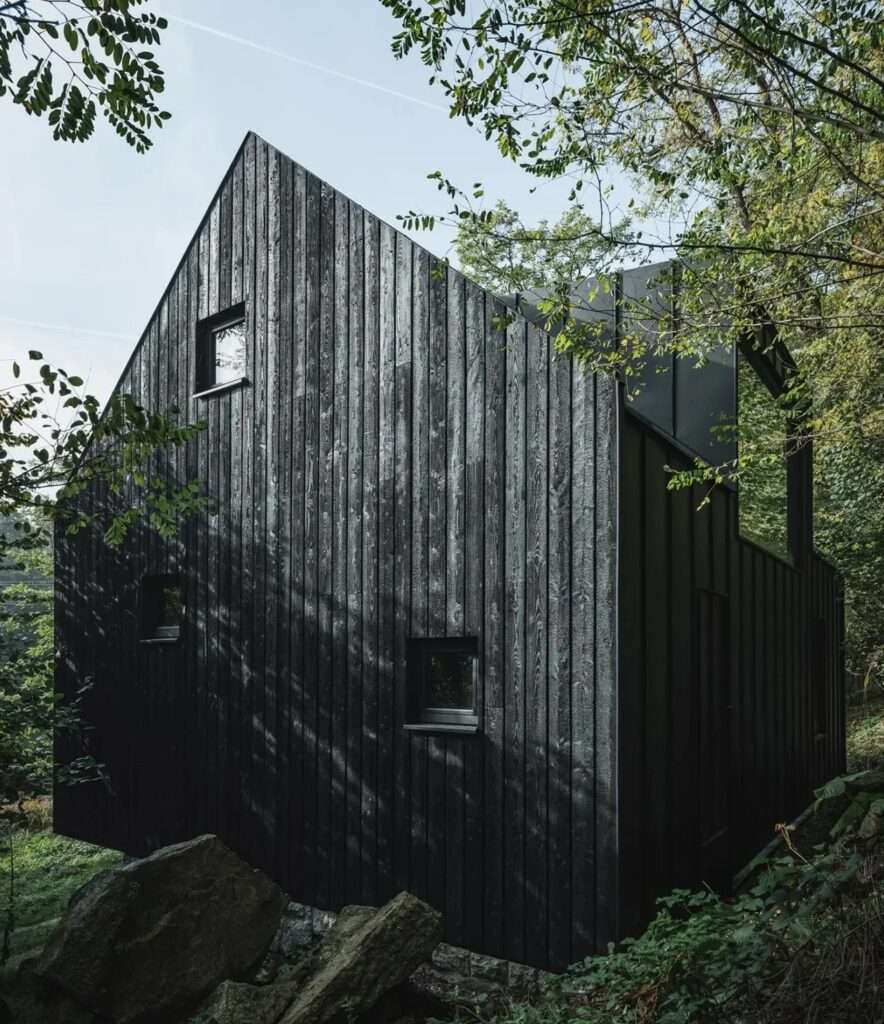
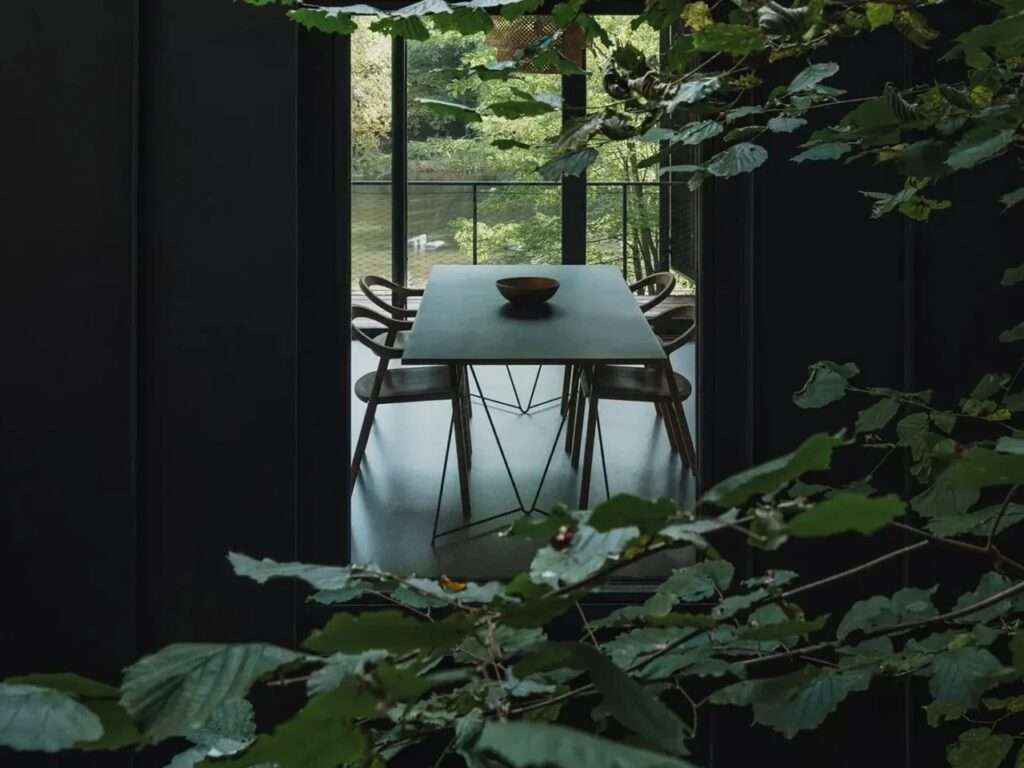
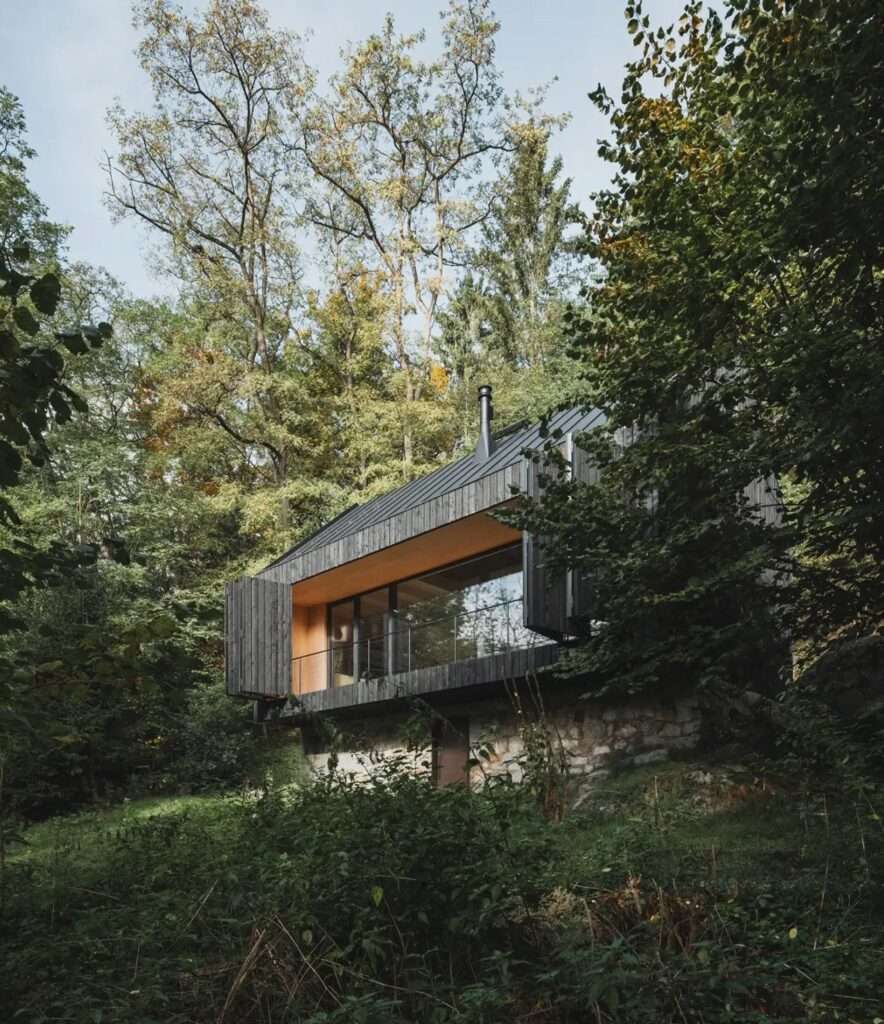
After the fire that destroyed the original cabin, only the load-bearing stone base remained. Instead of demolishing it, it was adopted as the foundation of the new Construction. This decision shaped the project’s identity, as the base became both a structural and conceptual element at the same time. The new timber volume was also elevated above the river’s flood level, providing seasonal protection and enabling a higher vantage point over the natural landscape. When the façade facing the water is opened, the river is revealed in its direct movement alongside rocks and birds gliding above the surface.
Exterior Treatment and Material References
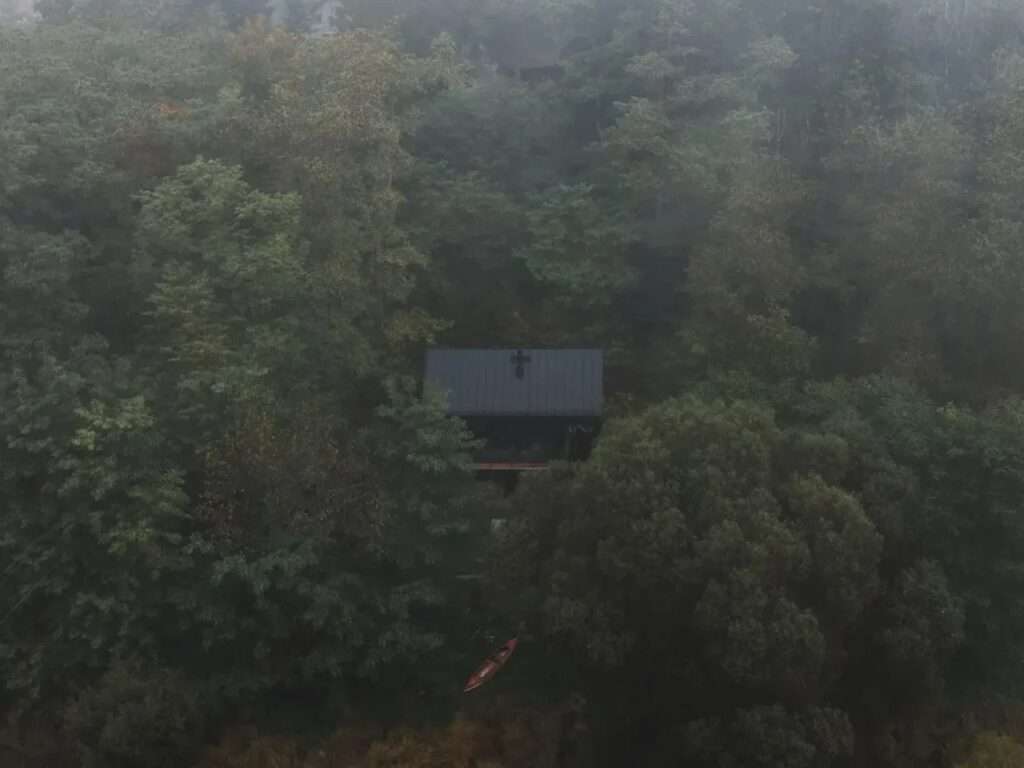
The exterior is clad in charred larch wood, referencing the Japanese technique known as yakisugi, where timber is burned to increase its durability and resistance to environmental conditions. This choice operates on both a pragmatic and symbolic level, utilizing durable Building Materials that reference the site’s history. The resulting darkened surface reinterprets the site’s post-fire history, transforming destruction into an embedded design logic. From a distance, the building visually merges with the surrounding pine forest, its form almost disappearing within shadows and bark tones.
Interior Contrast and the Redefinition of Spatial Perception
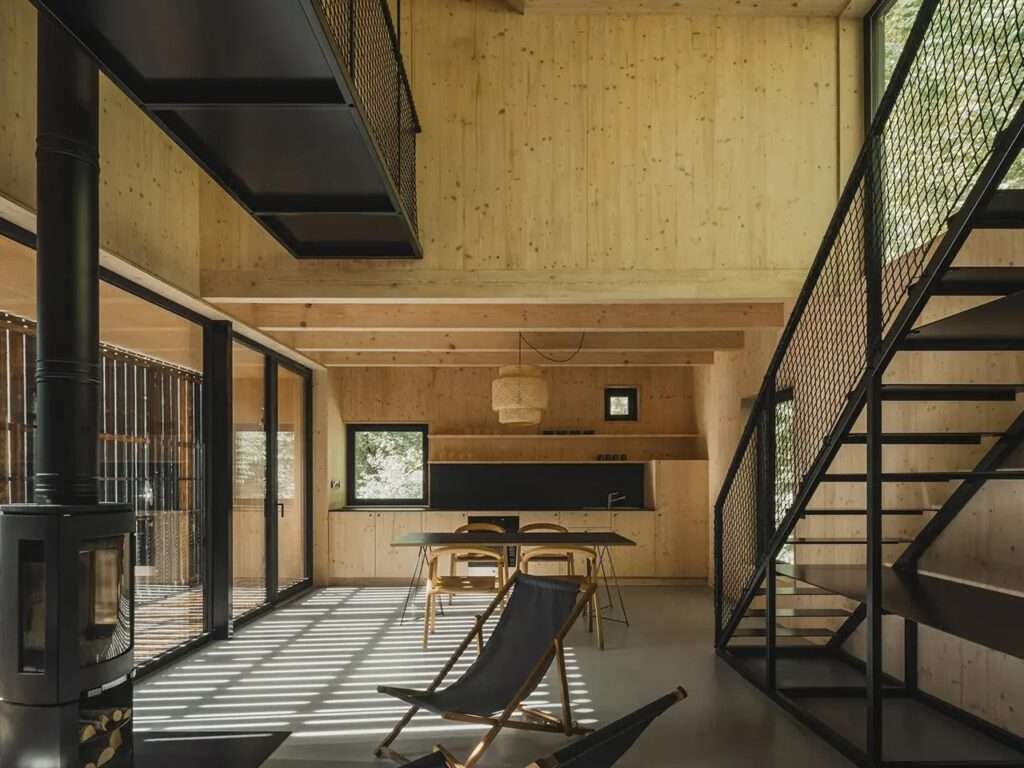
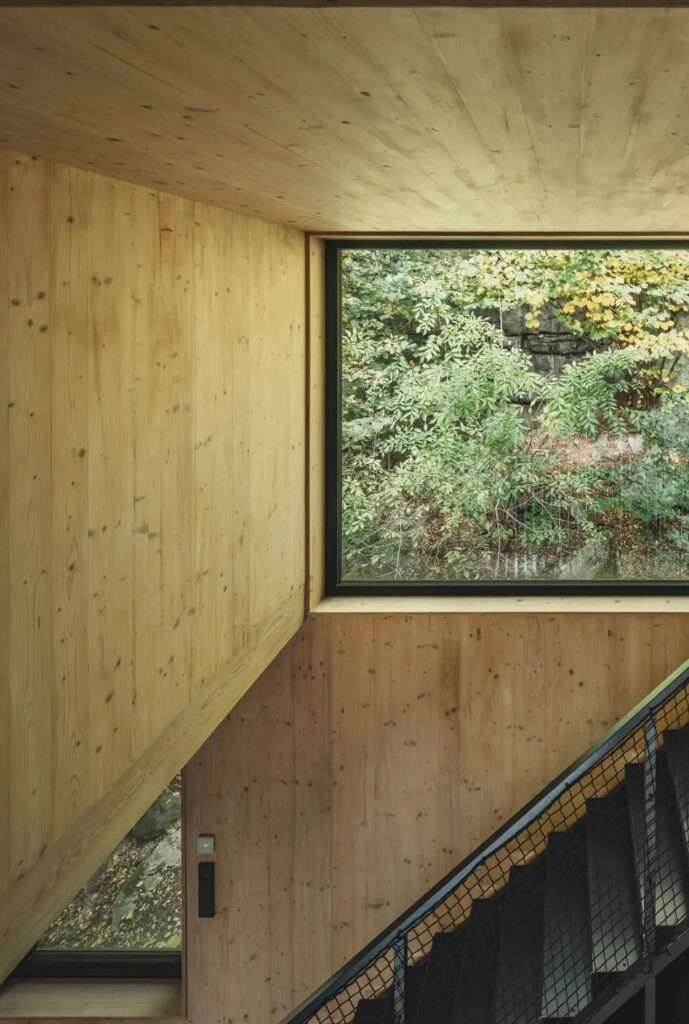
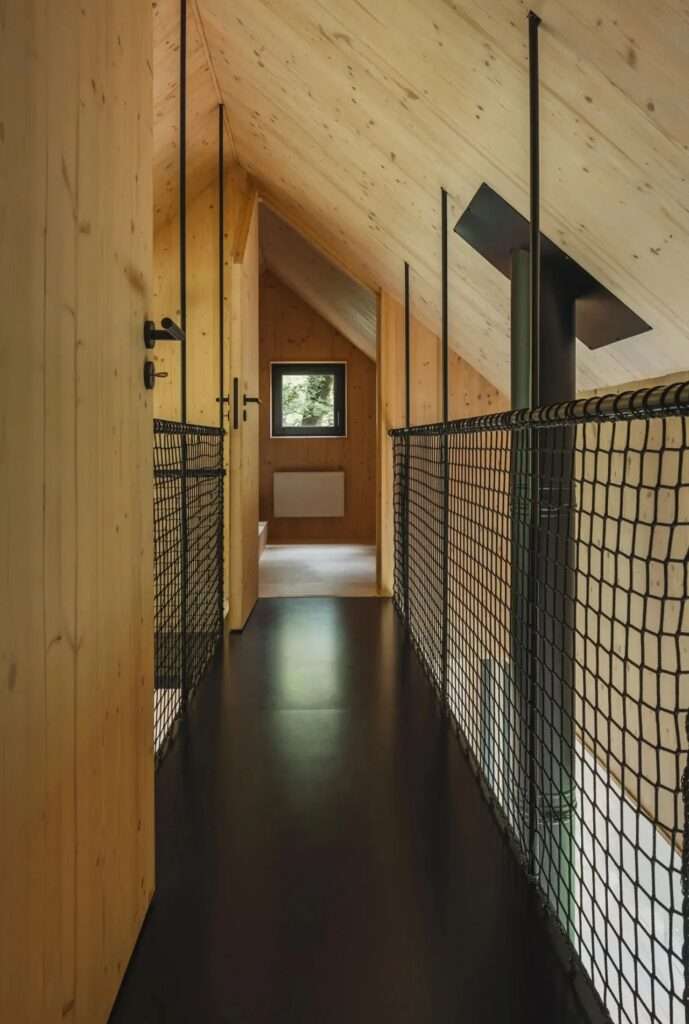
Inside, the visual character shifts dramatically, as the structure is lined with light, warm spruce wood panels. This contrast between the dark exterior and the luminous interior is not arbitrary; it creates a clear perceptual transition upon entry, showcasing a refined Interior Design approach. The user moves from a rough, exposed environment shaped by natural forces into a calmer, more sheltered space with a distinctly human scale and atmosphere.
Site Conditions and Geographic Constraints
The cabin is situated within a narrow strip of land between the riverbank and rocky slopes, imposing clear architectural constraints. Such interventions in sensitive natural contexts are often documented in Cities and rural studies. The design responds to these limitations without attempting to alter them, instead working within them. The result is a building that appears directly bound to its site, as if it were a natural outcome of its geographical conditions. The project spans the period between 2020 and 2025, and this duration is evident in the precision of detailing and the gradual refinement of architectural treatment.
✦ ArchUp Editorial Insight
The project emerges within a financial and regulatory context that makes post-fire reconstruction more viable than full demolition, where the existing stone base is transformed into a structural asset that reduces demolition costs and accelerates permitting procedures within a flood-risk river zone. Insurance logic and hydrological risk management require elevating the architectural mass above expected flood levels, satisfying legal responsibility while preserving site value. Similar case studies can be found in the Archive of innovative projects. Regulatory frameworks also allow rebuilding on the same footprint without full reclassification, reinforcing continuity of use. Material choices, such as charred wood, function as a maintenance-reduction strategy rather than an aesthetic gesture, drawing from techniques listed in Material Datasheets. The final form is a direct outcome of risk reduction, site constraints, and low-scale investment logic, where architectural agency is increasingly shaped by compliance pressures and regulatory structure. This project has also been featured among recent Projects and discussed in Discussion forums. For professionals interested in similar approaches, Research on post-fire reconstruction is available, and opportunities in this field can be explored through Architectural Jobs listings.