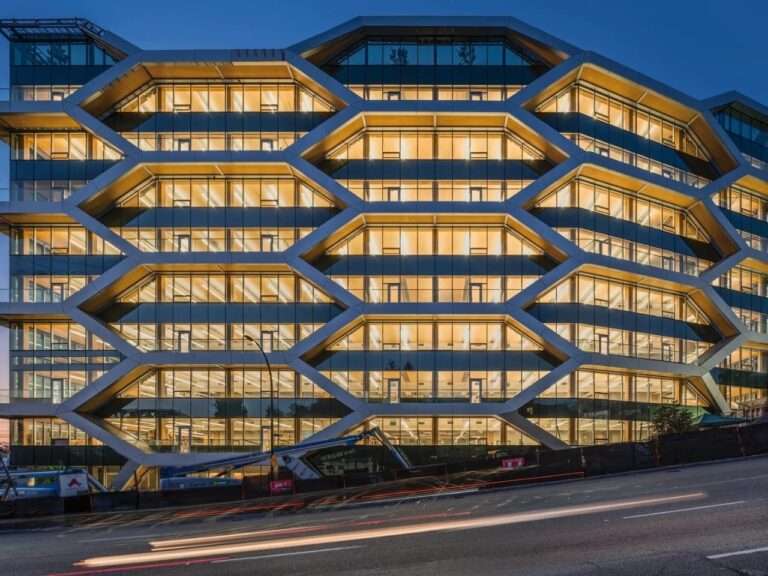
Who Deteriorates First, the Building or Its Resident?

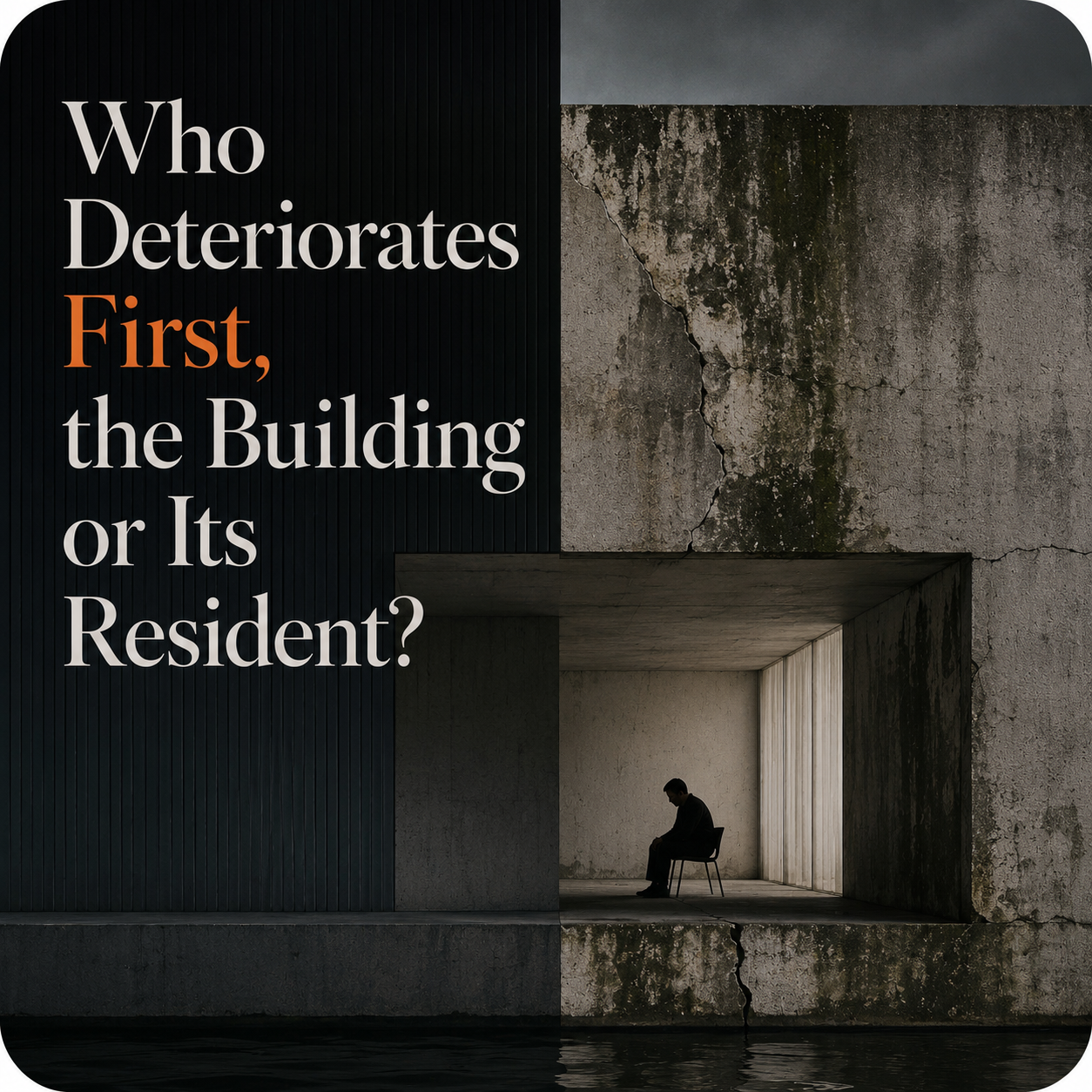
Residential deterioration results from a complex interaction between structural failures, intensive use, and behavioral patterns. While often blamed on individuals, decay typically stems from systemic issues such as financial pressure, overcrowding, and housing insecurity. These factors reduce the mental bandwidth required for continuous maintenance and property care.
Tenure and agency significantly influence how residents interact with their spaces. Renters often lack the incentive or authority to perform repairs, while shared environments suffer from ambiguous responsibilities. Neglected interiors often represent a feedback loop where economic constraints and power imbalances lead to an accumulation of deferred upkeep.
There is a question that has followed me for years. Have you ever entered someone’s home for the first time and felt, within the first five minutes, that you wanted to leave? Not because the apartment was small. Not because the furniture was old. Not because its owner earned a modest income. But because the place itself announced neglect. You step into the bathroom and sense that time stopped there years ago. You pass the kitchen and find that disorder has quietly become part of its layout. You look at the walls, the corners, the floors, the doors, and you begin to understand that the problem is not the age of the building. The problem is the relationship between the person and the place.
And then you enter another home. Smaller, perhaps. Cheaper, certainly. Possibly older. Yet from the first moment you feel an unfamiliar calm. Everything sits where it belongs. Maintenance is present without being announced. Cleanliness is not a performance but a habit. The space seems to breathe. At that point a different question begins to form. Is the care of an interior a matter of income? Of culture? Of the personality of whoever lives inside it?
The question sharpened for me during a visit to one of the projects we were studying for possible redevelopment. The building had lived with the same tenant for nearly twenty years without a real maintenance program. The first instinct of several colleagues was demolition. The truth was less dramatic and more instructive. The building was not structurally ill. It was the casualty of two decades of accumulated deferral. Its market value had fallen, its rental income had fallen, and the consumption of its components had accelerated, while a modest culture of continuous upkeep would have preserved it at a fraction of the eventual cost. Standing in its corridor, the real question of this piece presented itself. Which deteriorates first, the building or the person who lives inside it?
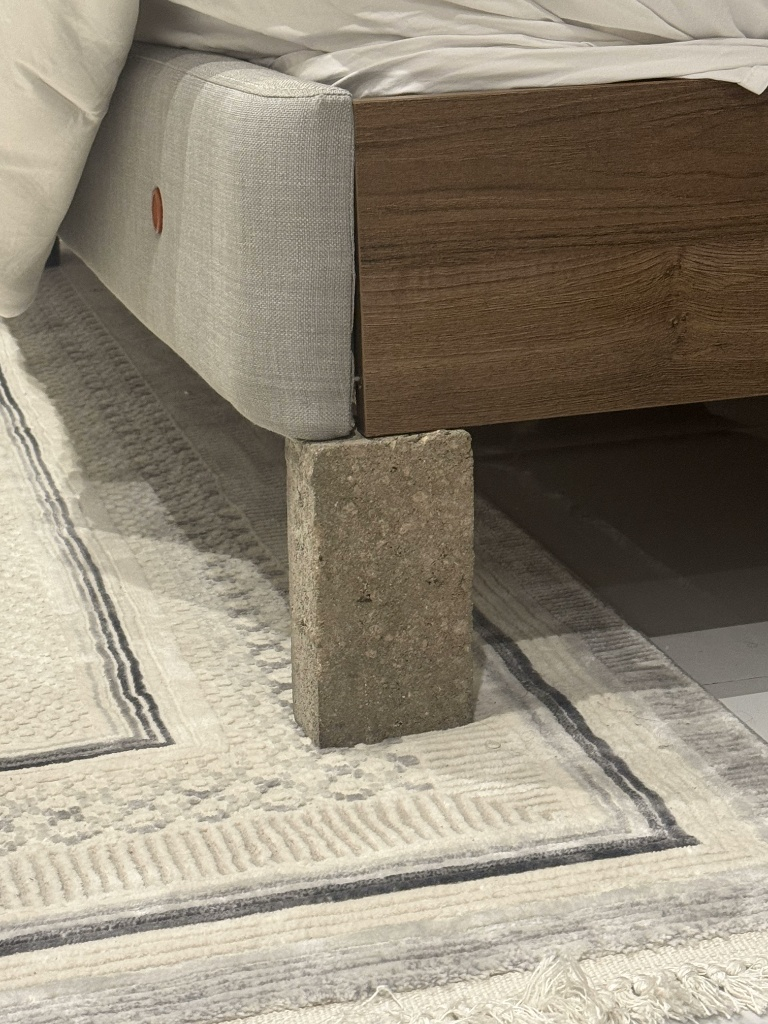
The honest answer, uncomfortable for anyone hunting for a villain, is that the evidence refuses a single cause. Deterioration of the residential interior cannot be explained by poverty alone, and it cannot be explained by the vague accusation of a resident’s culture. What the research describes instead is an interaction. Financial pressure, weak control over the dwelling, temporariness, crowding, ambiguity of responsibility, prior decay in the building itself, and psychological strain combine, and the interior records the combination. No credible study allows us to say that a social class, a nationality, or a profession is by nature less clean or less attentive to space. The built environment is more honest than that, and more complicated.
Three Deteriorations That Get Mistaken for One
Before any judgment can be made, three different kinds of decay have to be separated, because collapsing them into one is precisely how false explanations are born. The first is structural or service failure. Water leaks, damp and mould, faulty drainage, cracked walls, failed heating or cooling, warped windows and doors, tiles broken by the age of the building or by poor construction in the first place. These problems typically fall within the responsibility of the owner or the building manager, and they say almost nothing about the behavior of the resident. A tenant did not crack the foundation. A tenant did not specify the cheap membrane that now lets water into the wall.
The second kind is deterioration produced by intensive use. Bathrooms and kitchens consumed faster than intended, humidity accumulating from too many bodies in too little volume, waste generated at rates the storage was never sized for, furniture wearing out under constant rotation. Here the primary variable is arithmetic, the number of users measured against the capacity the design originally assumed. Income and upbringing are almost irrelevant to this category. A bathroom designed for a family of four and used by eleven workers will decay on schedule regardless of how disciplined those workers are.
The third kind is behavioral. Waste that is not removed, broken furniture kept when disposal was possible, surfaces left uncleaned, faults never reported, and a gradual acceptance of a lower and lower internal standard. This category can legitimately be studied psychologically and socially. But even here, the research warns against isolating it from tenure, management, and economic pressure. Behavior is the visible layer. It is rarely the origin.
The Arithmetic of Attention
Income matters, but it matters in two distinct ways, and neither of them is the way popular judgment assumes. The first is direct. According to OECD data, a household is considered overburdened by housing costs when more than 40 percent of disposable income goes to rent or mortgage, and on average roughly one in three low income renters across OECD countries falls into that category, with the share exceeding half in some countries. The implication follows immediately. When the dwelling itself swallows that much income, the resources left for maintenance, replacement, cleaning materials, transport, and the disposal of damaged furniture shrink toward zero. Small problems are not solved. They are postponed.
The second way is less visible and more interesting. Research on the psychology of scarcity argues that constant preoccupation with rent, debt, work, and food consumes what the literature calls mental bandwidth. When cognition is locked onto the most urgent problem, tasks that are important but not urgent fall away. The loose hinge, the darkening grout, the report that should be sent to the landlord never reach the top of the list, not because the resident does not see them, but because they never win the competition for attention. Deferred faults then compound, and by the time they demand attention their repair has become genuinely expensive. This is a mechanism, not a verdict. Neglect exists in expensive villas, and exceptional care exists in homes worth a fraction of them. Poverty raises the probability of deferral. It does not manufacture indifference.
A House You Cannot Change Is Hard to Love
The research on place attachment adds a layer that pure economics misses. Attachment to a dwelling is consistently found to be higher among owners than renters, higher among long term residents, and higher among those who hold real control over the place and the freedom to personalize it. One study of residential attachment found the bond weakest exactly where the physical markers of deterioration were greatest. The interpretation is not mysterious. An owner captures the future value of every repair. A renter may leave next year, is often contractually forbidden from modifying anything, and knows that whatever is invested in the unit ultimately becomes equity in someone else’s asset. Under those conditions, restraint is not laziness. It is a rational reading of the contract.
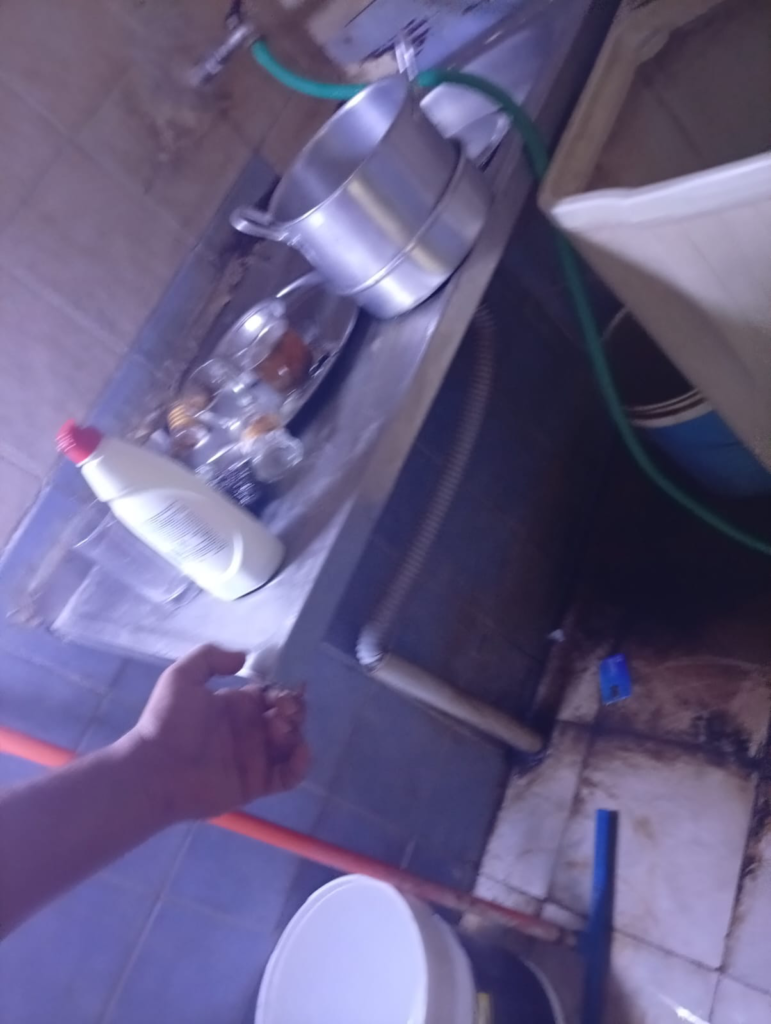
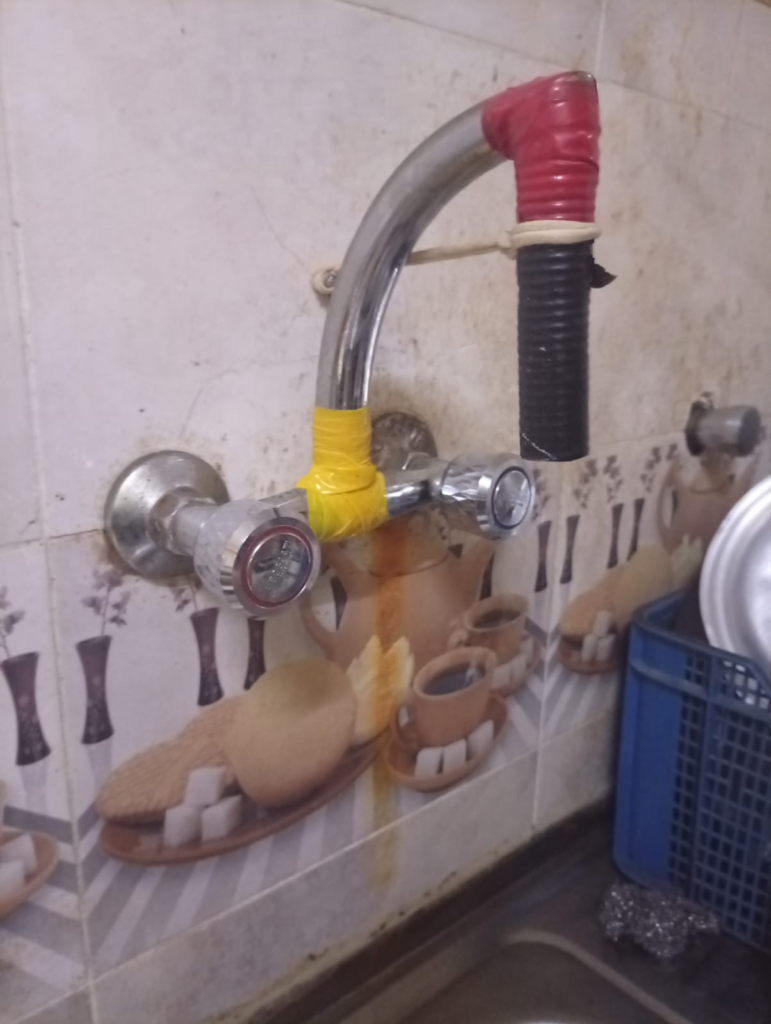

Yet rental alone does not produce neglect, and this is where the analysis has to stay disciplined. Stability of tenure, fairness of the contract, responsiveness of the owner, and the freedom to personalize can turn a rented unit into a genuine home. What corrodes the relationship is not the absence of a title deed but the absence of agency, the sense that one’s actions can actually change the place. This is most visible in temporary and worker housing. The duration of stay is unknown. The room was not chosen. The furniture belongs to someone else. Roommates rotate. Every maintenance decision sits with a distant administration. No architecture, however carefully composed, can demand attachment from a person who has been denied every instrument of it.
Why do rented homes deteriorate faster than owned ones?
Crowding then accelerates everything. Density multiplies the load on bathrooms, drainage networks, kitchens, floors, ventilation, storage, and waste handling. Studies of overcrowding and hazardous housing conditions have proposed that occupant density damages the dwelling itself, including through accumulated humidity and interior wear. A study of 1,613 residents in Beijing found that density, whether measured as floor area per person or persons per bedroom, was associated with a higher risk of depression, and that the primary pathway was the stress produced by the housing space itself. Longitudinal work has found that increases in crowding, through the loss of bedrooms, were followed by increases in depressive symptoms. The architectural conclusion is sharper than the epidemiological one. Sometimes the behavior is not unfit for the space. The space was built for far fewer people than it now serves, and it is the design assumption that failed first.
The Bathroom Nobody Owns
Shared interiors introduce a mechanism that economists identified long ago, the free rider problem. Everyone benefits from a clean kitchen, but the cost of cleaning falls on whoever performs it. If each person assumes another will act, the shared space decays while the private rooms remain tidy. Research on the management of collective housing describes the maintenance of common property explicitly as a collective action problem, one that requires cooperation and an agreed distribution of duties to survive. In worker dormitories, student flats, and shared apartments, the pattern repeats with almost mathematical reliability. The more users who are unrelated to one another, the harder it becomes to assign responsibility, and without a schedule, a supervisor, or any form of accountability, cleanliness becomes public property without an owner.
Above the residents sits a second failure, the failure of reporting. In British government research on private renters, 77 percent reported at least one problem in their dwelling and 44 percent reported damp or mould, yet satisfaction with how problems were resolved remained low. Among tenants hesitant to complain, 27 percent feared a rent increase and 22 percent feared eviction. Read those numbers slowly, because they dissolve one of the most common moral judgments in housing. What looks from the outside like acceptance of decay is often a calculation that requesting repair is either useless or dangerous. The same English data records damp in roughly 1.4 million homes in 2024, about 5 percent of the stock, but with a telling distribution, 10 percent of private rented homes against 4 percent of owner occupied ones, while 23 percent of renting households reported dissatisfaction with the repairs carried out by their landlord. That gradient across tenure is not a gradient in hygiene culture. It is a gradient in power.
Between the owner and the resident lies what can be called the maintenance responsibility gap. Most rental systems divide duties clearly enough on paper. The owner holds the structure, the roof, the windows, the main plumbing, the electricity, the essential sanitary fittings. The tenant holds daily use, cleanliness, reporting, the avoidance of damage, and access for repairs. In practice, wherever those boundaries blur, both sides defer, each convinced the other is responsible, and the problem falls into a zone that nobody’s contract instructs them to reach into. Entire buildings age inside that gap.
What the evidence ultimately describes is a feedback loop rather than a straight line. A place begins in a weakened state. The resident’s satisfaction and perceived control fall. Attachment falls with them. The willingness to invest, to clean, to report declines. Deterioration accelerates, and the degraded condition quietly becomes the accepted normal. Studies of housing quality confirm that the residential environment correlates strongly with attachment and with place dependence, the functional and psychological reliance of a person on where they live. The health literature closes the circle. Scoping reviews find worse mental health among those exposed to low housing quality, including damp, poor cleanliness, and hazards, while the World Health Organization links inadequate housing to mould, extreme heat and cold, injuries, and respiratory risk. Poor housing raises stress, and stress erodes the very capacity needed to manage housing. Neither side of that loop is simply the cause of the other.
Who is responsible for damp — landlord or tenant?
For cities, none of this is a private matter of taste. The most sustainable building is the one that already exists and is kept alive, which makes maintenance a sustainability question long before it is an aesthetic one. Deferred upkeep is a quiet form of demolition, spread over twenty years instead of one morning, and the news cycle only arrives for the final act, never for the two decades of deferral that produced it. Meanwhile the briefs of most housing competitions still reward the rendering of the empty unit rather than the tenth year of its occupancy, and the architectural research on attachment, crowding, and tenure remains largely absent from the documents that actually shape what gets built. What becomes evident is that the profession is being pushed toward a different accounting, one in which the condition of a dwelling is read through seven variables together. The original quality of design and execution. The age of the building and its maintenance history. The density of use. The income of the resident and the share of it consumed by rent. The expected duration of stay. The degree of control and belonging. And the clarity of responsibility between owner, resident, and management. That model explains what the word upbringing never could.
So the strongest claim the data supports is not that some people destroy the spaces they live in. It is that a space becomes far more likely to deteriorate when the person inside it does not own it, does not control it, does not expect to remain in it, pays an excessive share of income for it, shares it with more people than it was designed to hold, and can find no clear or responsive party for its maintenance. The personal factor is real, but it is one component inside an economic, architectural, administrative, and psychological system. A neglected interior is rarely a confession by its resident. It is an audit of everyone who held power over that space and chose not to use it.
✦ ArchUp Editorial Insight
The neglected interior is not a character study — it is a contract audit, and the article’s most precise contribution is its systematic dismantling of the moral judgment that housing deterioration invites by relocating the cause from the resident’s disposition to the seven-variable system that governs their relationship to the space they inhabit. The 27 percent of British renters who declined to report damp or mould because they feared eviction are not indifferent to their environment; they have correctly read the power structure of their tenancy and calculated that visibility is more dangerous than deterioration, which means the decay that accumulates in unreported faults is not the product of negligence but of a rational response to a governance framework that punishes the exercise of the tenant’s most basic contractual right. The article’s epidemiological data — that private rented homes carry damp at more than twice the rate of owner-occupied ones — is the clearest architectural evidence that the variable determining whether a building is maintained is not the resident’s culture but the resident’s tenure, a finding that connects directly to what The Driver’s Room established at the scale of a single programmatic element: in both cases, the spatial condition of the person with least contractual power is determined not by what they need or how they behave but by what the party who owns the space calculated was the minimum required before signing the agreement, and the deterioration that follows is simply that calculation, made visible over time in water stains, broken hinges, and walls that nobody’s contract instructs anyone to reach into.