Secret Gardens: Density and Climate in Housing Design

Climate Architecture within the Urban Fabric
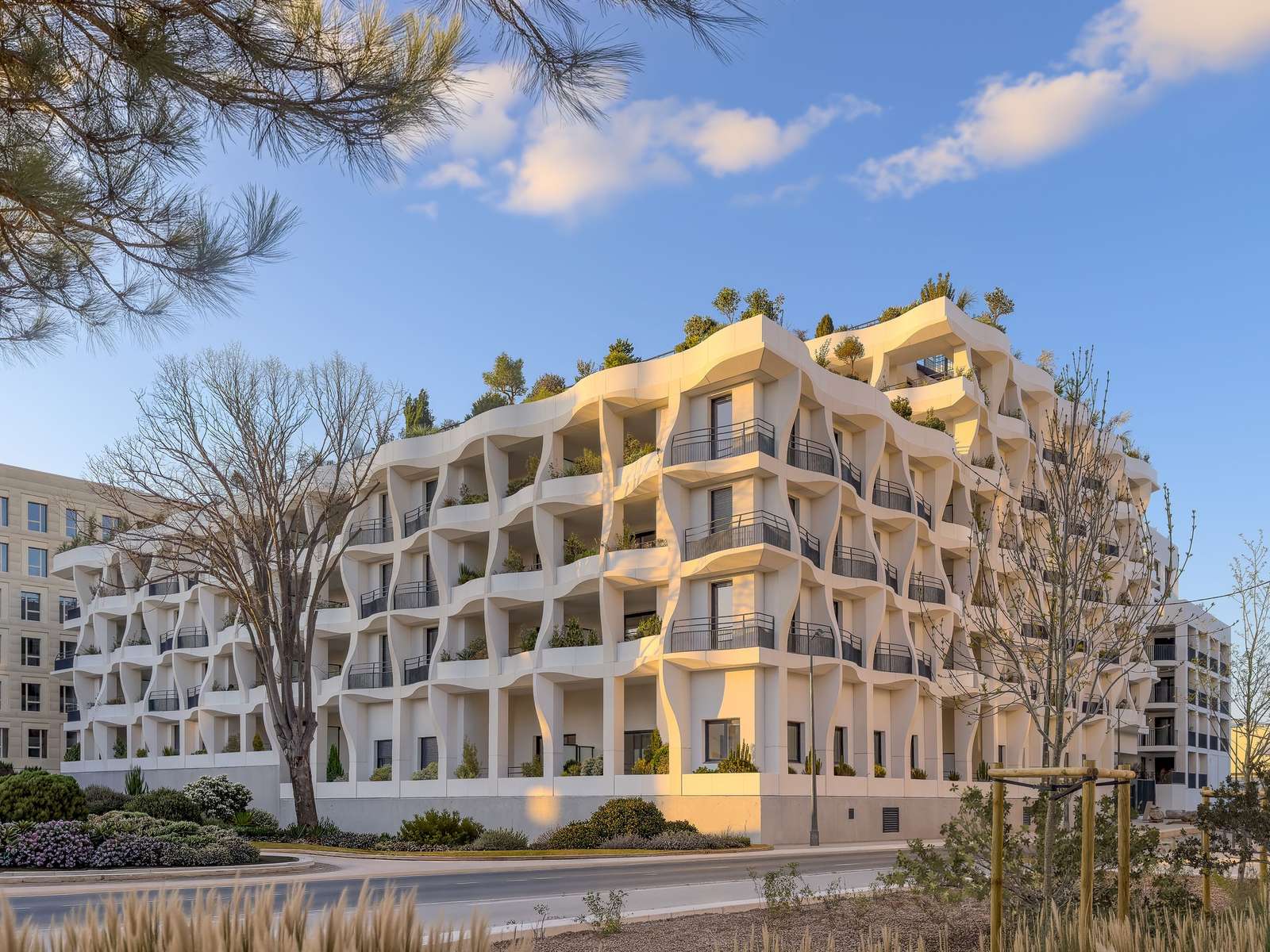
The “Secret Gardens” project in the city of Montpellier was introduced as a model that connects residential density with local climatic considerations. The architectural composition is based on organic masses that respond to Mediterranean factors such as sun and wind, aiming to improve ventilation and create a more breathable urban environment. The project is integrated within the Cité Créative district on the former site of the École d’Application de l’Infanterie (EAI), while maintaining an urban scale close to the surrounding context. This approach reflects a broader trend in Architecture, where climate responsiveness is becoming central to urban design.
Residential Diversity and Environmental Compliance
The project consists of two residential buildings designed by Vincent Callebaut Architectures as a case study within contemporary ecological architecture trends. It includes 113 housing units, among them affordable units, while adhering to RE2020 standards related to environmental performance and reduced climatic impact. The project also focuses on supporting biodiversity and social diversity through the distribution of units and planted areas within the urban mass. Many recent Buildings in Mediterranean regions are now following similar hybrid models.
The Relationship Between Urban Memory and Organic Language
The project attempts to achieve a balance between preserving the memory of the former military site and introducing a more flexible and organic architectural language. At the same time, it interacts with the surrounding urban fabric near the historic center of the Écusson district, without detaching from the structured character of adjacent buildings. This reflects a growing trend in Mediterranean housing projects toward combining density, green spaces, and climatic responsiveness within a cohesive urban framework. To explore similar transformations across different regions, you can browse the Archive for case studies and historical comparisons.
| Category | Details |
|---|---|
| Architects | Vincent Callebaut Architectures |
| Area | 8209 m² |
| Year | 2026 |
| Photographs | Vincent Callebaut Architectures |
| Structures | André Verdier Ingénieur Conseil |
| MEP | DEXO |
| Landscape Design | Land’Act Paysages & Territoires |
| Urban Planner | West 8 |
| Main Contractor | Sectp |
Climatic Facades Between Ornament and Environmental Performance
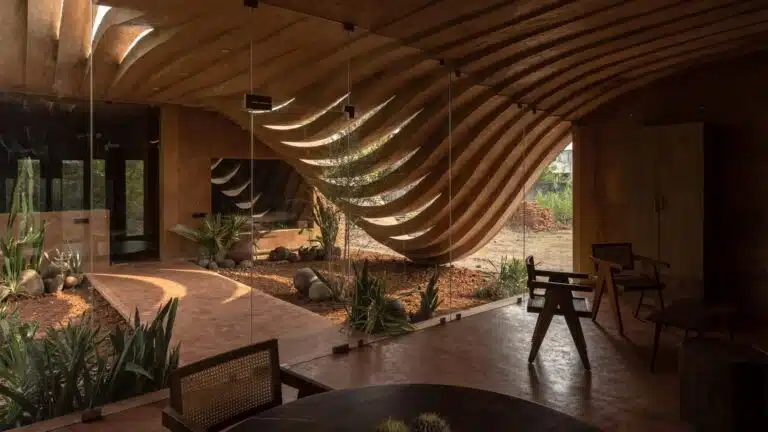
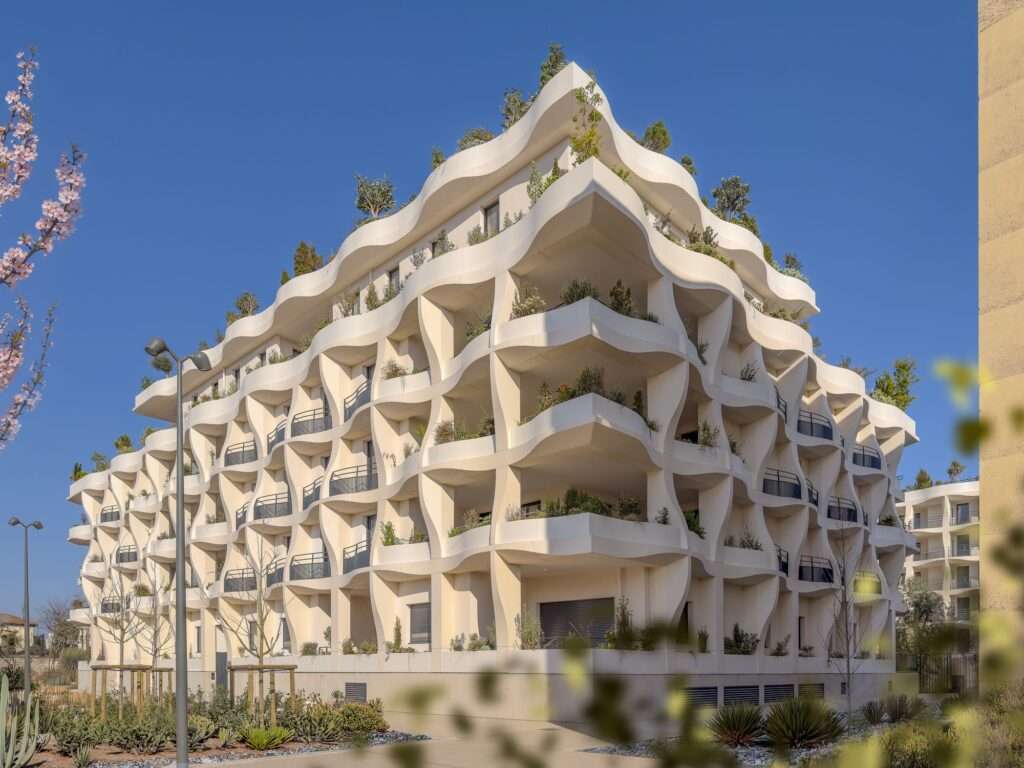
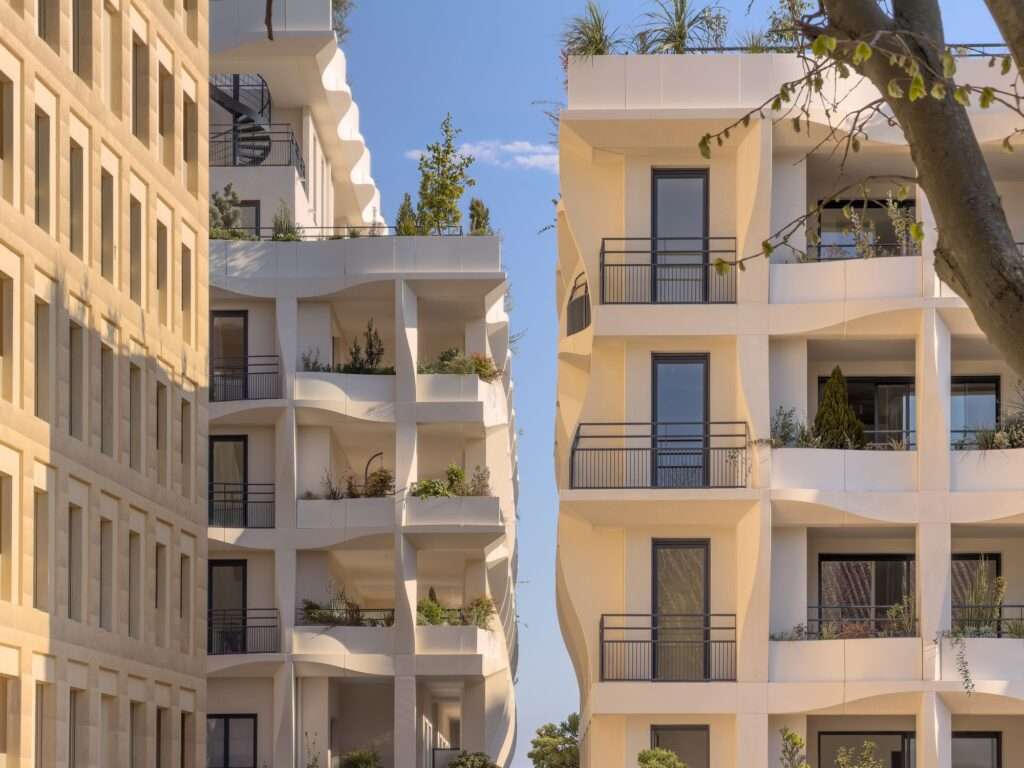
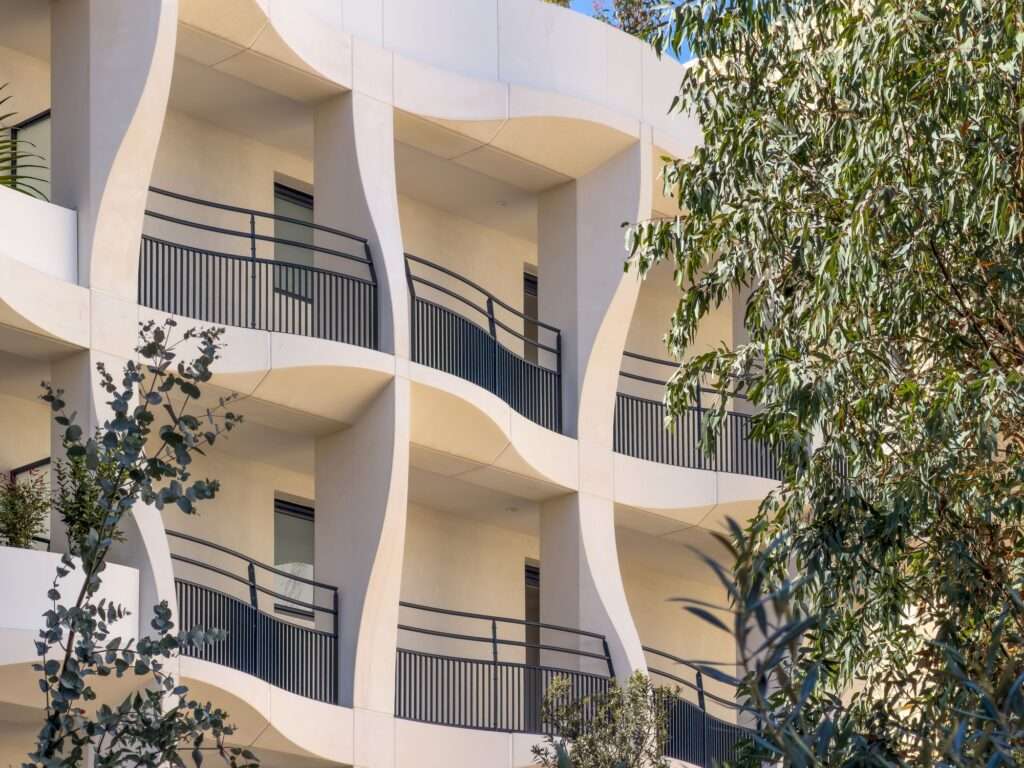
The “Secret Gardens” project reinterprets certain principles of Art Nouveau within a contemporary ecological context, through organic façades inspired by the works of Victor Horta, Antoni Gaudí, and Émile Gallé as a visual and compositional reference. The residential blocks appear as porous architectural envelopes that interact with light and wind, where façades filter sunlight, improve air movement, and create a more stable microclimate within residential spaces. This strategy aligns with innovative Design approaches that prioritize environmental adaptation without sacrificing aesthetics.
The metallic façades also rely on convex and concave curves that function in a manner similar to mashrabiyas, contributing to shading, reducing heat gain, and improving natural ventilation. This approach reflects an attempt to link climatic performance with organic forms rather than relying on traditional rigid geometric compositions. For technical specifications on similar envelope systems, refer to the Material Datasheets available in our resource library.
Architectural Form as Climatic Response
The architectural language of the project proposes a concept based on linking building form to local climatic conditions, where masses and openings are calibrated according to sun paths and prevailing wind directions. In this context, the façade becomes a functional envelope that balances environmental protection with openness to the Mediterranean surroundings, with an emphasis on thermal comfort and reduced reliance on mechanical systems. This integration of form and environment is a recurring theme in contemporary Construction practices.
The project also relies on a set of environmental strategies, including the reuse of rainwater and greywater for irrigating planted areas, as well as the use of a low-carbon structural system and high-performance thermal insulation. Dense Mediterranean vegetation further contributes to reducing urban heat through evapotranspiration, while supporting local biodiversity within the urban area.
Energy and Nature Integration within the District
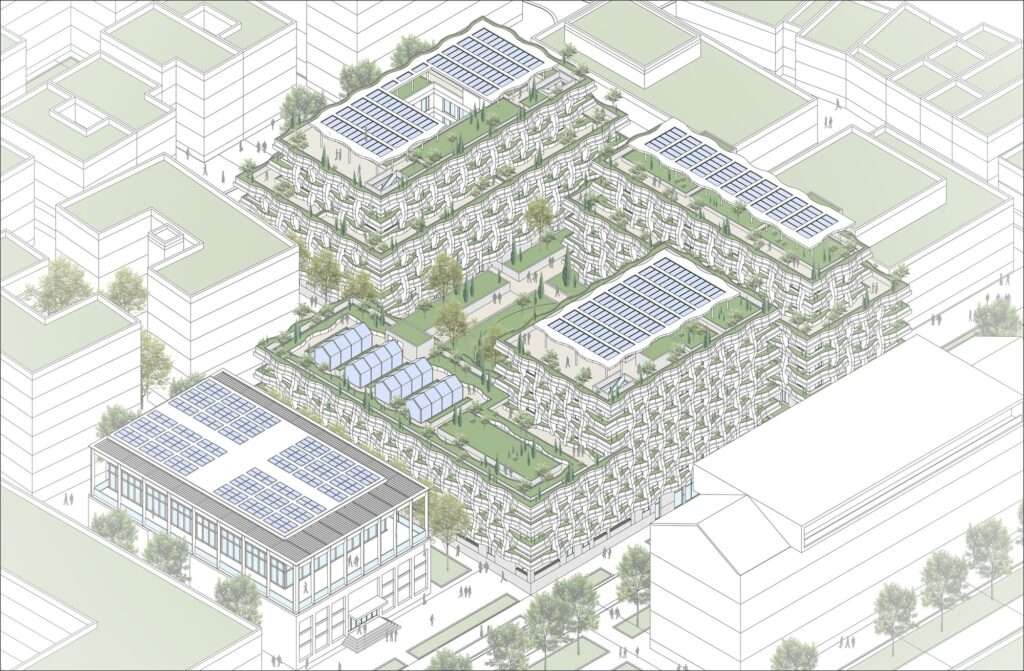
The project is connected to the surrounding natural landscape through a visual and ecological extension toward Montcalm Park, helping to form a continuous ecological corridor between built and green spaces. At the same time, the two buildings rely on shared renewable energy sources, including a biomass heating plant and rooftop solar panels, aiming to reduce energy consumption within the framework of an eco-district and contemporary performance standards. To stay updated on similar innovative projects, follow the Top News section covering global architectural developments.
Urban Density and Porous Voids
The “Secret Gardens” project is based on an urban model that combines residential density with open voids, where 113 housing units are organized around a large central courtyard with unsealed soil that allows trees to be planted directly on site. This configuration improves stormwater drainage and reduces soil sealing effects, while enhancing thermal comfort within the residential complex. This type of density management is increasingly discussed in literature on Cities and sustainable urbanism.
The project is also connected to the surrounding urban fabric through pedestrian pathways, shaded alleys, and planted spaces that help mitigate heat during summer. At the same time, the ground floor is elevated by one meter to ensure greater privacy while maintaining consistency with the heights of adjacent heritage buildings.
Organization of Residential Blocks and Housing–Climate Interaction
The “Théa” building takes the form of an L-shaped mass with varying heights, containing apartments of different sizes that rely on cross-ventilation and multiple orientations to improve climatic performance. Living spaces are connected to deep loggias that function as semi-outdoor extensions of the housing units, with elevated planted beds providing privacy and reducing direct sun exposure. For architects and students interested in this field, current Research highlights the importance of such passive strategies.
In contrast, the “Opal & Sens” project is organized around an internal courtyard that extends through the full height of the building, allowing natural ventilation to reach residential units and creating a calm transitional zone within the urban mass. The façades alternate between planted loggias oriented toward internal voids and more open balconies facing the street, aiming to balance privacy with urban openness.
Infrastructure and Movement within the Project
Parking spaces are relocated beneath the buildings to preserve continuous open soil within the central garden, relying on natural ventilation through a large lower courtyard. The project also emphasizes sustainable mobility by integrating bicycle rooms at ground level and underground parking, in addition to its direct connection to the new tram line in the area. Such features are often highlighted in Events and conferences focused on green mobility and low-carbon districts.

Planted Spaces and Their Climatic Role
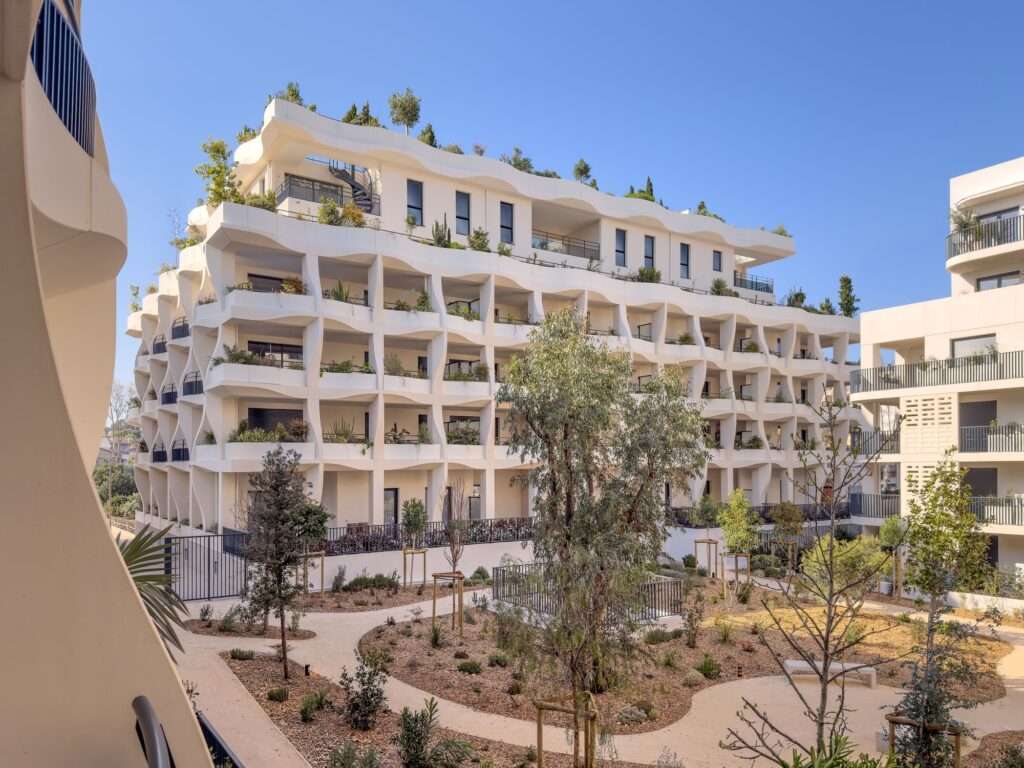
The ground-floor apartments in the “Secret Gardens” project rely on elevated private gardens that enhance privacy and improve the direct relationship between housing and nature. In contrast, continuous balconies extend along the façades overlooking the garden, forming a continuous vegetated layer that helps reduce heat and improves the effectiveness of the urban “cool island” within the residential block. This integration of planting and dwelling is a growing focus in Interior Design, where indoor-outdoor connections are prioritized for comfort.
Green roofs and terraces also play an additional role in improving the local microclimate and reducing the impact of urban density, while maintaining a clear presence of natural elements within the architectural composition.
Regenerative Urbanism and the Re-integration of Ecological Systems
The project presents a model of dense urbanism that relies on porous voids and open spaces as a fundamental part of its structure. This is expressed through community gardens, shaded alleys, and green roofs, alongside a focus on reducing material and energy consumption and relying on shared renewable energy sources. For professionals seeking similar case studies, the Projects section features numerous examples of regenerative design.
At the same time, the project attempts to reintegrate certain natural ecological cycles into the urban environment, such as water and energy management and the support of local biodiversity. Shared spaces also contribute to forming social connections linked to the daily use of gardens and open pathways.
Architecture as a Mediator Between Humans and Climate
The project reflects an architectural approach that draws on Mediterranean ecological systems as a reference for climatic and urban organization, rather than treating sustainability as a separate technical layer. In this context, vegetated façades, transitional voids, and natural ventilation are used as tools to improve thermal comfort and reduce reliance on closed mechanical systems. This philosophy is frequently debated in Discussion forums among architects and environmental designers.
The project also reinterprets certain principles of Art Nouveau within a contemporary framework that links environmental performance with organic architectural language, allowing architecture to act as a medium that balances comfort, nature, and resource efficiency within the residential environment.

✦ ArchUp Editorial Insight
The “Secret Gardens” project in Montpellier functions as a direct translation of a regulatory and economic framework driven by RE2020 energy performance standards within the Cité Créative redevelopment zone on a former military site (EAI). The primary driver here is not a purely design decision, but the repurposing of urban land according to municipal policies aimed at increasing residential density and achieving investment returns within competition among developers such as Bouygues Immobilier and Vestia Groupe. Similar competitive dynamics are visible in many Architecture Competitions where innovation is balanced with regulatory compliance.
The constraints are expressed through height regulations, proximity to the historic fabric of the Écusson district, integration of the tram line, underground parking requirements, and stormwater management through ground permeability. The architectural outcome appears as a spatial compromise between these pressures, expressed through a porous mass around a central courtyard, ground-level elevation, planted balconies, and green roofs, achieving a functional distribution of ventilation and heat reduction within a strictly regulated framework. For updates on policy-driven projects and their outcomes, the Competition Results page offers valuable benchmarks.