Shanti Project: Redefining Affordable Tiny Living on Wheels

Price and Context in the Tiny House Market
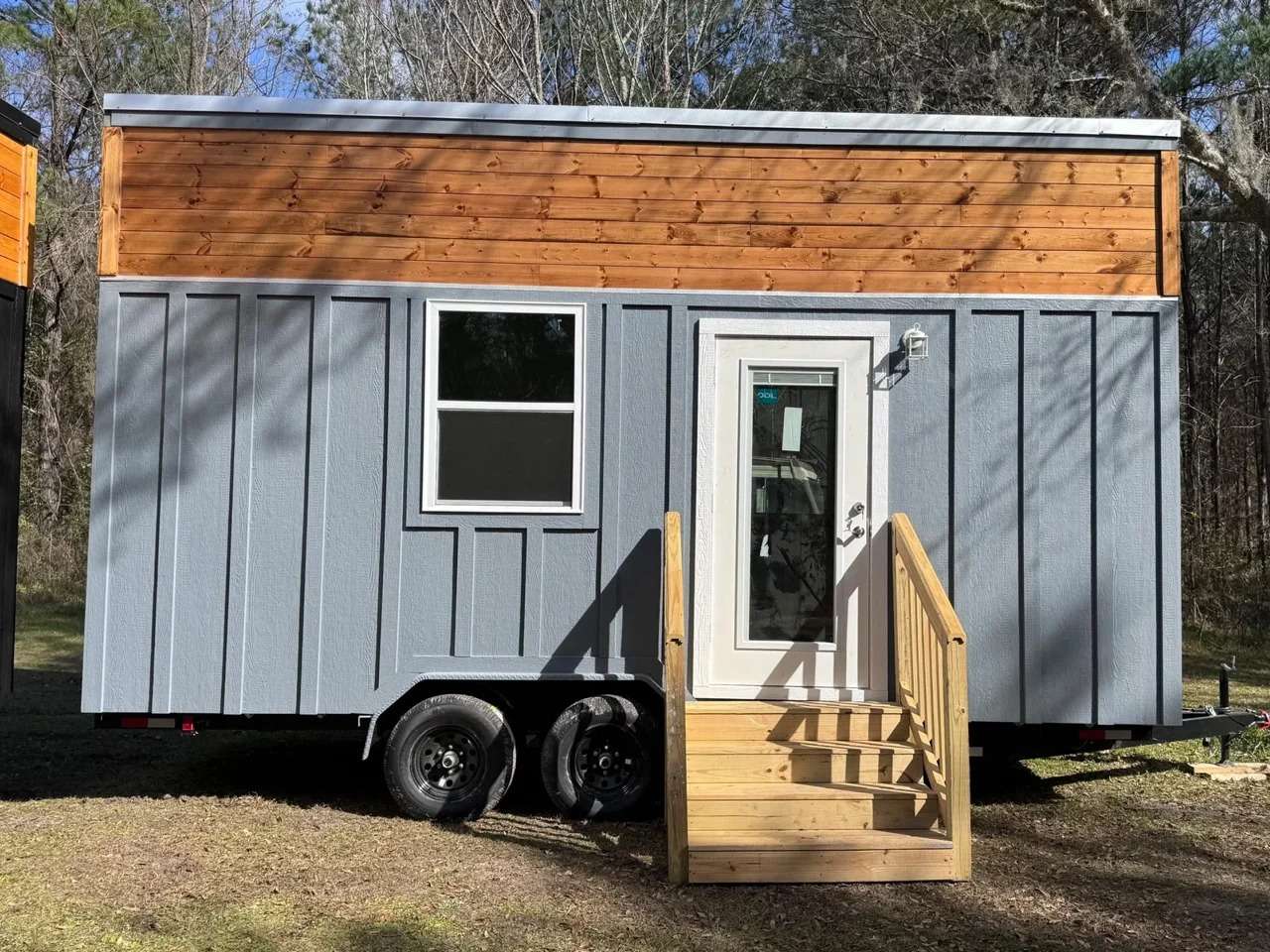
The Shanti house is positioned within the tiny house category at a price of approximately $30,000, placing it in the lower range compared to many similar projects that can exceed $100,000 before completing essential fittings such as the kitchen. This offering comes in the context of a market that is witnessing significant price variation against highly limited living spaces.
Dimensions and Living Space
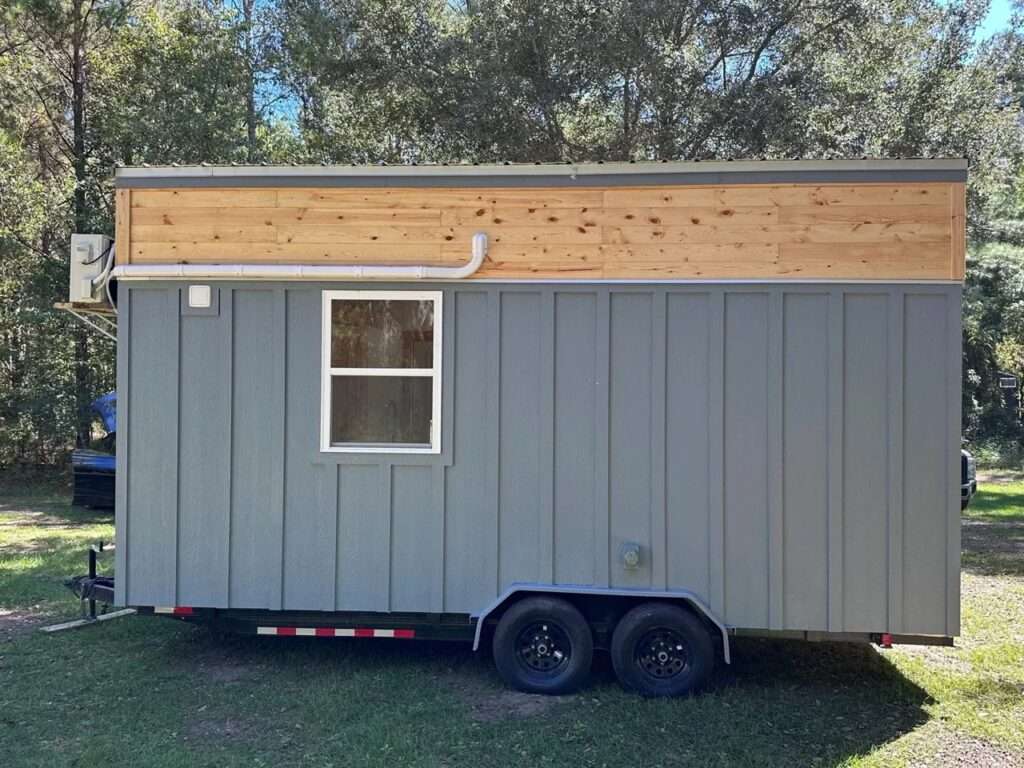
In terms of Dimensions, the house measures approximately 8 feet 5 inches in width, 20 feet in length, and 13 feet 6 inches in height. This results in a main-floor living area of around 133 square feet. These specifications reflect a traditional model of compact mobile homes built on wheels.
Space Distribution and Design Decisions
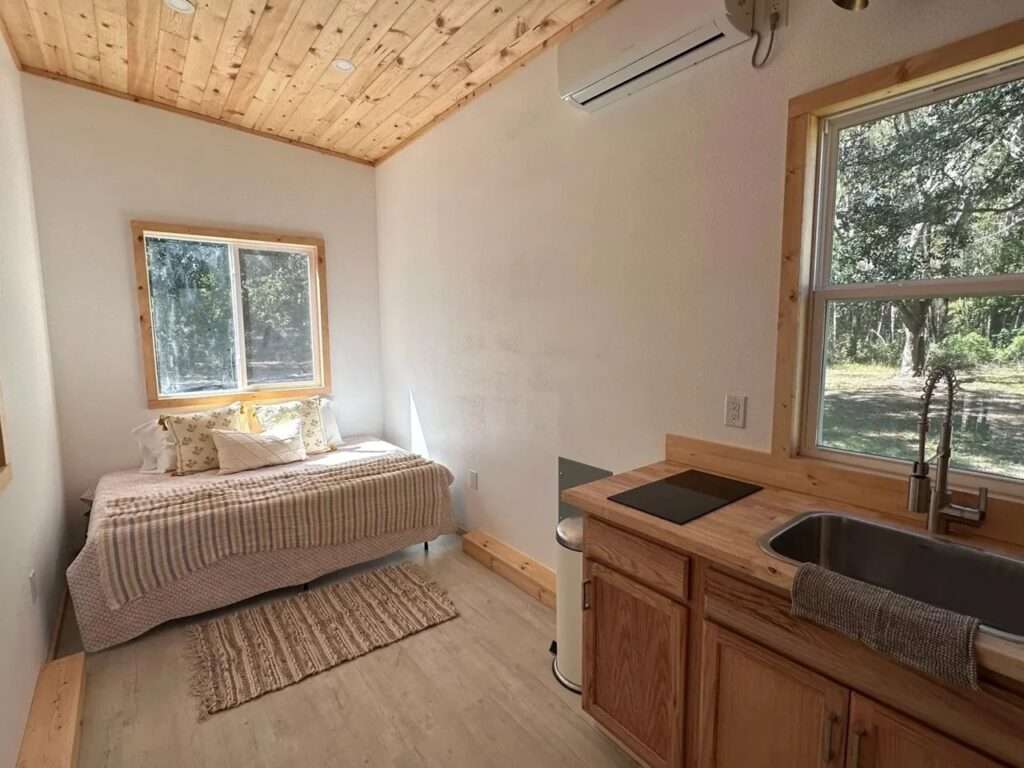
The interior design relies on a direct distribution of essential functions. A queen-size bed is placed on the ground floor instead of depending on an elevated sleeping loft that requires climbing stairs, which changes the daily usage pattern of the dwelling. The upper level is used exclusively for storage, reducing reliance on vertical movement within the space and making the configuration more suitable for certain user groups such as elderly individuals or those who prefer to avoid stairs.
Interior Design and Functional Layout
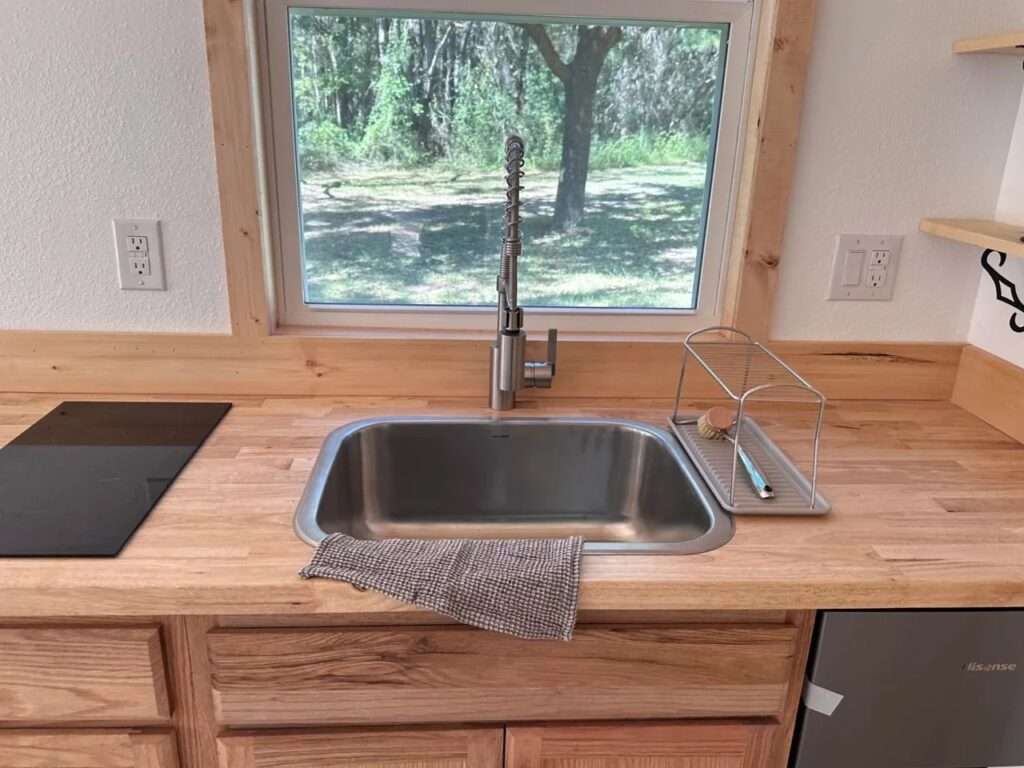
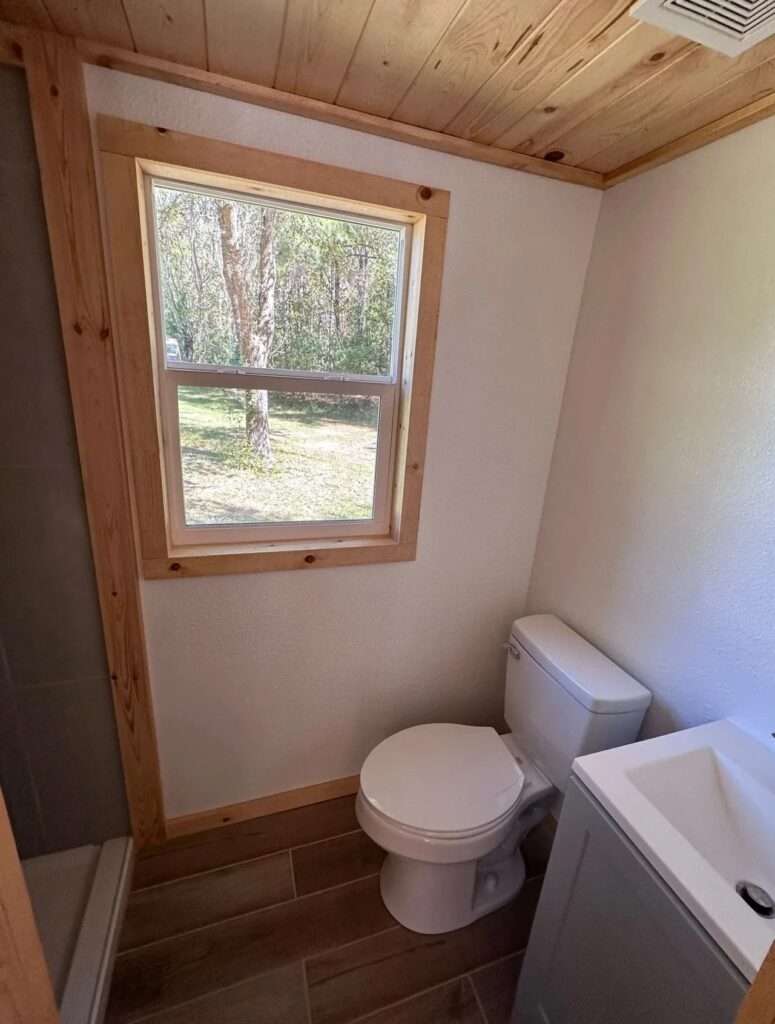
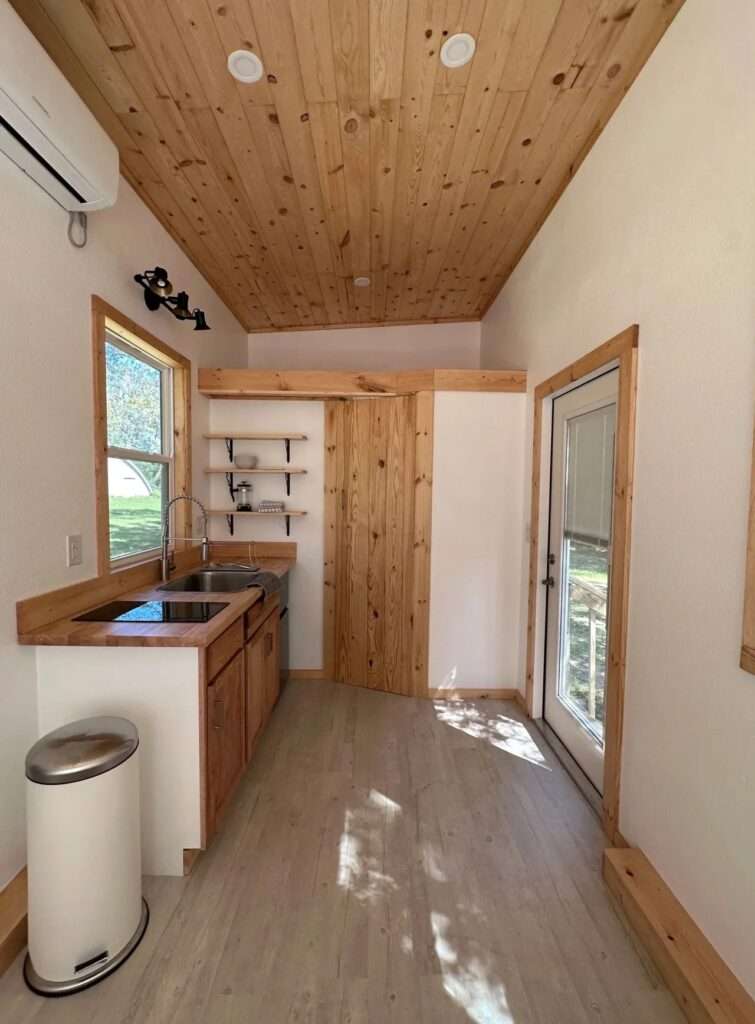
The Interior design is based on an intentionally open space to reduce complexity in partitioning. The main area includes a kitchenette, a bathroom equipped with a shower and a standard toilet, as well as a built-in sink. This layout focuses on providing essential functions within a limited footprint without introducing complex internal divisions.
Structural Specifications and Equipment
The structure is built on a heavy-duty steel chassis designed as a mobile living trailer, with dual axles rated at 5,000 pounds each, along with trailer brakes and road-compliant lighting. The unit is also certified by NOAH as a recreational vehicle (RV), confirming its readiness for mobility and transport. Customization options are available, including shiplap interior walls, a built-in washer/dryer unit, and full furnishing, which raises the cost of the move-in-ready version to approximately $35,000.
Uses and Application Context
The model was developed as the first project in a limited production series, presented as a space that can be repurposed in several scenarios such as temporary housing, guest units, home offices, or short-term rental units. Some units have already been used in short-term rental activities through accommodation platforms near tourist areas in Florida, allowing the model to be tested in real-world usage environments.
✦ ArchUp Editorial Insight
The Shanti tiny house operates as a response shaped by compliance logic to the pressures of housing affordability and the optimization of short-term rental returns within a legal category that permits mobility and bypasses certain urban planning restrictions. The primary driver is the widening gap between urban rental levels and low-cost homeownership requirements, which pushes toward housing models classified as recreational vehicles to avoid land-use zoning requirements. Constraints emerge from building codes, transportation regulations, and insurance costs, which collectively impose pressure that reduces the usable space to 133 square feet. The internal configuration, ground-floor sleeping, upper storage, kitchenette, and service unit, is not purely a design decision but rather a regulatory compromise. The structure mounted on a steel chassis with NOAH certification transforms the dwelling into a deployable mobile unit in short-term rental markets and reproduces a tiny house pattern driven more by financial rigidity than architectural innovation.