JK-AR: Timber Massing and Three-Courtyard Spatial System

Mass Formation and Dialogue of Three Voids
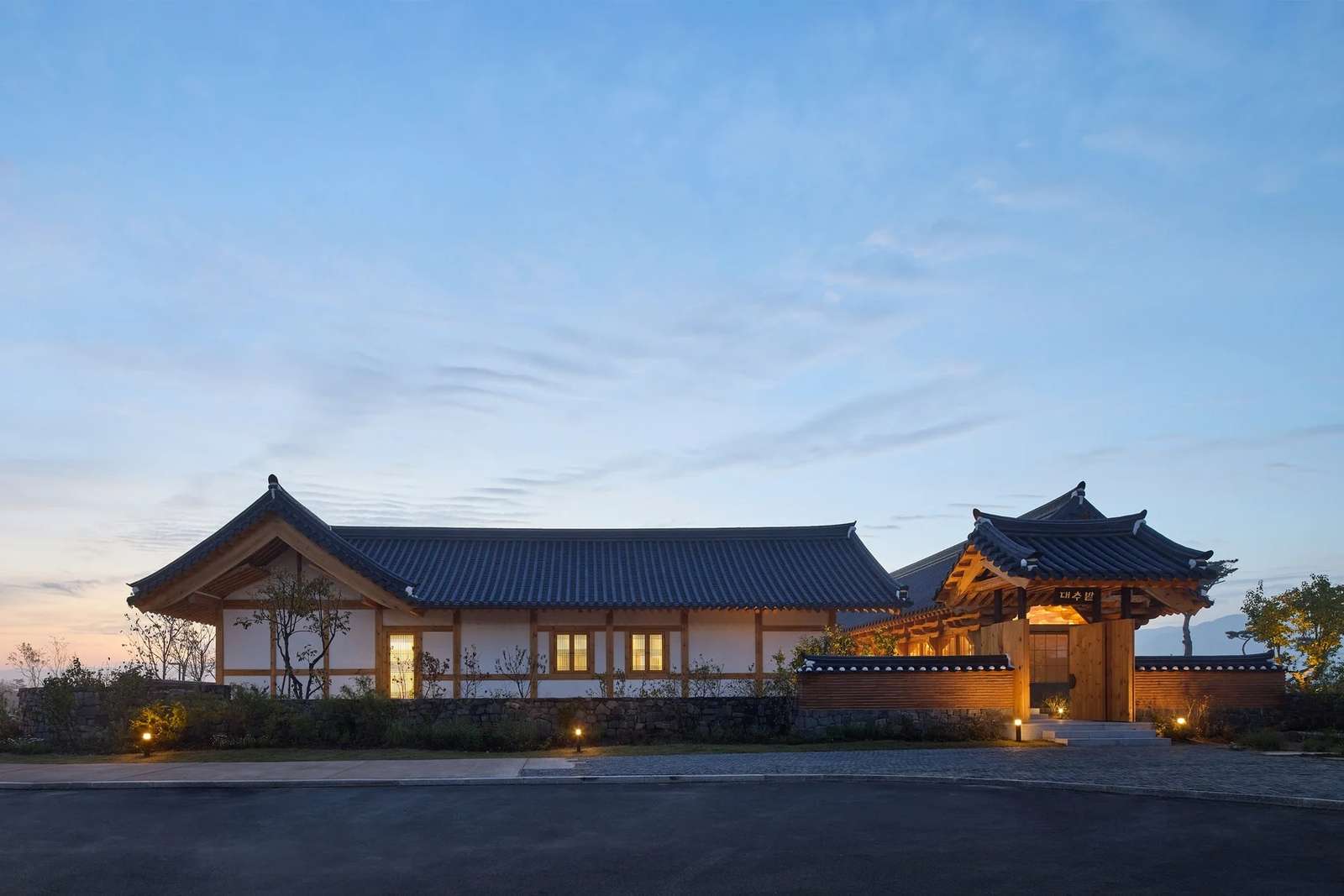
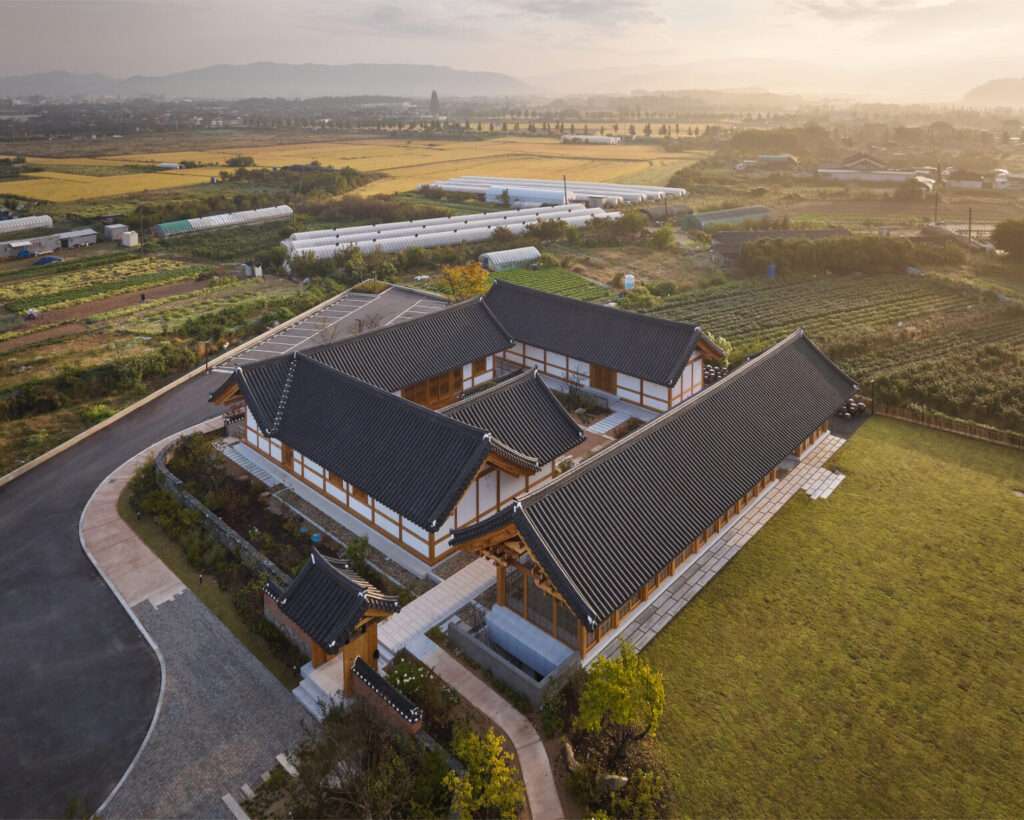
The project is based on deconstructing the complex functional program (clinic, exhibition, café) into three interconnected masses, instead of relying on a single central void. This organization draws inspiration from concepts of traditional Korean architecture, where masses are distributed around three courtyards that function as transitional axes for movement and visual connection. These courtyards are not limited to separating functions; they also organize circulation and shape the user’s experience inside the building. As one moves between spaces, the perception of scale and privacy gradually shifts, turning movement into a sequence of spatial transformations defined by changing natural light throughout the day. This variation reflects different states of use between calmness and activity in each space.
Wooden Synaesthesia and Environmental Performance
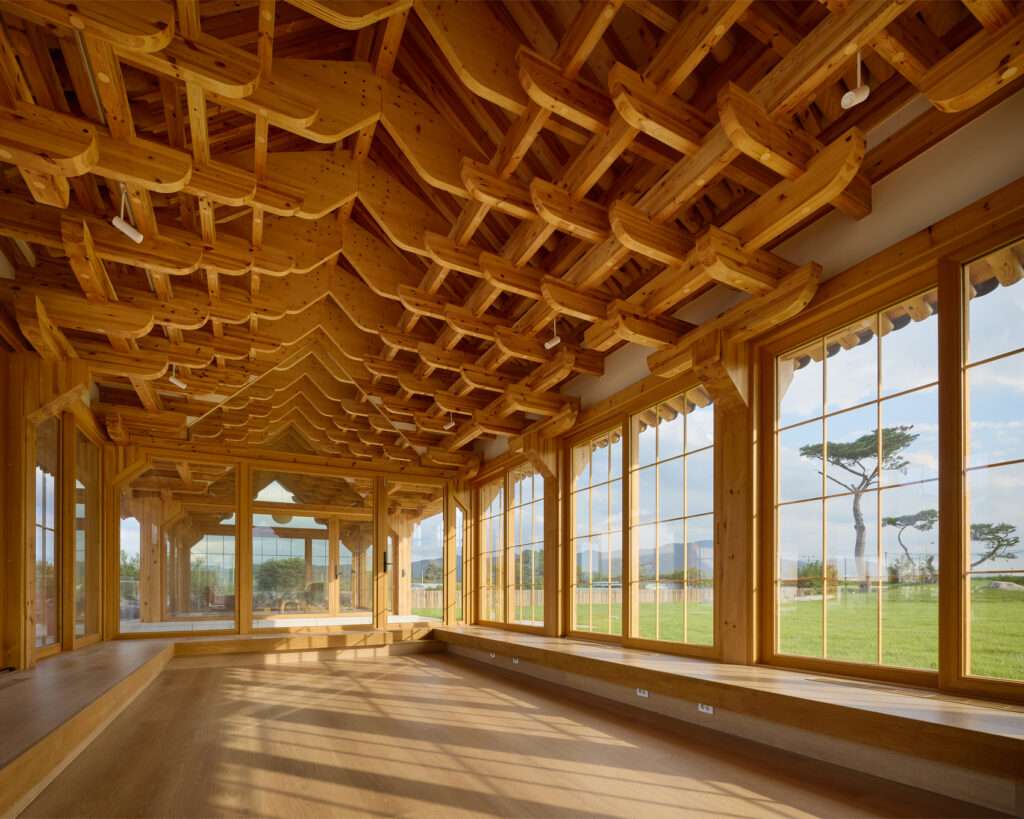
The structural system in the project is transformed from a purely load-bearing element into an active spatial component that shapes the interior experience. JK-AR reinterprets traditional timber Construction techniques within a contemporary architectural language, where wooden roofs integrate with spatial masses to form a functional visual system. The shadows generated by this configuration enhance the sense of enclosure and spatial warmth.
This aesthetic dimension is integrated with passive environmental strategies based on mass orientation and the use of natural ventilation through courtyards. The use of local timber and improved thermal insulation further enhances environmental performance. In this way, material becomes a dual-function element: it carries a cultural dimension linked to architectural memory, while simultaneously supporting the building’s environmental efficiency through carefully selected materials.
| Category | Details |
|---|---|
| Architects | JK-AR |
| Area | 951.19 m² |
| Photography | Rohspace |
| Lead Architects | Jae K. Kim |
| Architects Team | Jae K. Kim, Gyutae Kim, Yesol Lee, Sookran Kwak |
| Contractor | Gapbong Kim, Dohyung Kim, Minho Kim (Stuga House) |
| Structural Engineering | Agehara Shigeo (Structural Net), Byeongsoon Park (Theo Structure) |
| MEP Engineering | Jongtaek Lee (Yoosung Engineering) |
| Landscape Design | Jaehyeok Choi (Openness Studio) |
| Materials | European red pine glulam, domestic red pine |
| City | Gyeongju-si |
| Country | Republic of Korea |
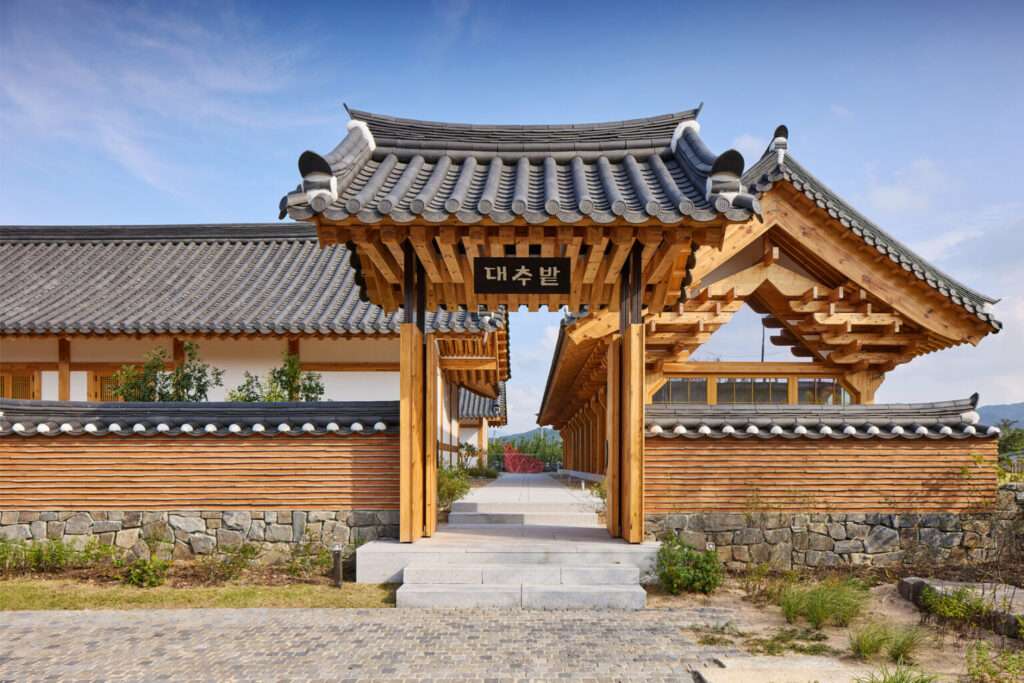
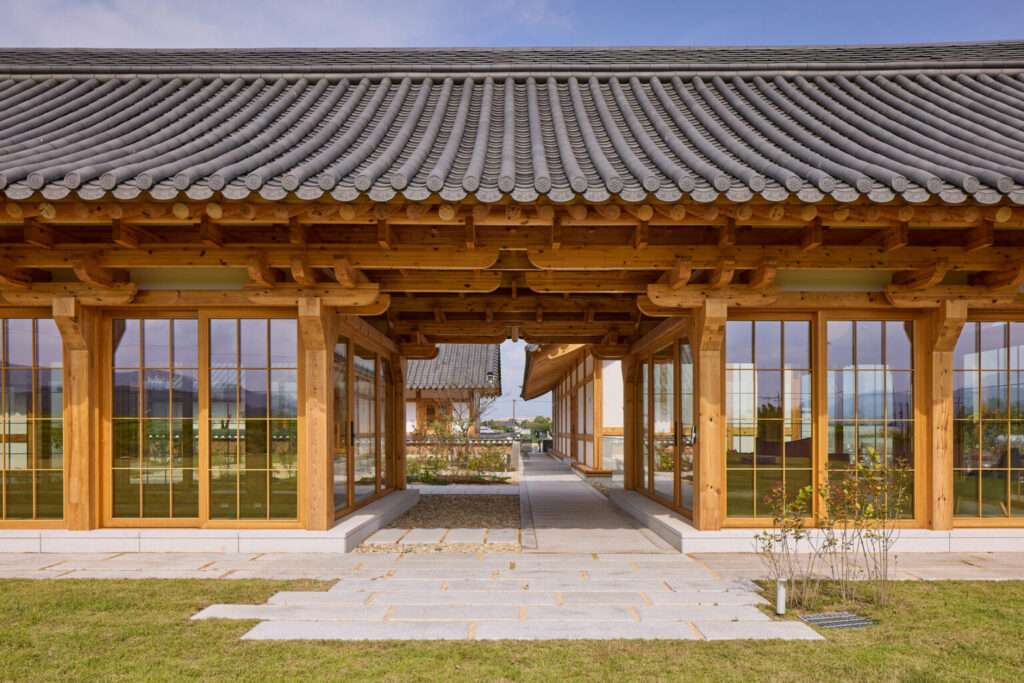
Spatial Articulation and Transition through “Toenmaru”
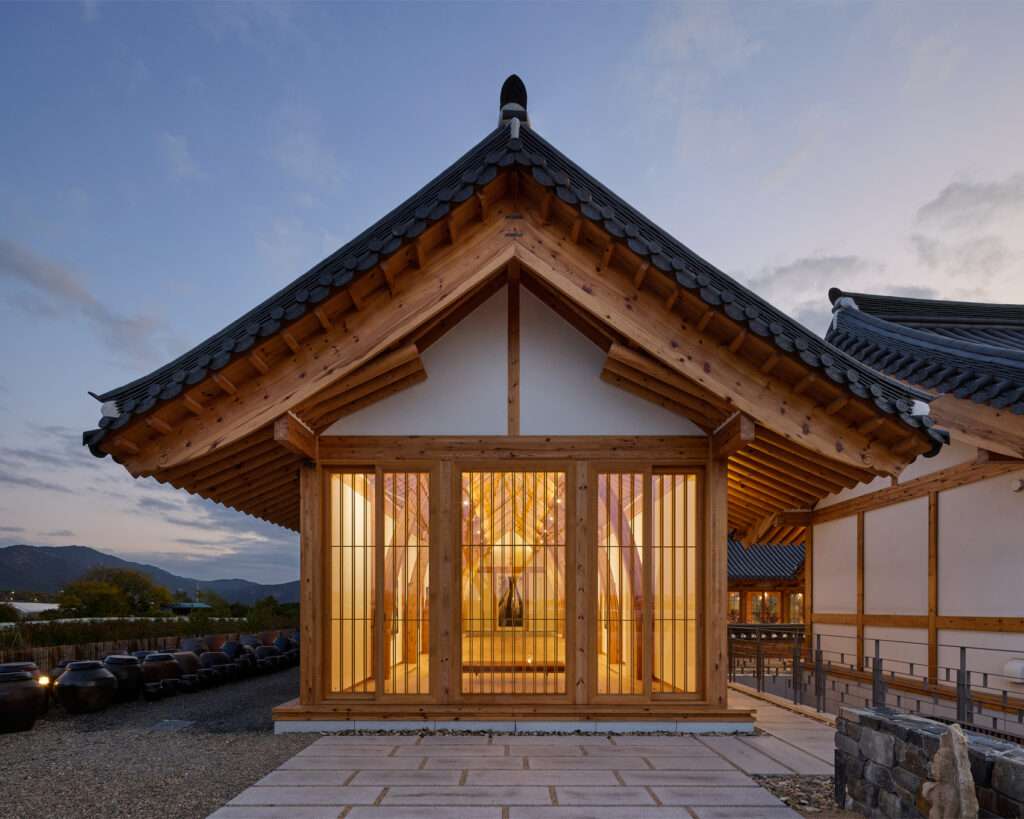
The Design moves toward decomposing the architectural mass into three functionally independent yet visually connected buildings, reviving the spatial logic of traditional Hanok structures. This approach is expressed through the “Toenmaru” (traditional veranda), which acts as a transitional threshold connecting interior and exterior spaces while softening the boundaries between them.
The spatial experience is composed of a gradual movement that begins at the point of entry, where circulation, ventilation, and lighting paths are interwoven. This organization encourages slower movement and deeper interaction with shifting shadows and spatial transitions as users move between therapeutic and cultural functions.
Structural Deconstruction and Material Essence in the Three Halls
The project redefines material and construction technique as a design language that shapes sensory experience, rather than merely a means of building.
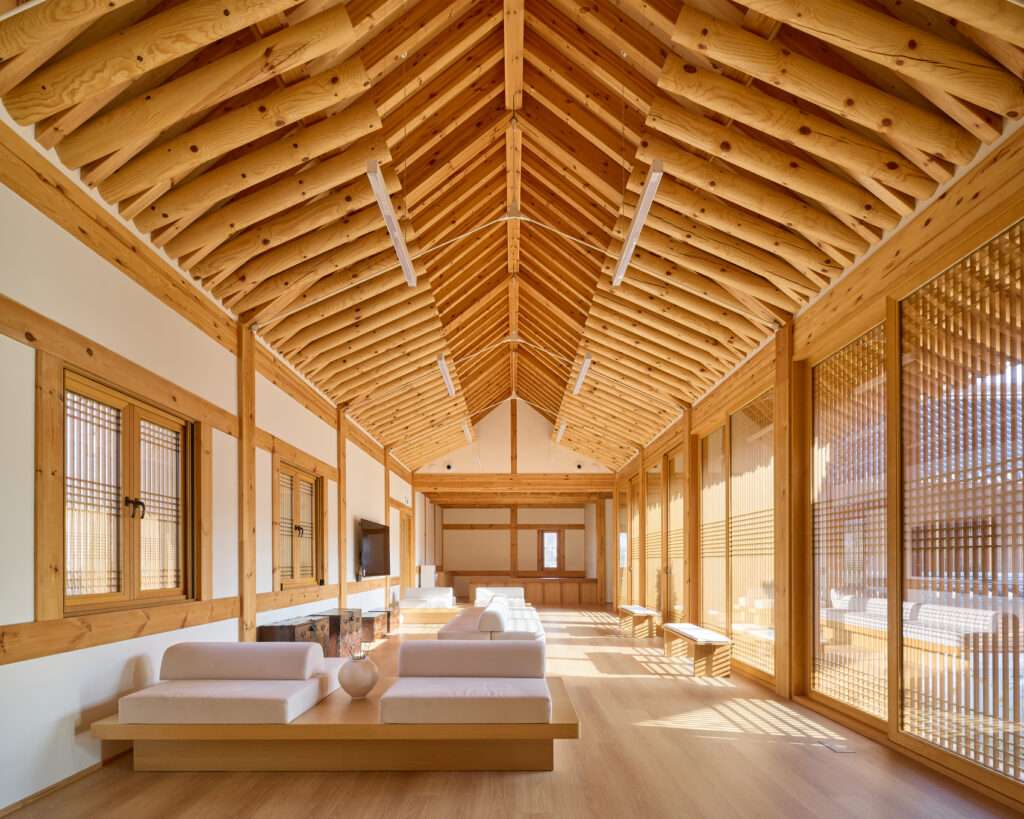
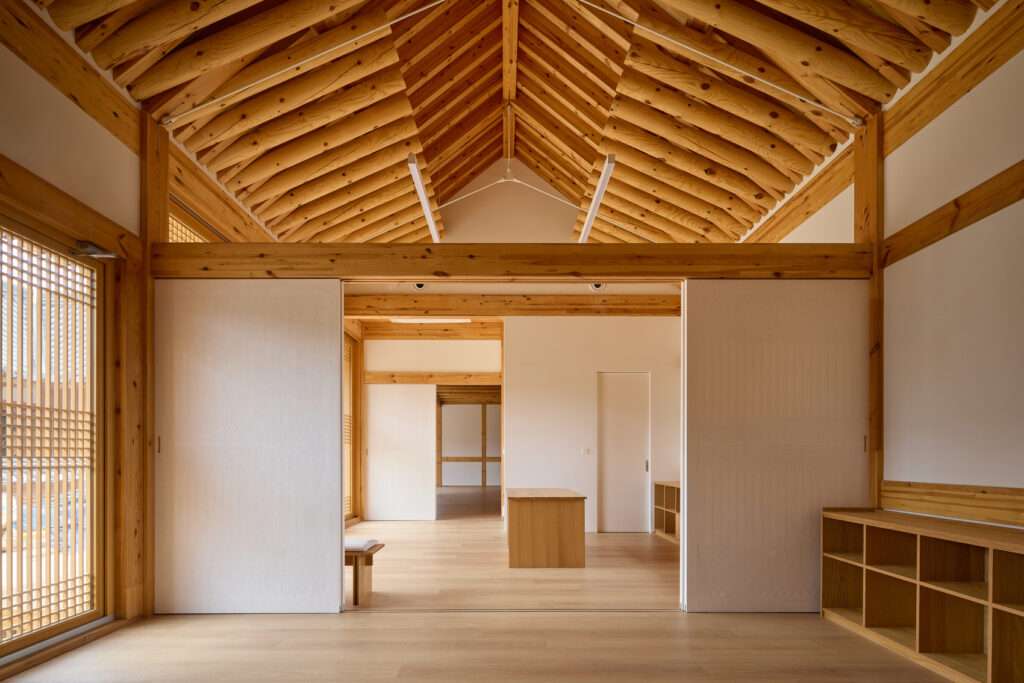
In the “Healing Hall,” functional requirements are integrated with a warm interior environment that supports comfort and recovery. The “Contemplation Hall” (art exhibition) adopts a quieter and more visually disciplined space that enhances focus through controlled light and shadow. In contrast, the “Insight Hall” (tea café) appears as a more expressive space of wooden structure, where traditional joint details are reinterpreted in a contemporary composition, producing a dynamic roof that responds to natural light and enriches the sensory experience of the space.
Structural Synaesthesia and Transformation of Cultural Memory
The project does not merely reference heritage as a formal inspiration, but reinterprets structural elements derived from the Samguejeong residence and the Jahamun gate of Bulguksa Temple within a contemporary architectural language.
The spatial experience is based on curved timber elements that generate visual continuity within the space, where light and shadow interact dynamically with architectural masses. This interaction creates a dual sensation that combines enclosure and openness, transforming cultural memory into a spatial system experienced through the user’s movement within the building.
Madang Sequence and Integrated Environmental Performance
The project organizes visitor movement through three courtyards (Madang), forming a structural framework that mediates the relationship between the interior and the natural landscape of Jeonju. The sequence begins with a front courtyard that directs the view toward Mount Namsan, establishing a moment of calm and contemplation. It then continues to a central courtyard that functions as a kinetic joint connecting the masses and enhancing cross ventilation.
This spatial organization is supported by a set of passive environmental strategies, including careful orientation, natural lighting, and roof thermal insulation. Local materials are also used in a way that enhances the building’s long-term performance. Service functions and parking areas are placed at the rear to preserve the clarity of the project’s scenographic experience within dense cities.
✦ ArchUp Editorial Insight
The JK-AR project deconstructs the functional program into three interconnected architectural volumes organized around Madang courtyards, reinterpreting the logic of traditional Korean dwellings within a contemporary timber structural system that controls light, movement, and functional gradation. Passive environmental performance, natural ventilation, and material continuity are employed to link the clinic, exhibition, and café into a continuously evolving spatial experience shaped by Design.
In contrast, this reliance on a formal translation of vernacular heritage may amplify spatial narration at the expense of operational efficiency in contemporary urban contexts. In high-density cities, architectural practice tends to reduce physical fragmentation in favor of integrating services and infrastructure, while a tripartite separation logic may remain less compatible with spatial economy and lifecycle management considerations in urban environments.