Spatial Sequencing in Milan: Material and Sensory Design

Spatial Sequencing as a Tool for Orientation
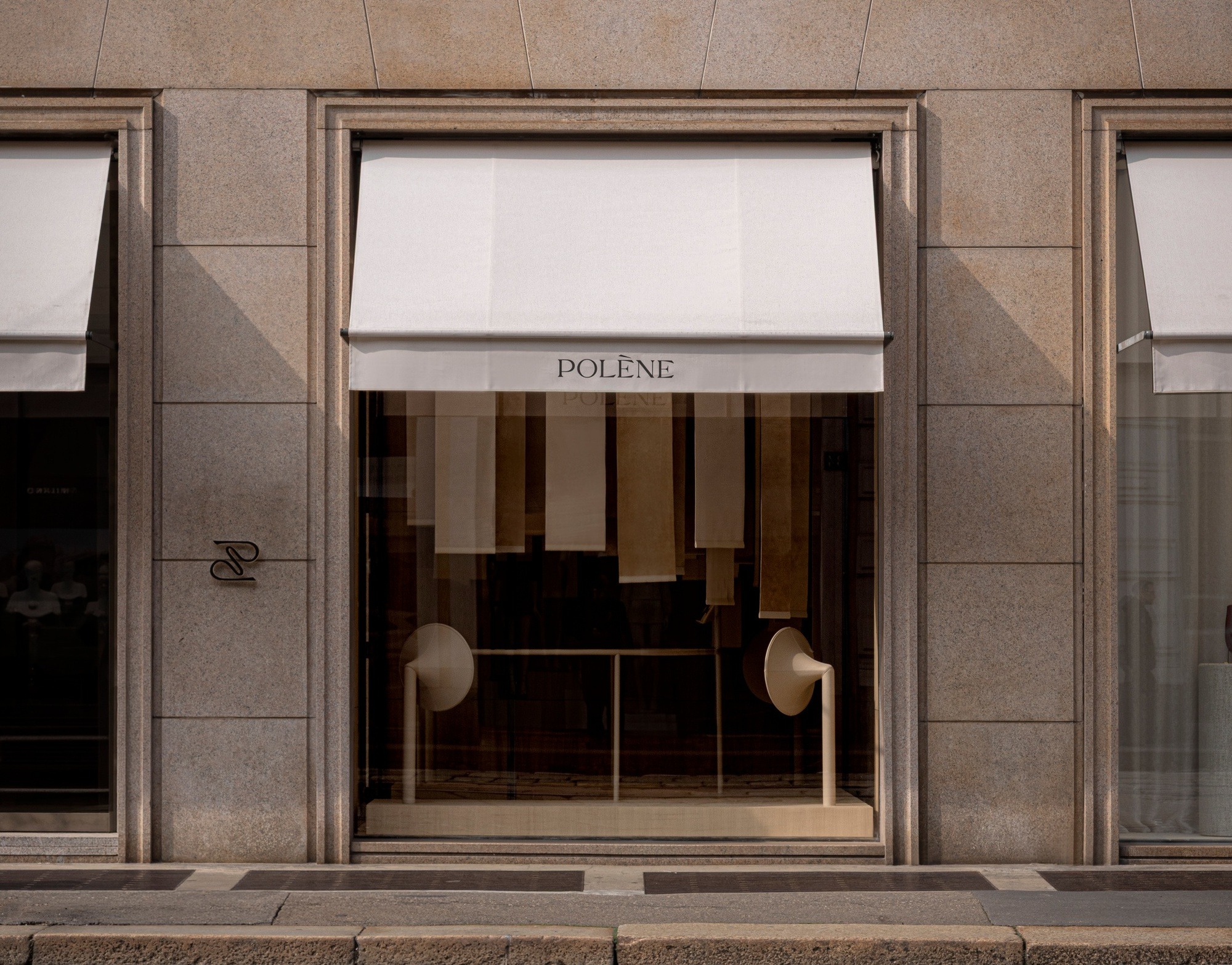
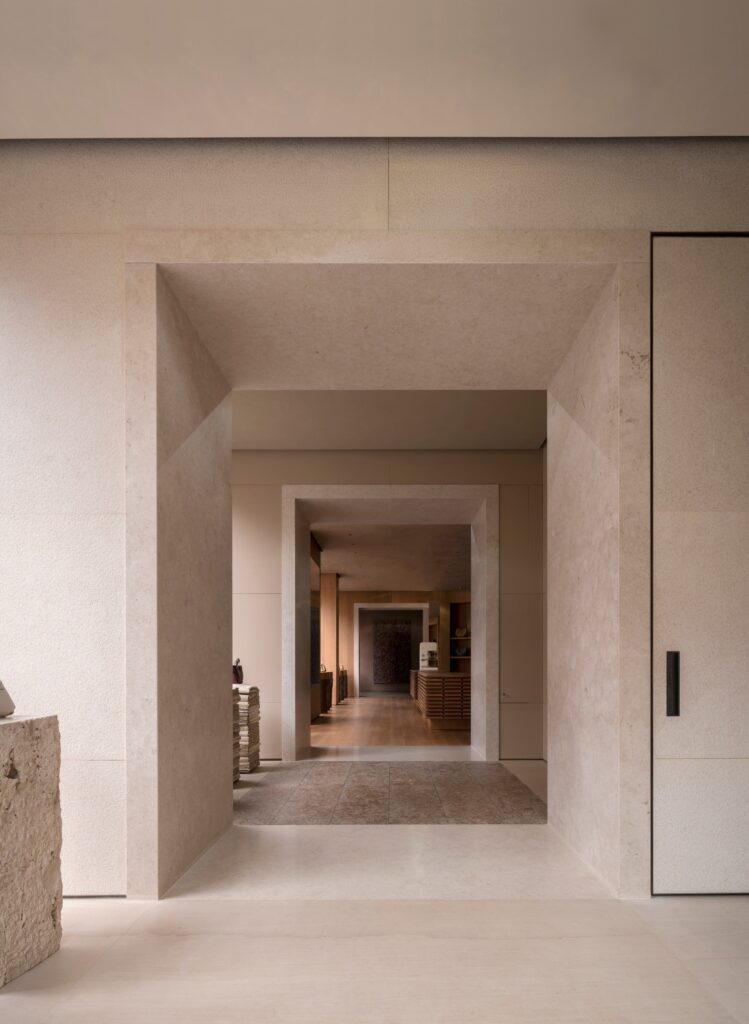
The project is set within a traditional urban fabric in Milan and is based on the principle of successive spaces (enfilade) to organize movement. Through this sequence, a clear visual axis is formed, intuitively guiding the visitor through a series of interconnected rooms. At the same time, the repeated thresholds create moments of pause and discovery, where perspectives and proportions overlap to generate a gradual and indirect spatial experience. This approach to Design emphasizes the role of spatial flow in shaping perception.
Material as a Narrative Element
The interior composition is based on a clear material gradation, beginning with more elementary finishes and gradually transitioning toward more refined treatments. The Building Materials vary between stone, wood, leather, brick, and textured surfaces, with each material dominating a distinct spatial segment within the sequence. This gradation does not function merely as visual variation, but rather reflects a logic of material transformation, where sculptural display elements highlight how material is shaped and developed through craftsmanship.
Sensory Dimension and Indirect Organization
The project relies on softening geometric compositions through subtle curves and an organic language, reducing the rigidity of space. In parallel, operational elements are embedded indirectly within the path, such as the movement of staff behind semi-hidden thresholds, adding a sensory layer without disrupting continuity. At the end of the sequence, the ceramic element acts as a visual focal point, gathering the journey into a concluding moment that re-unifies the experience within a single coherent frame. For further Research on sensory design, similar strategies are explored in contemporary projects.
Façade and Relationship with Context
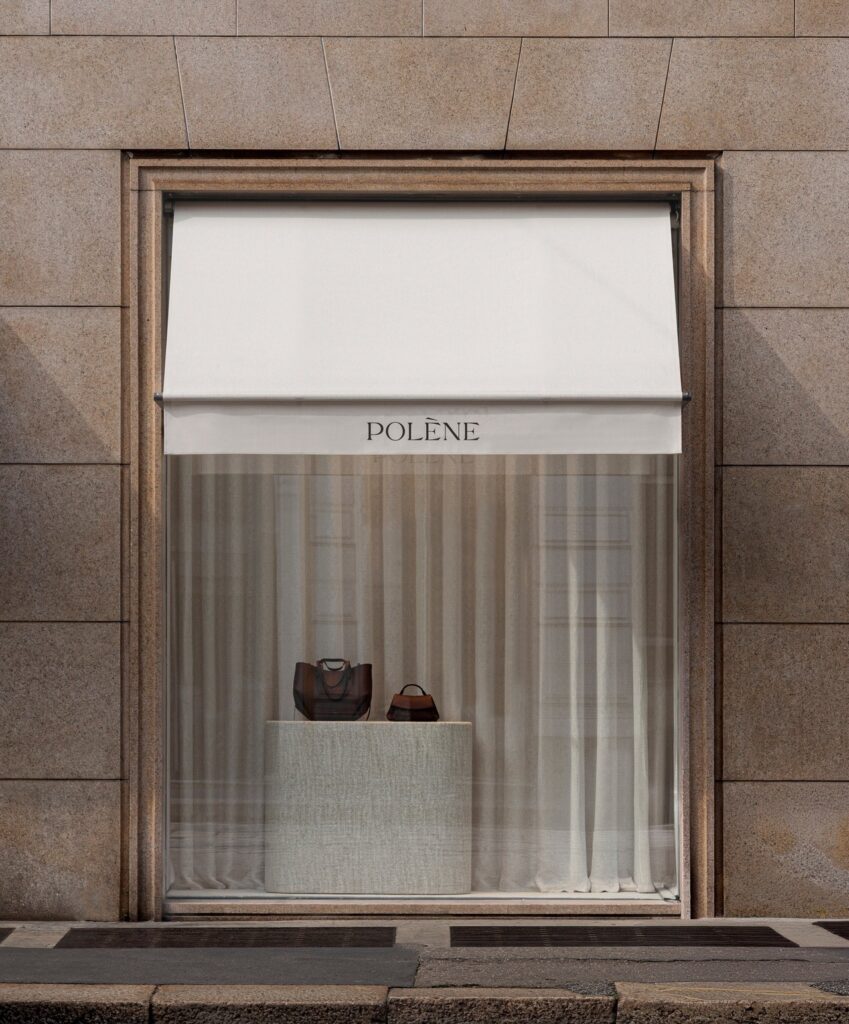
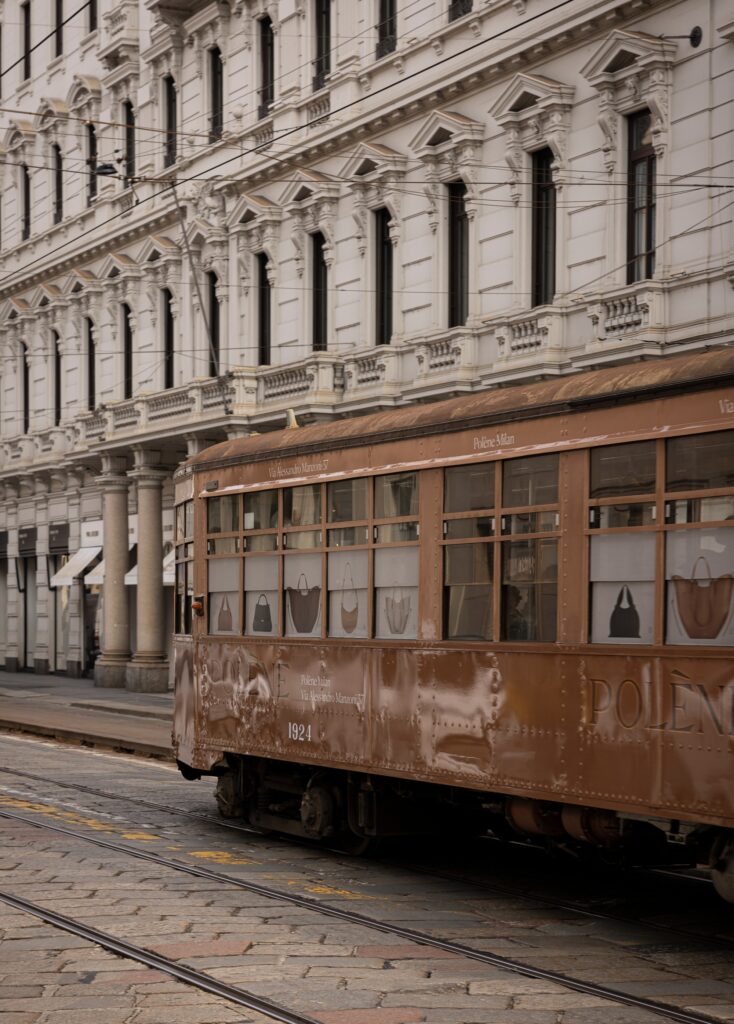
The project is situated within a historic fabric on Via Manzoni, where classical façades coexist with contemporary commercial typologies. Within this context, the composition adopts a balanced and restrained façade that draws inspiration from the local character, which often conceals rich interior worlds behind understated exteriors. Rather than imposing a striking visual presence, the design embraces a quiet approach that aligns with the rhythm of the street, reinforcing the continuity of the urban scene. This sensitivity to context reflects broader principles in Cities design, where the relationship between individual Buildings and the public realm is carefully negotiated.
The Threshold as a Transitional Zone
The façade, framed in stone and softened by textile elements, forms a transitional layer between exterior and interior. It does not fully reveal the space, but instead allows a controlled degree of visibility that evokes curiosity without excess. This gradual unfolding prepares the visitor psychologically for entry and establishes a progressive shift from the public context to a more intimate spatial experience. The concept of the threshold is a recurring theme in Architecture, acting as a mediator between inside and outside.
Spatial Organization and Sensory Experience
Upon entry, a continuous visual axis is formed through a series of successive openings, creating an immediate sense of depth and intuitively guiding movement. This organization is reinforced by a spatial sequence in which each room is defined by a distinct material, progressively explored from its raw state to more refined treatments. In parallel, framed thresholds and balanced lighting contribute to a smooth transition, where proportions and materials integrate to form a cohesive sensory experience from the very first moment. Understanding Construction details is essential to achieving this level of spatial fluidity.

Stone Room and the Beginning of the Material Narrative
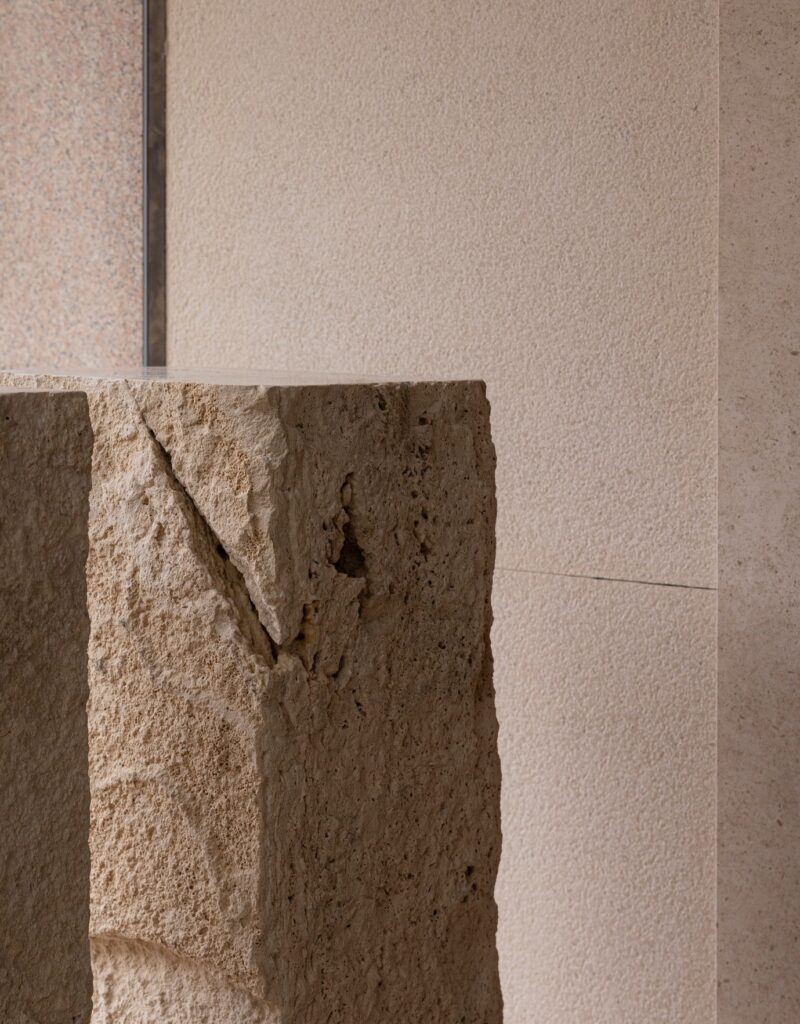
The Stone Room opens the enfilade sequence by presenting material in its most primordial state. Raw blocks of travertine stone, minimally cut and partially worked, are contrasted with limestone walls treated using the bouchardé technique and polished flooring surfaces. This contrast between rough and smooth highlights the intrinsic qualities of stone through texture and light. Within this context, the material functions simultaneously as a structural and expressive element, where surfaces are left to reveal their natural details without concealing traces of formation or time. For technical specifications, Material Datasheets provide in-depth information on stone treatments and performance.
Leather Room and Sensory Transformation
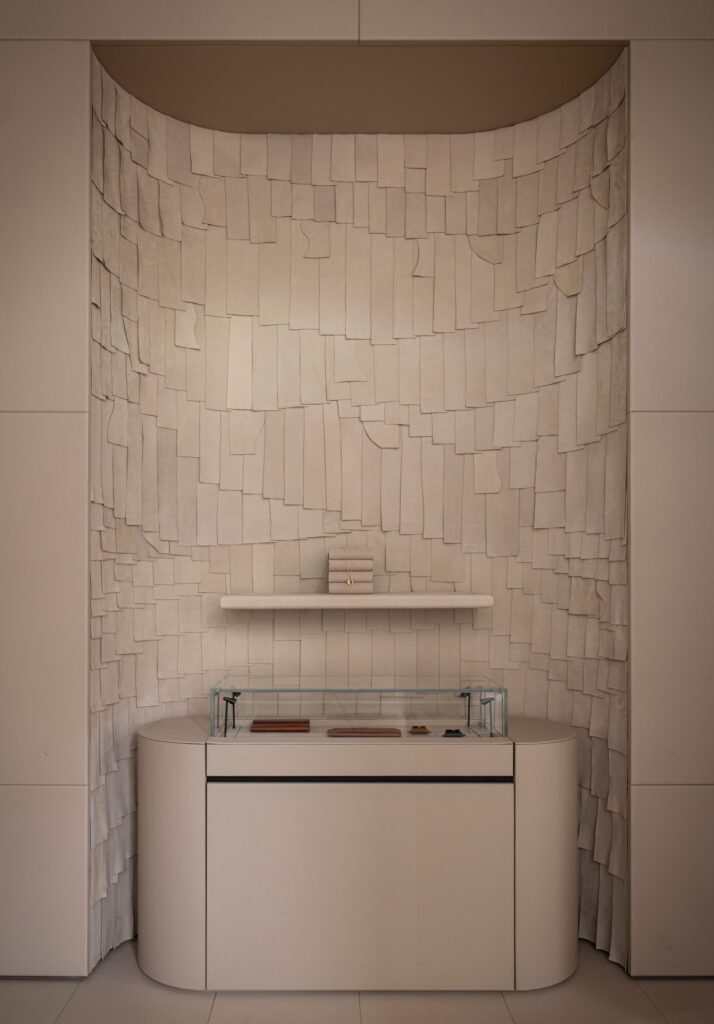
As the sequence transitions into the Leather Room, the atmosphere shifts toward greater softness and an emphasis on sensory perception. The material is presented through suede leather pedestals, leather-clad wall surfaces, and compressed flooring, emphasizing the flexibility of leather and the diversity of its finishes. Stitched details and variations in scale further reveal the material’s nature as a malleable element, while maintaining its direct tactile presence within the space. This approach to Interior Design highlights how material selection can shape emotional and sensory responses.
Thresholds and Gradual Organization
The two spaces are connected by a continuous visual axis that intuitively guides movement through framed thresholds. These thresholds allow for a gradual transition in colors and materials, progressing from lighter to deeper tones, thereby reinforcing a sequential reading of the experience. Rather than functioning as mere separators, these elements act as framing devices that structure transitions and grant each material its autonomy within a cohesive composition.
Wood Room as a Spatial Core
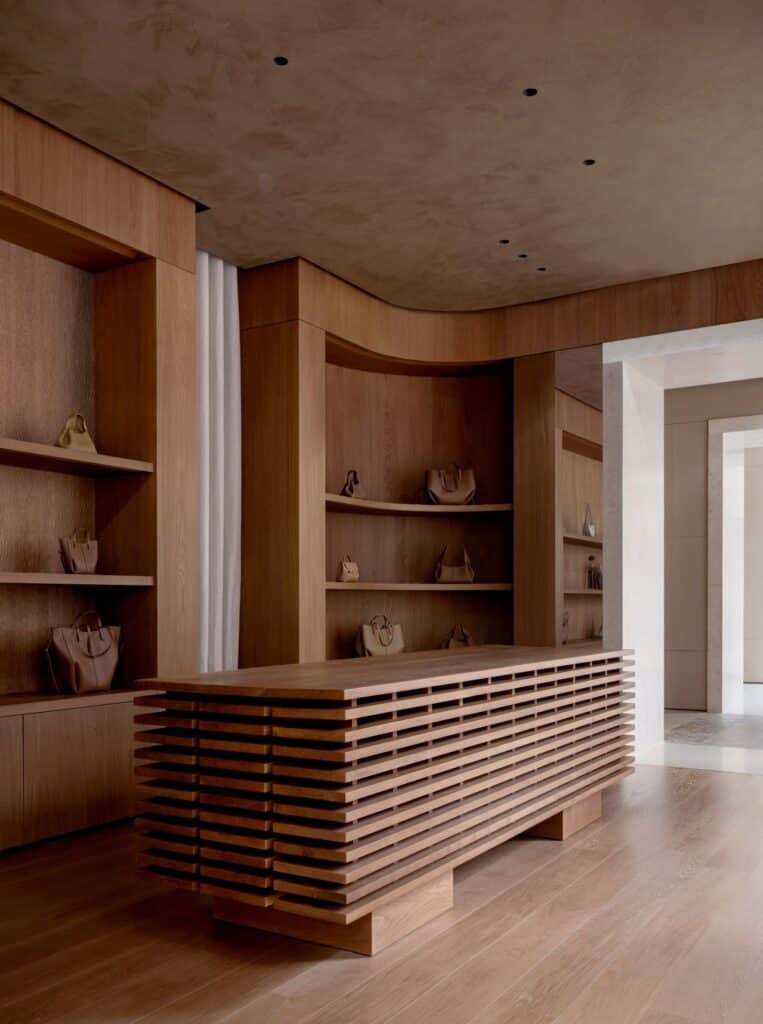
The Wood Room forms the main extension within the sequence, where warm-toned oak dominates the various elements. The material treatment ranges between polished surfaces and more tactile finishes, with features that emphasize the grain and depth of the wood through carving and shaping. Within this framework, wood is not used merely as cladding, but as an expressive medium that reflects its transformation from a raw state into more refined articulations, while subtle curves help soften the composition and guide movement within the space. To explore similar built works, visit the Projects section for case studies on material-driven spatial design.
Visual Connections and Spatial Continuity
The organization of the spaces is not limited to material articulation alone, but extends into a network of thresholds and openings that visually connect the rooms. These relationships allow for layered sightlines, where partial views of adjacent spaces are revealed, enhancing the sense of depth and continuity. At the same time, these connections establish a balance between the autonomy of each room and its belonging to a broader spatial system. An extensive Archive of spatial configurations can be found in architectural references that discuss enfilade and visual permeability.
Spatial Rhythm and Gradual Experience
The path is structured through a sequence of compression and expansion, where movement shifts between more intimate spaces and more open volumes. This progression introduces an indirect rhythm that guides the visitor without the need for explicit cues. In parallel, smaller areas for pause and interaction appear along the route, allowing a closer reading of the materials. Within this context, architectural elements recede in favor of emphasizing the relationship between light, texture, and proportion, forming a continuous experience based on gradual exploration.
Clay Room and the End of the Spatial Sequence
The Clay Room represents the final station in the enfilade sequence, where the spatial character shifts toward a condition more deeply rooted in earthy materiality. The room is defined by clay plaster walls, handmade brick floors and pedestals, and a rammed earth counter, all of which give the space a heightened sensory density within the sequence. Serving as the payment area, the experience settles at its conclusion, where the narrative of material and craftsmanship is brought to completion, reinforced by the presence of a glazed ceramic piece by the artist Clara Graziolino, which anchors the material composition of the scene.
The Textile Room as an Independent Intimate Space
Outside the enfilade sequence, the Textile Room appears as a more secluded and private space intended for VIP visitors. The composition is based on fabric-clad walls, linen curtains, and upholstered pedestals, creating an environment with a strong textile identity. At the same time, the restrained color palette allows attention to focus on light, shadow, and composition, while softened geometries enhance a sense of calmness without sharp visual interruptions.
From Density to Contemplation
The transition between spaces follows a gradual shift from higher material density toward a more calm and contemplative condition. In the Clay Room, Building Materials is expressed in its closest relation to the earth, while in the Textile Room rigidity recedes in favor of a softer sensory experience. Within this contrast, a balanced spatial trajectory emerges, linking the material culmination of the sequence with the beginning of a more intimate and serene experience.


✦ ArchUp Editorial Insight
The spatial sequence here operates as a delayed extension of a pre-existing framework of constraints associated with the context of Via Manzoni in Milan, where the historic urban commercial fabric, programmatic divisions, and gradients of rental value predefine the internal organization prior to any architectural decision. The logic of the enfilade does not emerge as a Design choice so much as it functions as a movement device aligned with compliance requirements and risk mitigation, producing a controlled linear distribution of rooms within a rigid urban grid.
The material progression from stone to leather, then wood and clay, reflects an operational sequence tied more to supply chains and specialized execution disciplines than to a sensory narrative. Thresholds operate as regulatory devices for limiting visual exposure and managing access, while the resulting sensory experience becomes a final negotiated outcome between real estate value pressures, demands for commercial differentiation, and the constraints of standardized execution within a dense urban environment, where Architecture is reduced to an ultimate layer of control over an already established economic rigidity.