Santa Margalida Social Housing: Materials, Efficiency & Flexibility


General Context and Architectural Concept
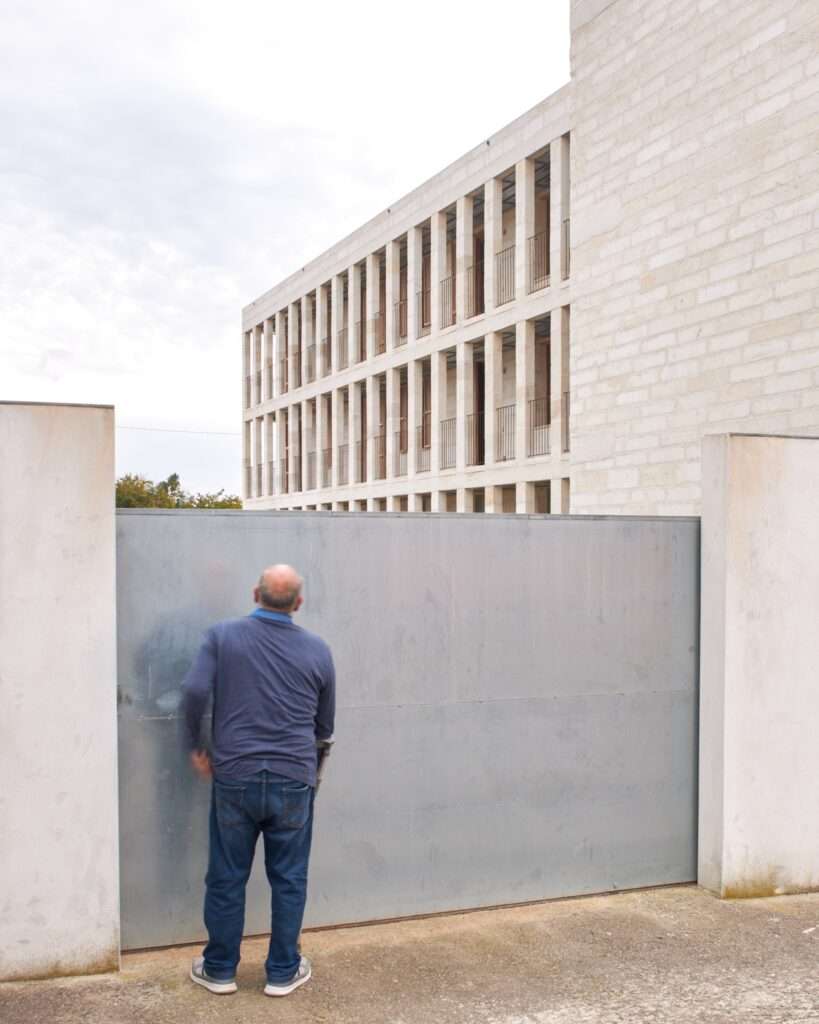
The project is located in Santa Margalida, a small town in northern Mallorca. It proposes a building comprising 10 social housing units and 10 multifunctional spaces. The Design is based on the use of local or low environmental impact materials, aiming to strengthen the connection with the surrounding context. This approach integrates contemporary Architecture with traditional techniques.
Structural System and Materials Used
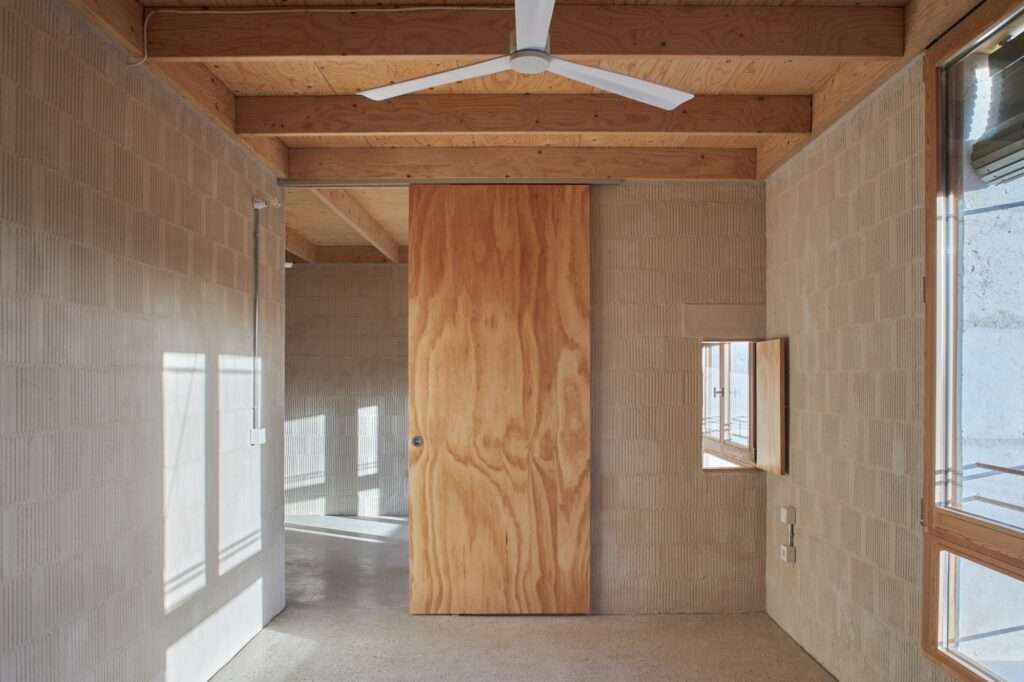
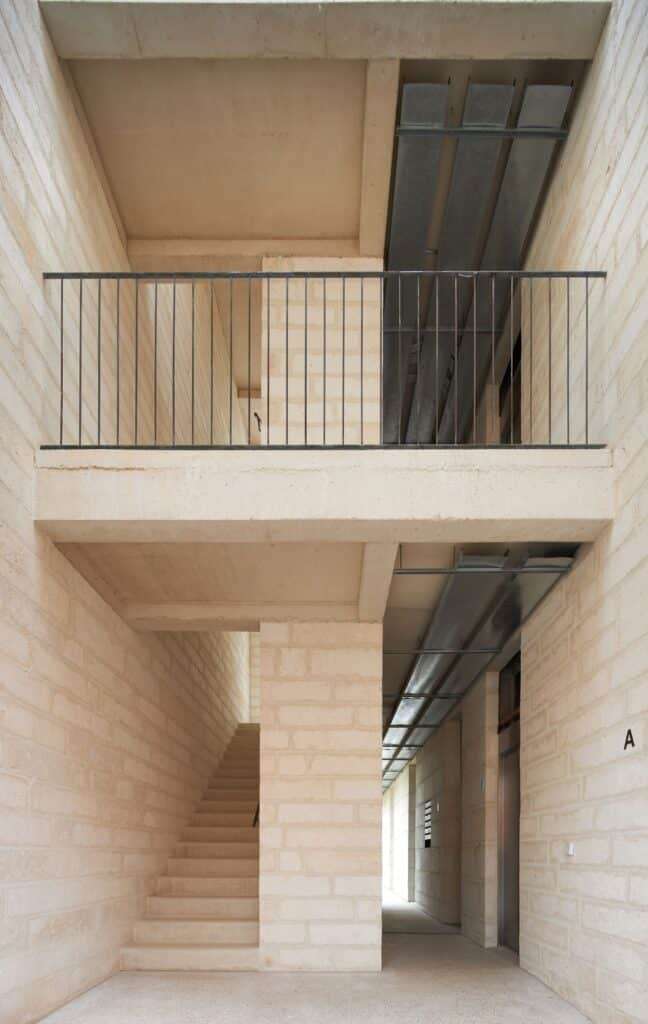
The external structure is executed using Marés stone extracted from local quarries, providing a solid structural mass that helps the building blend into its environment. Internally, the system relies on prefabricated timber panels as a horizontal element, along with load-bearing walls made of local brick as a vertical element, supporting the structural system and influencing Construction feasibility. Careful selection of Building Materials ensures durability and sustainability.
Structural Efficiency and Technical Optimizations
The technical analysis focuses on reducing the thickness of structural elements and decreasing the amount of on-site material usage. This is achieved by rotating floor slabs across alternating spans to improve load distribution and enhance the cohesion of the structural mass, allowing for thinner load-bearing walls and reduced costs. A prefabricated timber panel system is also adopted to facilitate assembly and speed up construction. The panel section is based on an H-shape, where the upper layer protects the upper part of the beams in case of fire, reducing the need for additional timber treatment or the use of fire-resistant coatings. For similar technical details, you can consult the Material Datasheets available online.

Response to Regulatory Requirements and Their Reinterpretation
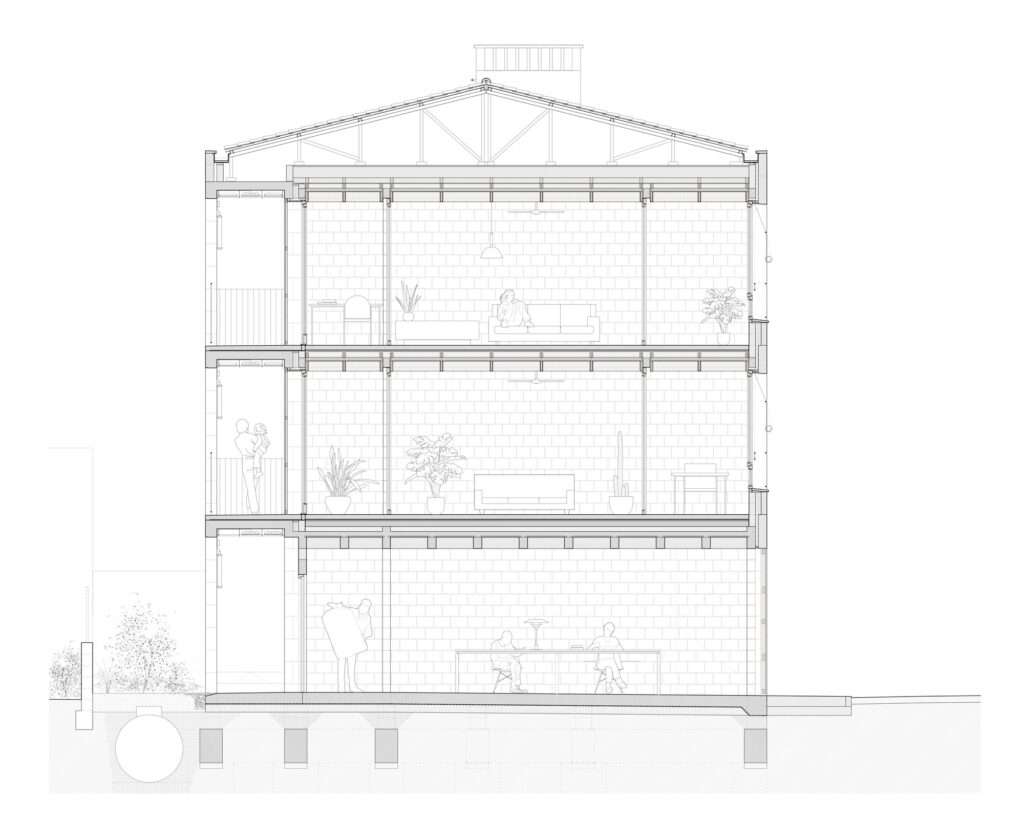
In response to the requirement of providing one parking space per residential unit, and considering the actual low demand for parking in the town, the project reinterprets this condition by transforming it into multifunctional spaces on the ground floor. Through this approach, the construction of an underground parking level is avoided, thereby reducing environmental impact and the costs associated with excavation works and retaining structures. Such innovative solutions are often discussed in Discussion forums among architects.
Ground Floor as a Flexible Multi-Functional Space
This strategy results in a system of 10 multifunctional spaces directly connected to the street and the rear garden. These spaces can function as garages, workshops, or support areas, and may also, should future regulations change, accommodate up to five additional housing units. Thus, the ground floor becomes highly adaptable to different uses over time. Similar flexible strategies can be found in various Projects that prioritize adaptability.
Internal Organization of Residential Units
On the upper floors, the limited building depth is utilized to create dual-aspect residential units with cross ventilation, reinforcing a living concept closely connected to outdoor space. The internal layout is based on a gradual distribution of rooms around a central core, generating circular pathways and flexible circulation within the unit, with extended views and visual connections. The spaces also adapt to the sun’s movement throughout the day, which defines patterns of internal use. This approach to Interior Design maximizes both comfort and spatial efficiency.

Climatic Performance Through Architectural Form
The project seeks to achieve thermal comfort requirements through the architectural configuration itself, relying on passive systems such as cross ventilation, solar galleries, and thermal mass. This approach leads to a reduction of non-renewable primary energy consumption to zero. Many contemporary Buildings now adopt similar passive strategies to minimize environmental impact.
Solar Orientation and Façade Organization
In this context, all residential units are oriented toward the southeast, allowing the façade galleries to function as energy-gathering spaces during colder periods. In contrast, solar radiation is controlled during the hot months through a system of roller blinds that shade these spaces and limit heat gain. For more insights, you can browse the Archive of case studies on bioclimatic design.
Plan Organization and Natural Ventilation
This arrangement results in shallow dual-aspect residential units, enhancing the effectiveness of cross ventilation. It also enables the use of prevailing air currents, thereby directly supporting internal environmental performance through the spatial distribution. Recent Research highlights the importance of natural ventilation in reducing energy loads.

✦ ArchUp Editorial Insight
The Santa Margalida project operates as an urban outcome preconditioned by social housing policies, parking requirements, and land-value pressures within a constrained municipal fabric. The primary driver lies in the pressure to distribute housing units within a regulatory framework that assumes lower mobility patterns than those that actually exist. Points of friction emerge in excavation costs, material supply chain constraints, and structural compliance requirements governing load-bearing wall systems and prefabricated timber slabs. For updates on regulatory trends and industry news, refer to Top News in the architectural field.
The spatial outputs re-balance these pressures through a hybrid system combining local stone as a structural envelope and timber as a horizontal element, enabling reduced thicknesses and improved construction efficiency. The ground floor is reprogrammed from mandatory parking into adaptable spaces, while maintaining future convertibility. Vertical population flows are redistributed within shallow dual-aspect units, where ventilation and lighting become regulatory outcomes rather than direct design decisions. To explore similar innovative housing solutions, visit the Architects Lobby platform.