

Grand Palais in Paris: Architectural Space Reclamation Under Europe’s Largest Glass Dome

The transformation of the Nave within the Grand Palais in Paris creates the largest indoor facility for skating globally. This annual project embodies the success of Temporary Design for a historic building. It employs a functional, temporary approach.
The city’s glass and metal walls reconfigure the urban experience. This seasonal activation begins with the onset of winter. It continues through the holiday period. It offers a model for how heritage buildings interact with temporary recreational demands.
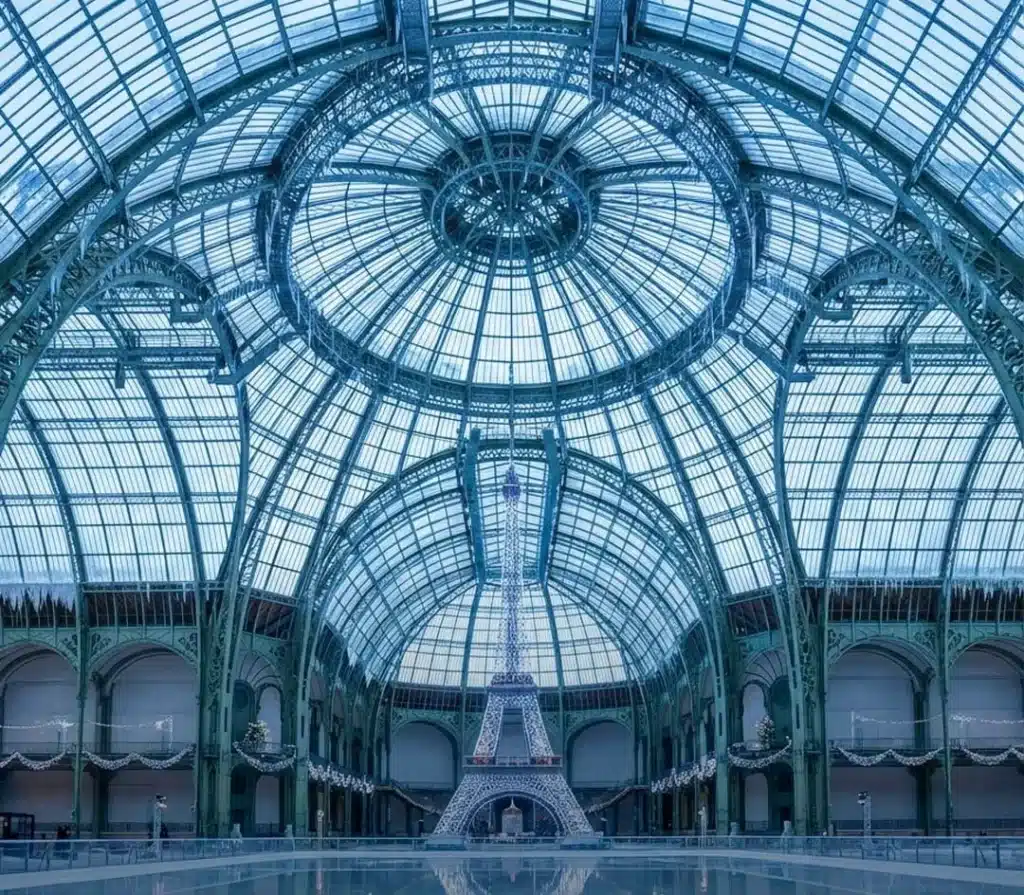
Beneath the Glass Structure: Perceiving the Redefined Scale
The visitor encounters a crucial moment upon entering the Grand Nave. They immediately perceive the vast scale of the glass structure and the roof. We recognize this roof as the largest of its kind in Europe.
The Temporary Design here focuses on the floor. The enormous skating rink stretches out as a central visual and interactive point. The facility features a real ice surface covering 2,700 square meters. This size presents a logistical and engineering challenge in construction. The primary goal remains to provide a smooth, safe gliding experience for numerous participants.
Movement Paths and the Symbolic Installation
Visitor paths organize the flow of movement around this immense area. The structure clearly separates the open skating zone from areas dedicated to beginners. This ensures a comfortable and safe skating experience for everyone.
A new visual element appears at the heart of the structure this year. It is a miniature Eiffel Tower model at a 1/10 scale. This installation acts as a spatial marker. It is also a nod to Parisian identity. It becomes a key focal point for photographs. The design aims to integrate the recreational practice within a clear visual framework. This instantly positions the Temporary Design as part of the broader Parisian scene.
Temporary Construction Techniques and Material Distribution
Executing this complex rink within a historic monument requires precise materials and techniques. The primary reliance is on real ice. Industrial refrigeration techniques are essential to stabilize the 2,700 square meters surface.
Key Materials and Techniques:
Executing the ice rink within the historic monument requires high technical precision to ensure the original structure’s safety. The operation primarily relies on 2,700 square meters of real ice, with a constant thickness of 8 cm. A controlled industrial refrigeration system maintains the ice temperature at 4%, utilizing 80 km of piping and a cooling capacity of up to 2 Megawatts. The visual and functional performance features natural light penetrating the glass roof at a rate of 9% during the day. This light transitions at night to an artificial system, including 300 LED lighting units with a power demand of up to 150 kilowatts. As a central installation, the project includes a miniature Eiffel Tower model at a 1:10 scale (with a height of 32 meters). Functionally, the facility accommodates 3,000 skaters daily over an operational cycle of 8 weeks.
Programmatic Transformation: From Daytime Calm to Nighttime Rhythm
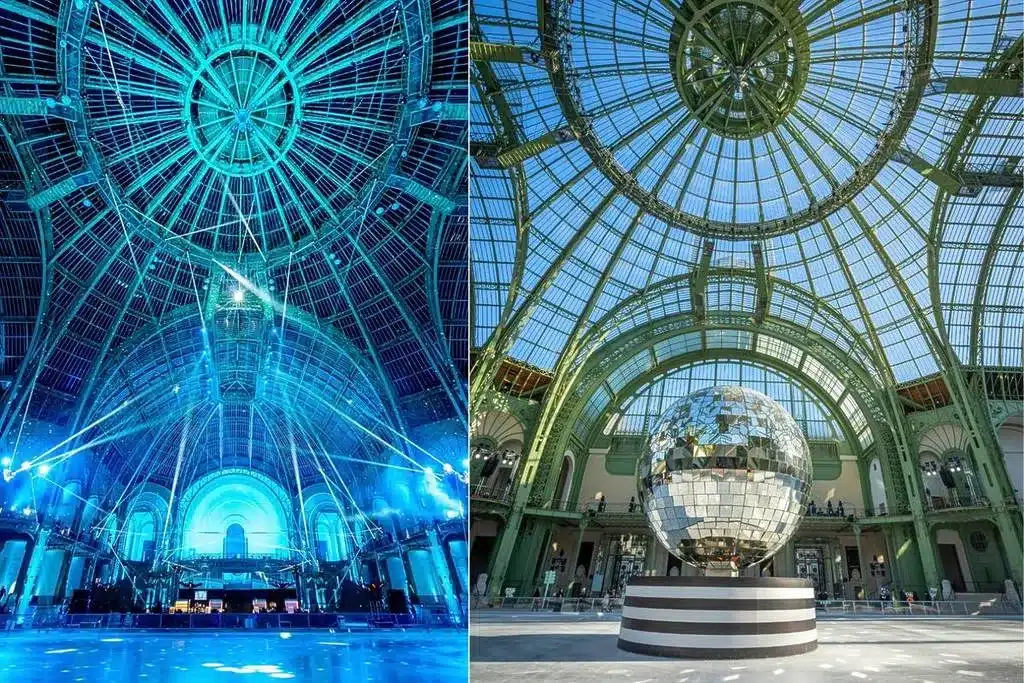
The execution highlights the programmatic flexibility achieved by the Temporary Design strategy. During daylight hours, natural light floods the venue. This provides a serene environment. It is ideal for family activity and learning.
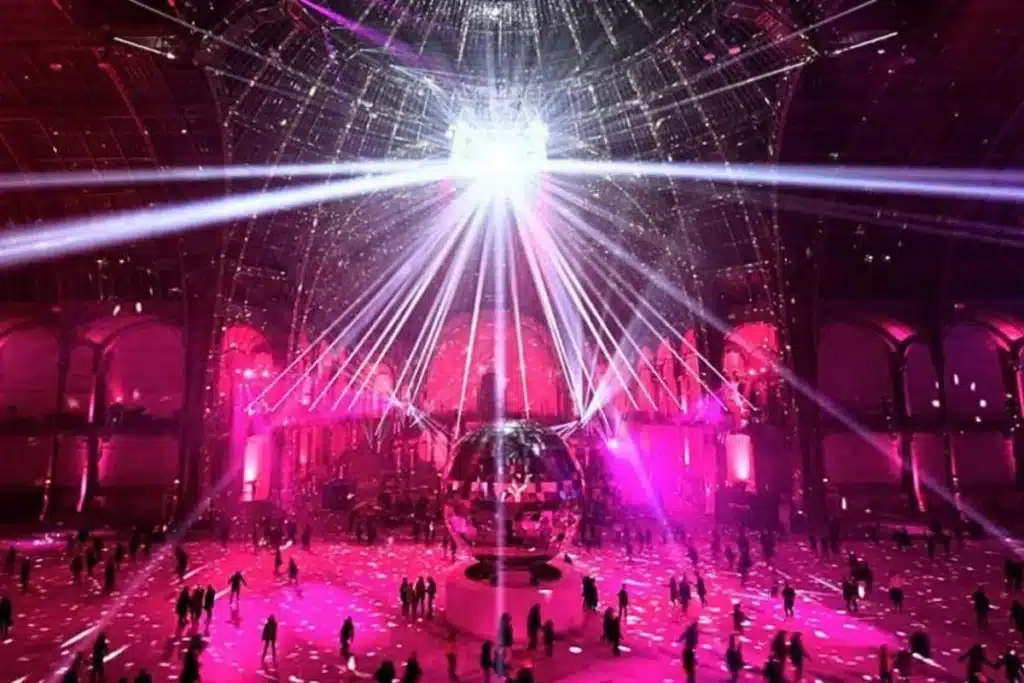
As the sun sets, the dynamic use of the hall changes. Programmed colored artificial lights reconfigure the space. The hall transforms into a vibrant ice dance floor. This change reflects a smart strategy in facility management. The facility serves two distinct age groups with contrasting recreational demands. This occurs within the same architectural envelope, showcasing flexible interior design.
Urban Impact and Central Location
The Temporary Design contributes to reinforcing the Grand Palais’s role as a vital center for urban interaction in Paris . The building is centrally located. Visitors easily access it via major public transport networks. This ensures a wide flow of visitors. This project’s ability to attract diverse audiences confirms the ongoing value of adaptive solutions for heritage buildings. This process creates a new winter urban memory.
✦ ArchUp Editorial Insight
The annual execution of the ice rink inside the Grand Palais represents a visually stunning exploitation of Europe’s largest covered architectural space. The vast glass roof envelopes a 2,700 square meters surface of artificially created ice. Despite the logistical success in achieving Architectural Space Reclamation for this monument, the design approach leans heavily on seasonal spectacle and direct symbolism, clearly embodied by the addition of the 1/10 scale Eiffel Tower model. This heavy symbolism risks diminishing the Nave’s original structural value, reducing it to a backdrop for temporary shows. Nevertheless, this temporary programming reaffirms the building’s high flexibility and continuous capacity to adapt to urban recreational demands, supporting the sustainability of its public presence as an interactive center.





ArchUp: Structural and Technical Analysis of the Grand Palais Paris Skating Rink
This article examines the temporary skating project in the Grand Palais Nef in Paris as a case study in heritage space reuse. To enhance its archival value, we would like to present the following key technical and structural data:
The structural system utilizes the historic glass roof spanning 13,500 m² (largest in Europe), with a height of 45 meters beneath the dome, supplemented by a temporary 2,700 m² ice surface with 8 cm thickness of real ice. Temperature control is maintained at -4°C through a cooling system using 80 km of pipes and cooling capacity reaching 2 MW.
The visual and functional performance features 90% daylight penetration through the glass roof during daytime, transforming to artificial lighting (300 LED units) at night with energy demand up to 150 kW. The project includes a 1:10 scale Eiffel Tower model (32-meter height) as central installation.
In terms of operational efficiency, the facility accommodates 3,000 skaters daily within an 8-week seasonal cycle. The hall’s structural capacity reaches 5,000 people, generating estimated revenue of €4 million per season, with installation and dismantling costs of €1.5 million.
Related Link: Please review this article for a comparison of heritage space reuse techniques:
Historic Building Reuse: Between Preservation and Contemporary Function
https://archup.net/bukhara-biennial-2025-opens-across-restored-historic-landmarks-in-uzbekist/