Terra Seeds: Packaging and Plant Growth Redefined

Deconstructing Material Void: From Visual Chaos to Quiet Order
The contemporary reality of gardening products reflects a state of material and visual pollution resulting from the excessive use of plastic packaging and metallic foils. This creates a complex and irritating user experience that negatively affects the psychological state of the user and contradicts the essence of nature. In contrast, the Terra Seeds project by Tom Fosbery proposes an alternative architectural philosophy based on reducing volumetric clutter and purifying it from visual excess. This Design goes beyond being a mere product, becoming a study in quiet minimalism that redefines the relationship between humans and surrounding materials, where the sharp and complex lines of traditional packaging transform into an intuitive, orderly geometric composition that evokes comfort and stability upon interaction.
Sensory Scenography and Intuitive Human Experience
The use of this product becomes a living scenographic experience based on hand movement and touch, far from mechanical complexity. The user undergoes a gradual transition that begins at the moment of holding the designed mass, where the dynamic interaction between the materiality of the product and the movement of air and light cast upon its pure surfaces becomes evident. This structural simplicity employs a clear Design language that guides user behavior automatically without the need for complex instructions, generating a positive psychological effect that directly connects humans with their environment. It transforms agricultural rituals into a sensory spatial experience characterized by depth and continuity.
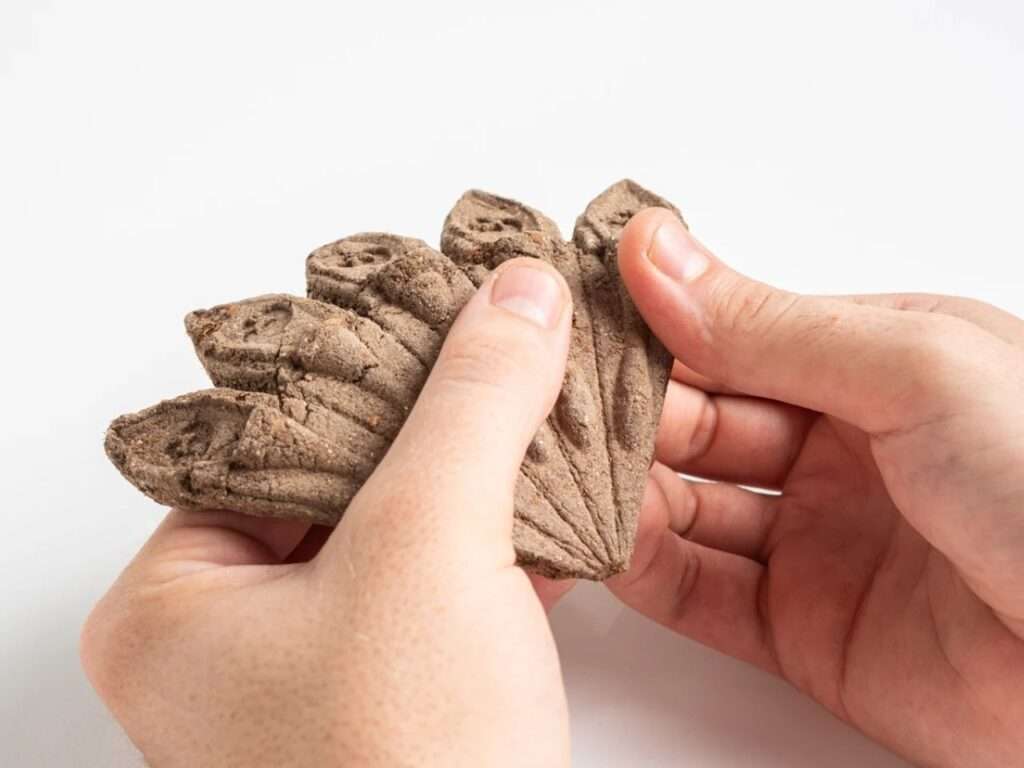
Organic Composition and the Sustainability of the Spatial Mass
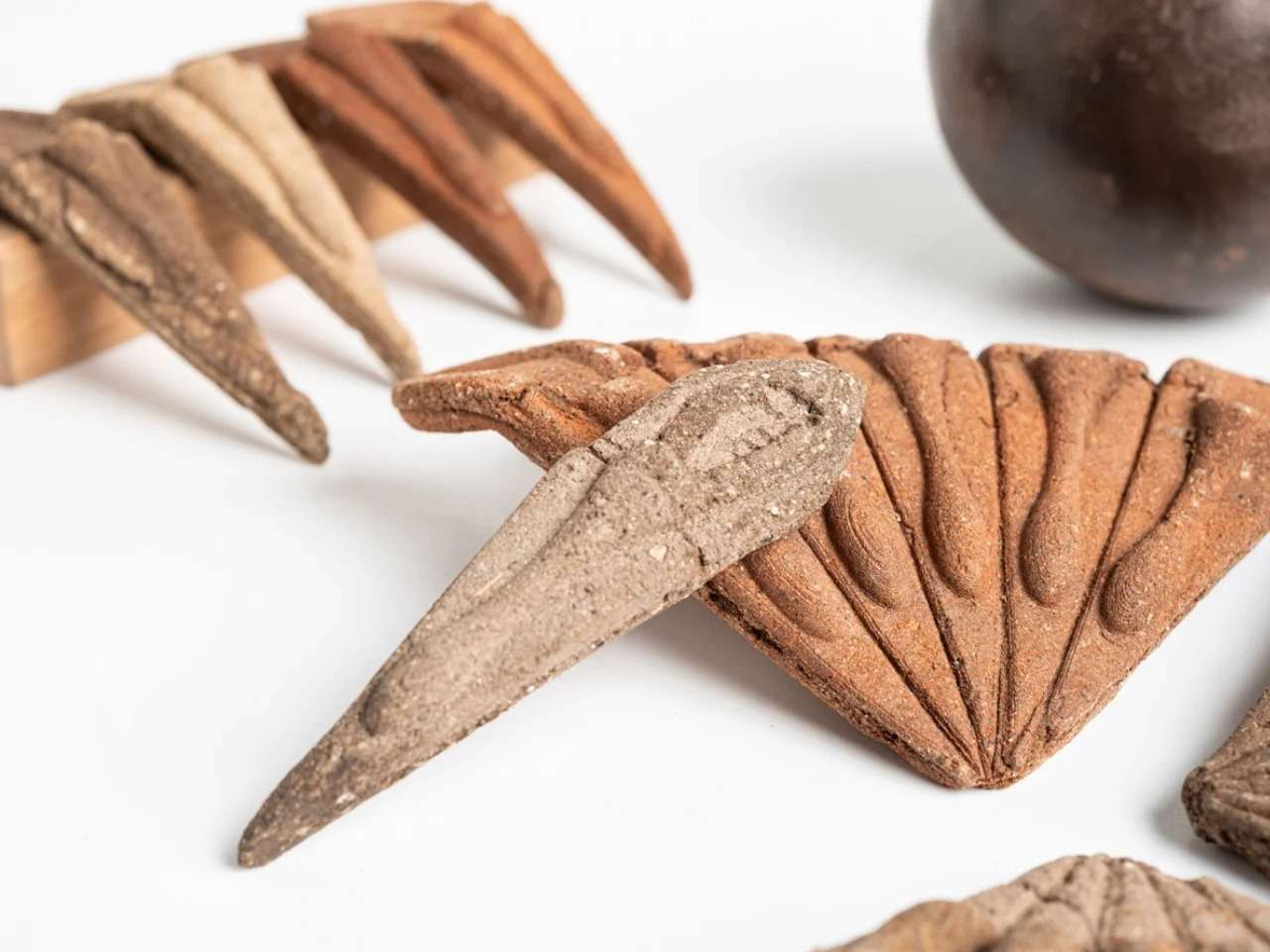
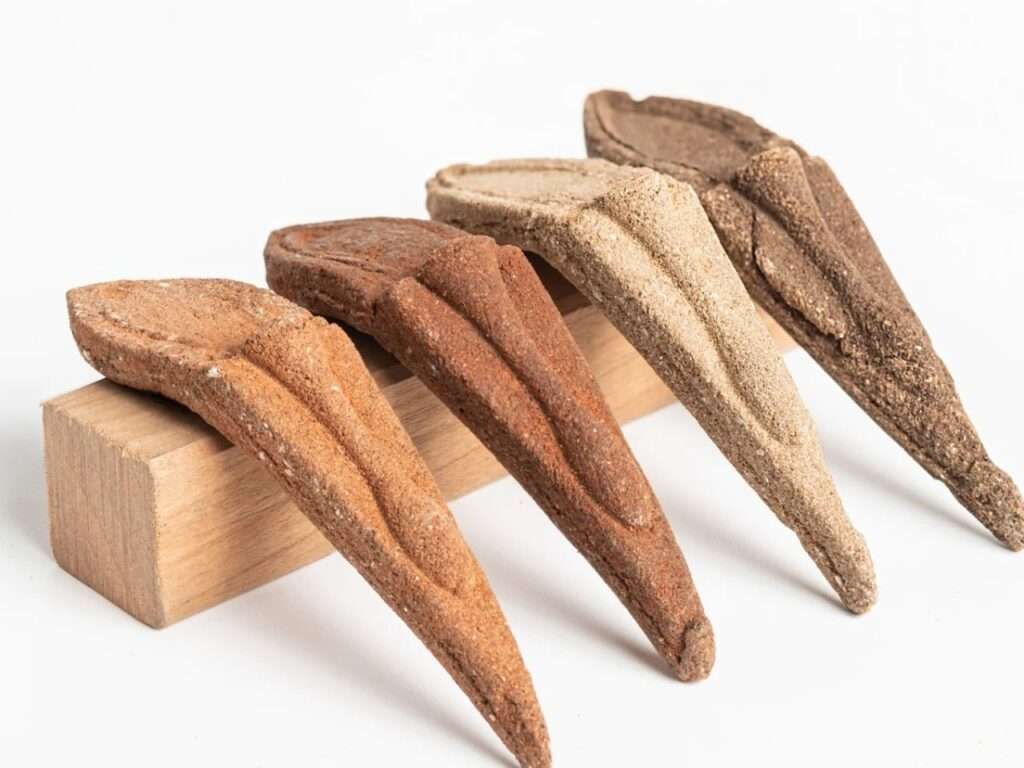
The structural concept of the Terra Seeds project is based on eliminating the traditional separation between envelope and content, where the designed mass becomes both space and material simultaneously. The structural unit features a functionally optimized fan-like geometry, providing sufficient surface area to ensure material cohesion while seamlessly integrating with the small planting cavity. The reliance on naturally derived materials such as compacted local soil, tapioca starch acting as a moisture-dissolving binder, and embedded nutrients transforms the product into an integral part of the earth. This achieves an ecological Design principle based on zero waste, moving beyond temporary fixes such as replacing plastic with paper.
Scenographic Experience and Psychological and Material Impact
The act of planting through this formation becomes a reduced scenographic experience free from physical or psychological friction, where human interaction within the space is limited to a simple gesture of pressing the disc into the soil. The material’s dynamic behavior emerges through its immediate response to natural factors such as air movement, soil humidity, and the path of sunlight. The structural envelope gradually dissolves, transforming into energy that nourishes the seeds and supports germination. This radical shift in Design philosophy goes beyond material substitution, redefining the sensory impact on the user and turning the act of planting into a direct, intuitive experience that strengthens psychological and material connection with nature without any visual pollution.
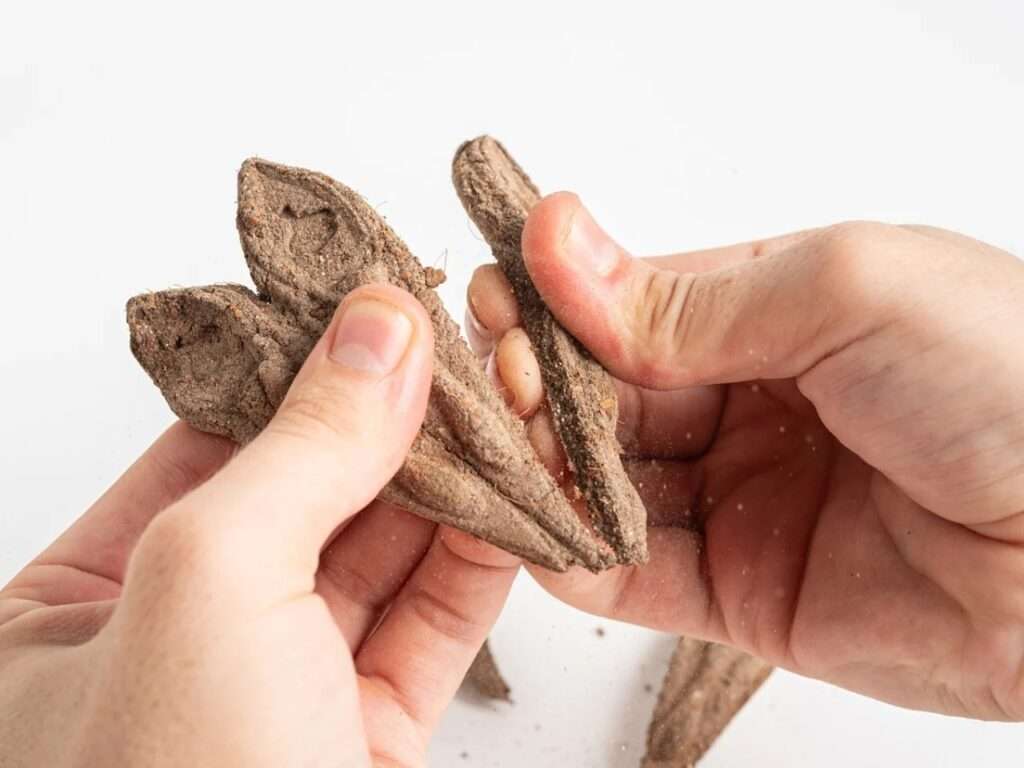
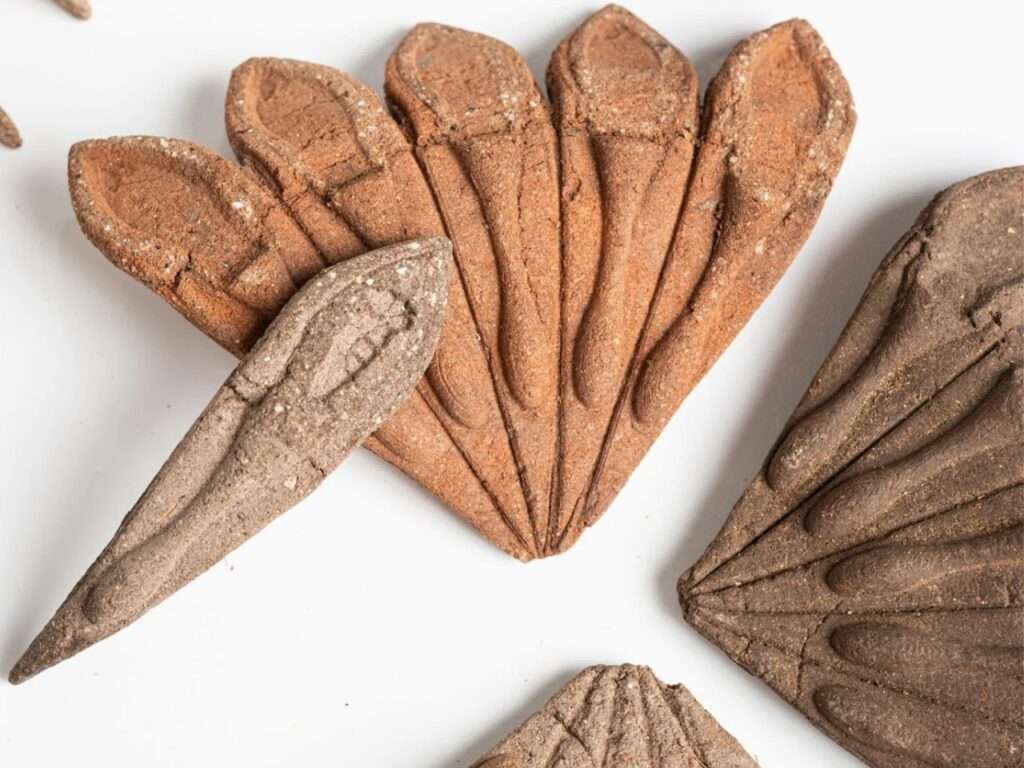
Guiding Scenography and the Deconstruction of Functional Structure
The Design moves toward shaping a guided spatial experience intended for urban gardeners and families, a group that often lacks technical expertise in handling agricultural space. The fan-like geometric form of the mass acts as a visual and physical guiding element, replacing traditional tools and instruction manuals. It automatically and simply defines the depth and direction of movement within the soil. This intelligent deconstruction of function removes psychological and material barriers for the user, transforming the act of planting from a confusing technical process into a smooth geometric experience free from visual complexity, allowing efficient and meaningful interaction with the soil and its material components without compromising the essence of the experience.
Material Impact and the Future of the Mass in the Environmental Space
Despite the conceptual success of the Design and its receipt of the Green Product Award, its physical mass faces real scenographic challenges related to its responsiveness to environmental variables prior to use, such as resistance to humidity, storage conditions, and the structural shelf life of organic materials. These questions do not diminish the critical value of the idea; rather, they open new horizons for developing the interaction between the mass and its environment. The Design redefines the life cycle of the product by employing light, air, and moisture to decompose the mass and transform it into a nutrient element for the soil, achieving a complete and sustainable sensory experience that entirely eliminates outdated plastic and visual pollutants, leaving behind a pure environmental and psychological footprint.
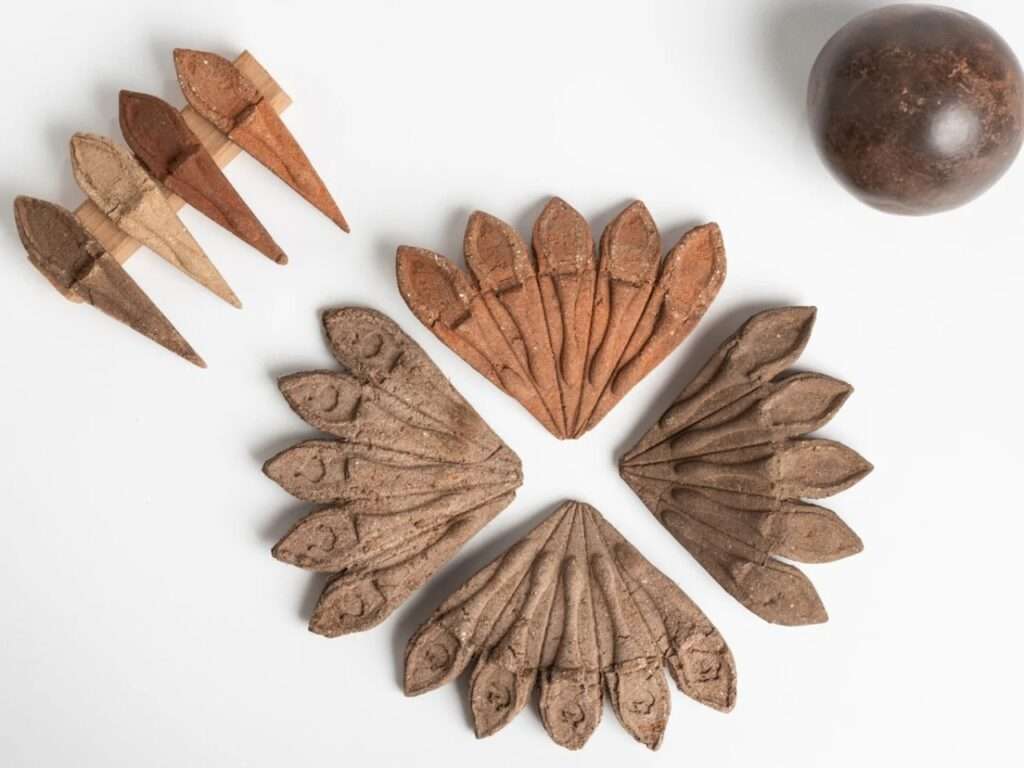
✦ ArchUp Editorial Insight
The text diagnoses the material pollution of contemporary consumer agricultural systems, presenting the project as a metabolic fusion in which the relationship between envelope and product is reduced to a zero-waste vital structure. By replacing multilayer plastic with compacted local soil and tapioca starch, this innovation seeks to erase the friction between urban Design and biological growth, employing sustainability as an intuitive and fluid gesture for shaping space.
In contrast, this refined architectural romanticism overlooks the strict logistical challenges of supply chains and climate variability. Without protective chemical treatment, raw organic masses face risks of premature decomposition, extreme sensitivity to humidity, and limitations in large-scale production. Although the concept is well-suited for individual and niche practices within Cities, it collides with an industrial reality that imposes rigid and regulated barriers to protect living material before its final interaction with the earth.