Fire Rise RTT: Rethinking Roof-Top Tents

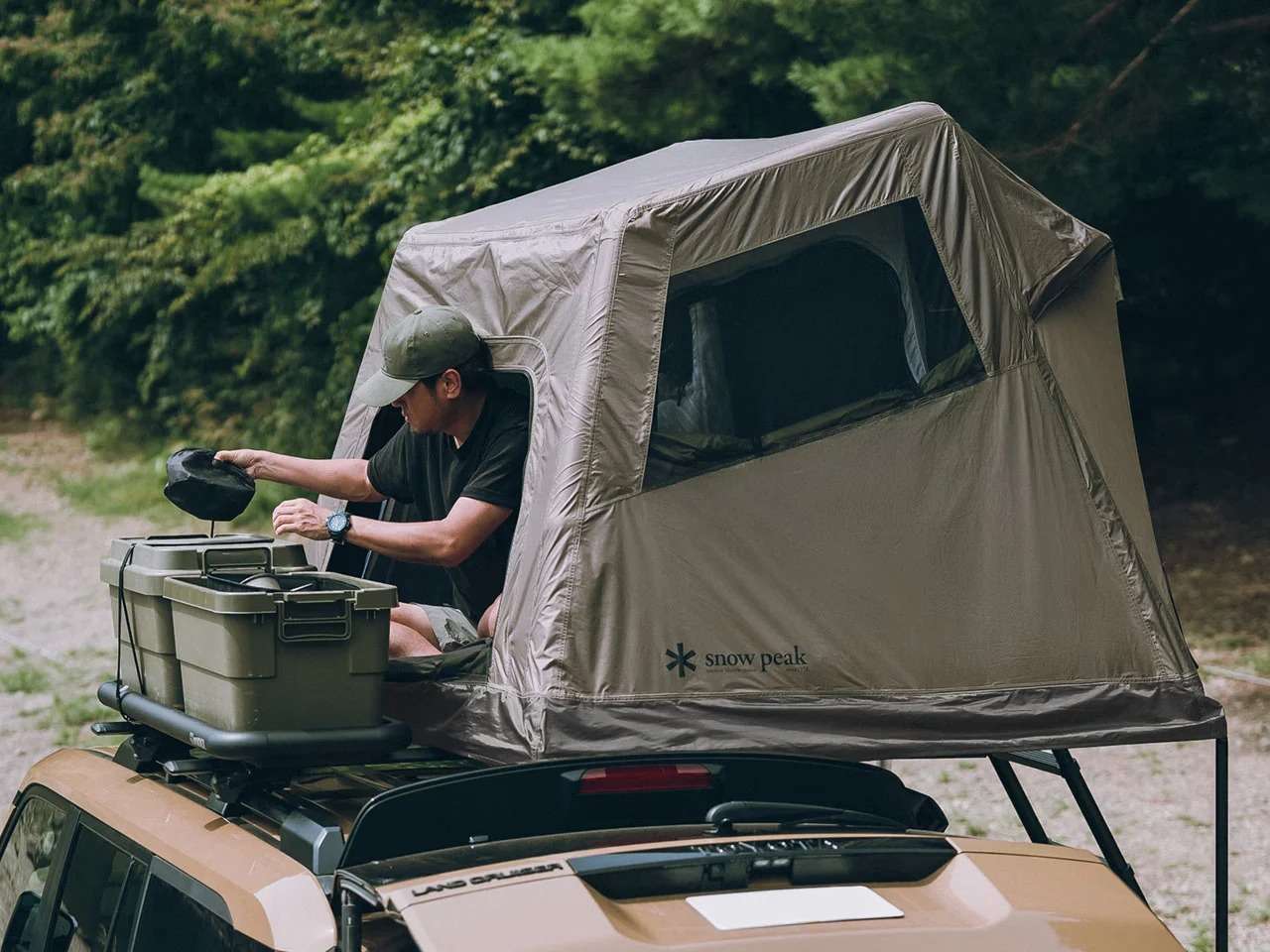
The Market of Vehicle-Mounted Tents and the Context of Innovation
The market for roof-mounted car tents is considered a highly saturated market. However, it continues to demonstrate design evolution that indicates innovation has not been fully exhausted. Within this context, a tent developed by a Japanese company is presented here as a case study for examining emerging directions in the design evolution of camping equipment associated with outdoor lifestyles.
Structural System and Mode of Use
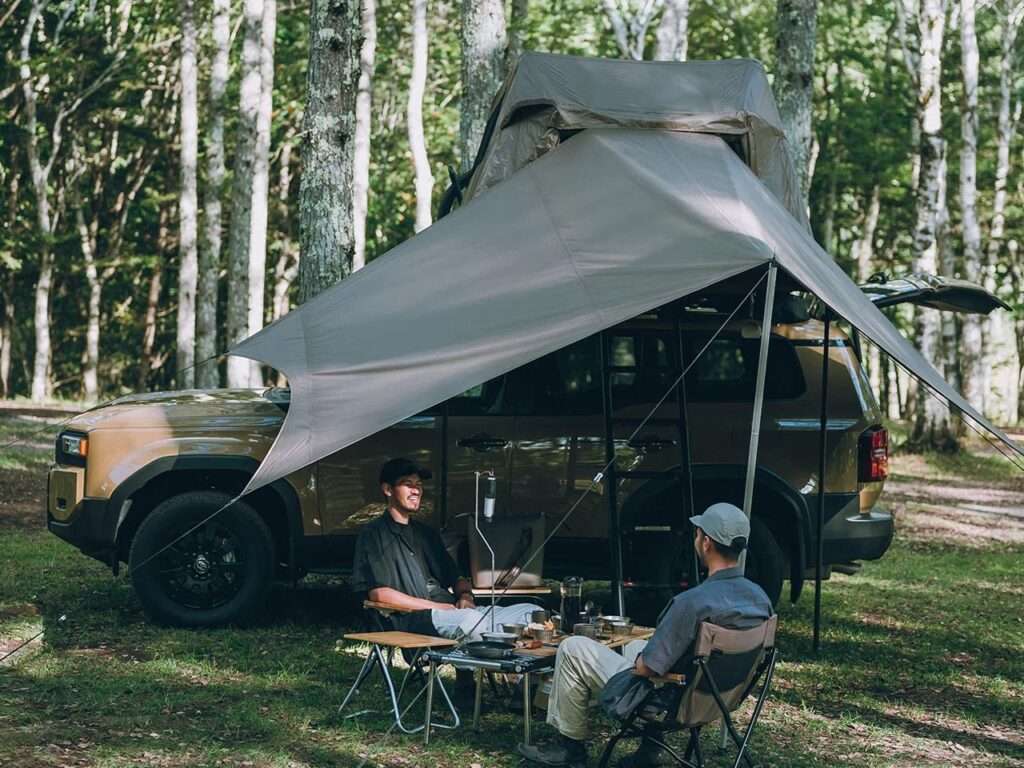
The tent relies on an inflatable structure that forms the primary framework without requiring complex assembly. It is based on a direct-operation principle that reduces setup and dismantling steps, making the usage process faster and simpler. In addition, the design includes side doors, along with an extended base awning that provides additional protective space during outdoor use, while maintaining integration with the vehicle-based usage context.

Environmental Performance and Adaptation to Conditions
The design is based on a double-wall structure aimed at achieving balance with seasonal climate variations. This configuration also enables improved resistance to wind and rain, allowing the tent to be used in different weather conditions. Due to its compact nature and lightweight structure, it can be mounted on a wide range of vehicles while maintaining a level of comfort during outdoor use.
Operational Efficiency and Reduction of Setup Time
The Fire Rise RTT roof tent focuses on minimizing the time required for installation and dismantling, aiming to provide more time for actual outdoor activities. This approach reflects a shift in camping equipment design toward reducing operational complexity, making setup closer to direct use rather than traditional procedures.
The tent includes a wide entrance leading to a transitional space (mudroom), designed according to a concept that separates the external environment from the interior. This spatial organization helps maintain the cleanliness of the sleeping area, particularly by allocating a zone for removing and wearing shoes at the entrance.



Internal Organization and Expansion of Functional Space
The interior design is based on a clear separation between the entry zone and the sleeping area, where the internal tent provides a dedicated environment for two people. This separation enhances the functional efficiency of the limited space inside the tent while maintaining a level of comfort during occupancy.
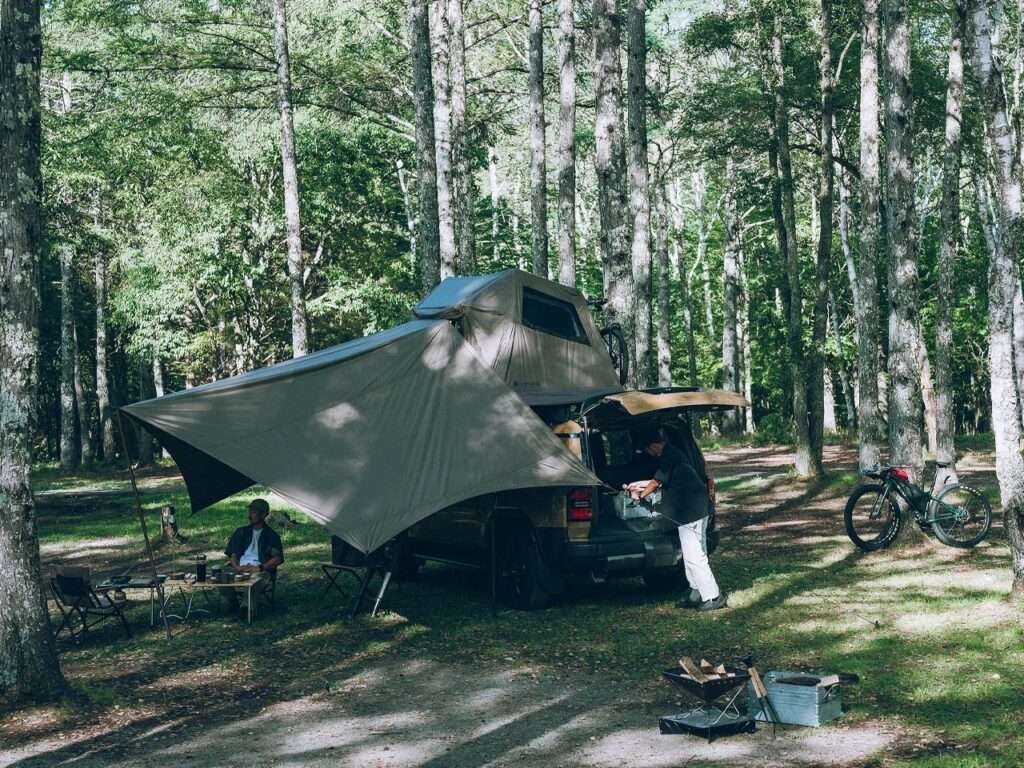
It is also observed in this model that the external space extends through a side awning supported by expandable structural elements, adding an additional functional layer without changing the primary structural volume during use.
Portability and Adaptation to Long Trips
The structure has been developed so it can be folded into a relatively compact size, allowing storage while leaving additional space on the vehicle roof for other equipment. This aspect reflects a design direction that considers multi-day travel, where space management becomes a core design factor.
The tent also features multiple side openings with additional front-facing windows, supporting ventilation and natural lighting. Overall, this model can be interpreted as a case study in integrating operational simplicity with the demands of variable camping conditions.



✦ ArchUp Editorial Insight
Fire Rise RTT roof tent is read as a spatial outcome within a mature roof-tent market, shaped by an economic logic based on minimizing setup time and improving storage efficiency as core value metrics. The production rationale emerges from the transformation of camping into an activity linked to vehicle-based mobility systems, where time becomes a quantifiable resource. Constraints are defined by roof load limitations, transport volume restrictions, and safety requirements related to weather variability. The configuration responds through an inflatable structure, a functional transitional zone separating interior and exterior, and an extending awning that redistributes spatial use without increasing permanent volume. Folding down to half the vehicle’s size further reflects a logistics and storage optimization logic. Ultimately, the product appears as a compromise between market constraints and mobile consumption models, where the role of design agency is reduced in favor of systemic and usage-driven logic.