The Fortress Monument: Erasing the Line Between Civic Space and Security Perimeter

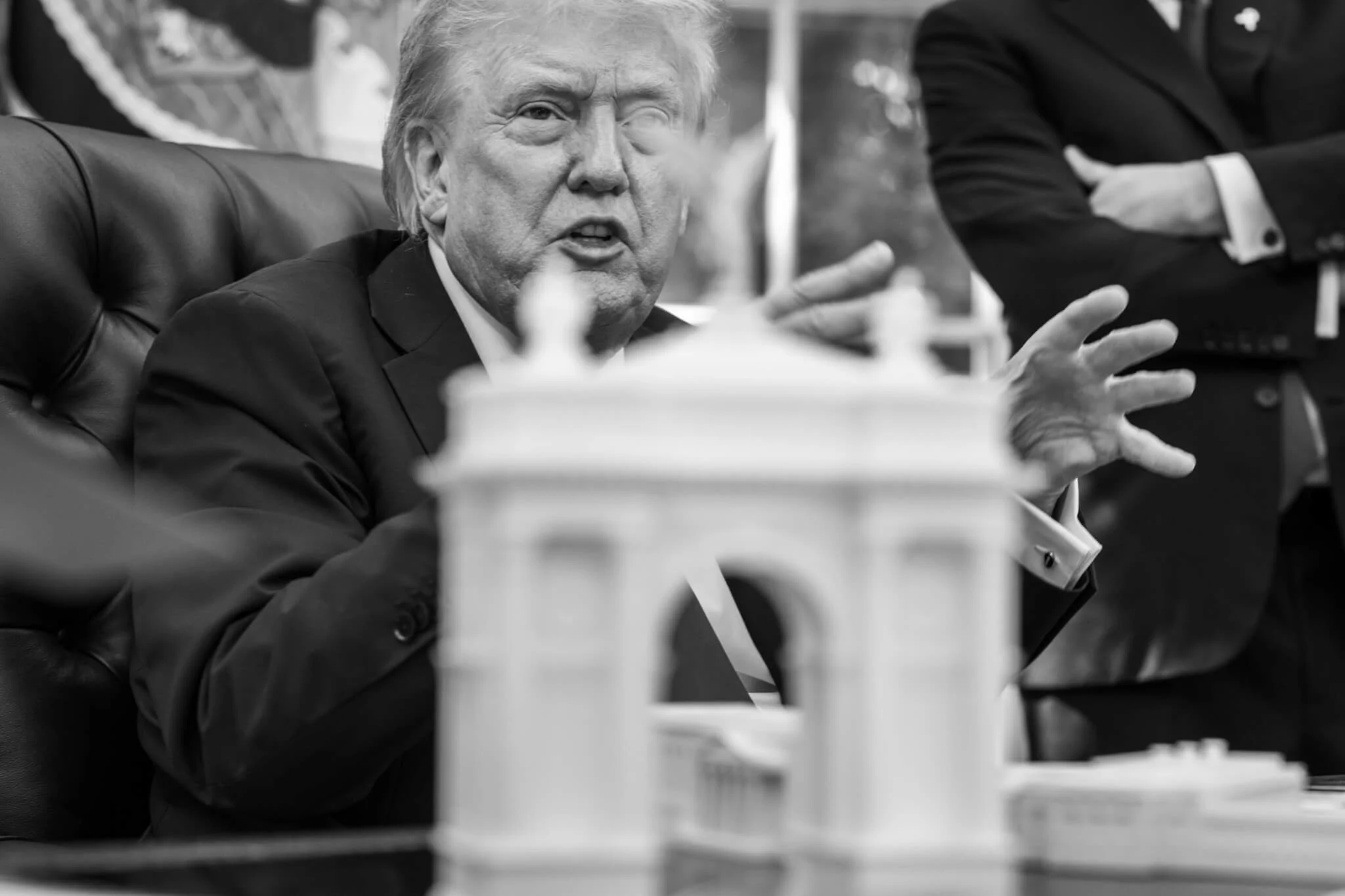
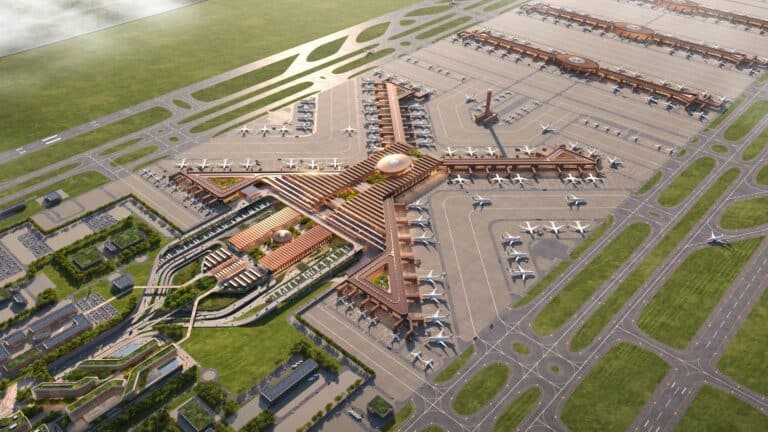
President Donald Trump announced September 20 that the proposed 250-foot triumphal arch in Arlington, Virginia, will house sniper positions, droneports, and large quantities of sniper ammunition — rebranding the commemorative structure as a “top grade military complex.” The Cultural Landscape Foundation (TCLF) responded September 21 with a formal letter to the National Park Service demanding suspension of the Section 106 review, arguing the military function fundamentally alters the project’s stated purpose. Simultaneously, a federal judge blocked the Kennedy Center’s Trump-ordered renaming, prompting the administration to close the building to the public and call for congressional takeover. The White House also banned CNN, MSNOW, and Politico from press briefings, triggering a collective refusal by the five-network TV pool to cover presidential pool events.
The triumphal arch, originally conceived by the 1924 Arlington Memorial Bridge Commission as a commemorative gesture, has undergone successive mission creep. Trump’s Truth Social posts cite U.S. military requests for “National Security purposes” to justify sniper nests and ammunition storage within the arch. TCLF CEO Charles A. Birnbaum calls this a fundamental change in purpose and need, well beyond NPS’s putative intent. The Memorandum of Agreement governing the Section 106 review, TCLF argues, is now dead on arrival until revised designs reflecting the military function undergo public scrutiny. The White House East Wing Ballroom followed a similar trajectory — proposed as cultural space, later repurposed for military use.
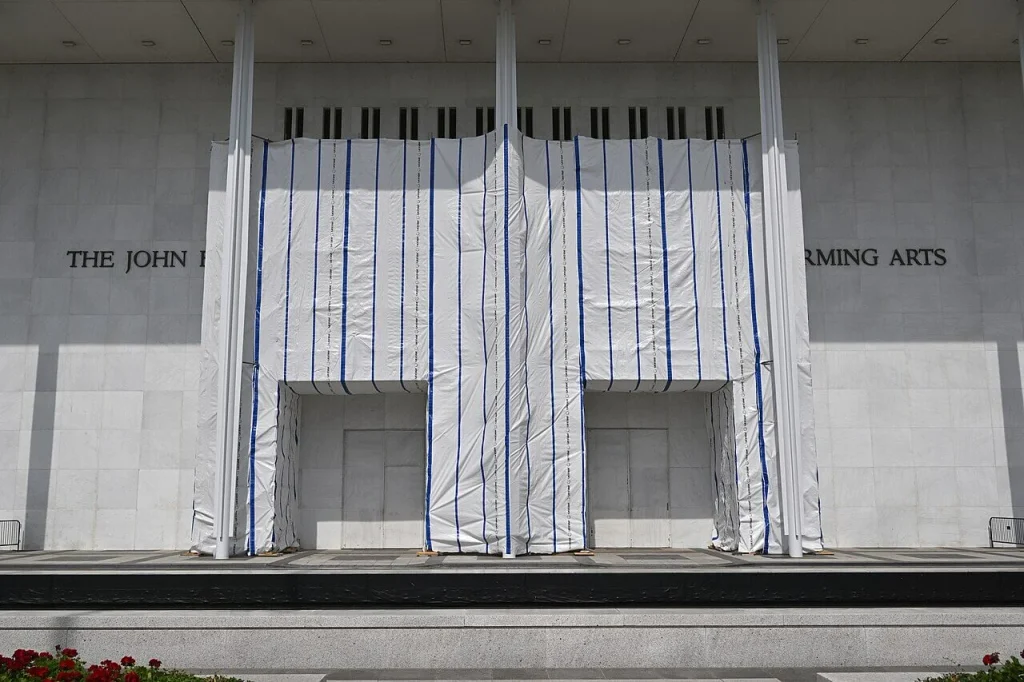
The Kennedy Center crisis escalated in parallel. On September 15, Judge Christopher R. Cooper blocked the renaming; hours later, Trump ordered the building closed to the public. Eight plaintiffs — including AIA, ASLA, Committee of 100, DC Preservation League, Docomomo US, National Trust for Historic Preservation, Society of Architectural Historians, and TCLF — filed for independent judicial protection of the historic building. Judge Cooper ordered 30-day notice before any renovation implementation. Greg Werkheiser of Cultural Heritage Partners called it a significant win against potential demolition by administrative fiat. The White House press bans on CNN, MSNOW, and Politico drew a unified response: ABC, CBS, CNN, Fox News, and NBC agreed to boycott pool coverage, stating no administration should restrict a news organization over reporting objections.
These three threads — militarized monument, captured cultural institution, suppressed press — form a single pattern: the instrumentalization of civic architecture and public information infrastructure for executive control. The triumphal arch transforms from commemoration to fortification. The Kennedy Center shifts from living memorial to political prize. The press pool, designed to ensure independent witness, fractures under retaliatory exclusion. Each move tests whether institutional guardrails — Section 106 review, judicial oversight, press pool solidarity — can withstand coordinated pressure. The architectural profession’s organized resistance (AIA, ASLA, SAH, Docomomo, National Trust) signals recognition that the stakes exceed any single building.
The liability transfer pattern appears here in inverse: rather than externalizing costs onto communities, the state internalizes civic assets — monuments, cultural centers, information channels — into instruments of executive power. The arch’s commemorative budget absorbs military infrastructure costs. The Kennedy Center’s endowment and public trust become leverage for political branding. The press pool’s collective access structure is weaponized to punish dissent. The architectural review processes designed to protect public interest (Section 106, judicial injunction) become the battlefield. When the commemorative becomes the martial, the cultural becomes the partisan, and the witness becomes the target, the liberal spatial contract — public space for public use, public institutions for public trust, public information for public verification — dissolves into a security perimeter with no exterior.
Analytical Critique
The week’s events reveal a stress test of the civic architecture framework. The triumphal arch’s mission creep from commemoration to militarization exposes how commemorative authority — once granted — can be incrementally repurposed without new authorization. The Kennedy Center closure demonstrates how executive control over federal cultural institutions can suspend public access overnight. The press pool boycott shows the fragility of voluntary cooperative structures when one party defects. The architectural coalition’s legal intervention is the only institutional counterweight holding; its durability depends on judicial independence and congressional willingness to act. The pattern suggests a strategy: seize symbolic infrastructure, redefine its purpose, dare institutions to resist.
✦ ArchUp Editorial Insight
The triumphal arch, Kennedy Center, and White House press room form a triad of civic infrastructure being converted into executive apparatus. The arch’s Section 106 review — designed to protect historic resources from adverse effects — now confronts a project whose adverse effect is its own redefinition: a commemorative object hollowed out and refilled with sniper nests. TCLF’s “DOA” verdict on the MOA recognizes that the review process cannot accommodate a project that changes its nature mid-review. The Kennedy Center plaintiffs’ demand for a receiver acknowledges that fiduciary duty has been compromised at the leadership level. The press pool’s collective refusal to cover pool events is a rare institutional mutation: the witness structure defending itself by withholding witness. Together, these moves reveal a governance model where civic assets are not stewarded but seized — their public legitimacy used to legitimize private capture. The architectural profession’s coalition (AIA, ASLA, SAH, Docomomo, National Trust, TCLF) is the only formation treating this as a systemic threat rather than discrete controversies. The question is whether professional liability — the obligation to protect the public interest embedded in licensure — can scale to confront state-level liability transfer. If the commemorative becomes martial, the cultural becomes partisan, and the witness becomes target, the spatial contract fails not by erosion but by inversion.
Project Team
Triumphal Arch: Arlington Memorial Bridge Commission (1924 origin), National Park Service (Section 106 review), Cultural Landscape Foundation (opposition)
Kennedy Center: Judge Christopher R. Cooper, AIA, ASLA, Committee of 100, DC Preservation League, Docomomo US, National Trust for Historic Preservation, Society of Architectural Historians, TCLF, Cultural Heritage Partners
Press Pool: ABC, CBS, CNN, Fox News, NBC, White House Correspondents’ Association
Project Notes
Triumphal Arch: 250 ft height, Arlington VA, sniper nests + droneports + ammunition storage, “top grade military complex” per Trump Truth Social Sept 20, TCLF letter Sept 21 demands Section 106 suspension
Kennedy Center: Renaming blocked Sept 15, building closed same day by Trump directive, 8 plaintiffs seek judicial protection, Judge Cooper orders 30-day notice before renovations
Press Bans: CNN, MSNOW, Politico banned Sept 21, 5-network TV pool boycotts pool coverage in solidarity, outlets suing to reverse ban
White House East Wing Ballroom: Precedent — proposed cultural, repurposed military
Section 106 MOA: TCLF declares dead on arrival pending revised military-design review