Unveiling a sustainable housing prototype at the Venice Biennale


Unveiling a sustainable housing prototype at the Venice Biennale,
The Norman Foster and Holcim Foundation unveiled a prototype of sustainable housing for the displaced at the Venice Architecture Biennale.
The project, called the Basic Houses Research Project,
is now being shown as part of the exhibition The Temporal Presence of Space in the Marinaris Gardens, Palazzo Mora Gallery, Italy.
The prototype is on display during the Biennale from 20 May 2023 to 26 November 2023, Venice, Italy.
The structure was developed using Holcim’s low-carbon, circular and energy-efficient solutions.
The structure is described as “highly sustainable”
because the house contains 70% less carbon dioxide than traditional structures.
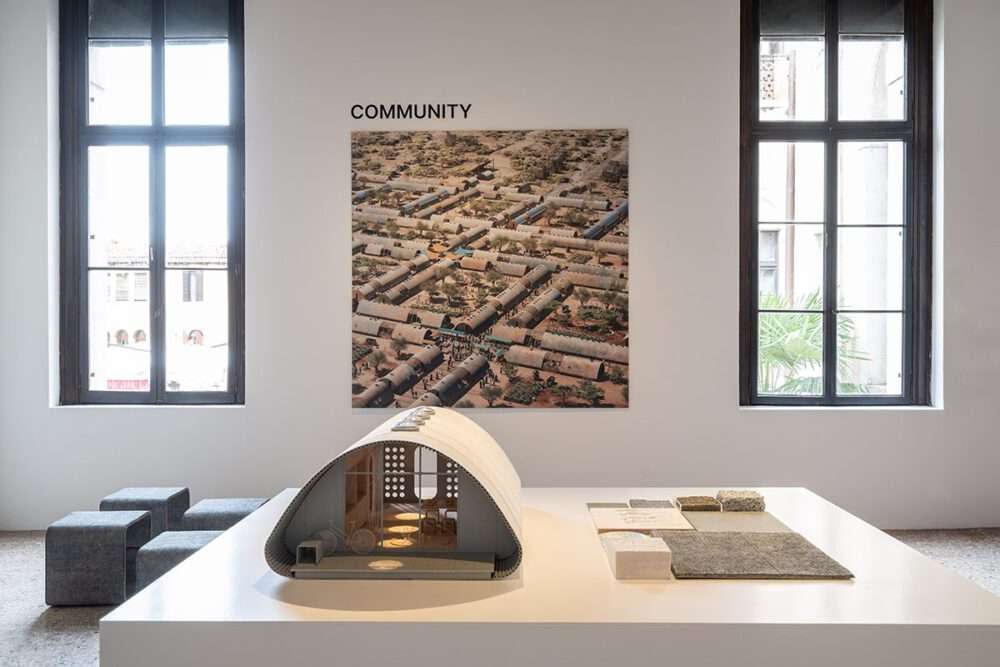
Design features
The house is encased in low carbon concrete slabs where the rollable form contains a low carbon cement mix,
It is placed on a rollable cloth, and after spraying water on the cloth,
the cloth dries and hardens, forming a hard crust.
The project was developed in partnership with the Norman Foster Foundation,
designed to create a sustainable home.
To meet basic human needs, and to provide safety,
comfort and well-being to displaced people, who can live in temporary settlements for decades.
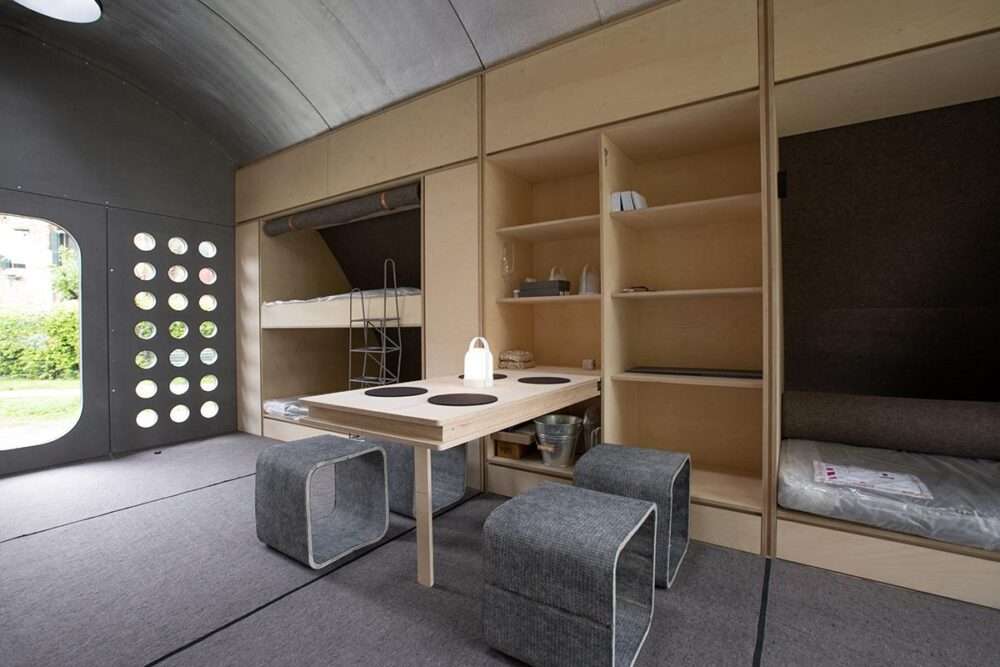
Using sustainable building solutions from Holcim,
the house offers low-carbon and energy-saving circular solutions,
What shows how sustainable building can be made possible for everyone.
And at the end of use, every component of Essential Homes can be reused and recycled.
Where the house represents a circular design at the end.
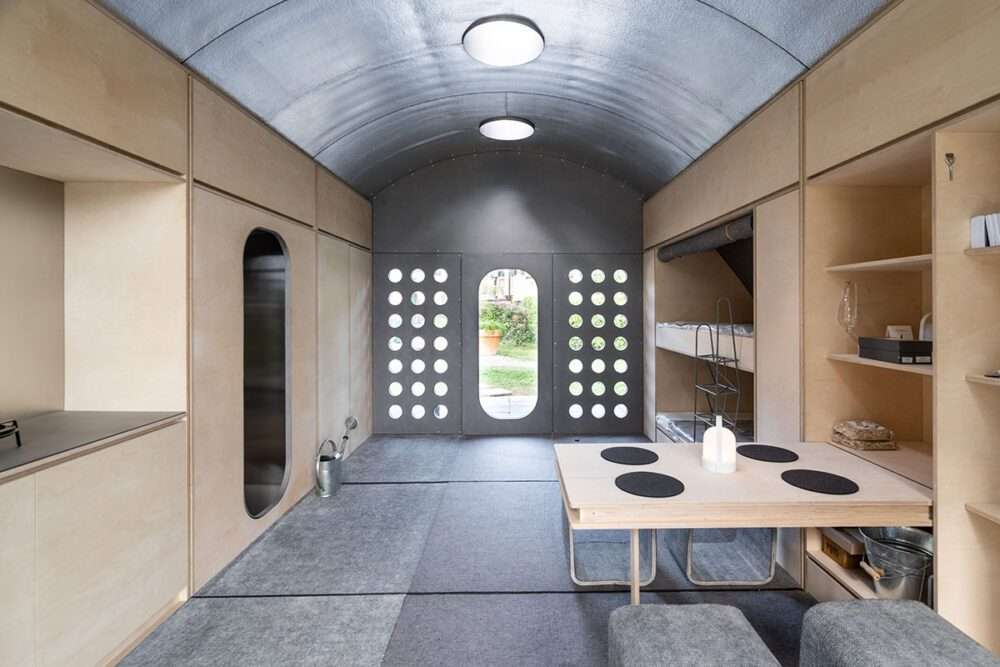
The house is also linked by permeable paths made of Holcim’s ECOPact low-carbon concrete tiles.
which connects the houses, which are made of light-absorbing aggregates that reflect natural light at night,
While also reducing energy use and light pollution.
It also includes energy-efficient insulation systems from Elevate panels to low-carbon Airium foam for thermal and acoustic comfort.
To enable circular construction, for the base of the house,
the team used Holcim’s ECOCycle circular technology that uses recycled building demolition materials.
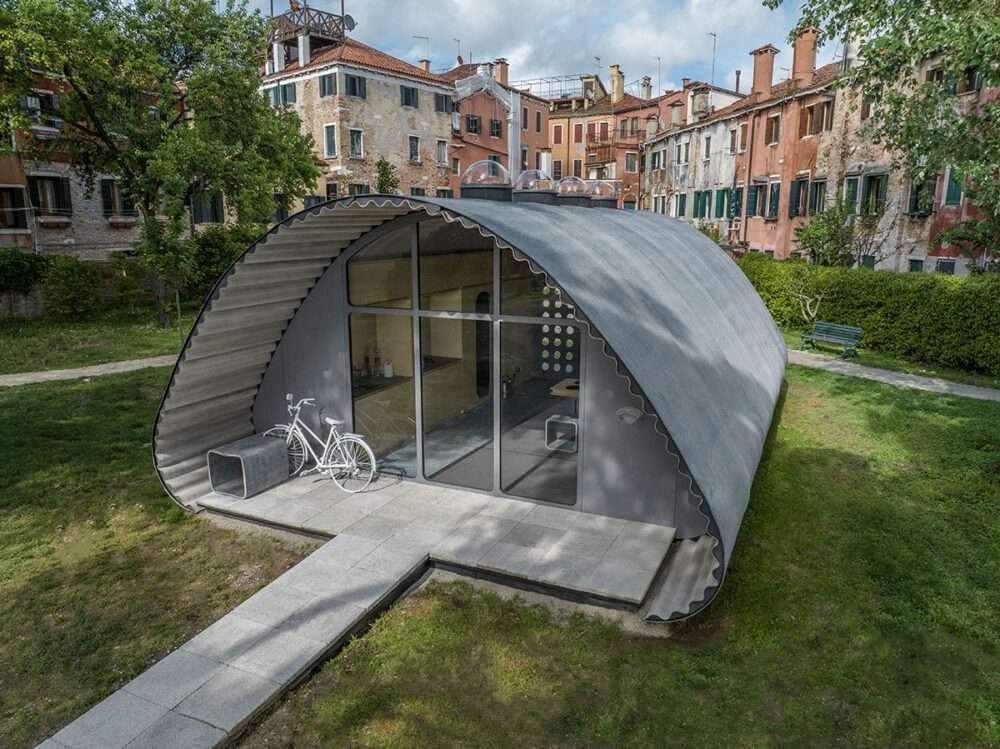
The base of the house is made of cement, concrete and aggregates to make it more weather resistant.
The Essential Homes Research project aims to open a fundamental conversation about making sustainable building possible for all.
To build a future that works for people and the planet.
The house is built on site where all the materials can be moved easily.
This also speeds up construction for all contingencies.