Colburn Center Turns Gehry’s Expressive Language Inward

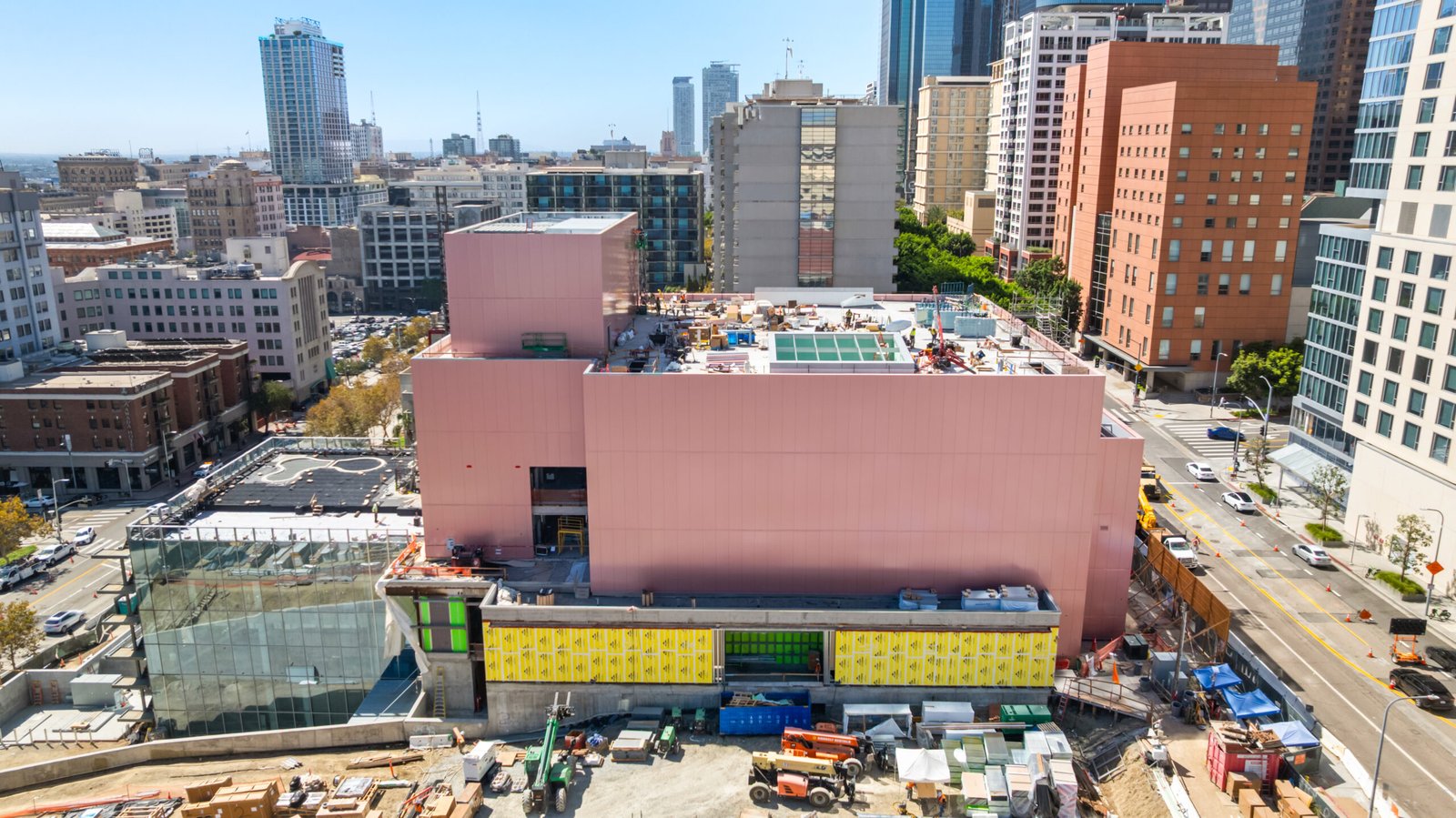
The Colburn Center is not a newly disclosed project. Colburn unveiled Frank Gehry’s design in March 2022, and construction began in 2024. The latest announcement adds a September 25, 2027 opening date for Terri and Jerry Kohl Hall, with the Dance Center expected to open in August. The news is therefore about delivery, not a new design reveal. The more useful question is what kind of Gehry building is taking shape on Grand Avenue.
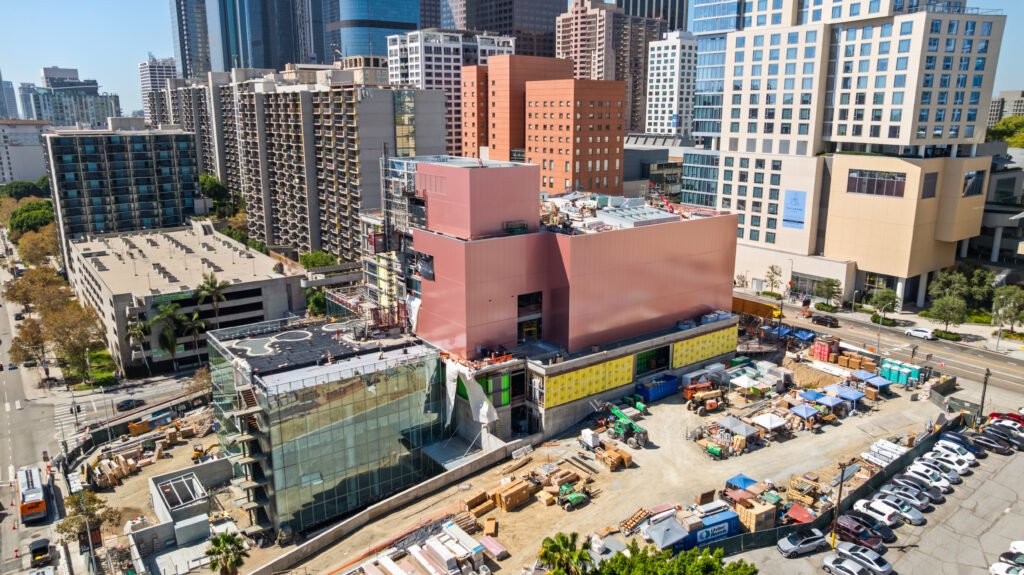
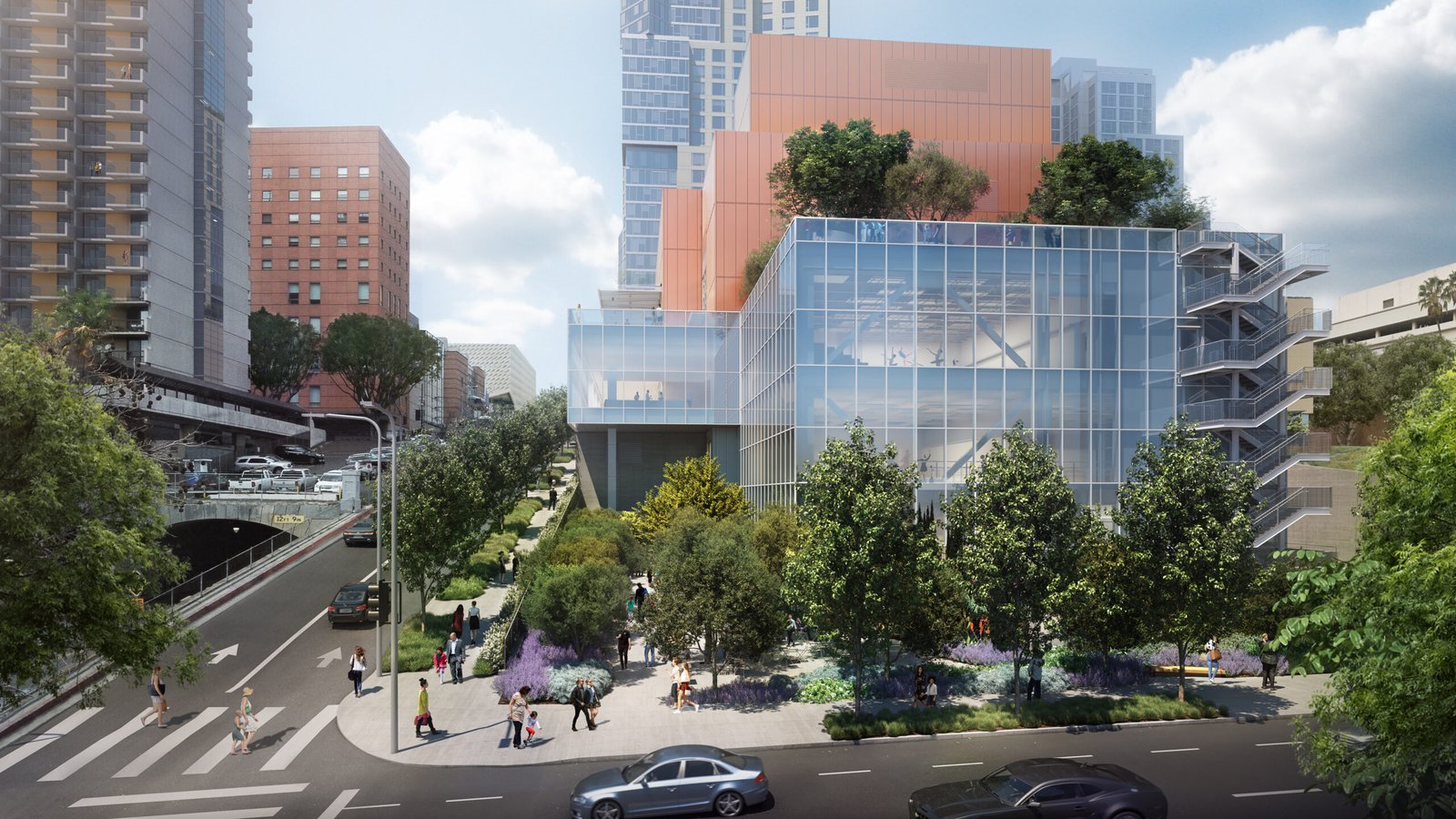
The project sits in Bunker Hill, within a cultural corridor already shaped by the Walt Disney Concert Hall, The Broad, and the Museum of Contemporary Art. Here the terrain is part of the architectural problem. The site falls across the surrounding streets, and the massing steps with its natural contour. Rather than make a single sculptural object dominate the block, the design arranges interlocking, mostly rectilinear volumes across the slope.
A quieter exterior, a more expressive interior
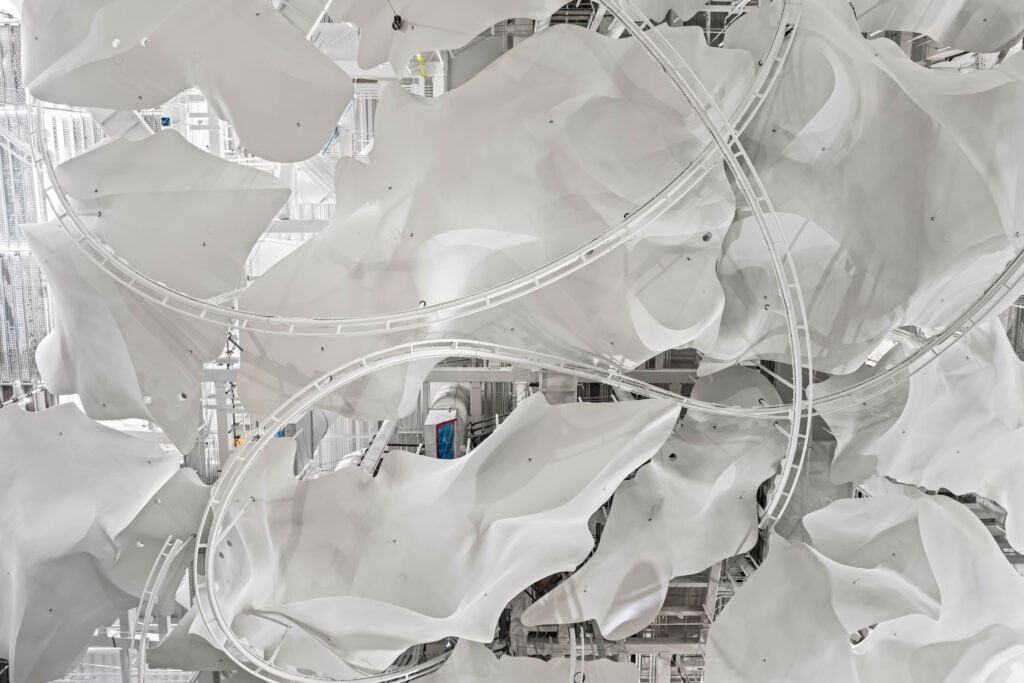
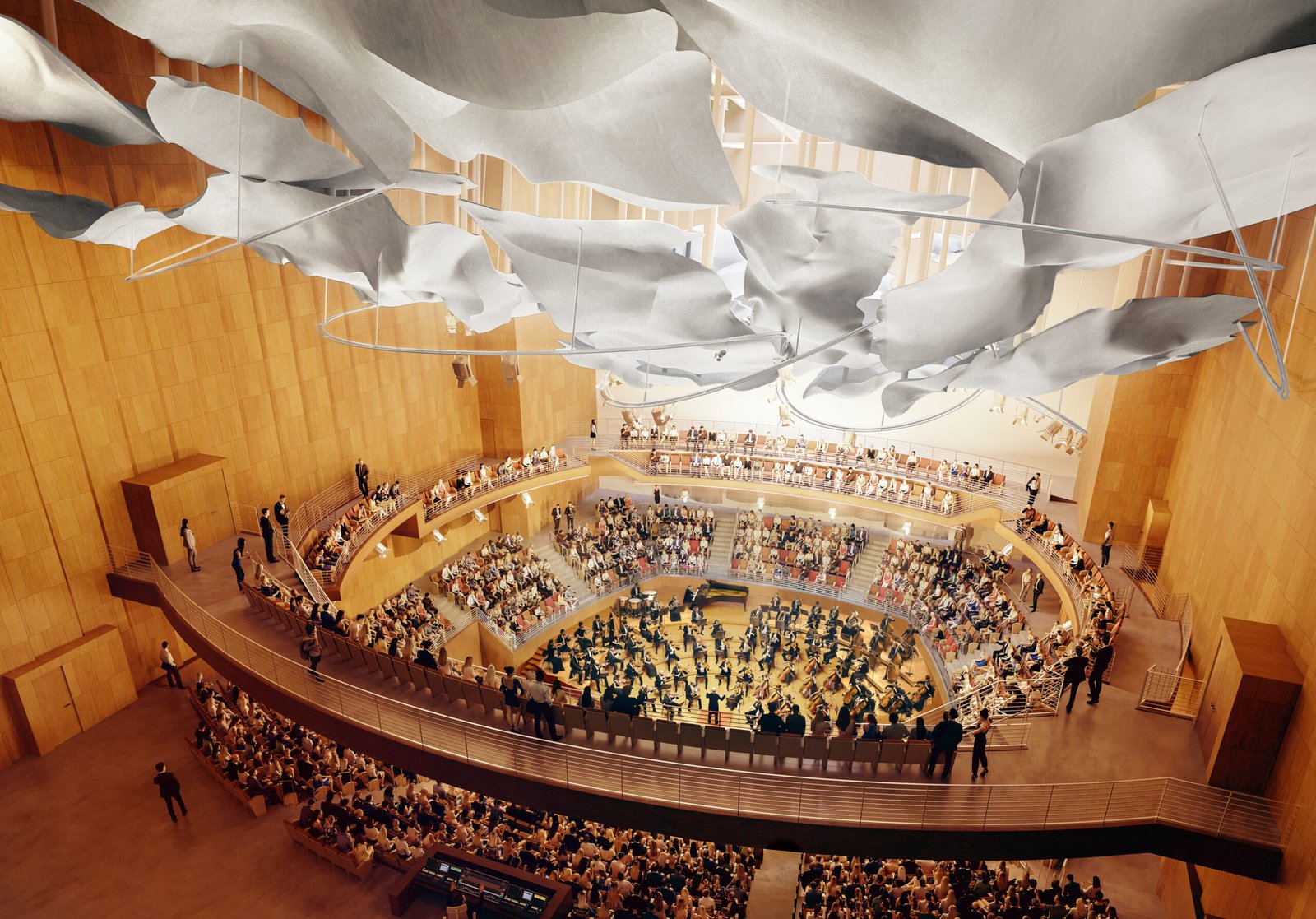
That choice marks a shift from the Gehry many visitors associate with Los Angeles. At Walt Disney Concert Hall, the building’s public identity is carried by a conspicuous sculptural exterior. At Colburn, the outer composition is comparatively restrained: opaque and glazed blocks, layered and stepped to meet the site. The more overtly expressive gesture moves inward. In the concert hall views, suspended acoustic elements above the audience carry some of the sculptural language that, in other Gehry projects, often defines the exterior.
This is not simply a lesser version of a familiar Gehry effect. It is a different distribution of attention. The street receives a more measured envelope; the performance space becomes the primary interior event. The trade-off is worth examining: does the building’s civic identity remain legible to people moving through the district, or does its architectural character become clear mainly to students, performers, and ticketed audiences? The question recalls ArchUp’s reading of Gehry’s Fondation Louis Vuitton, where the envelope and the institution it contains were considered together. At Colburn, the relationship is less about a singular exterior image and more about how the school joins teaching, rehearsal, and public performance.
Constraints explain the shift, but do not settle the critique
Colburn’s own account says the design was refined in response to the budget, the urban site, and the school’s needs. That is a useful explanation, but it does not establish that cost alone produced the quieter exterior. The 2024 groundbreaking materials placed the construction estimate at $335 million, separate from $65 million for endowment and operating costs. Those figures show the scale of the commitment; they do not, by themselves, reveal which design decisions were reduced, retained, or moved indoors.
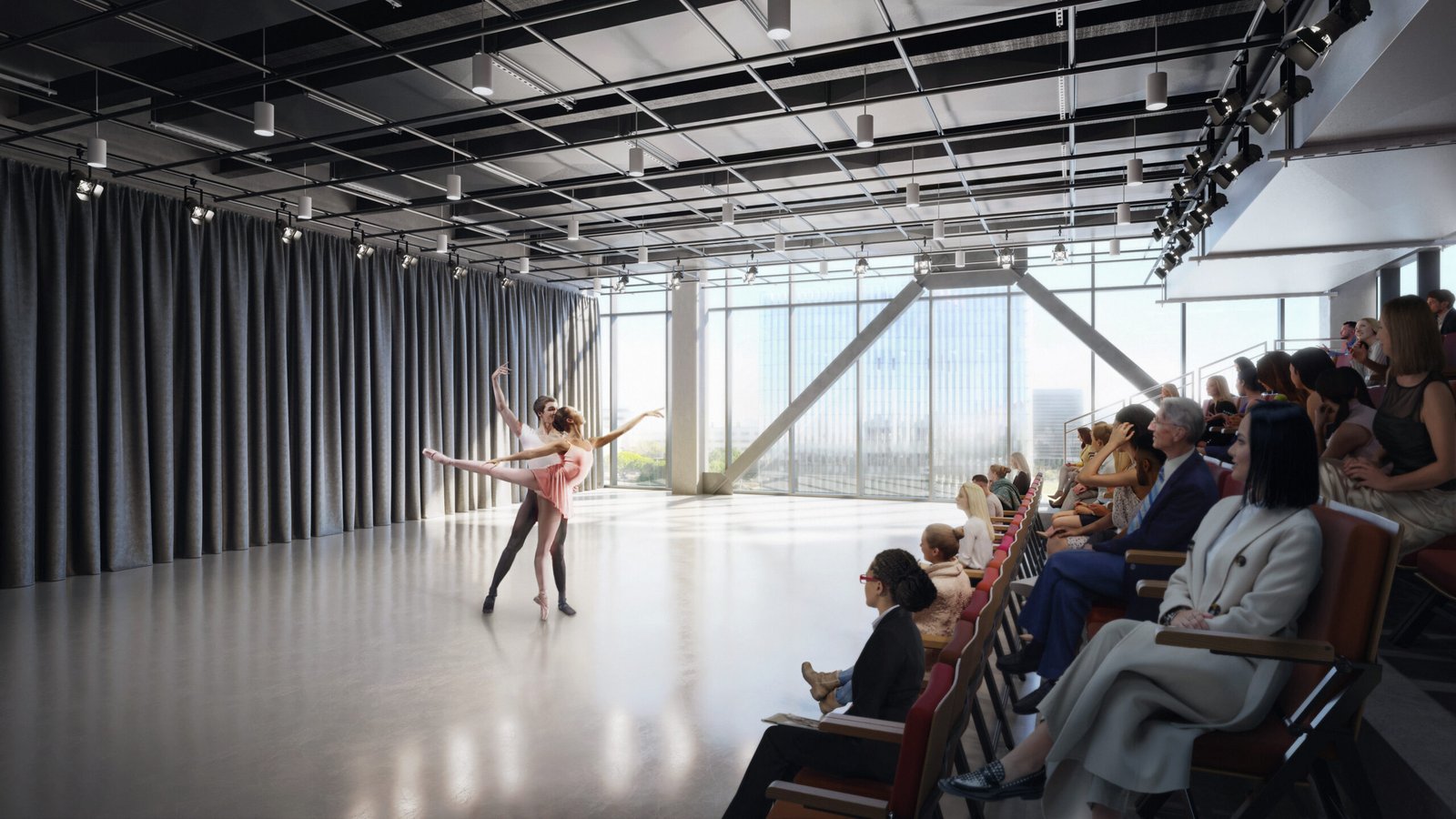
The programme helps explain why the interior carries so much of the project’s technical ambition. The expansion combines a 1,000-seat concert hall in the round, a 100-seat dance studio theatre, and four professional-sized dance studios. Its final construction sequence includes acoustic and stage systems, lift machinery, specialist flooring, and public garden spaces. These are not finishing details in a conventional sense: they determine whether music, dance education, rehearsal, and public events can share one building without compromising one another.
What the opening date will test
With substantial completion expected in summer 2027, the remaining months will test coordination and commissioning as much as visible construction. The opening date cannot show whether the venue will be affordable and accessible to the wider public, how often its gardens and halls will be open, or how the finished building performs environmentally. The October announcement provides no energy, water, or embodied-carbon data; gardens alone do not establish environmental performance.
For a project whose design has circulated publicly since 2022, the significant story is no longer the arrival of another Gehry commission. It is whether this quieter exterior and more expressive interior can make a large institutional investment work as part of the city, rather than only as a new address for the institution.
✦ ArchUp Editorial Insight
This is a news-desk delivery report rather than an essay, and it is worth noting that it already performs much of the forensic discipline this archive values — refusing the design-reveal framing, declining to accept the institution’s budget narrative as a sufficient explanation, and insisting that the opening date cannot answer the questions that matter. The most structurally significant pattern beneath the report is the inward migration of expressive ambition from the street to the ticketed interior, which the desk correctly frames as a redistribution of attention rather than a diminished Gehry, but which carries an unexamined governance dimension: the quieter envelope and the sculptural concert hall together encode a decision about who the building’s architectural character is actually for, and the answer the report gestures toward — students, performers, and ticketed audiences rather than people moving through the district — is the same access question this archive raised in Fondation Louis Vuitton, where the envelope and the institution it contained had to be read together to see whose cultural access the arrangement served. The report’s sharpest move is its refusal to let the $335 million figure settle the critique, because a construction estimate shows the scale of a commitment without revealing which decisions were reduced, retained, or moved indoors — precisely the procurement opacity this archive examined in Prospect Place, where the gap between a signature architect’s formal ambition and the delivered building is closed not by design argument but by a financial logic the public never sees. What the desk identifies as the genuine test — whether a large institutional investment works as part of the city rather than only as a new address for the institution — is the correct structural question, and the honest admission that the announcement provides no energy, water, or embodied-carbon data names the deferral at the center of the civic claim: the building will be judged on the performance it displays to its audiences long before anyone can measure what it costs the city that hosts it.