The Walled Courtyard House: Light and Enclosure

Massing and the Dialogue of Light and Shadow
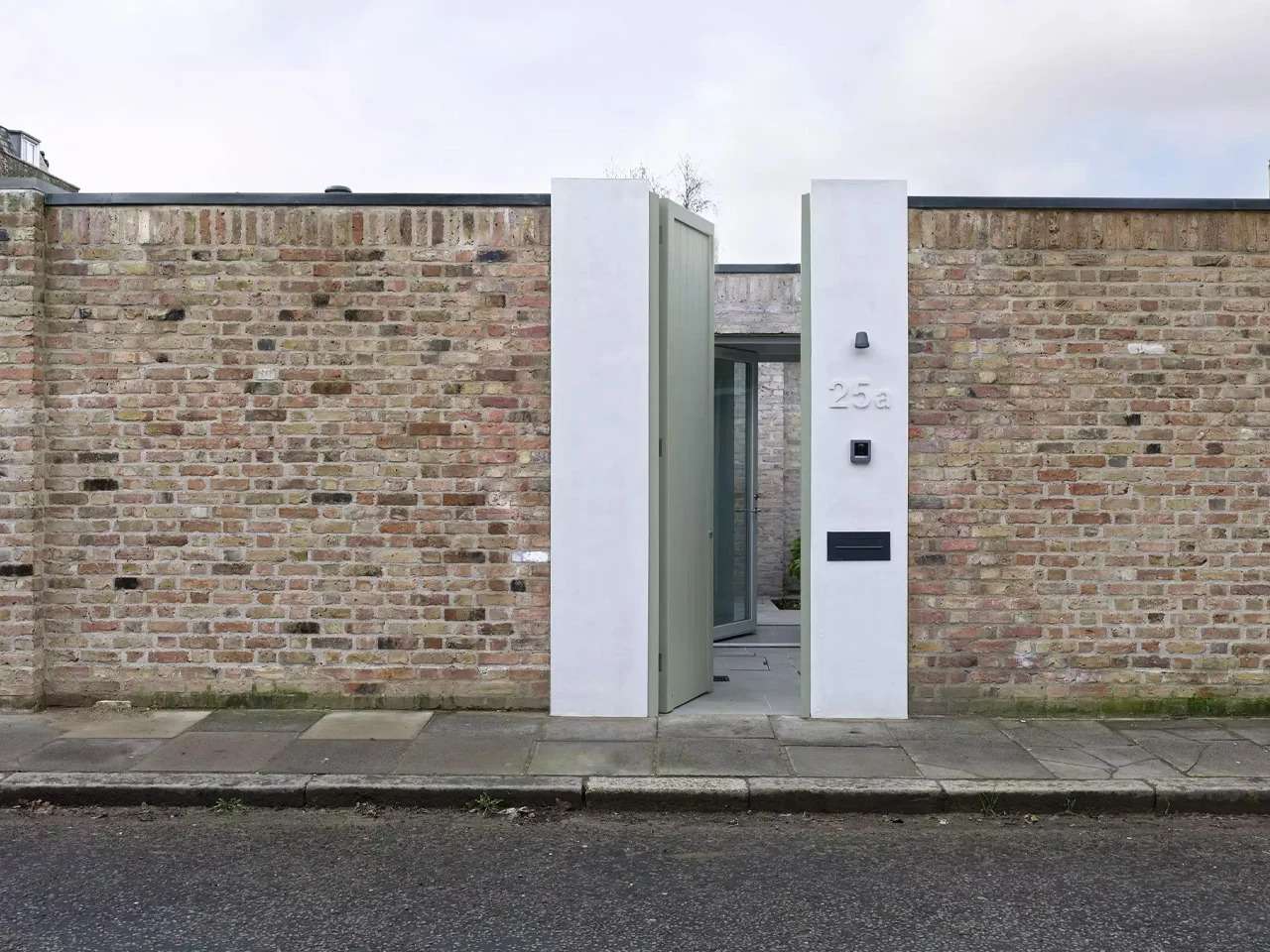
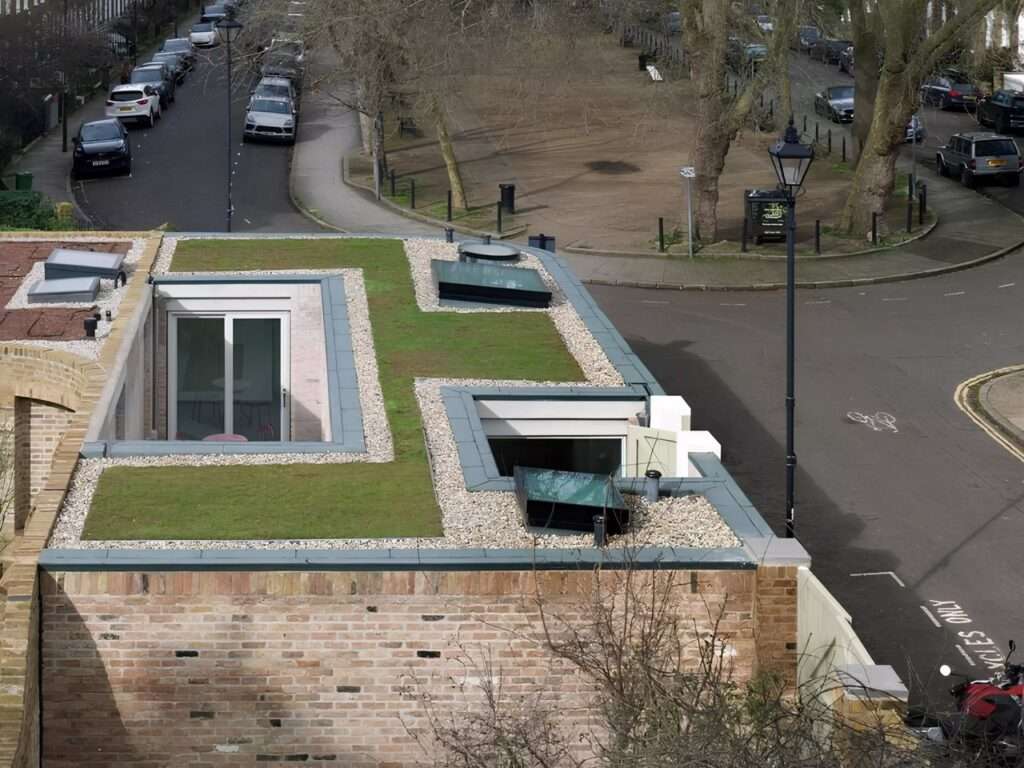
The reclaimed brick wall transforms from a mere external boundary consistent with the historical character of Cleaver Square into an architectural envelope that defines the site’s limits and directs the experience inward. By eliminating street-facing windows, the project relies on roof lighting and lime-plastered walls to shape the interior environment. These light-toned surfaces enhance the reflection of natural light and distribute it throughout the spaces, creating a continuously shifting visual variety within the interior scene and softening the perception of enclosed spatial boundaries.
Kinetic Passage and Spatial Extension
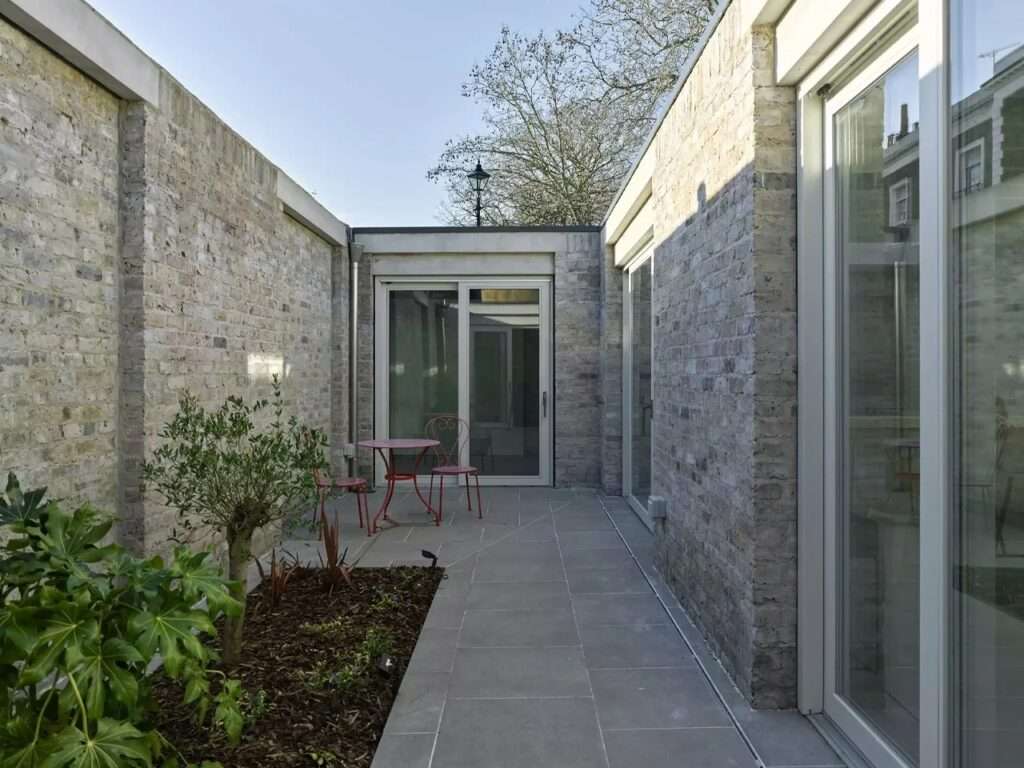
The building experience begins upon passing through the wooden gate, where the user transitions from the atmosphere of the surrounding street into a quieter, more private internal world. The architectural program is organized on a single floor that prioritizes ease of movement and accessibility, while sequential sightlines guide the flow between different spaces toward the internal courtyard and natural light sources. This horizontal organization, supported by overhead lighting, strengthens the sense of openness and spatial continuity despite the limited site area.
Spatial Sequencing and Visual Connectivity
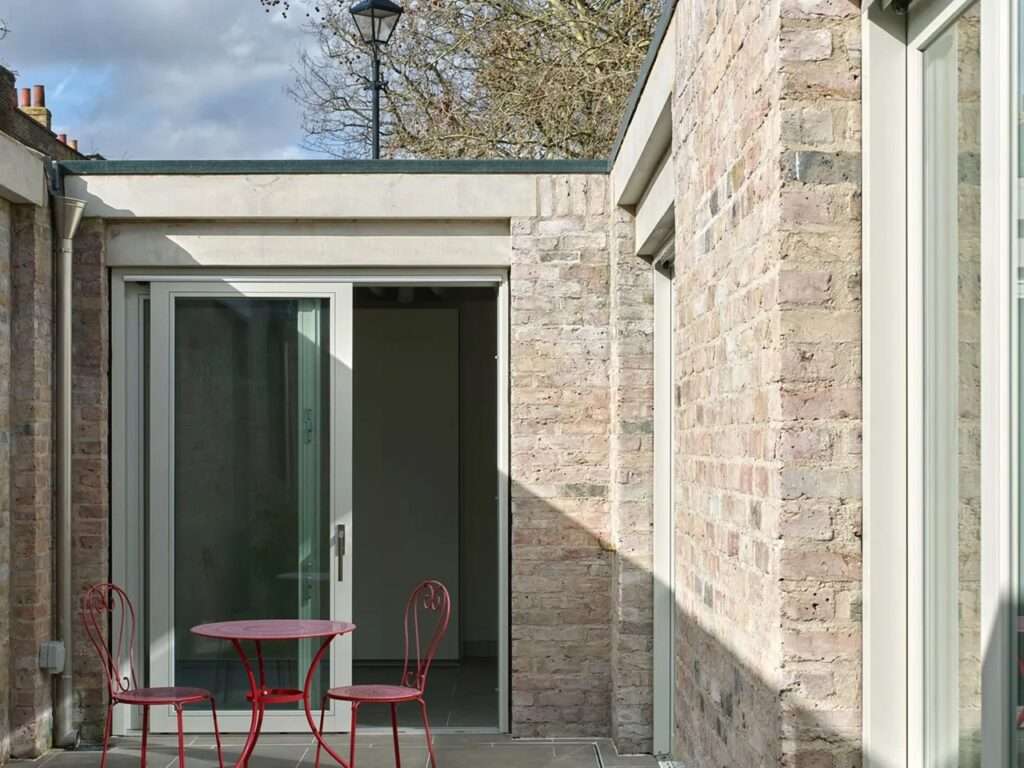
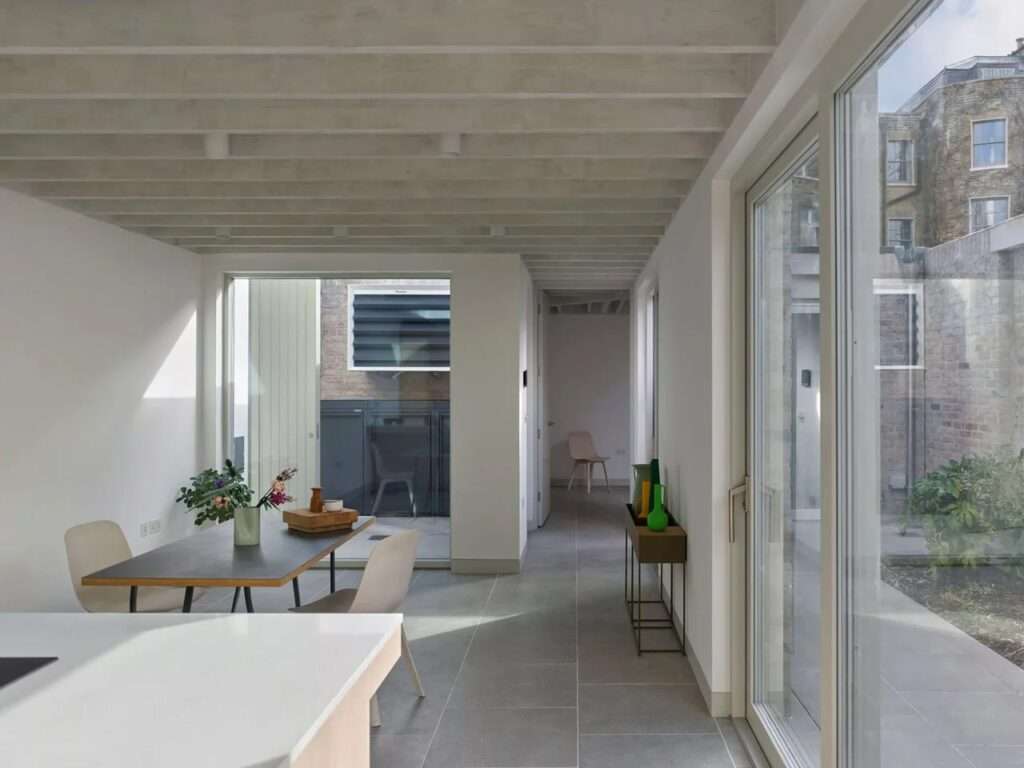
The planted internal courtyard organizes the heart of the architectural plan, acting as the connecting element between the various parts of the dwelling. Full-height sliding glass doors allow uninterrupted visual continuity between bedrooms, living areas, and the kitchen, reinforcing the interrelationship between different functions. Hidden doors integrated within the walls further reduce visual barriers when opened, transforming movement within the house into a continuous experience in which views and spaces flow seamlessly into one another.
Material Interaction and Environmental Synthesis
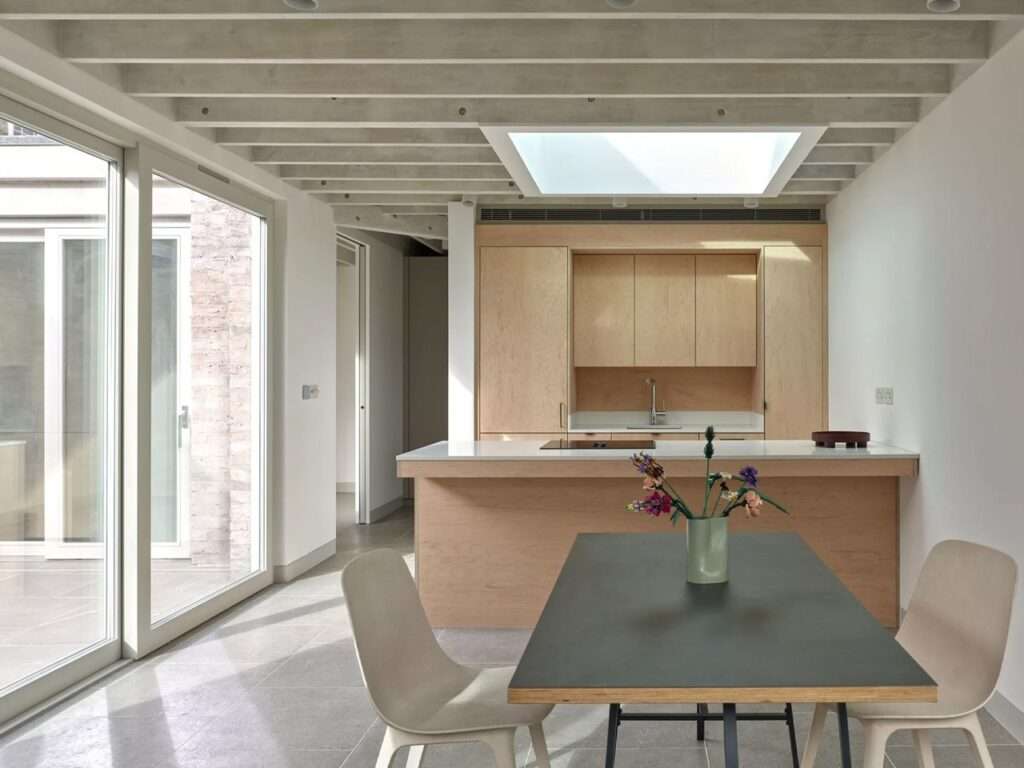
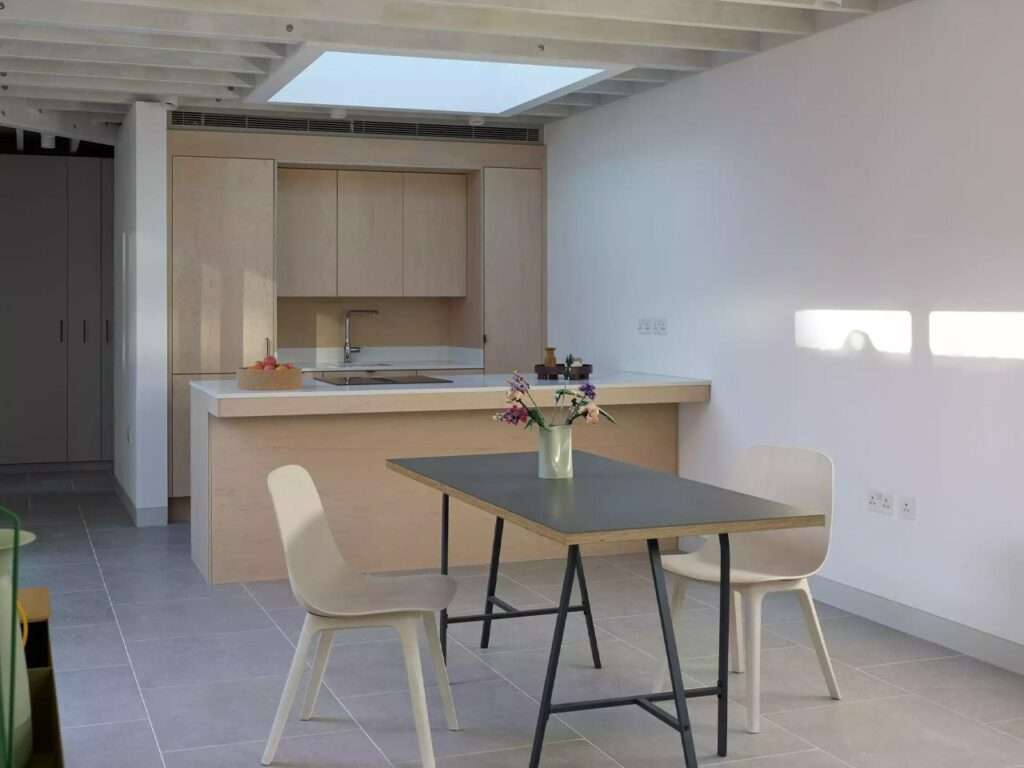
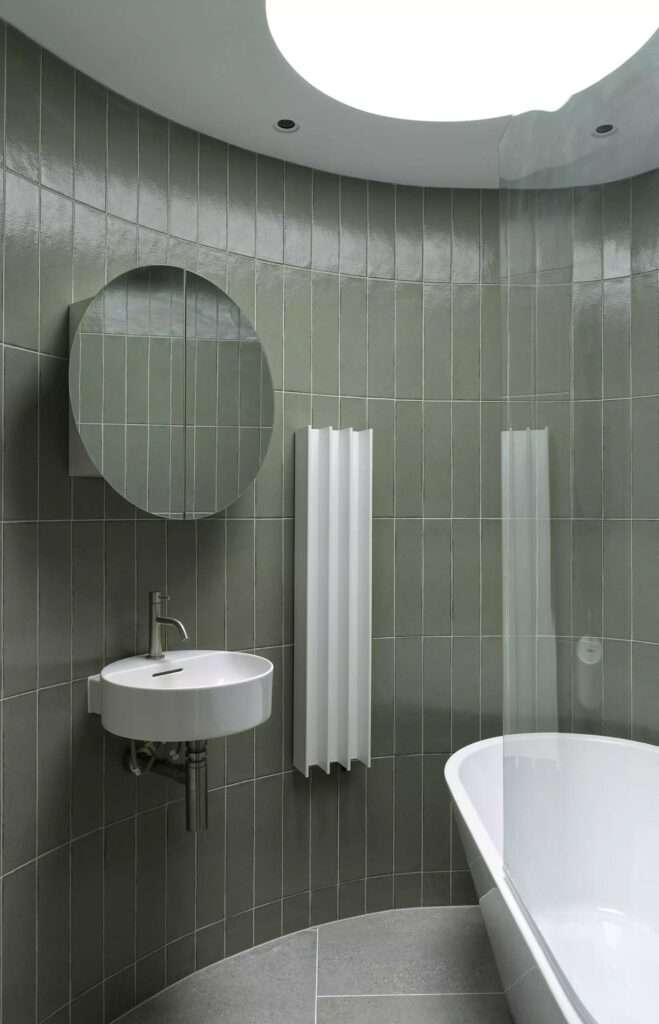
The interior spaces rely on a restrained material palette combining white walls, grey porcelain flooring, and exposed timber elements. Wooden ceiling beams stand out as part of the building’s structural expression, while roof openings play a central role in introducing natural light and directing it throughout the spaces over the course of the day. This is complemented by a sedum-planted roof and integrated environmental strategies, resulting in a visually restrained architectural model that responds to environmental performance requirements while maintaining harmony with the surrounding historical context.
✦ ArchUp Editorial Insight
The project redefines the perimeter wall from a visual boundary into a spatial filter that directs the domestic experience toward a central internal courtyard. The design depends on the removal of street-facing openings in favor of roof apertures and lime-coated walls to redistribute light within a single horizontal floor. Movement is transformed into a continuous visual sequence between rooms and the internal garden, within a controlled lighting logic that reshapes spatial perception. However, this inward enclosure may overextend the idea of spatial purity, overlooking the fact that complete isolation from the street in dense urban environments can generate social detachment and place environmental strain on thermal performance. Furthermore, the reliance on roof openings introduces thermal fluctuations and ongoing maintenance demands that contradict the claim of controlled lighting. Ultimately, this model appears closer to a residential scenography driven by budgetary and representational considerations than a flexible response to the complexities of contemporary urban conditions within architectural and design discourse.