Spiderweb House and Open-Plan Living

Structural Articulation and Mass Fragmentation
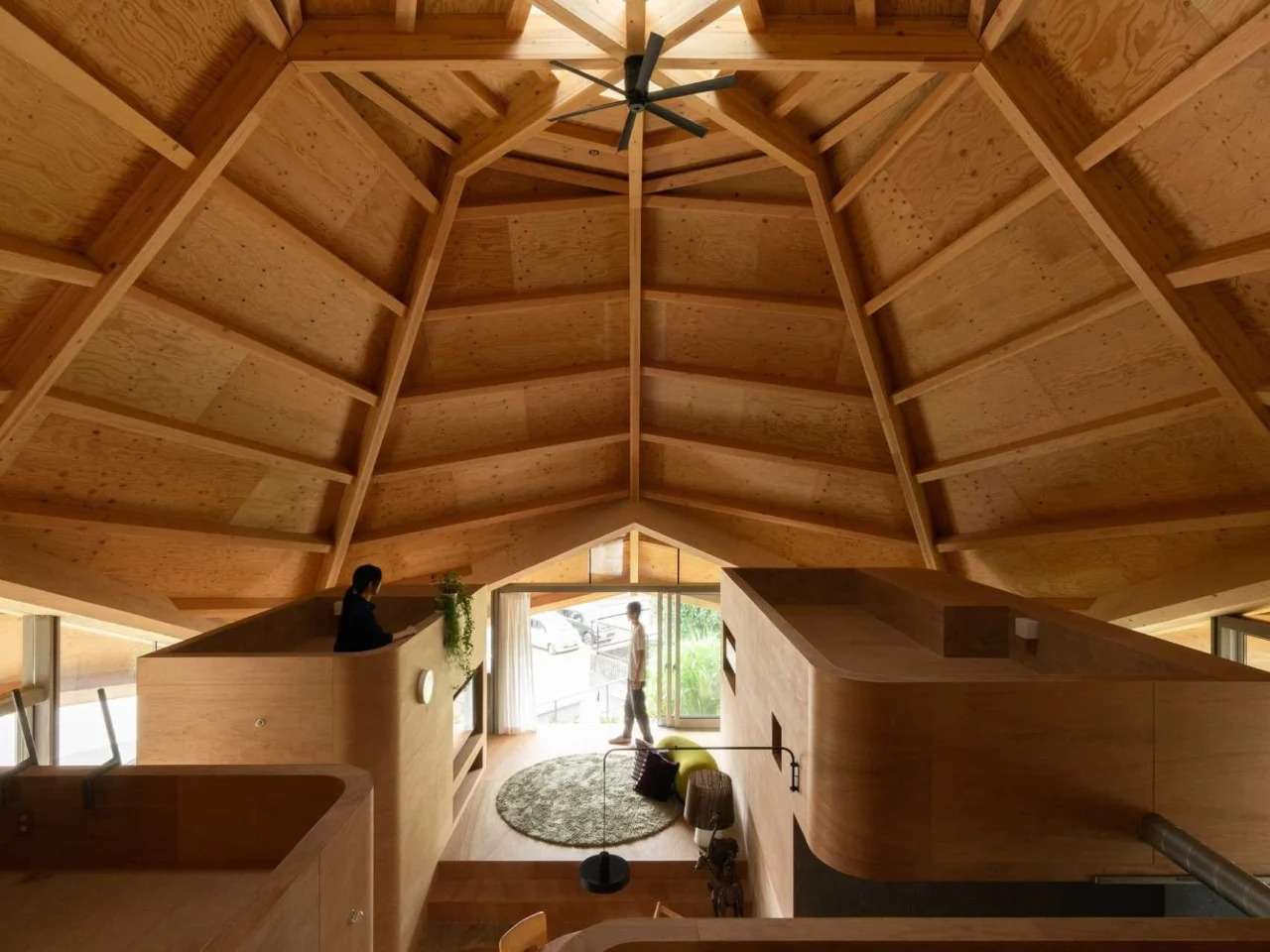
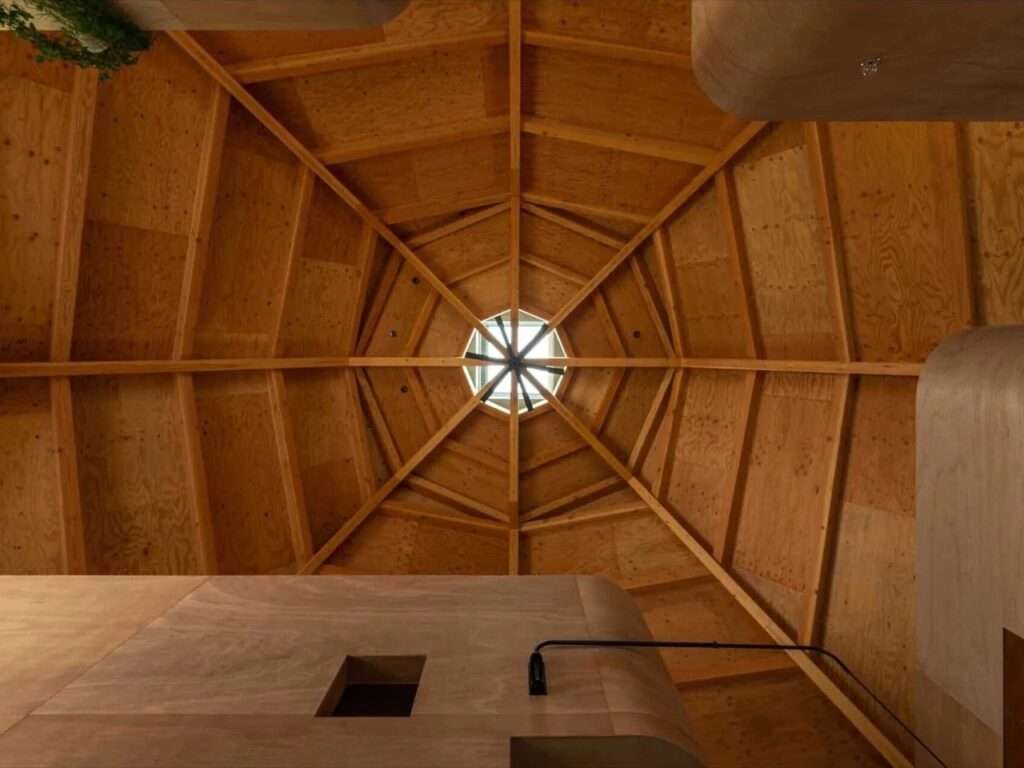
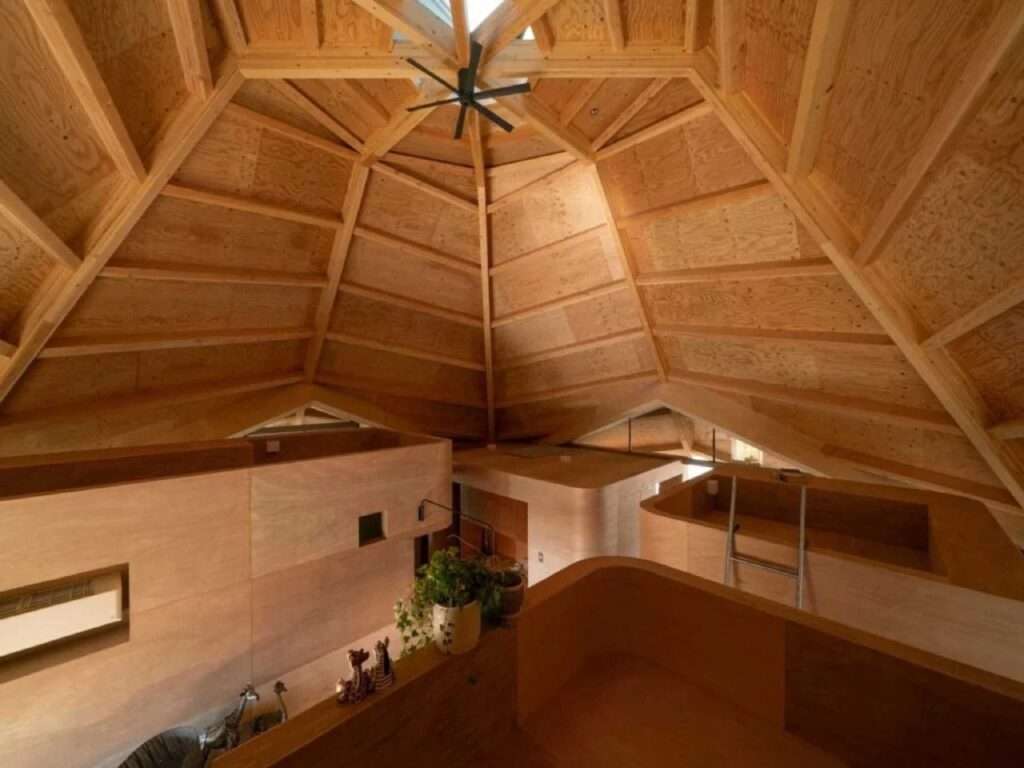
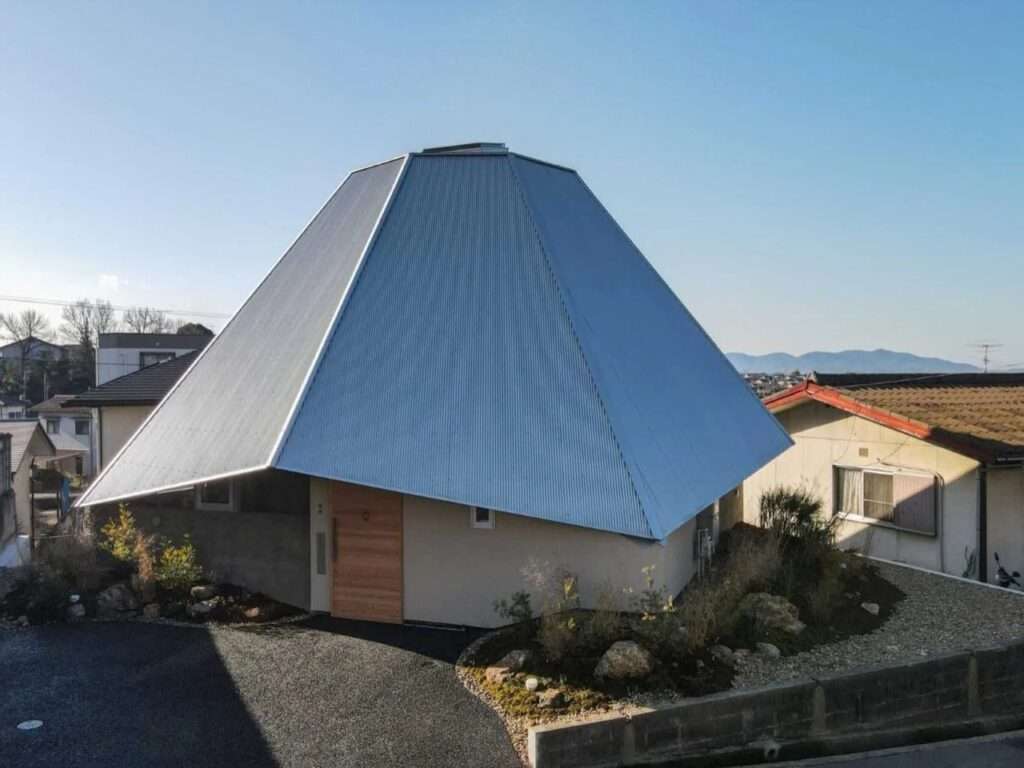
The architectural system of the building is formed by an octagonal timber frame rotated 45 degrees above a sloping residential site, an engineering response that adapts to the terrain while giving the volume a distinctive visual presence. The structure rests on only four primary support points, minimizing direct contact with the ground and reinforcing the lightness of the architectural composition. Overhead, timber roof beams intersect and converge at a central skylight, generating a clear radial structure that draws the eye toward the center while distributing loads throughout the framework rather than concentrating them in a single location.
Spatial Scenography and Human Experience
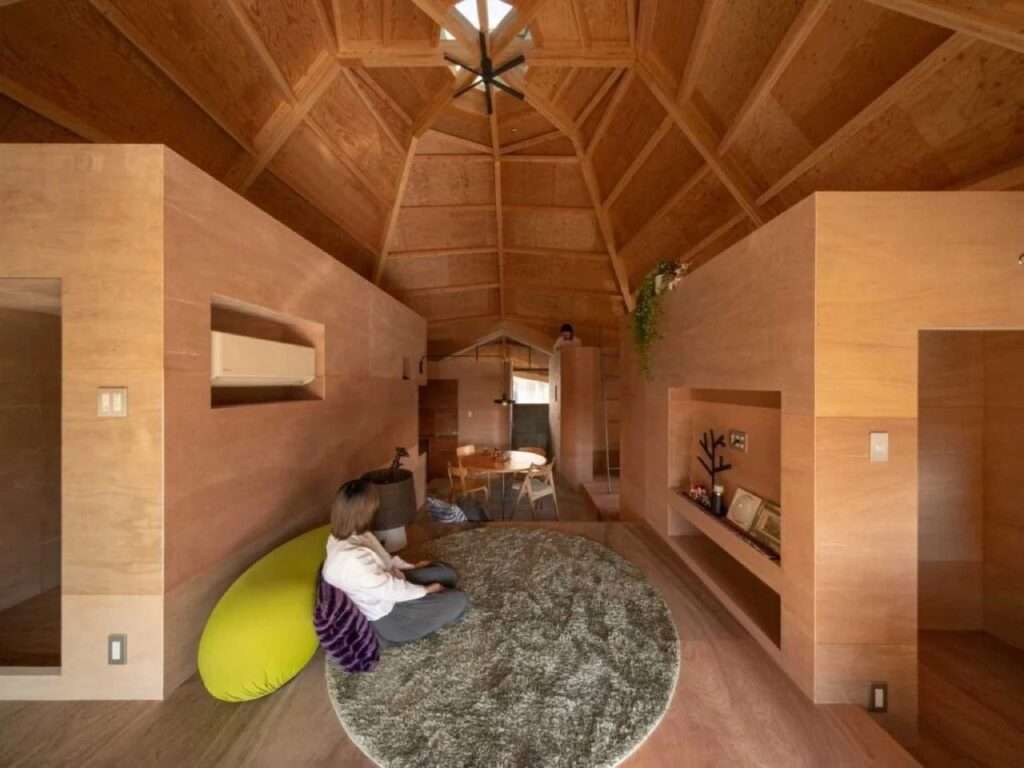
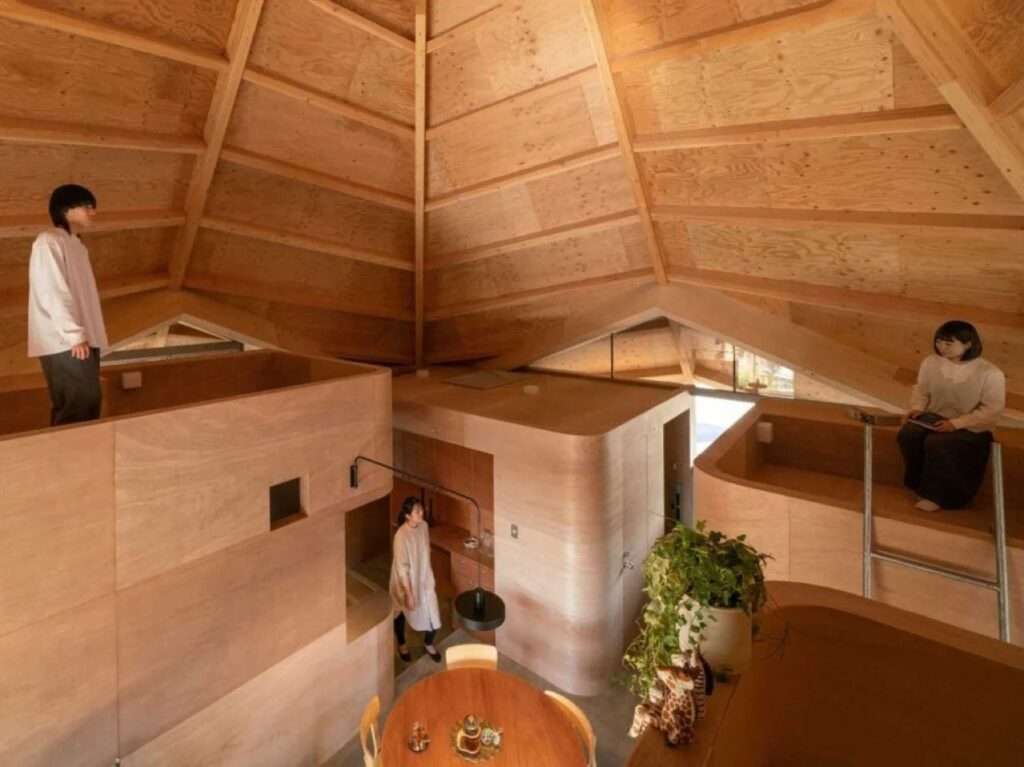
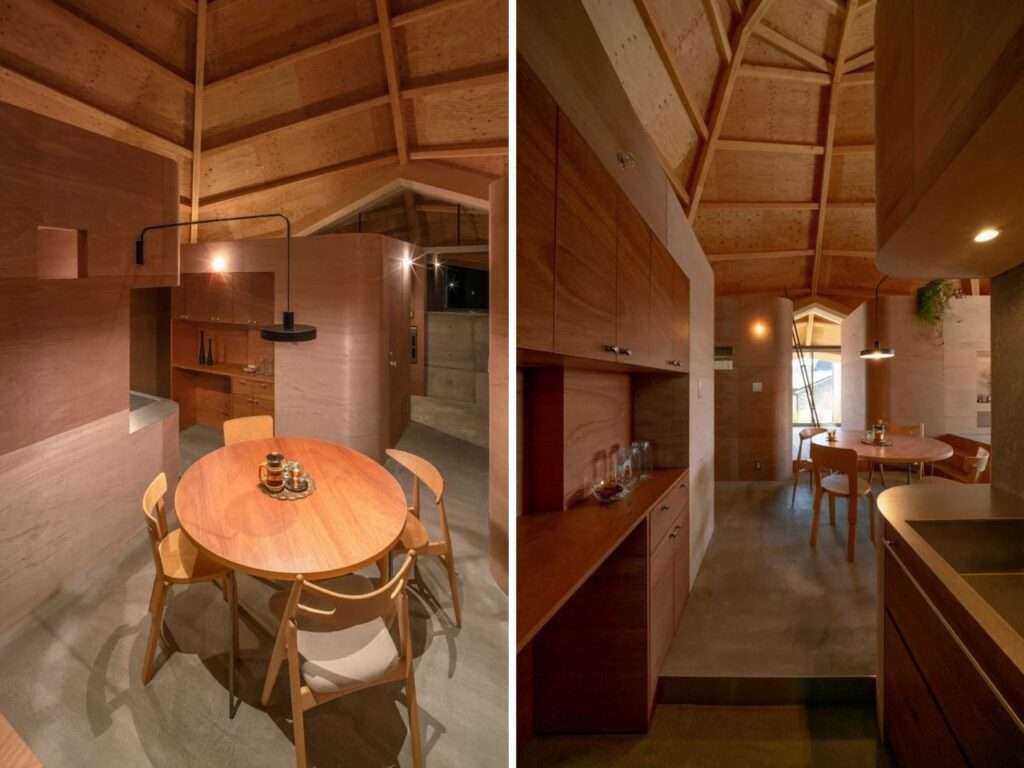
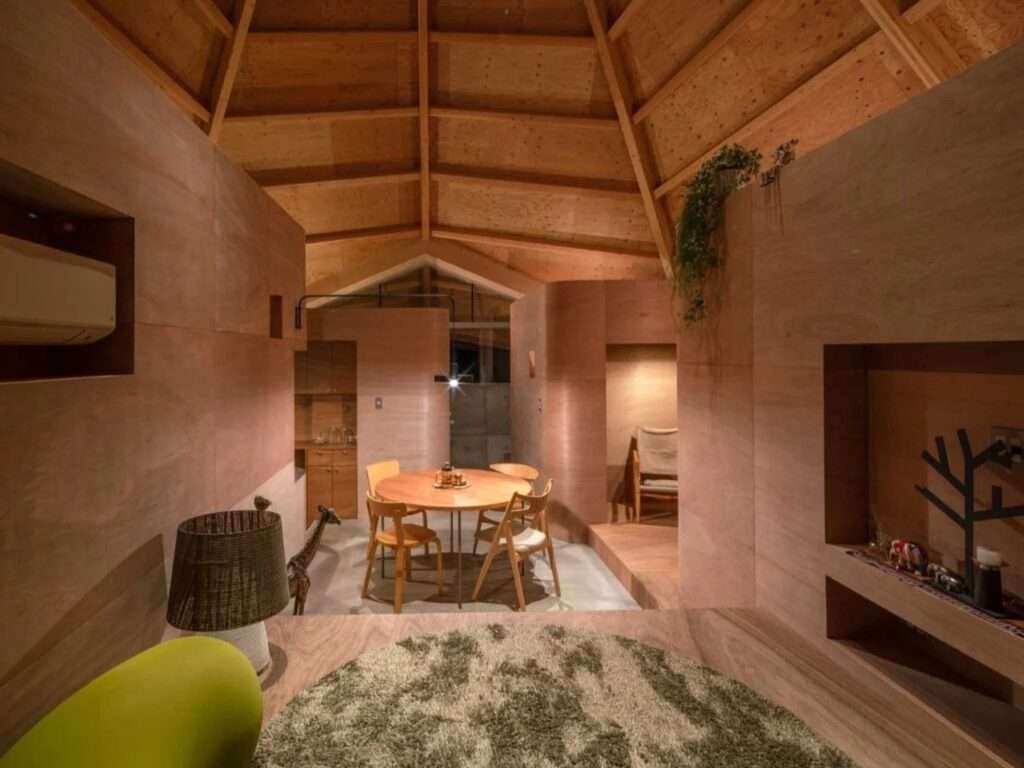
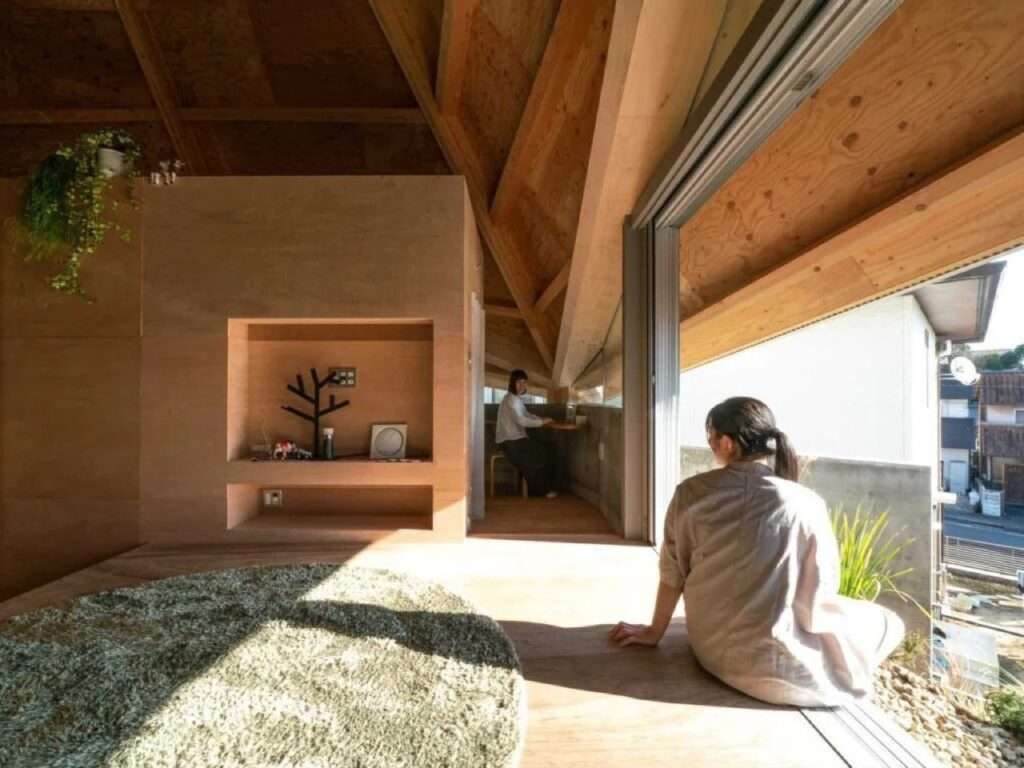
Within an open-plan area of approximately 828 square feet, circulation emerges through a spatial organization that eliminates conventional interior walls. The design relies on four plywood volumes with curved edges that perform a dual function: accommodating essential household activities while directing movement and sightlines throughout the home. Triangular openings surrounding the envelope allow natural light to enter in changing patterns throughout the day, producing shifting shadows and reflections across the timber surfaces. At the heart of this spatial arrangement, the dining table is positioned beneath the central skylight, becoming both the focal point of daily life and a meeting point between structural order and natural illumination.
Envelope Contrast and Perceptual Scale
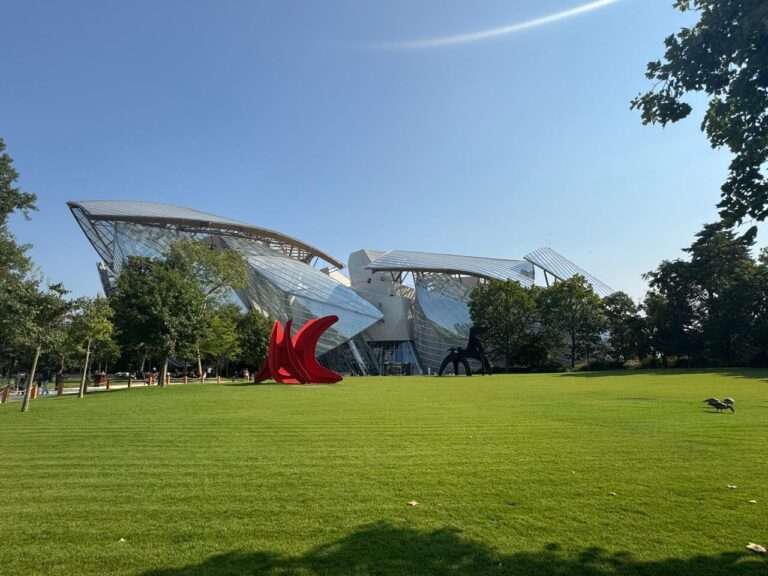
The project is defined by a clear contrast between its exterior appearance and interior experience. From the outside, it presents itself as a multifaceted metallic volume rising above the surrounding residential fabric in an unconventional geometric form. Inside, however, a generous vertical space unfolds, reinforced by the exposed timber structure. Eight beams extending toward the center of the roof emphasize this sense of openness, guiding the eye upward to the skylight, which serves as the primary source of daylight and establishes a strong visual anchor within the space.
Interior Topography and the Dynamics of Gradation
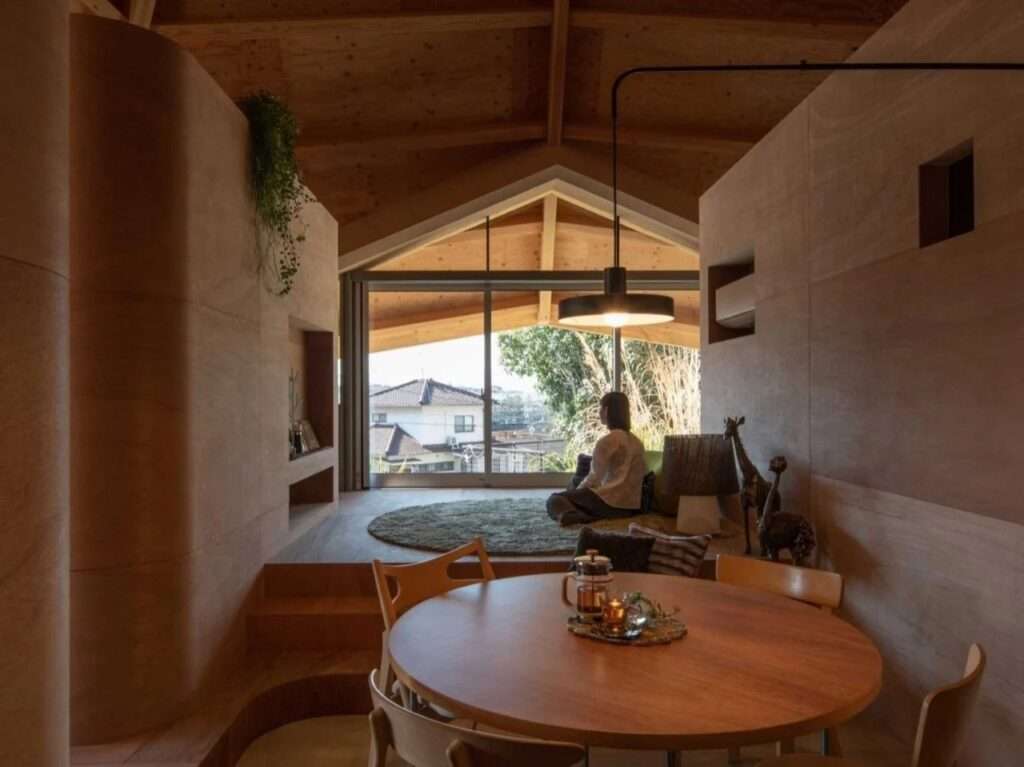
Although the plan is based on an open-space concept, it does not offer a completely homogeneous environment. Instead, functions are organized through variations in floor levels and spatial relationships. The dining area is elevated above the sunken living space, creating a visual and experiential sequence that defines zones of use without requiring solid partitions. Low timber volumes further divide the interior into distinct functional territories while maintaining visual continuity and preserving the uninterrupted presence of the high ceiling throughout the home. This approach reflects key principles often explored in Interior Design.
Temporal Flexibility and Functional Fluidity
The residential concept is rooted in long-term adaptability, with an interior free of permanent walls that would restrict future reconfiguration. Rather than defining rooms through fixed partitions, functions emerge through furniture placement and everyday patterns of occupation, allowing the living environment to evolve alongside the changing needs of the family. This approach provides the building with the capacity to accommodate shifts in use without the need for major construction modifications.
Material Continuity and Visual Cohesion
Plywood serves as the dominant material shaping the spatial experience, extending from floors to walls and ceilings to create a unified material language that gives the interior a coherent identity. Rather than concealing the material beneath additional finishes, the timber is expressed simultaneously as a structural and visual element. The kitchen stands as the most notable exception within this continuity, with darker-toned cabinetry that grants it a distinct presence while preserving the overall visual unity of the residence. The extensive use of timber highlights the importance of building materials in defining architectural character.
Context and Architectural Extension
The project offers a contemporary interpretation of compact living that differs from the conventional box-shaped houses prevalent in its urban context. By combining spatial efficiency, functional flexibility, and open planning, it proposes a model that makes effective use of limited space without sacrificing the quality of everyday living. The project can also be situated within a broader lineage of Japanese architectural experiments that prioritize adaptability and responsiveness to small living environments, while reinterpreting these principles through a contemporary architectural language capable of accommodating the evolving needs of family life.
✦ ArchUp Editorial Insight
The project redefines compact housing as an adaptable spatial instrument rather than a static built object. The octagonal timber framework, the reduction of ground contact points, and the wall-free interior organization transform structural design into a mechanism for accommodating future change. Rather than maximizing floor area, the design invests in organizational efficiency and spatial relationships, where materiality, light, and sectional gradation work together to enhance functional capacity within a limited footprint. In doing so, it reflects a broader architectural shift toward spatial adaptability rather than adherence to fixed programmatic arrangements.
Nevertheless, the project may overstate flexibility as a comprehensive solution for contemporary housing. Open-plan environments often depend on stable living patterns and a level of behavioral discipline that can be difficult to sustain over time. The absence of permanent partitions may also transfer the burden of future adaptation to the occupants themselves. What appears as spatial liberation can, in practice, become functional ambiguity, placing privacy and everyday efficiency in direct tension with the freedom of spatial reconfiguration. Such ideas continue to shape current conversations in architectural news and contemporary residential discourse.