Washington Commanders Stadium Unveils 180-Acre Landscape Plan in Washington, D.C.

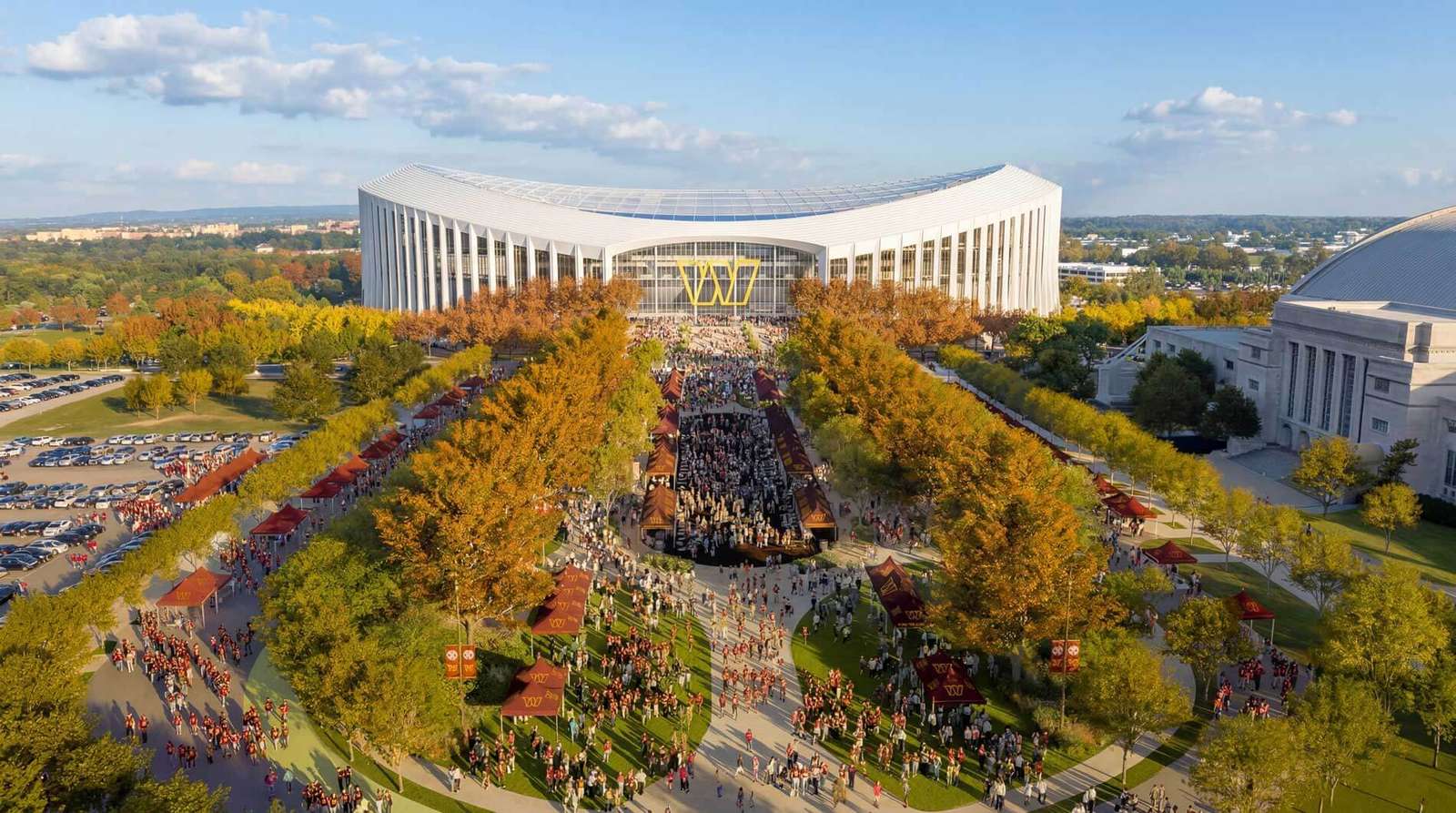
OJB has released conceptual landscape plans for the new Washington Commanders stadium in Washington, D.C. The project introduces a stadium in a park concept rooted in riverfront ecology. The 180-acre site will prioritize public space, recreation, and year-round community use beyond football events.
A Stadium Integrated with Parkland
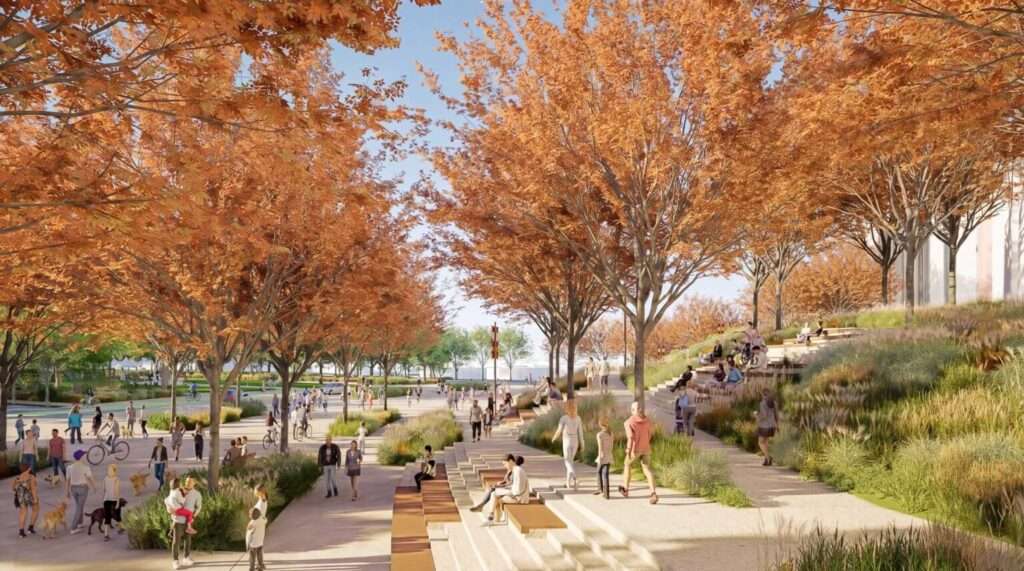
The plan allocates nearly 30 percent of the site to active and passive recreation. Lawns, groves, plazas, and promenades will surround the stadium structure. Moreover, a continuous promenade will link eastern and western plazas, improving circulation across the property.
Designers use the site’s natural grade changes to shape public areas. They embed seating steps into grassy slopes and create layered outdoor rooms. As a result, the landscape becomes part of the overall architecture strategy rather than a backdrop to the main venue.
The stadium joins a growing trend of multi-use buildings that function beyond single-event programming. Meanwhile, the project reflects broader shifts in urban planning that prioritize open space and walkability.
Festival Plaza and Civic Activation
At the center of the proposal sits the Festival Plaza along 22nd Street Northeast. This space will host markets, performances, watch parties, and tailgating. However, planners intend the plaza to remain active throughout the year, not only on game days.
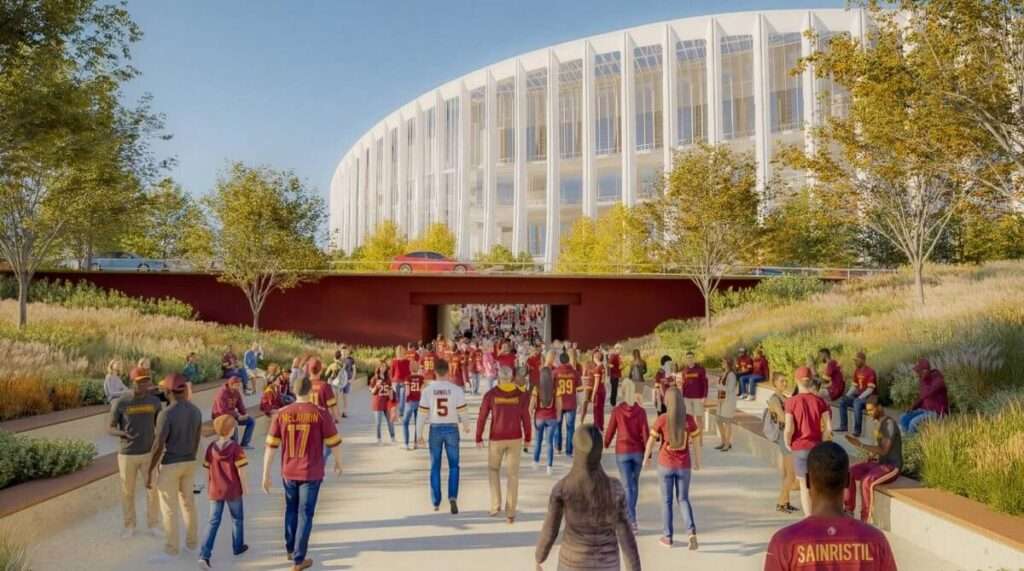
Tree-lined arrival plazas will frame entrances and improve wayfinding. Visitors approaching from the south will pass beneath a raised highway before entering the grounds. Therefore, landscape elements will soften infrastructure impacts and create a clearer pedestrian experience.
Renderings released earlier this year show how the stadium will appear from East Capitol Street and nearby bridges. These visuals position the project as a prominent addition to Washington’s evolving collection of civic towers and large-scale venues. Additional updates continue to shape the project narrative in recent news reports.
Construction Timeline and Environmental Strategy
The National Capital Planning Commission approved preliminary site and building plans on April 2. The next review session will take place in early May. If approvals proceed as expected, vertical construction will begin in spring 2027.
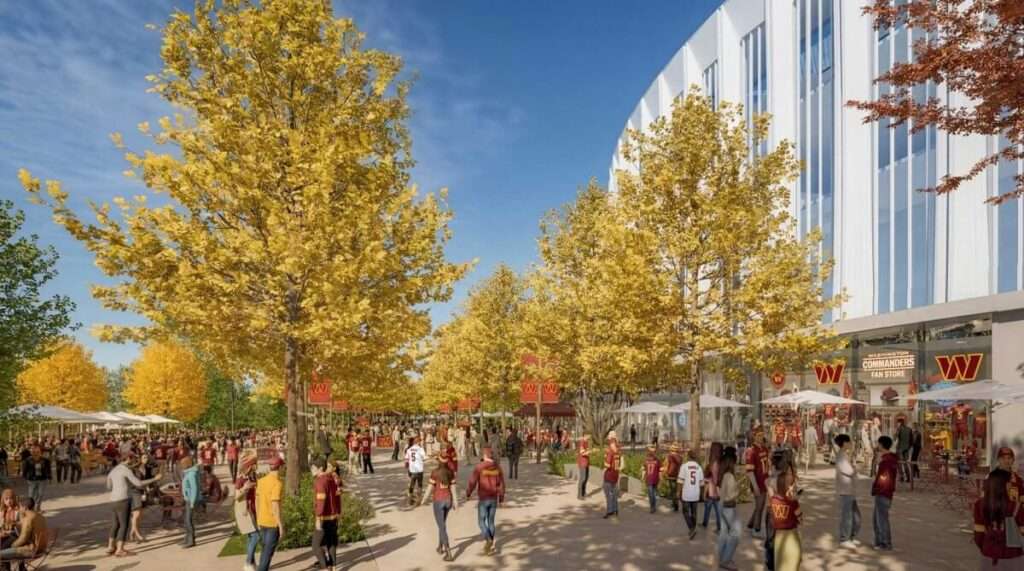
Completion is scheduled for 2030, with opening events shortly after. Meanwhile, planners emphasize long-term environmental performance. The landscape draws from regional riverfront ecology and supports outdoor activity in every season. These strategies align with broader goals for sustainability and resilient public space in dense urban areas.
A Quick Architectural Snapshot
Project: Washington Commanders Stadium Landscape
Location: Washington, D.C.
Site Area: 180 acres
Public Space Allocation: 30 percent
Key Feature: Festival Plaza and continuous promenade
Construction Start: Spring 2027
Completion Target: 2030
✦ ArchUp Editorial Insight
The transformation of stadium sites into mixed-use parklands reflects a direct response to the economic inefficiency of single-use sports infrastructure. City authorities now demand year-round activation to justify the massive land allocation and public subsidies inherent in such developments. This shift is a symptom of evolving urban land-use policies that view stadiums as anchors for continuous tax revenue rather than occasional event venues. By integrating extensive landscape buffers, the project addresses the pressure to mitigate the negative external impacts of massive concrete structures on residential property values. Furthermore, the emphasis on connectivity highlights a behavioral shift toward pedestrian-centric urban zones. This project is the logical outcome of municipal fiscal demands + real estate risk mitigation + modern ecological mandates.