Whale Gate: Rethinking the Residential Threshold

Massive Figuration and the Shock of Spatial Crossing
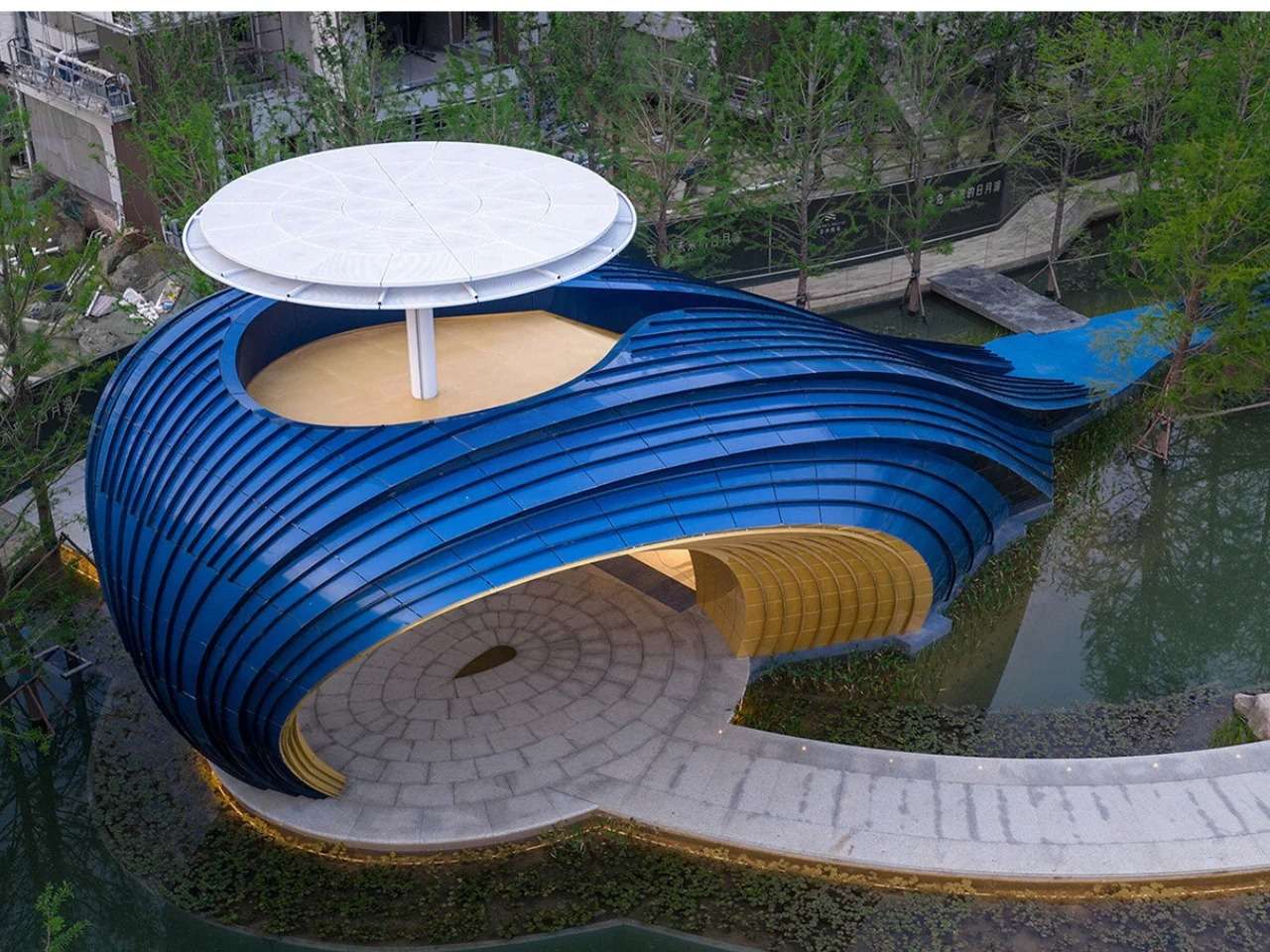
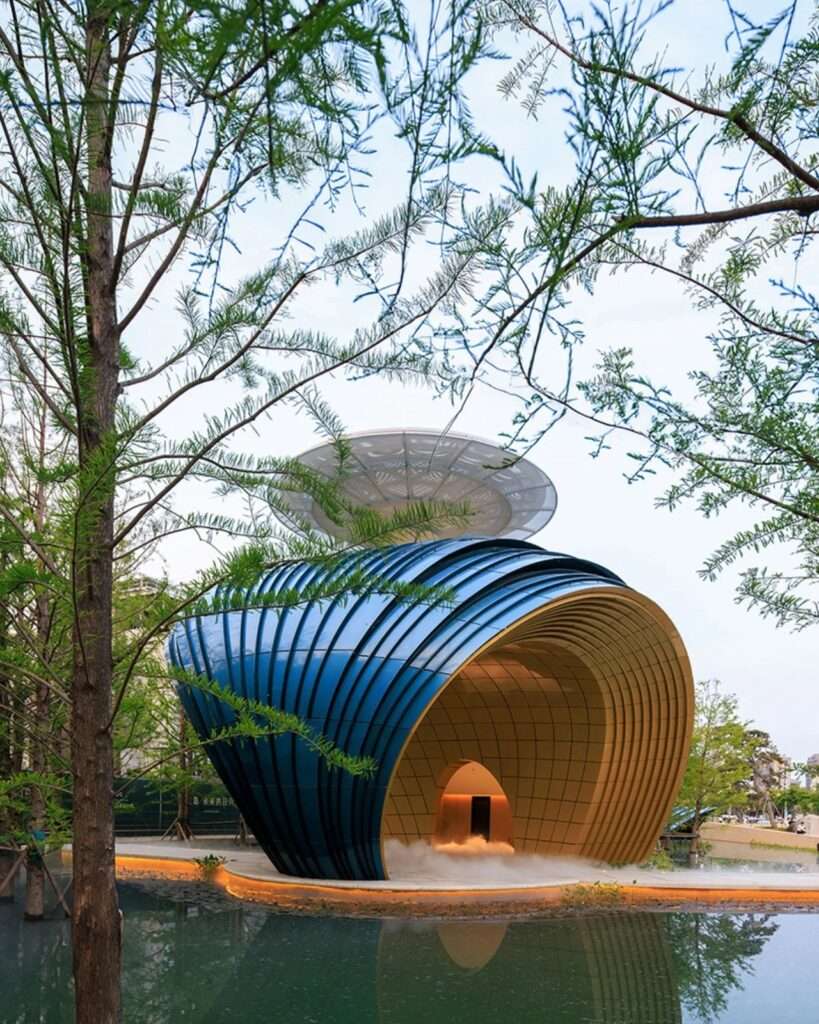
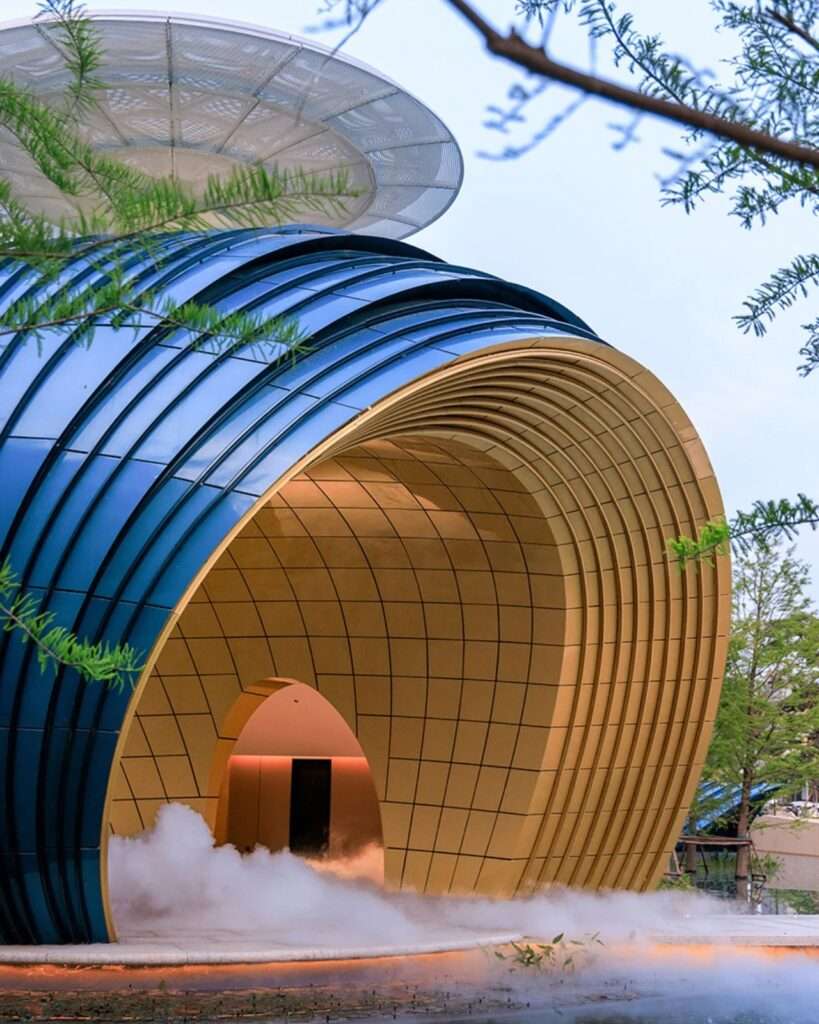
The plastic structure of the project’s entrance moves beyond the conventional frameworks of typical residential typologies, as the design replaces familiar horizontal elements with a boldly woven mass in the form of a cobalt-blue whale in a dynamic leaping pose. This sculptural configuration does not merely function as a visual partition barrier; rather, it redefines the concept of the gateway by creating an intentional spatial shock that breaks the monotony of the surrounding exterior. The deconstruction of this mass reveals a desire to transform the daily act of crossing from a mechanical routine into an intense scenographic visual experience, relying on the element of surprise and monumental scale to generate an immediate sense of complete detachment from the city and entry into an environment derived from the idea of archipelago and floating islands.
The Scenographic Experience and Simulation of Buoyancy
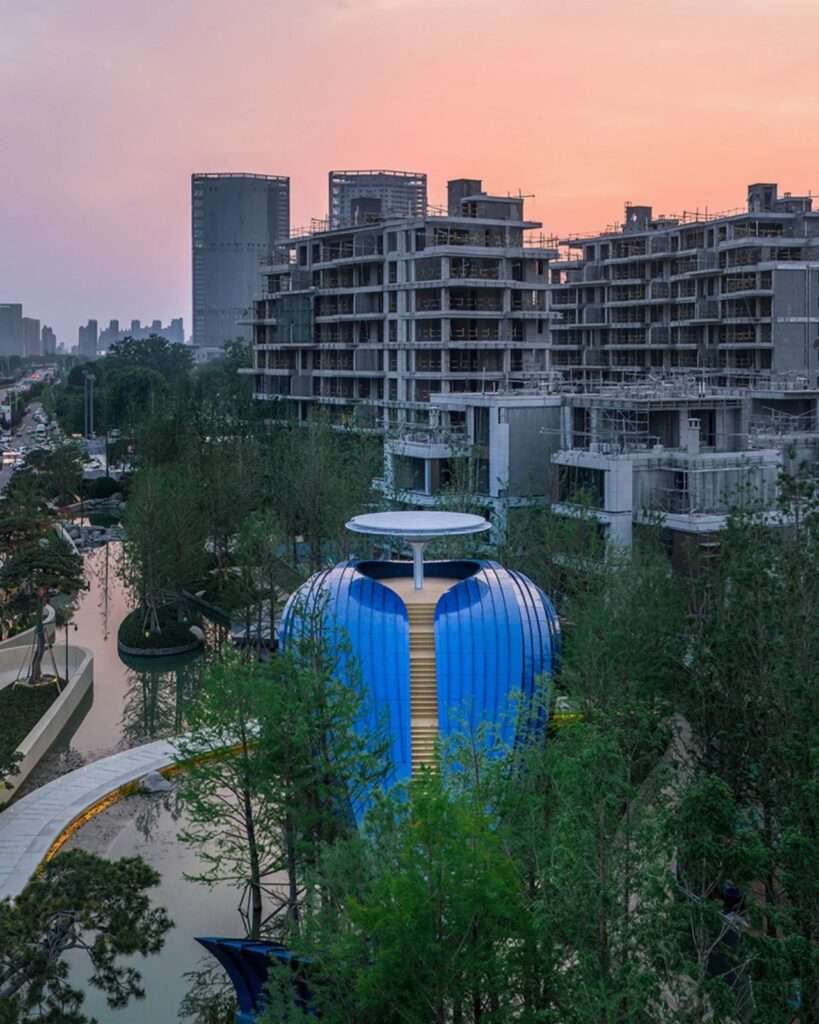
The user’s movement trajectory transforms upon entry into a scenographic visual experience that touches both the psychological and physical dimensions; the residential buildings are structurally distributed to appear as though they float above green spaces and water surfaces that mimic the motion of a private sea. The shadows cast by the monumental sculptural mass intersect with movement paths and the shifting solar trajectory, endowing the space with a mutable vitality throughout the day and fulfilling the design concept‘s aspiration to isolate the inhabitant from the external clamor. The Design language here does not content itself with visual description but rather propels the user of the space to test the moment of entry and passage as a transitional threshold separating two realities, where materials and surface textures integrate with air movement to perceive the space as an independent and carefully isolated world.
Dynamic Formation and Material Kinetics
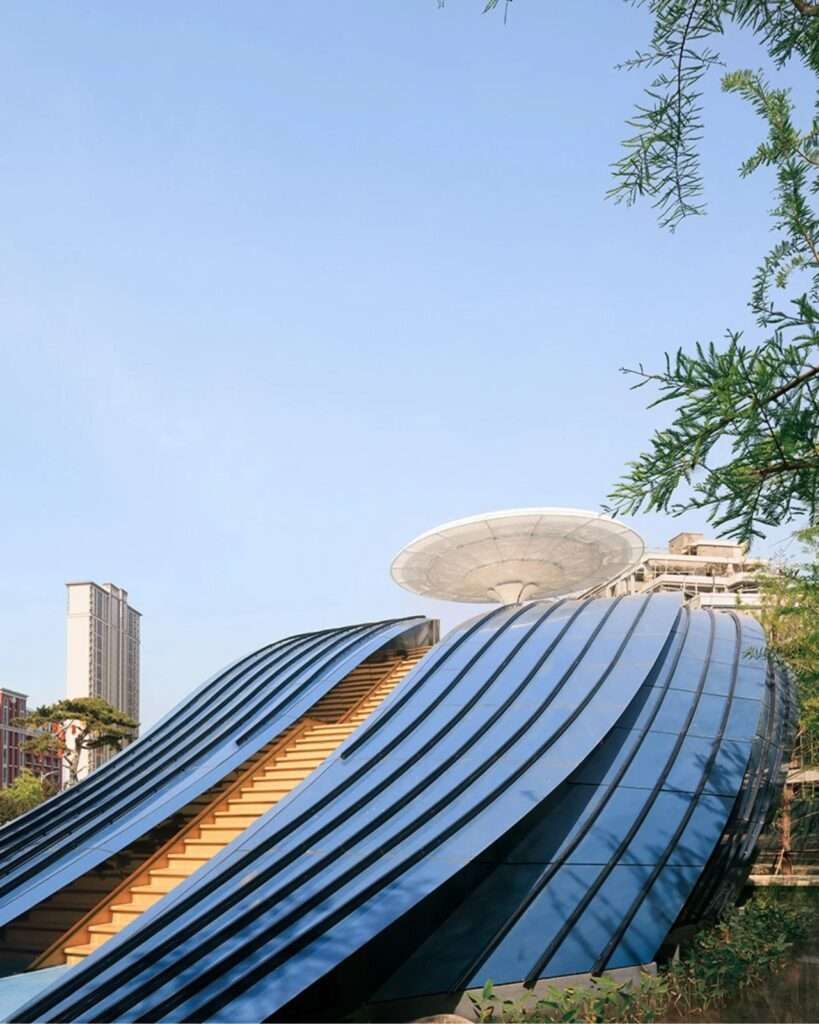
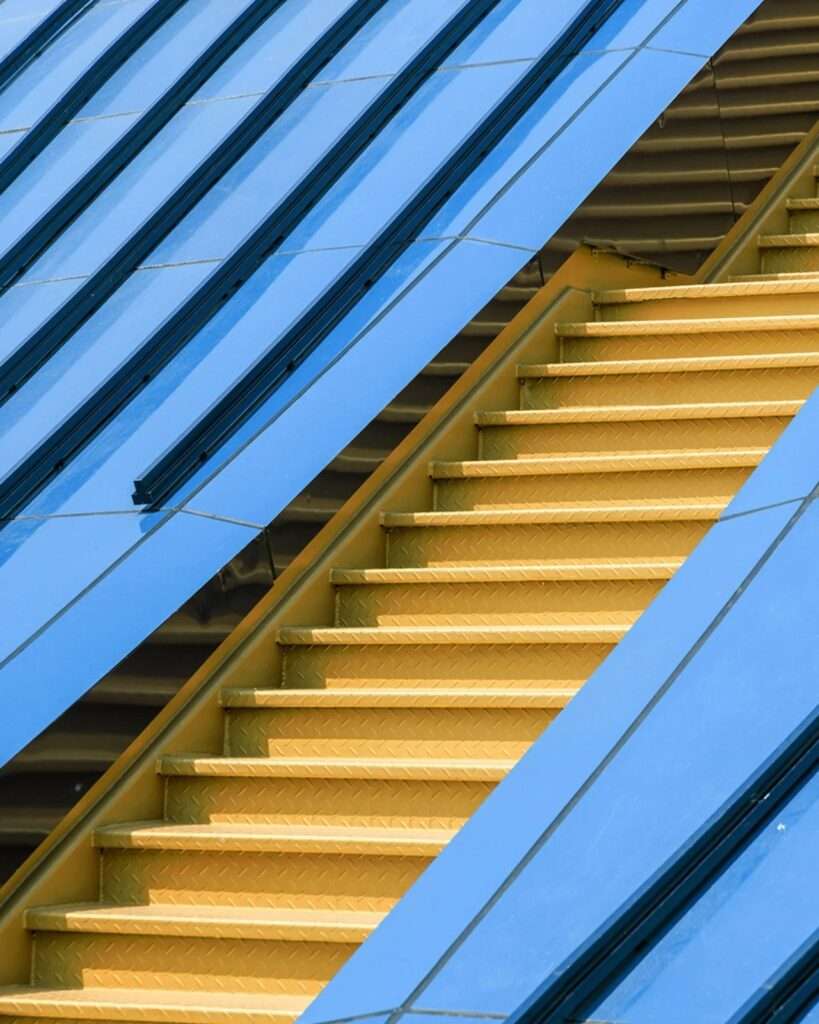
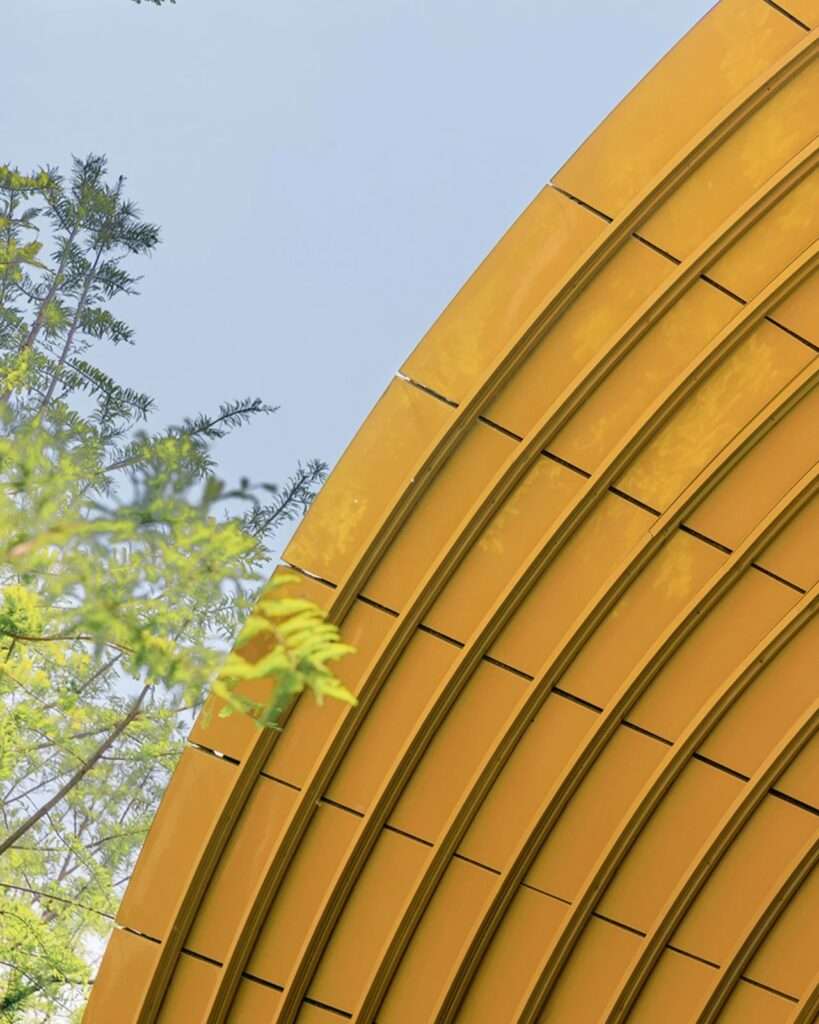
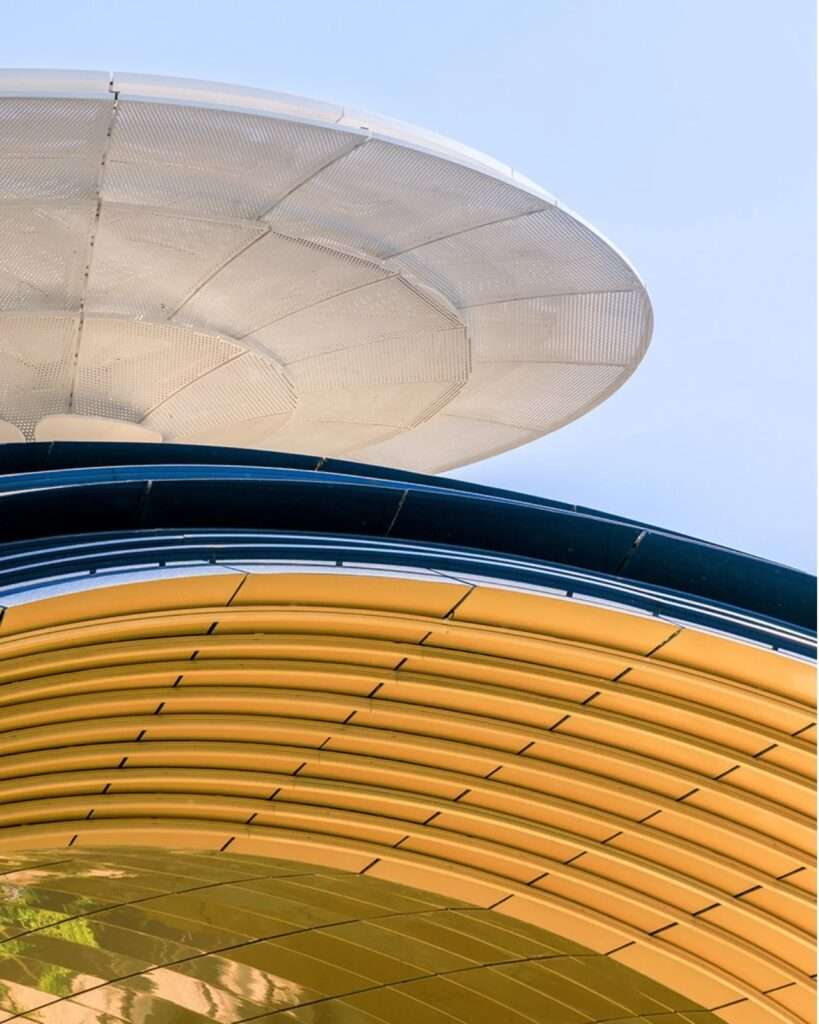
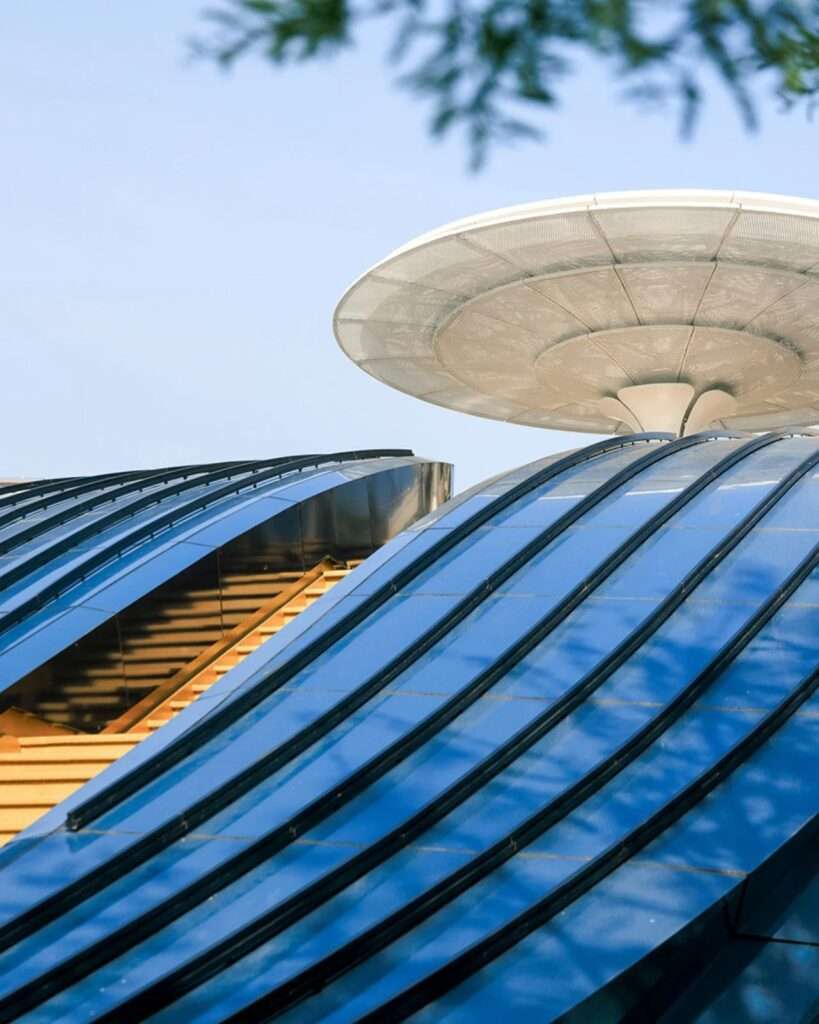
The design concept materializes in the freezing of a fleeting kinetic moment and a massive penetration of a virtual surface, where dynamics transform into a rigid structural entity clad in double-curved aluminum panels. This complex geometric configuration, predicated on the variation and non-identity of the panels, bestows upon the exterior surface a living undulation that interacts with natural light and the solar path, thereby reinforcing the visual suggestion of continuous motion. The critical reading of the mass relies on deconstructing this cobalt-blue outer envelope and the utilization of perforated panels at the top to generate a material contrast that simulates light scattering and water spray, thus transmuting the facade from a mere solid membrane into a scenographic element that interacts with the surrounding environment. The role of construction becomes inseparable from this visual narrative.
The Spatial Paradox and the Interior-Exterior Duality
The human experience of crossing within the structure is founded upon a sharp spatial paradox that divides the visual journey into two distinct phases; it begins from the surrounding blue mass on the exterior and culminates in penetrating the vertical aperture representing the entry point. This kinetic transition through the golden-hued vertical aperture operates as an internal threshold separating materials, thereby generating an immediate psychological and material effect that transports the user from the general urban space to the private residential domain within the city. The design here abandons intermediary and equivocal solutions and imposes a definitive visual language that precisely determines the movement path and vantage points, rendering the entry and crossing experience a conscious and impactful act that reformulates the relationship between humans and architectural landmark and the surrounding materials.
The Architecture of Symbolism and Rigorous Massing Commitment
The critical reading of this structure transcends the superficial notion of visual oddity to reveal a rigorous massing commitment that refuses intermediary solutions or floating organic abstraction; the design adopts symbolism as a standalone architectural function. The building is here deconstructed as an instrument for reinforcing the notion of “returning home,” where the sculptural mass transforms into a material acknowledgment of the spatial and psychological schism between the city and the residential domain. This architectural stance reformulates the concept of the architectural landmark within residential environments, extricating it from the idea of magnitude and abstract volume toward a space of clear Design language conviction that employs form in service of the immediate human experience at the moment of crossing.
The Structural Framework and the Subordination of Tectonics to Narrative
Behind the scenographic exterior lies an exceptional tectonic complexity (the nexus between construction and art), where the structure rests upon a precise structural system composed of six layers incorporating nearly 4,000 discrete elements of custom-fabricated steel and aluminum. This structural system was developed to precisely withstand the twists and curves of the dynamic form, making the immense structural weight appear in a state of buoyancy and momentary suspension mimicking mid-leap. Shadows and air movement intersect with this intricate lattice structure to create a vital interaction perceived physically and psychologically by the space’s user, where complex engineering and rigorous material calculations are placed in a secondary rank in service of the architectural narrative and the entry experience representing the correct tectonic ordering of priorities.
Simulation of Vertical Ascent and Acquisition of Spatial Perspective
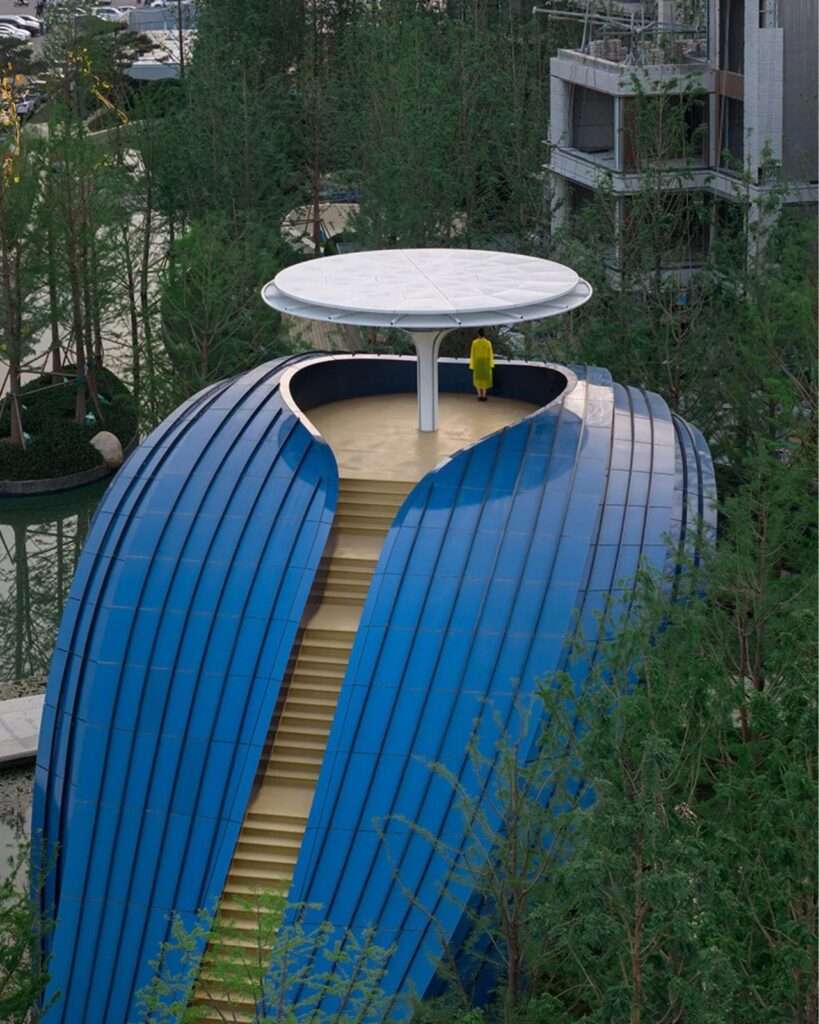
The kinetic transition in the upper part of the architectural structure manifests through a vertical pathway embodied by a golden staircase ascending within the mass cavity of the whale’s head, leading to a viewing platform reserved for residents. This spatial gradation transforms the platform from a mere functional threshold into a scenographic space that bestows upon the space’s user a visual and psychological reward after the journey of return; where the entire panorama unfolds onto the natural and urban vocabulary of the complexwaters, cypress trees, and buildings. This transitional moment, with its elevation, provides a visual extension that allows the user to perceive the overall scale and acquire an ever-shifting spatial perspective, wherein shadows and air movement intersect to generate a genuine sensory response toward the living environment, fulfilling the design’s aspiration.
The Logic of Biophilic Architecture and Narrative Spatial Coherence
The structure avoids falling into the trap of transient formal spectacle or arbitrary symbolism that afflicts some models of biophilic architecture, by constructing a coherent sequential logic that links the mass to the surrounding environment. The sculptural formation of the whale is structurally connected to the element of water, and water paves the way for the overall archipelago planning of the site, which in turn fulfills the spatial idea of arriving at an isolated, island-like environment. This scenographic succession endows the design with substance and a function that transcends initial awe, transforming the gateway from a mere traditional security checkpoint and guard booth into a studied transitional threshold that elevates the daily human experience within the residential space.
✦ ArchUp Editorial Insight
The text diagnoses the “Whale Gateway” project by Wutopia Lab as a preamble to rejecting contemporary real estate minimalism, where explicit biomimicry is exploited to restore the narrative meaning of residential thresholds. By favoring bold sculptural formation over abstract institutional masses, the project adopts a technologically complex design language to affirm the user’s psychological transition from the clamorous public realm to a private, ideal residential sanctuary.
However, this critique harbors a romantic weakness by severing the iconic spectacle from the mechanisms of the real estate market; in rapidly densifying cities, these unique formal gestures function as calculated marketing signifiers rather than profound human enclaves. This literal embodiment threatens to turn the structure into a rigid caricature once the initial shock of awe fades, thereby revealing the fragility of the architecture’s narrative-driven envelope.