Wittgenstein’s Cabin: Solitude and Philosophical Thought

Seeking Solitude as a Condition for Philosophical Creativity
In 1914, Ludwig Wittgenstein took an unusual step for a Cambridge-trained philosopher: he left his academic environment in England and moved to a small wooden cabin on the steep shore of Lake Eidsvatnet in Skjolden, Norway. Access to this place was only possible by boat or by walking across the ice in winter, making him almost completely isolated from the outside world.
Solitude as a Platform for Deep Thought
The purpose of this solitude was to seek a kind of calm that allowed engagement with essential ideas, far from everyday distractions. Wittgenstein found that the remote environment enhanced his focus and facilitated intellectual productivity in a way that was impossible elsewhere. He later described the cabin as providing a “quiet seriousness” that could not be found in any other context, emphasizing that this space was ideal for developing his core ideas.
The Relationship Between Place and Thought
During his stay in this cabin, many of the ideas that contributed to his book Tractatus Logico-Philosophicus took shape. Reflection was not limited to the cabin itself; it extended to short trips by boat across Sognefjord, where the natural calm and open waters provided an optimal environment for deep thought. This experience demonstrates how geographical isolation can serve as an effective tool for philosophical production, making the place itself an integral part of the thinking process rather than merely its backdrop.
Translating Solitude from Philosophy into Art
Ludwig Wittgenstein’s deep exploration of calm and solitude was not limited to philosophy; it has also inspired artists in their attempts to understand the relationship between humans and their environment. Some contemporary art projects reflect this interest in remote spaces as a field for reflection and creativity, using imagination to reimagine ways of living in harsh or neglected conditions.
Art as a Visual Argument
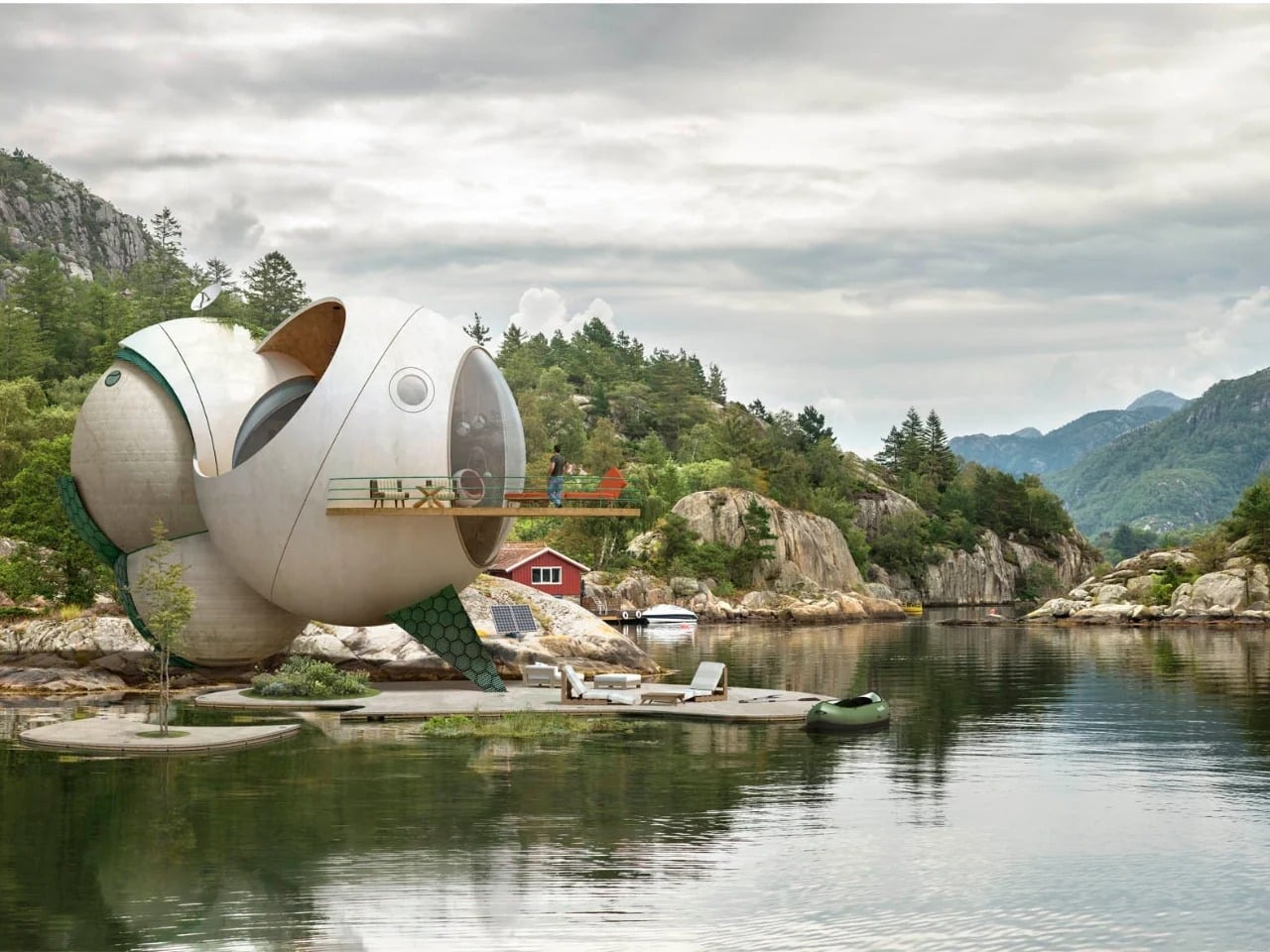
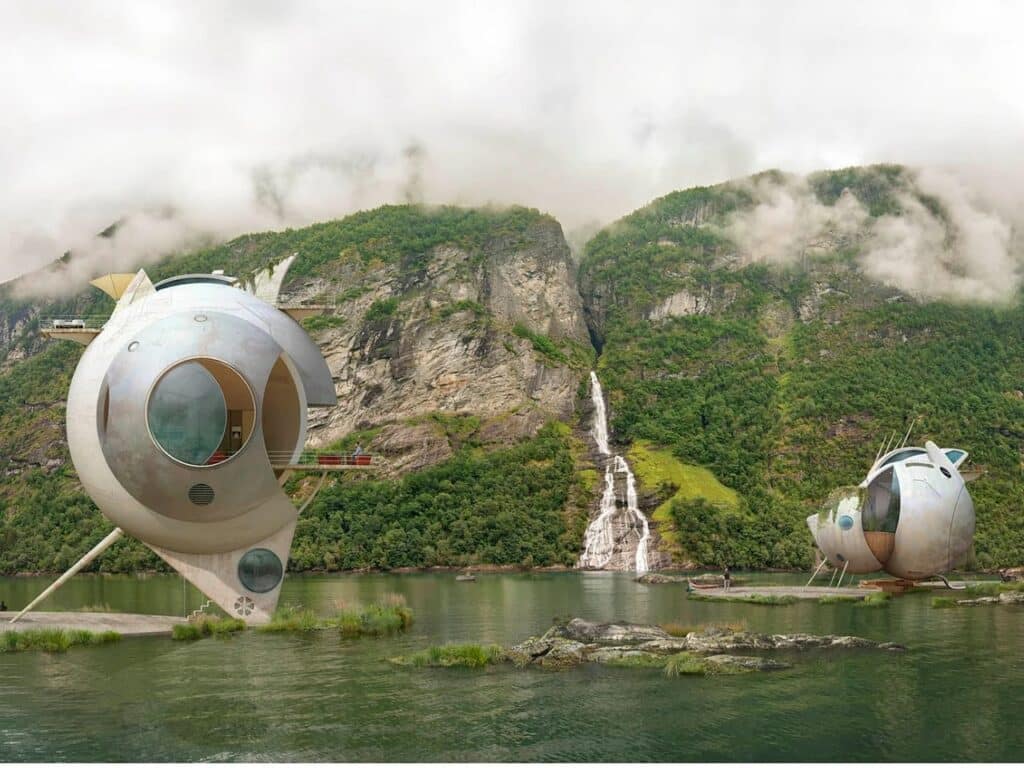
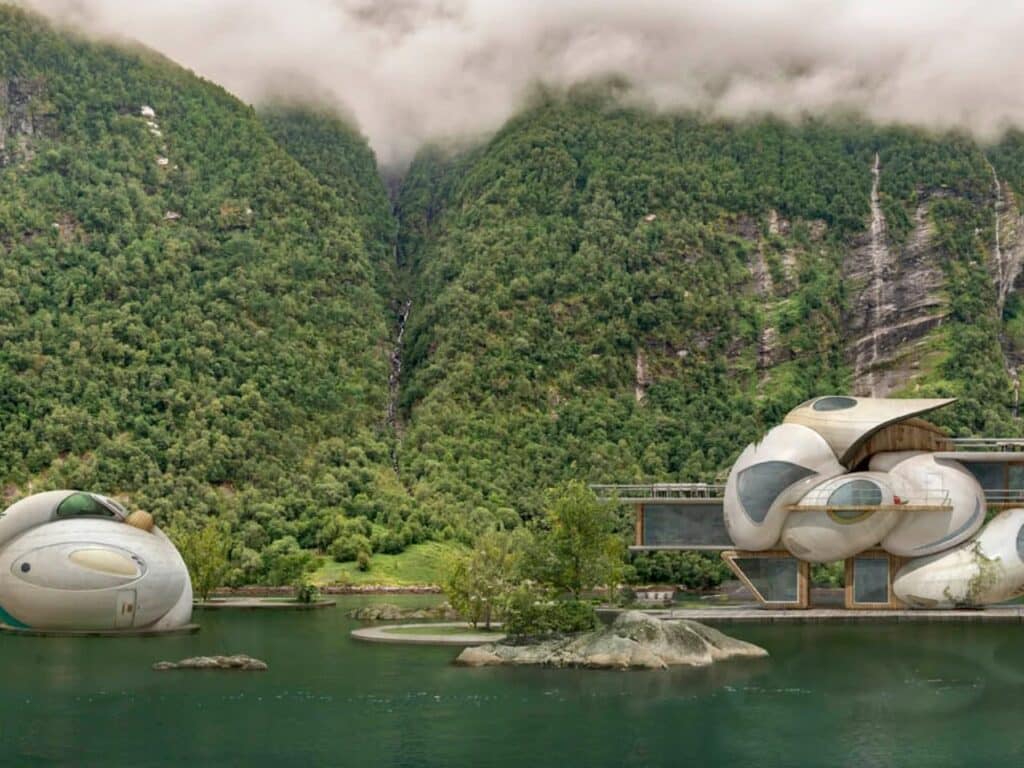
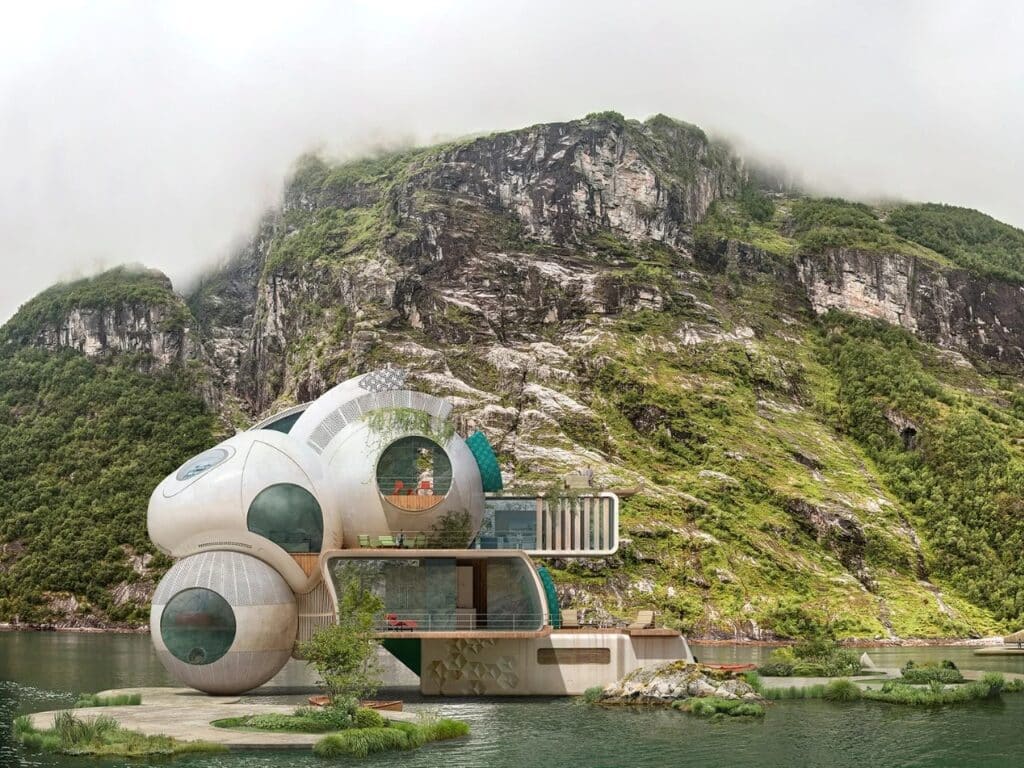
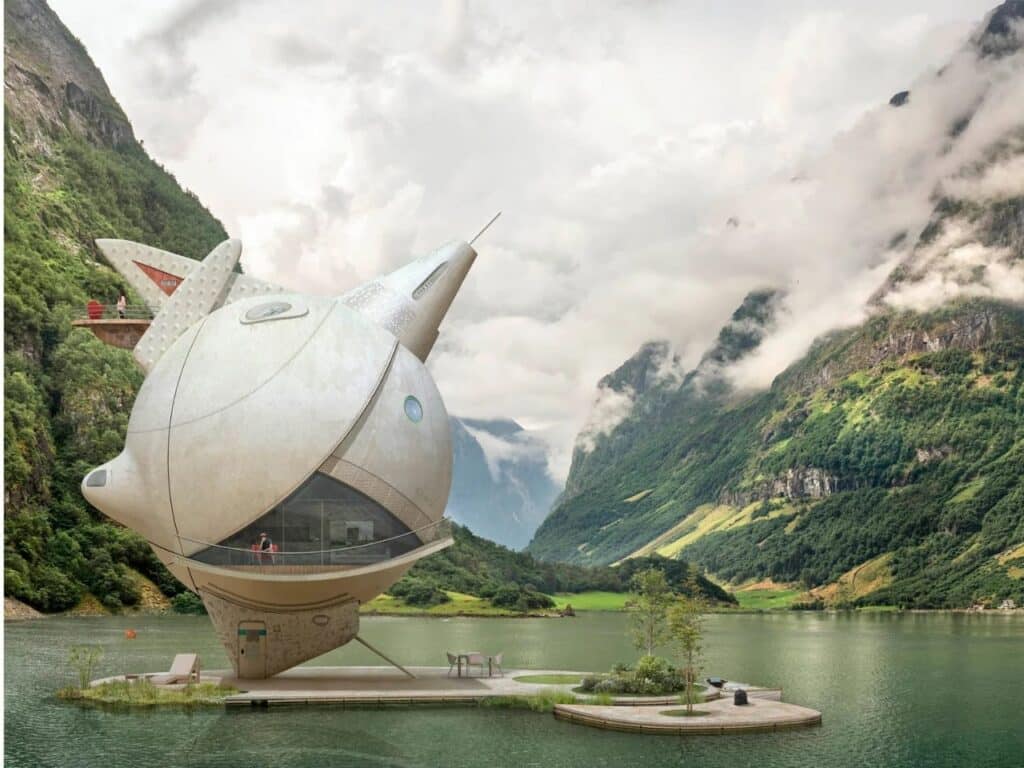
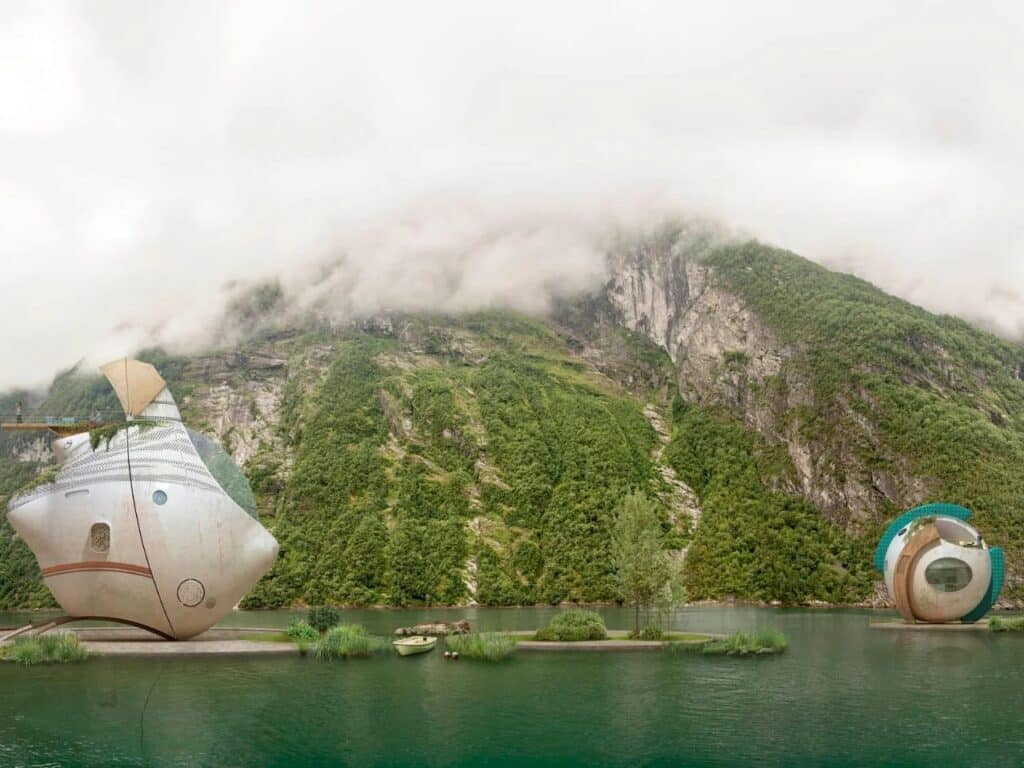
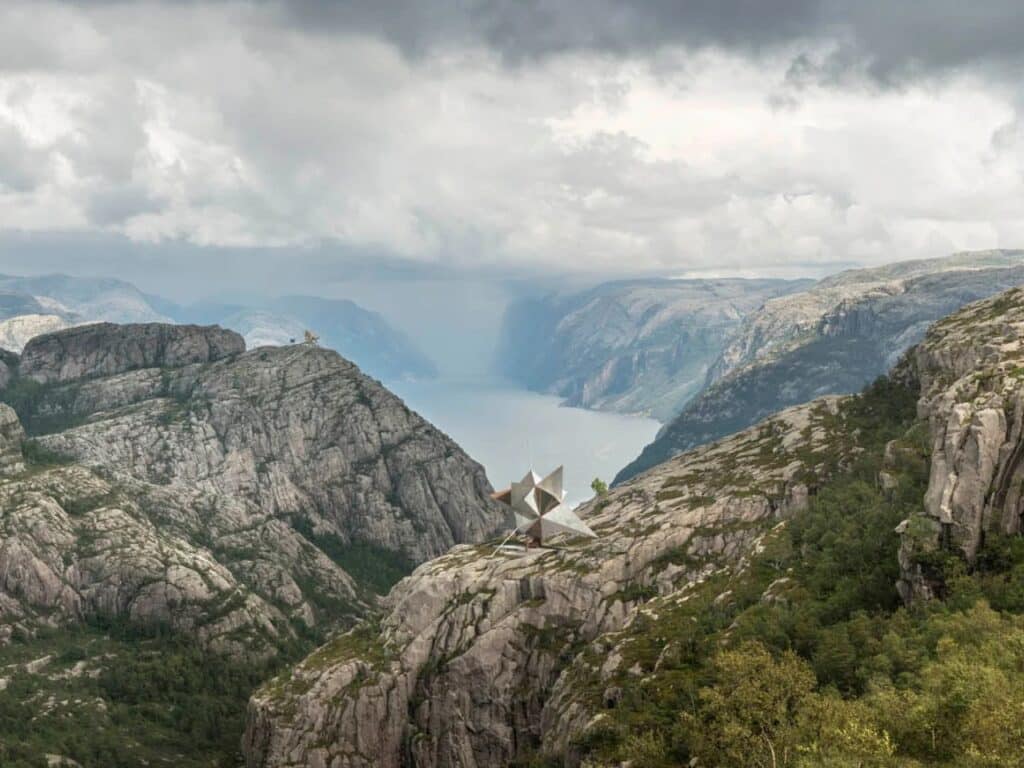
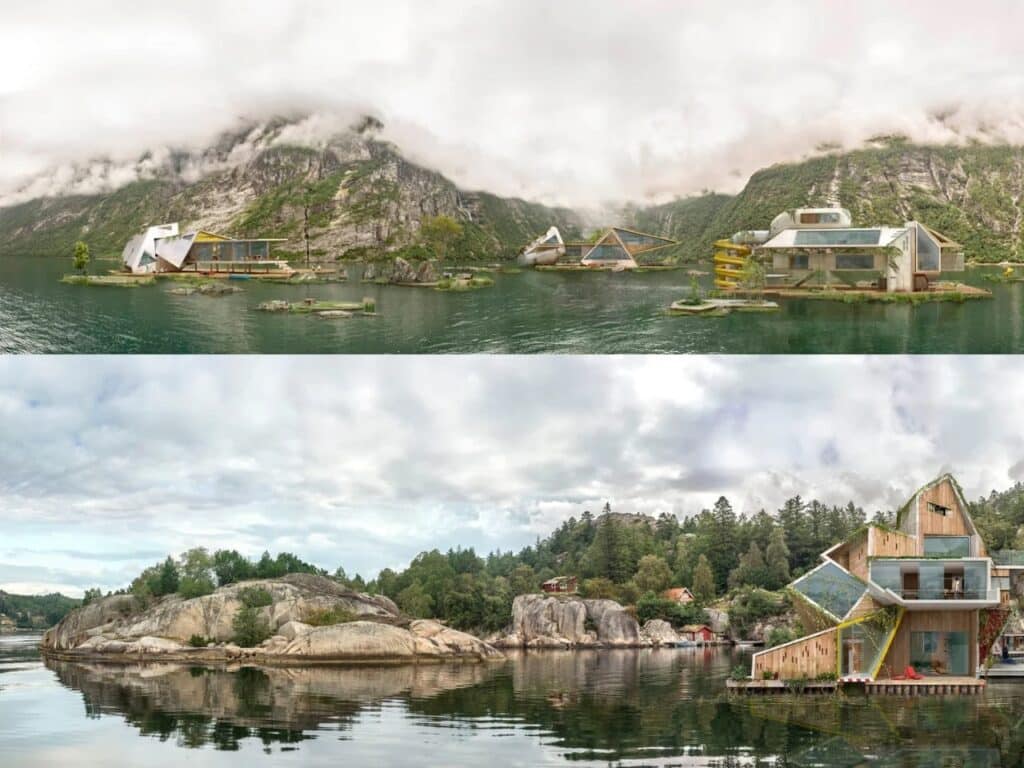
In this context, artworks have emerged that use imagery and digital montage to present models of floating or amphibious dwellings on remote lakes and fjords. These models are not intended as construction plans but are presented as “visual arguments” exploring the relationship between solitude and human existence, prompting viewers to reflect on how the environment influences thinking and creative production.
Linking Place and Idea
The focus on remote locations and open waters echoes Wittgenstein’s experience of meditation and deep thought. By translating this philosophical experience into a visual language, art can explore how spatial solitude affects human consciousness and what new ideas and mental experiences such spaces can generate.
Interaction Between Form and Place
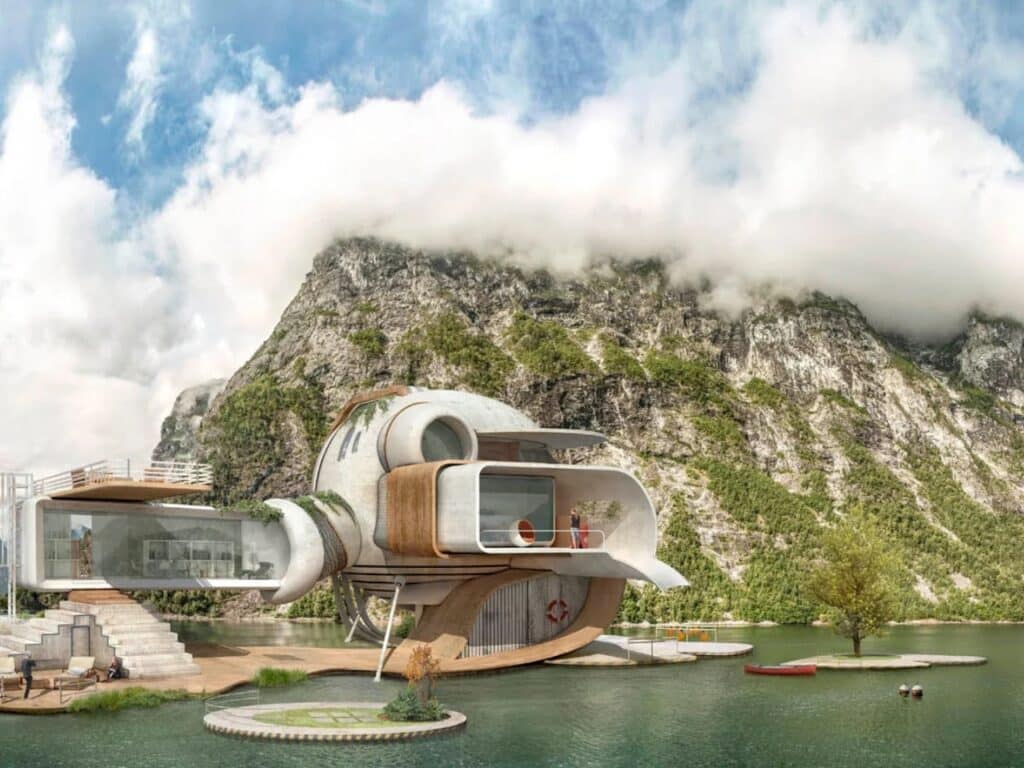
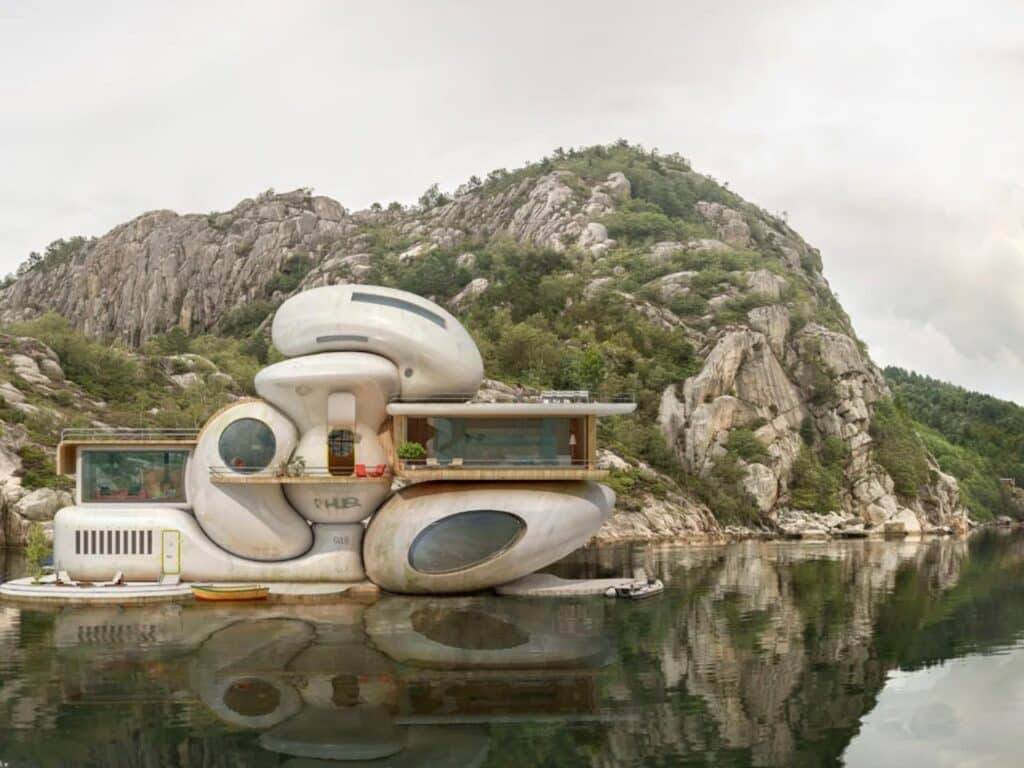
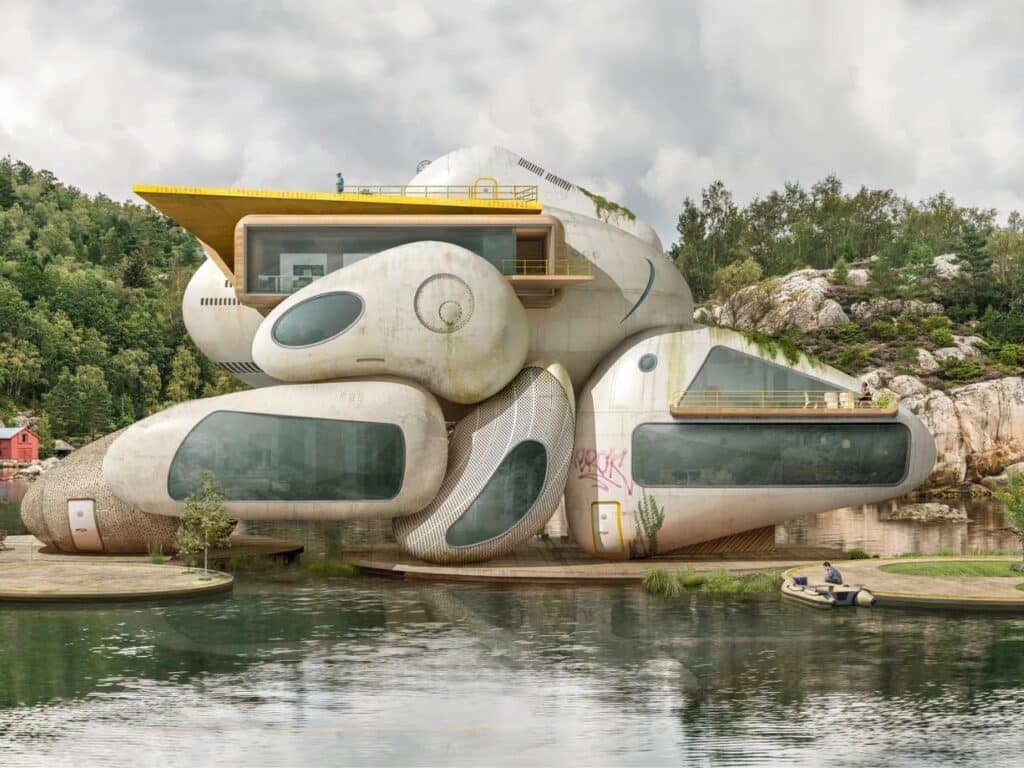
Structures inspired by the experience of philosophical solitude are characterized by striking visual features. They often blend industrial and organic qualities simultaneously, giving them a peculiar presence that captures attention and provokes questions about the relationship between material and surrounding environment.
Unity and Distinction Within a Group
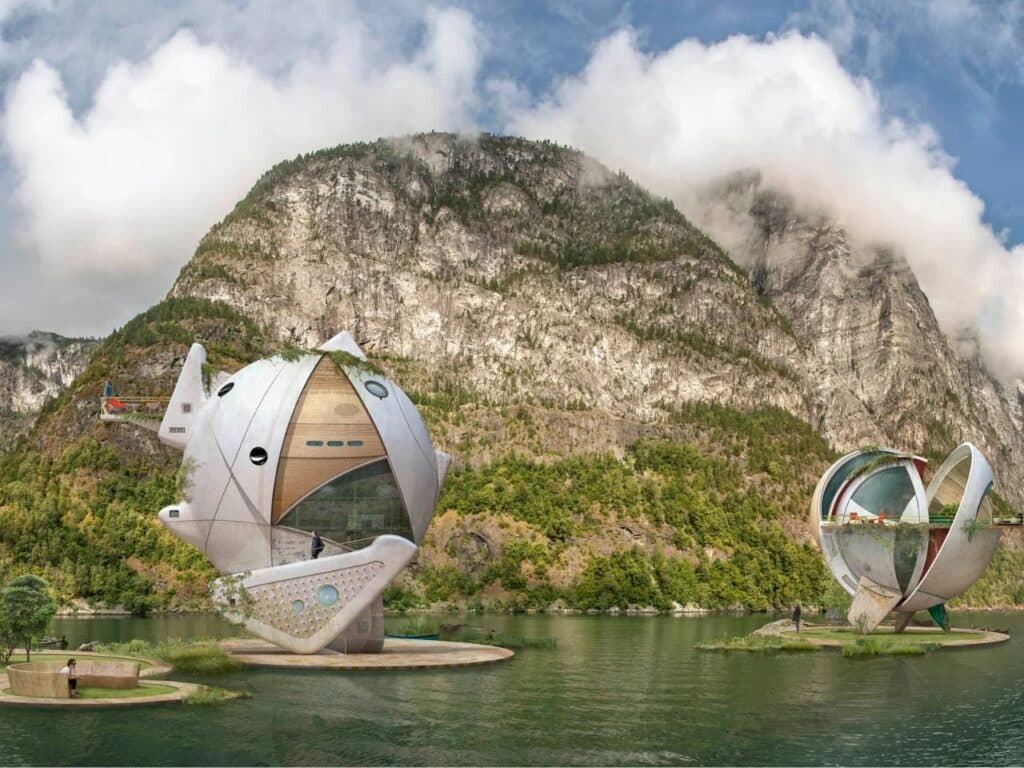
Each structure has its own unique form, yet they share common traits that suggest a “familial” connection, as if they are different offshoots of a single master plan. This approach highlights the idea of repetition and variation at the same time, providing a visually coherent experience despite formal differences.
Water as a Core Element of the Experience
The presence of these structures on water is not merely a backdrop; it represents an active interaction between humans and place. This emphasis on water reflects the concept of solitude and contemplation, turning the aquatic space into a defining factor of the experience. It becomes part of the architectural language itself, combining fragility and precision simultaneously.
Solitude and Creativity: A Continuous Tension in Design Thinking
This project evokes a fundamental discussion in the philosophy of design, concerning the relationship between solitude and creative thinking. The idea that one must escape distractions to achieve clear thought is an old notion, yet it gains greater significance today, as true silence has become a rare luxury that most people cannot easily access.
Philosophy as an Amphibious Endeavor
The project embodies this concept by representing philosophy itself as an “amphibious endeavor,” an experience that exists between the solid and the fluid, between stability and movement. In this context, floating cabins provide a tangible manifestation of this metaphor, giving form and weight to an idea within the physical world.
Residential Hypotheses as Tools for Thought
These cabins are not homes in the conventional sense; they can be regarded as experimental residential hypotheses. Through this approach, design becomes a tool for analyzing the relationship between humans and their environment, exploring how solitude and surroundings can shape thinking and creativity in a concrete way.
Architectural Imagination as a Tool for Thought
The purpose of these structures is not actual construction, and this represents the core of their strength. Imaginary architectural practice allows focus on the ideas themselves rather than solely on physical forms, opening the way for in-depth analysis of the relationship between humans and their environment.
Exploring Residential Possibilities Beyond Traditional Constraints
Through these designs, one can seriously reflect on desires for habitation and interaction with the world, even when the proposed solutions are far from current commercial or technical possibilities. In this way, design becomes a tool for contemplation rather than merely a practical project.
Visual Seriousness as a Means of Intellectual Persuasion
These designs carry a visual gravity that distinguishes them from mere fantasy, granting them intrinsic cognitive value. Viewers may sense that they deserve time and attention, not for real-world application, but for expanding the scope of thought about living and creativity in different environments.
Solitude as an Existential Condition
Wittgenstein’s aim in withdrawing from the world was to create a space for pure thought, where solitude becomes a tool for deeply exploring ideas. This concept goes beyond merely seeking a quiet place; it involves transforming the environment itself into a state of being that supports contemplation and understanding.
Translating Philosophical Instinct into Visual Language
Some artists follow the same instinct, but in a visual form: on open waters, within oxidized metal frameworks, they explore the concept of solitude as an actual condition, not merely a backdrop. This approach allows solitude to be imagined in a tangible and philosophically resonant way, where the place becomes part of the thinking experience itself.
The Strange Beauty of Solitude
The outcomes of these artistic and philosophical experiments are often simultaneously beautiful and strange, reflecting the nature of profound ideas and unusual experiences that inspire them. Thus, viewers can perceive solitude not just as a means or an end, but as a full existential condition worthy of reflection and contemplation.
✦ ArchUp Editorial Insight
The spatial outcomes of Wittgenstein’s cabin in Norway appear more as residual effects of demographic and intellectual divisions than as a consciously intended design choice. This experiment stemmed from the systemic need for sustained intellectual work and the constraints associated with academic mobility in the early twentieth century, where solitude served as an organizational barrier against social and professional disruption.
The cabin’s final form, shaped by logistical constraints from limited access, harsh climatic conditions, and scarce local labor, imposed a compact spatial unit that maximized contemplative productivity. The space, situated beside open waters and bounded by its minimal surroundings, represents a low-risk spatial compromise between philosophical rigor and environmental conditions, turning solitude into a measurable operational outlet.
Contemporary interpretations in visual or architectural media emulate this condition, reproducing intellectual solitude as a tool to experiment with human capital, without altering the systemic pressures that originally produced it. For more studies, see research on similar architectural experiments.