Wuxi MixC Mall Interior Design Inspired by Nature

Urban Vitality and the Extension of the Natural Landscape
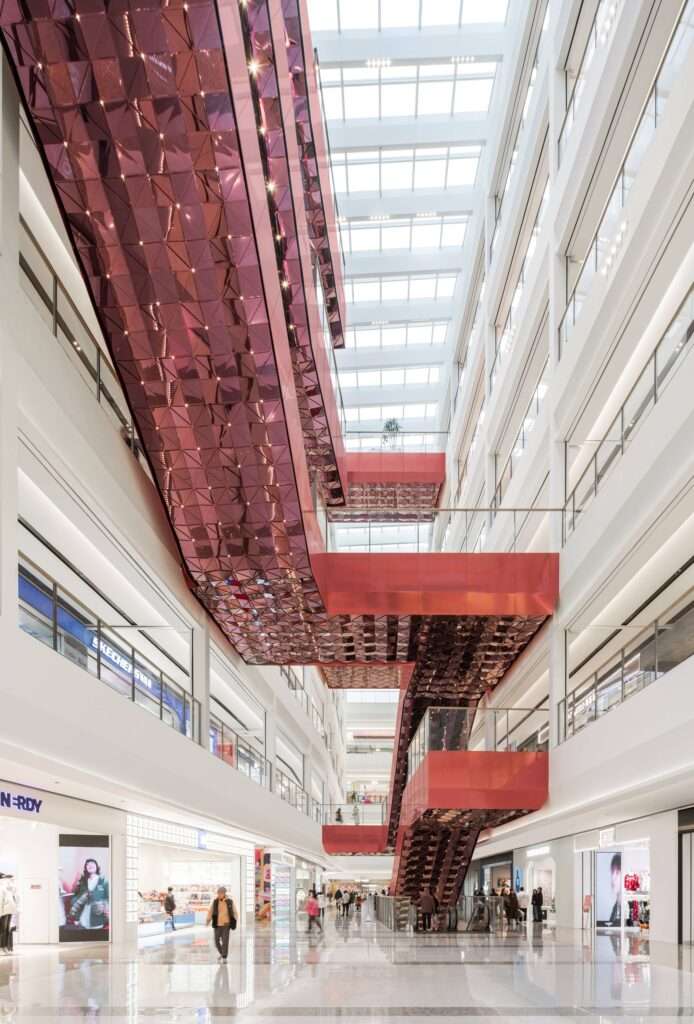
The interior design of Wuxi MixC Mall transcends the conventional concept of a shopping center, presenting a spatial environment inspired by the vitality of the city and its surrounding natural elements, including Tai Lake, Huishan Forest Park, and the Meiyuan Hengshan Nature Reserve. This connection is expressed through the creation of interior spaces that evoke the openness of the urban landscape, where balconies, bridges, and escalators become prominent sculptural elements that shape the character of the space and guide visual movement throughout it. Interior façades and architectural structures are also employed as display elements that integrate local cultural references within a contemporary architectural language, reinforcing the project’s spatial identity.
Human Experience and Spatial Circulation
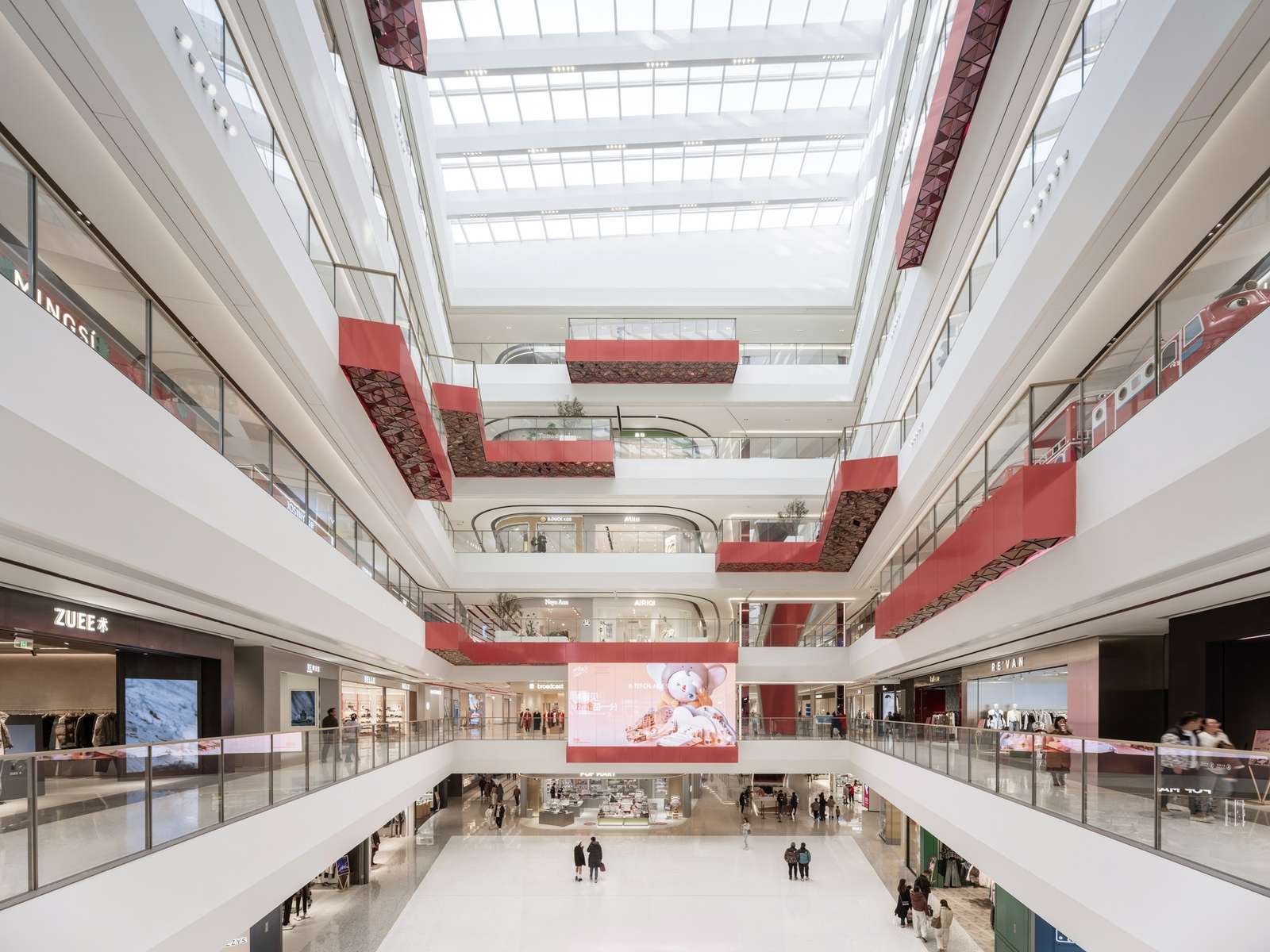
Three atriums of varying scales organize movement throughout the mall, functioning as visual anchors that connect different building levels while directing attention upward. These spaces also contribute to the distribution of natural light and emphasize the contrast between solid masses and voids, creating a dynamic visual experience that evolves throughout the day. The atriums are linked by a network of interior streets and plazas inspired by the structure of the traditional city, enabling fluid movement between different functions while enhancing the clarity of circulation and exploration routes within the project.
Color Contrast and Spatial Orientation
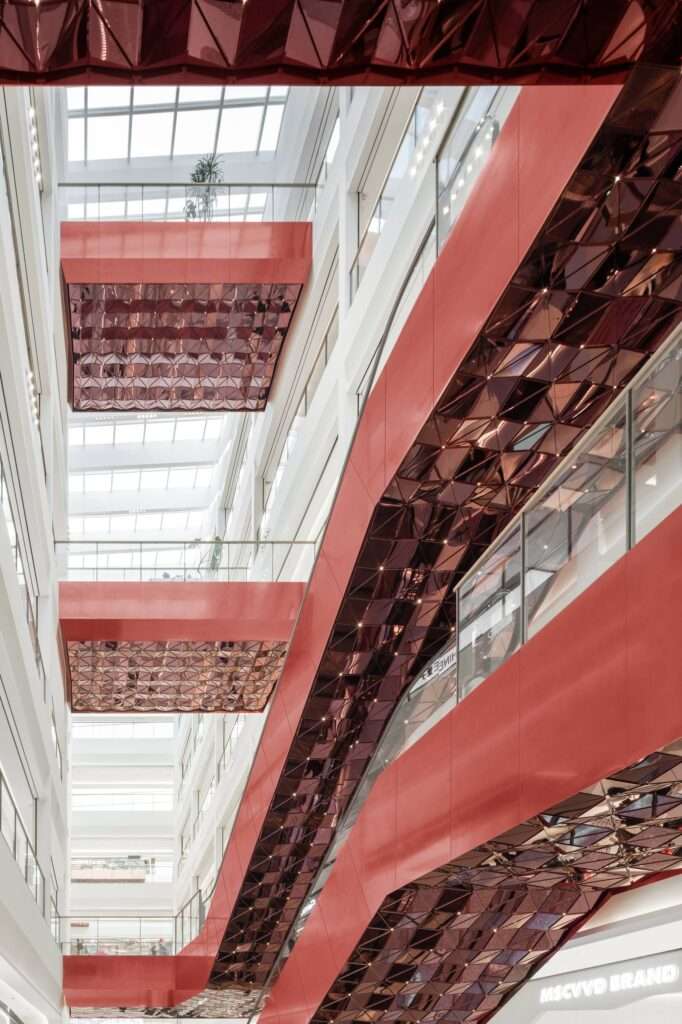
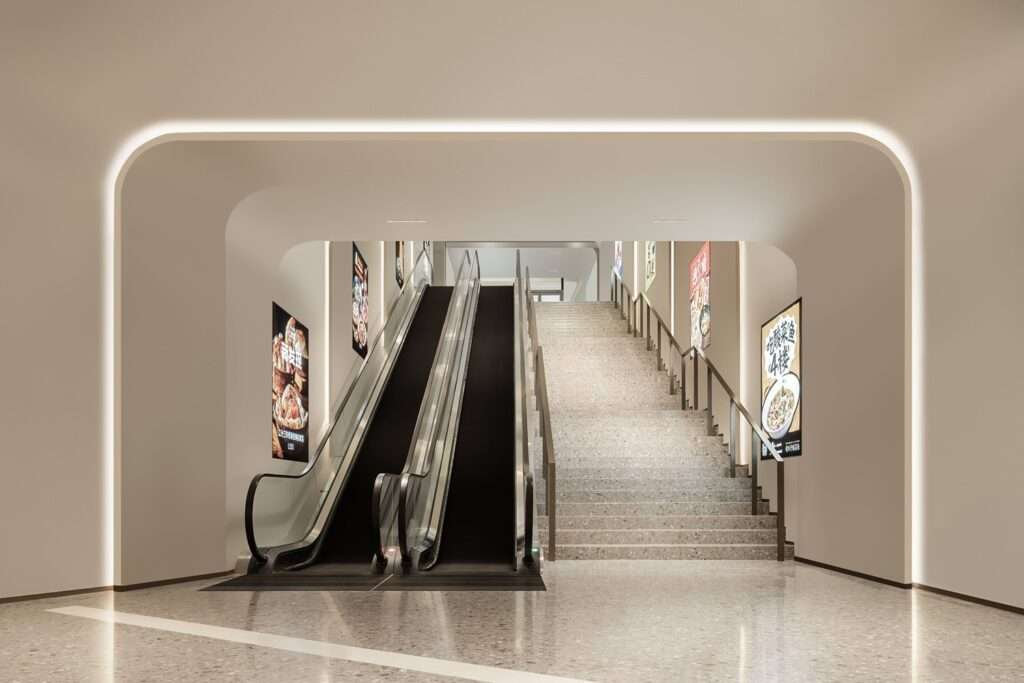
The project’s visual identity is based on a neutral white architectural framework contrasted by striking red elements distributed throughout the staircases and circulation corridors. This contrast enhances wayfinding within the 70,500-square-meter complex, as the colored elements serve as reference points that facilitate spatial navigation and orientation. In the eastern atrium, which serves as the mall’s primary entrance, escalators and bridges intertwine to create a dynamic composition inspired by the spatial progression of urban alleyways, while multifaceted metal panels beneath the bridges reflect light in ways that evoke the shimmering movement of water.
Sculptural Language and Natural Representation
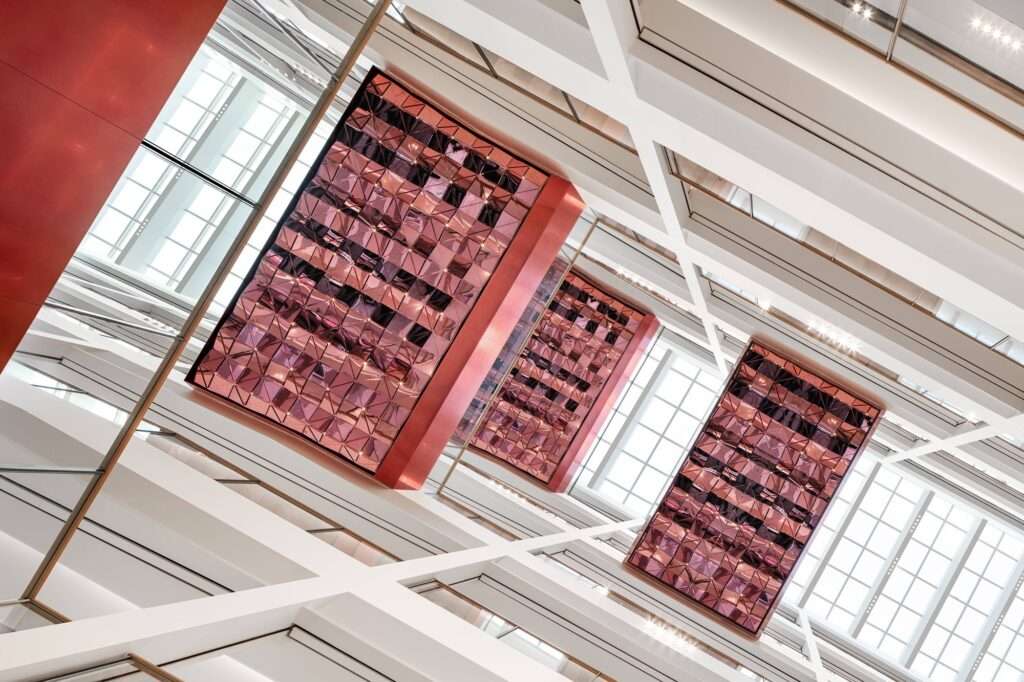
The western atrium is distinguished by a sculptural escalator composition that visually branches like tree limbs, strengthening the presence of vertical movement within the space. Square metal panels inspired by the historic paving patterns found around local lakes are incorporated, adding a material layer that connects the project to its geographical context. Meanwhile, the central atrium draws from references associated with local waterways, where natural light reflects off mirrored surfaces to generate constantly shifting visual effects that animate the ceiling and its surrounding spaces. These applications highlight the role of building materials in shaping spatial perception and atmosphere.
Interactive Balconies and Flexible Space
The balconies within the central atrium function as gathering and relaxation areas where the red architectural elements integrate with seating and interior landscaping. Triangular metal formations beneath the balconies introduce a changing visual dimension when viewed from different levels, enhancing the perception of depth and connectivity between floors. The space also supports multiple uses through an integrated large-scale display screen designed to host events and activities, providing operational flexibility and adaptability to changing programmatic requirements.
Lower Social Spaces and the Creation of a Visual Focal Point
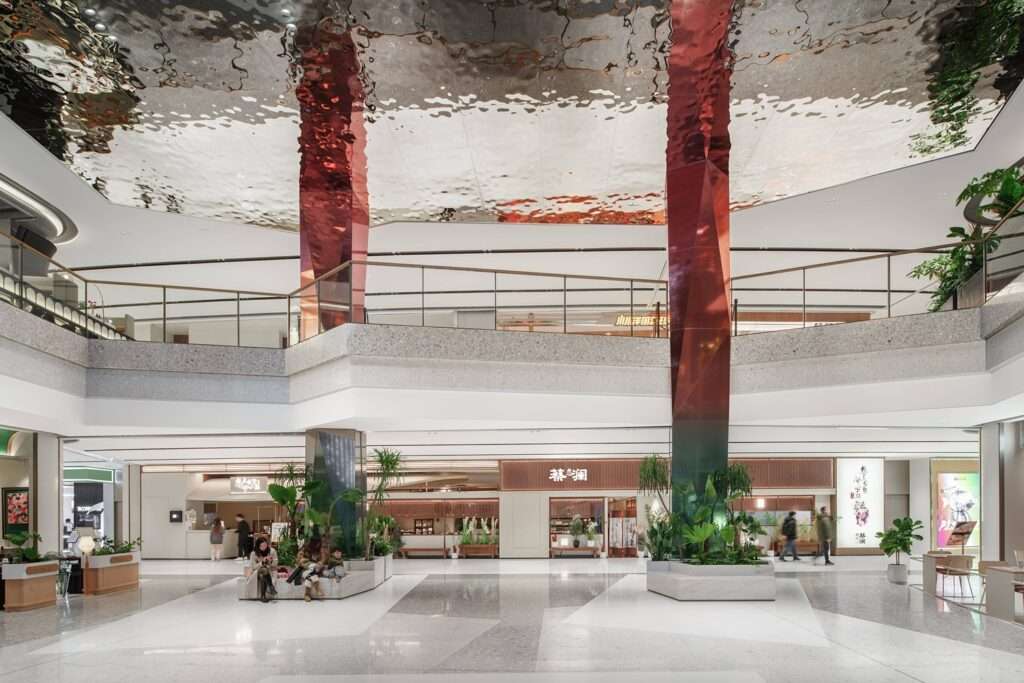
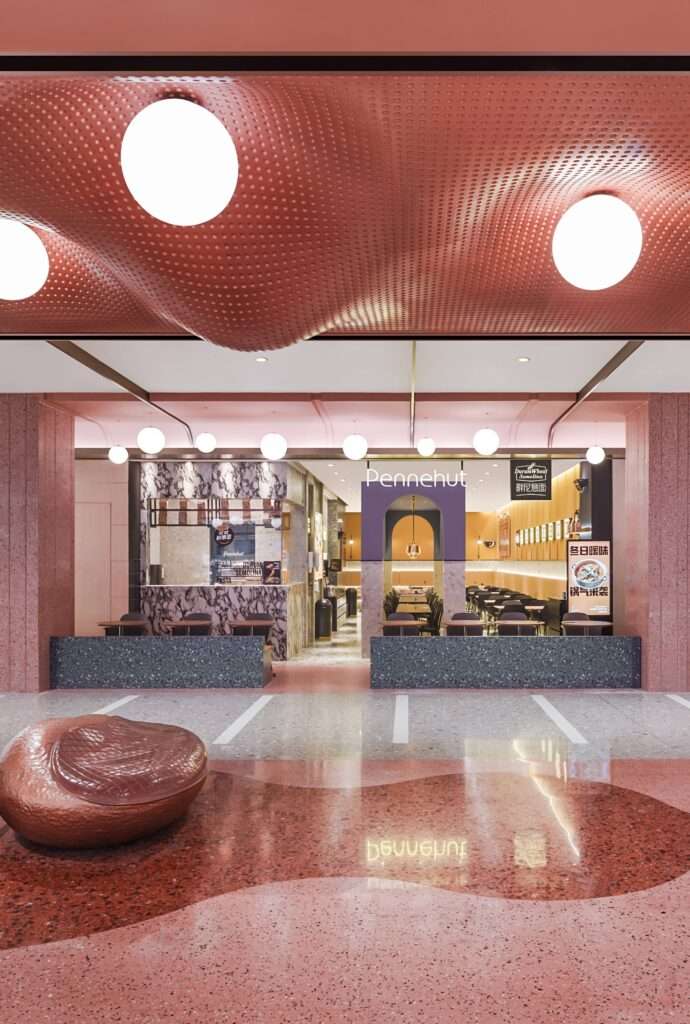
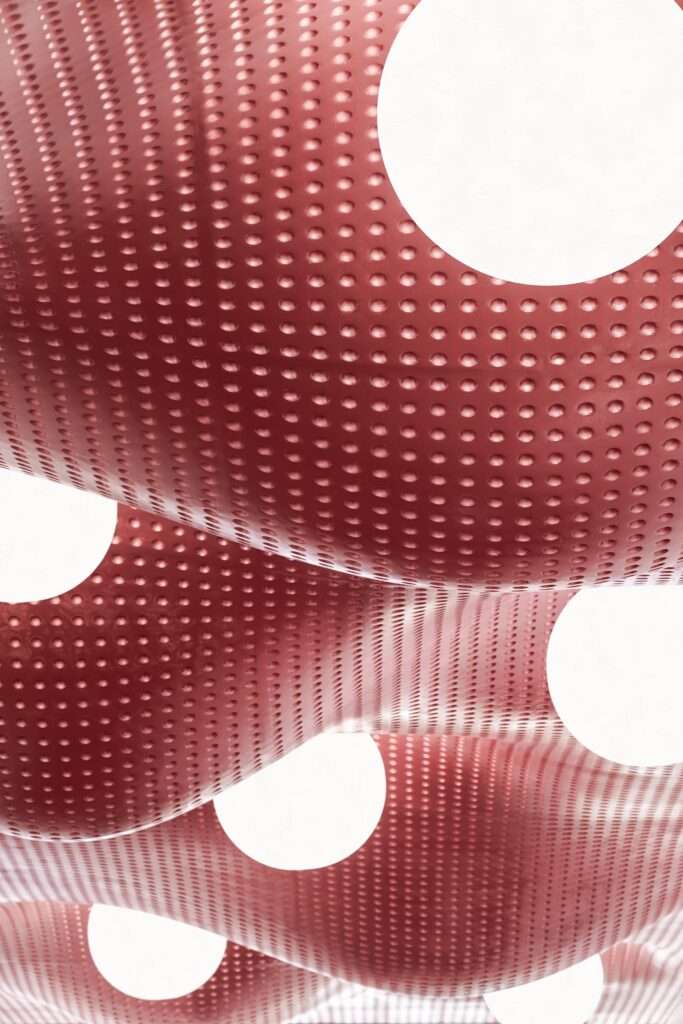
The project’s spatial experience extends into the lower ground level through the “Yummy” food court, conceived as a social environment that exceeds its traditional role as a dining destination. The space revolves around a central zone crowned by a distinctive ceiling installation that continues the presence of the red motif employed throughout the project. Landscaped seating islands are integrated with communal dining areas to create a comfortable environment that encourages visitors to linger and interact within the public realm, reinforcing contemporary approaches to design.
Vertical Dynamism and Overhead Visual Impact
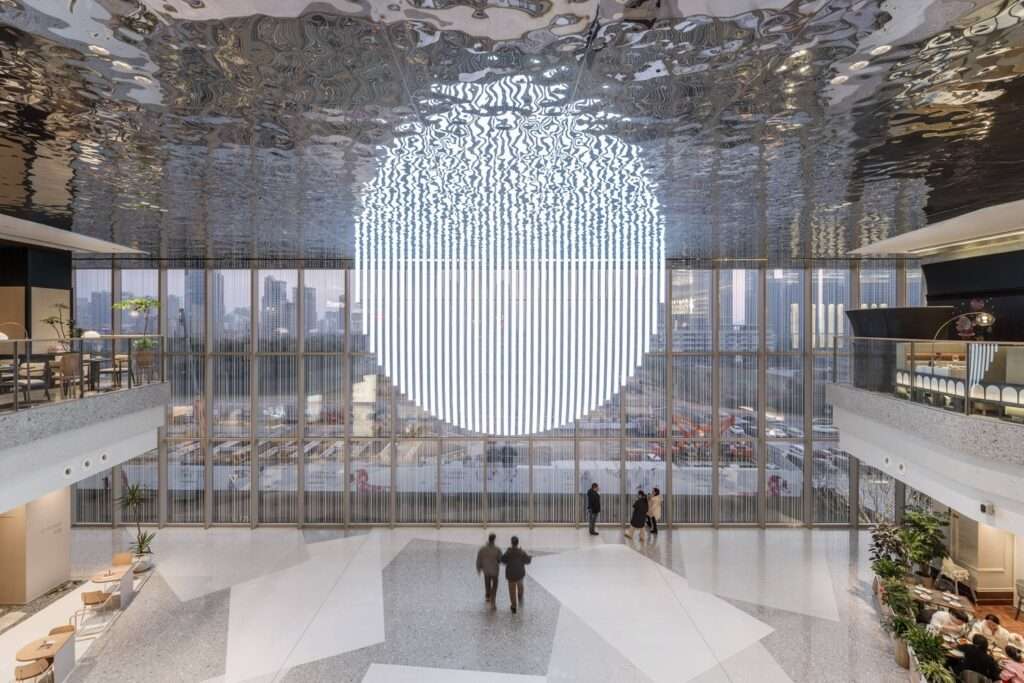
At the upper levels, the two-story “Moon Garden” emerges as a central event space surrounded by restaurants and seating areas. The space is defined by a ceiling treatment featuring a semicircular illuminated sculpture reflected on a mirrored metallic surface, serving as an abstract reference to the relationship between the moon and bodies of water. Polygonal mirror-clad columns further enhance this composition by multiplying reflections and amplifying the sense of visual expansion, while integrating with the flowing undulations of the stainless-steel ceiling to create a spatial experience that continuously changes according to movement and viewing angles.
| Category | Details |
|---|---|
| Architects | Ippolito Fleitz Group |
| Area | 25,528 m² |
| Year | 2024 |
| Photographs | CreatAR, SHADØO PLAY |
| Lead Architect | Jose Miso |
| Landscape Design | Pland |
| MEP | TIANHUA Architecture Planning & Engineering Ltd. |
| Lighting Design | HDA |
✦ ArchUp Editorial Insight
Wuxi MixC Mall reinterprets the shopping center as a miniature indoor city, where the surrounding lakes, forests, and urban movement patterns are translated into a continuous spatial sequence. Atriums, bridges, escalators, and reflective surfaces function not merely as circulation elements but as tools of orientation and visual perception, utilizing color contrast and sculptural compositions to organize the spatial experience. The project reflects a contemporary design approach that merges environmental storytelling with commercial programming within an immersive architectural framework.
However, this narrative may overemphasize natural references while overlooking the economic forces that fundamentally shape the project. Interactive balconies, social spaces, and visually engaging architectural features can also be interpreted as strategies designed to extend visitor dwell time and stimulate consumption. From this perspective, environmental metaphors become a framework for intensifying commercial appeal rather than a genuine extension of the urban or natural landscape. Such interpretations contribute to ongoing discussion surrounding the relationship between commercial programming and spatial experience in contemporary architecture.