Purple Brand Vancouver Studio: Industrial Warehouse Reuse

Reinterpreting the Space as an Integrated Production Studio
The project was designed as a workspace of approximately 14,000 square feet (1,300 square meters) within an existing warehouse dating back to 1973 in the Mount Pleasant industrial area of Vancouver. From the outset, the concept was based on preserving the original structural framework of the Buildings, while repurposing it as a spatial framework for new functions without fundamentally altering it.
Spatial Organization and Inter-floor Connectivity
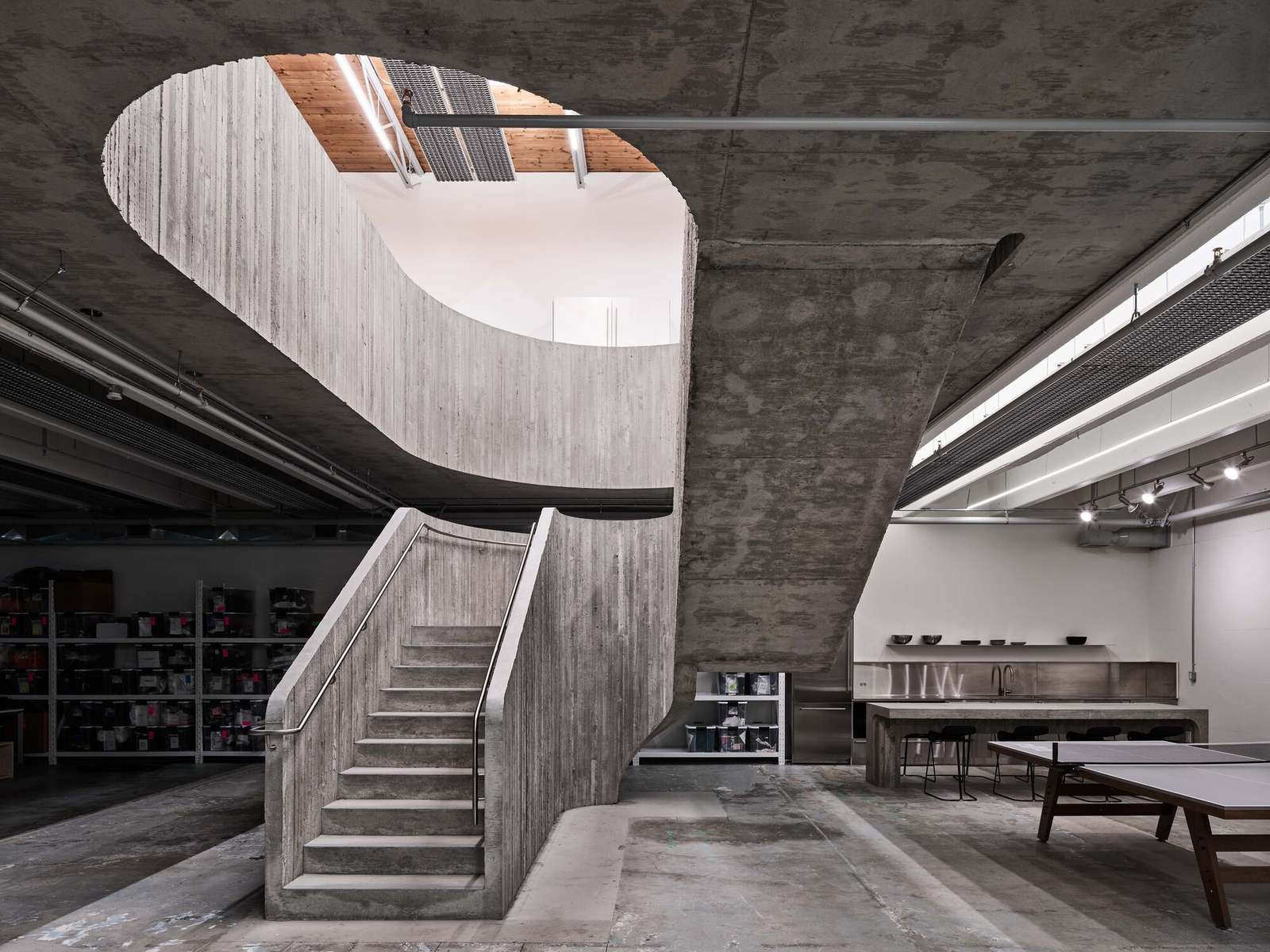
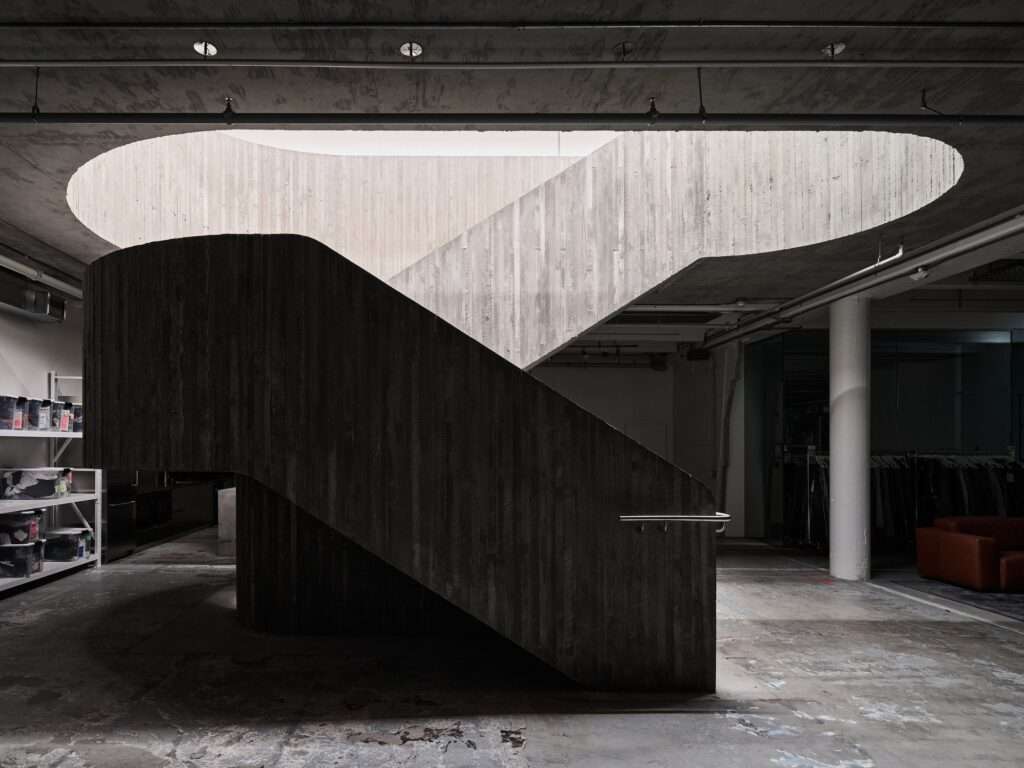
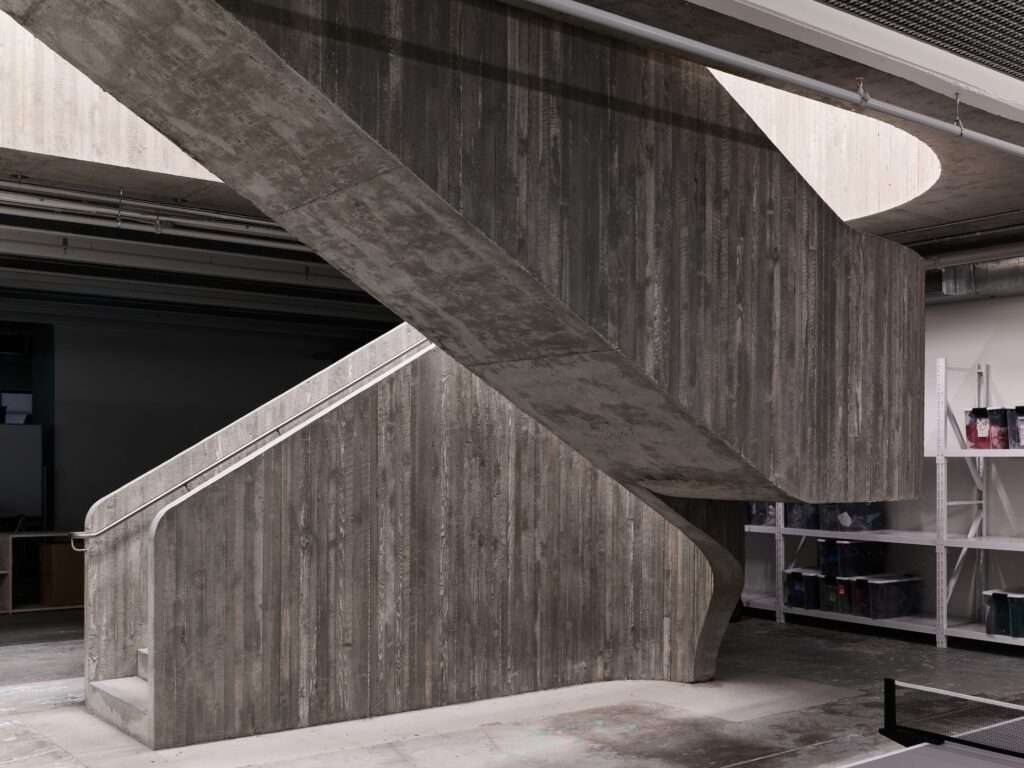
A central staircase was introduced within the precast concrete slabs, creating a direct visual and functional connection between the two floors. As a result, the internal layout is based on the interconnection between different work areas rather than traditional separation, with vertical circulation acting as a primary organizing element.
Functional Distribution Within the Studio
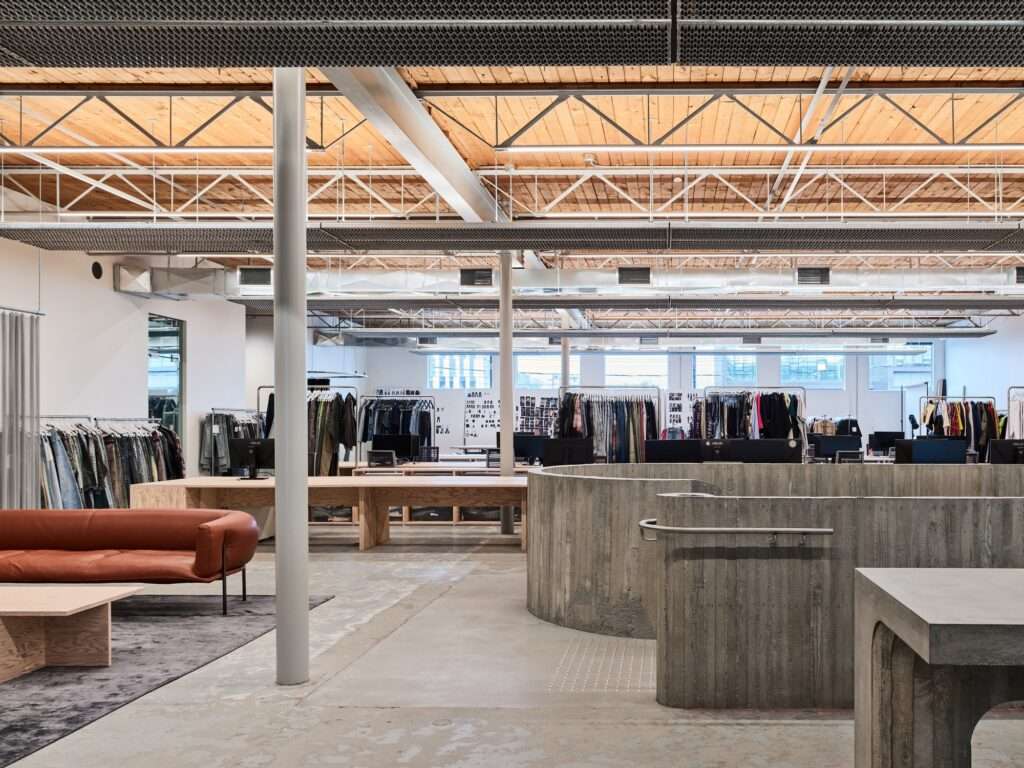
The studio accommodates a range of operational programs such as Design, Archive, model making, meeting rooms, and photography areas. These functions are organized within a relatively open working environment that allows overlap between teams while maintaining clear distinctions between usage zones.
Material Expression and Adaptive Reuse of the Building
The space was designed as a functional studio that primarily emphasizes the Building Materials as a visual organizing element. The existing structure is therefore treated as a foundational layer within the Architecture composition, neither concealed nor replaced.
Internal Additions and Display Organization
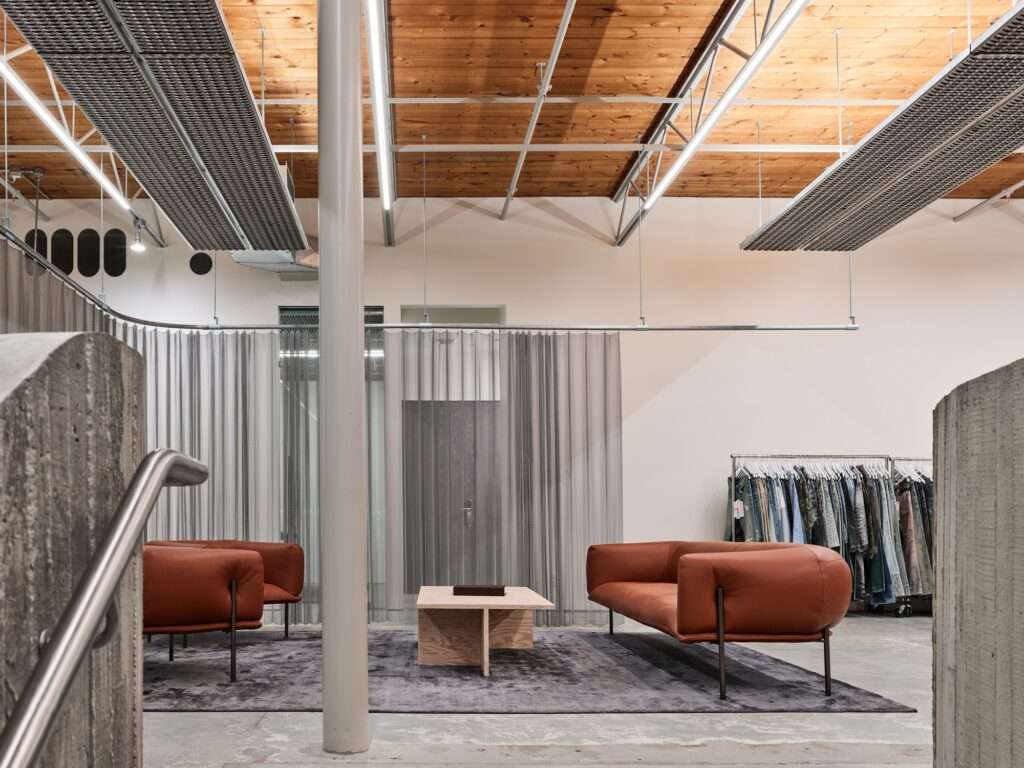
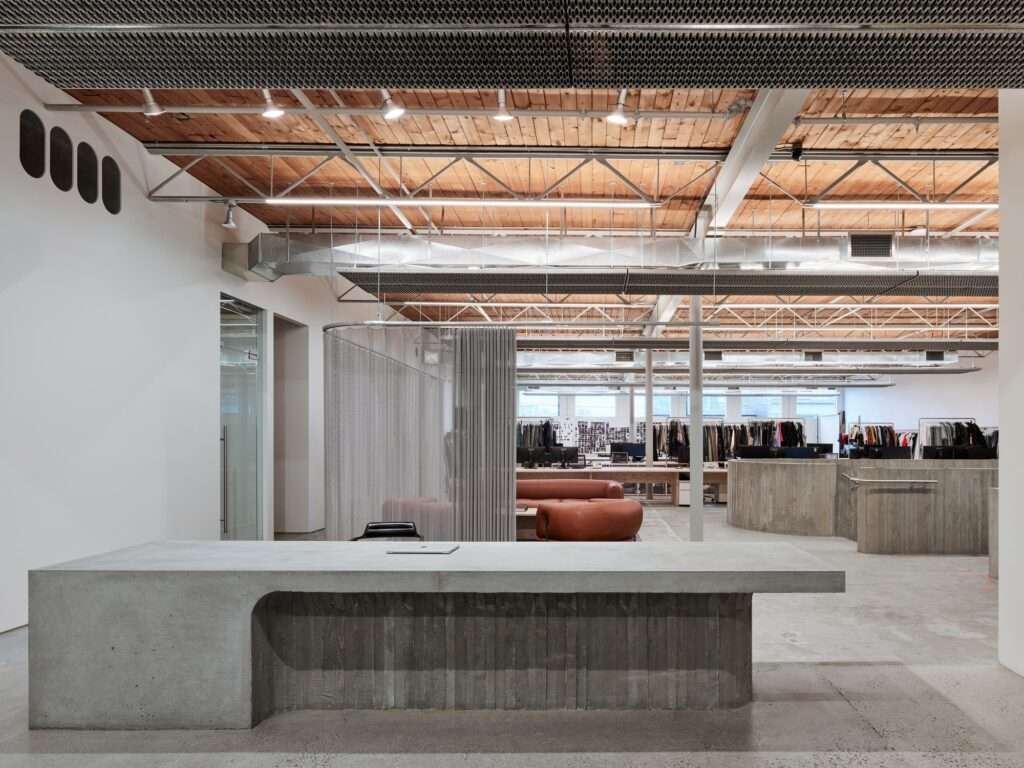
New elements such as recently cast concrete tables and staircases were introduced and visually integrated with the existing patina of the floors. Plywood furniture and stainless steel rails were also used to store and display samples, ensuring proximity to the working teams and ease of access. Detailed information on specific materials can be found in the Material Datasheets.
Service Systems and Material Logic
Construction services were organized within the existing structure above galvanized metal grating incorporating acoustic panels and indirect lighting, contributing to the illumination of the original timber ceiling. In parallel, materials were selected in a raw or partially treated state, allowing their appearance to evolve over time through use within the working environment. This approach is part of ongoing Research into adaptive reuse.
✦ ArchUp Editorial Insight
The project manifests as a reactivation of a production unit within a former industrial warehouse through the logic of adaptive reuse rather than reconstruction. The 1973 structure acts as a fixed framework defining the limits of spatial investment without expanding the structural envelope. The decision to preserve the concrete shell and transform it into a functional medium reflects a model of minimizing transformation costs through programmatic redistribution rather than reconstruction, aligning with the efficiency logic of industrial asset utilization.
The insertion of the central staircase within the slabs creates a vertical re-linking that reduces operational separation and increases the density of interaction between production units, thereby enhancing human workflow productivity within the same spatial footprint. You can explore similar innovative layouts in the Projects section.
Meanwhile, the distribution of programs such as Interior Design, archiving, and visual production operates as an internal organization based on functional integration rather than strict compartmentalization, reflecting an operational push toward flexibility in working methods.
The choice of raw materials and the emphasis on layers of patina, timber, and steel are not aesthetic gestures but responses aimed at reducing maintenance costs and extending material life cycles within a long-term operational economy. Stay updated with similar approaches through Architectural News.