Yogi’s Cabin: Architectural Reduction and Site Integration


Spatial Integration and Deconstruction of Mass
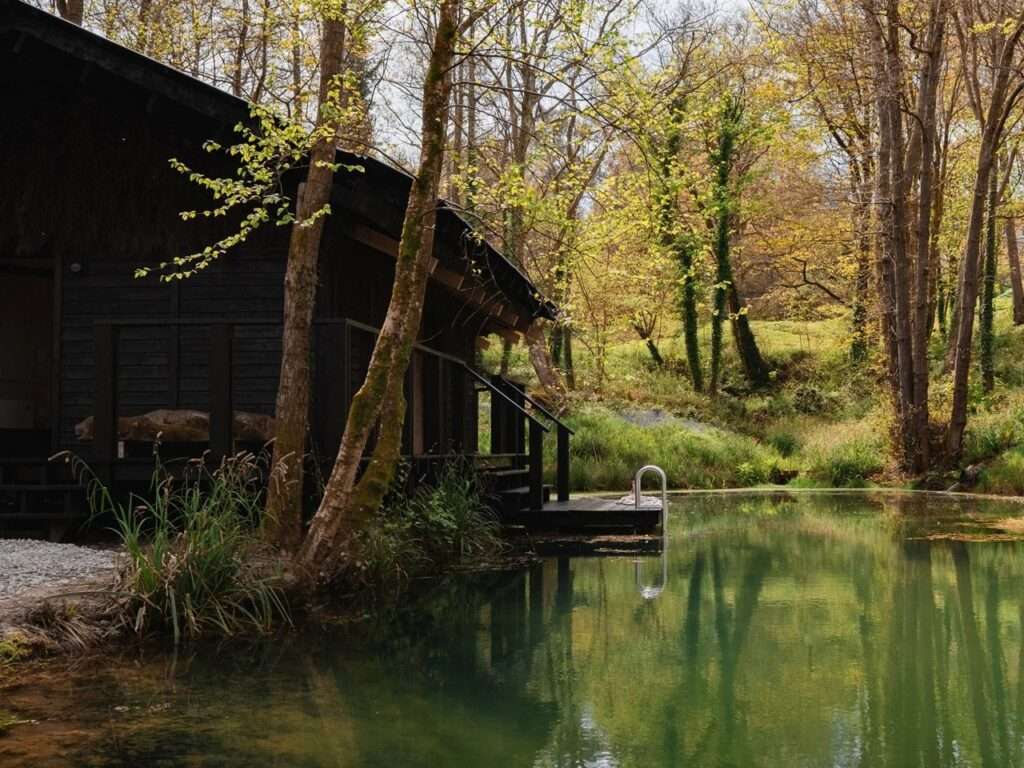
The Design goes beyond the concept of the structural system as an element detached from its surroundings, becoming an organic extension of the natural landscape. The Buildings derives its massing from the traditional lines of rural barns, yet reinterprets them through a contemporary architectural language that reduces its visual presence within the site. The cabin is positioned along the natural pond, while the façades and materials used enhance its connection to the surrounding landscape and its seasonal variations. This composition contributes to softening the rigidity of the mass and transforming its boundaries into transitional elements that connect interior and exterior, supporting the continuity of spatial experience.
Spatial Experience and Kinetic Flow
Movement within the Design is organized around the yoga studio, which forms the main axis of the functional program. The transition between the natural environment and the interior space enhances a sense of gradual passage from the external landscape into a more focused and contemplative environment. Natural light plays a central role in shaping the spatial experience; it filters through openings and façades, generating shifting interactions with the wooden surfaces throughout the day. This relationship between light and material contributes to the creation of a calm atmosphere aligned with the meditative activities hosted by the Projects.


Axis Orientation and the Relationship with the Natural Landscape
The interior space is organized along a horizontal axis extending from east to west, strengthening the building’s connection to the natural movement of light throughout the day. Large sliding openings frame extended views toward the trees and the pond, allowing natural elements to become part of the daily visual experience. This orientation reinforces a continuous relationship between interior space and the external environment, where the quality of light and visual perception changes according to time and seasons, giving the Design a quiet dynamism without the need for complex formal interventions.
Fusion of References and the Material Effect of Façades
The external composition combines the Japanese concept of “engawa” with the typology of English agricultural barns, creating a sheltered transitional zone between interior and exterior formed by the surrounding veranda and deep overhangs. The use of locally sourced larch wood from the farm’s land strengthens this connection to place, particularly after being treated using the traditional “Yakisugi” technique. This treatment gives the surfaces a distinctive material character and a dark tone that helps the mass blend visually with the surrounding environment, while highlighting the properties of the natural material and its role in shaping the project’s identity within broader Architecture.


Interior Minimalism and Spatial Flexibility
The interior environment adopts a minimalist approach that prioritizes spatial quality over the accumulation of visual elements. Continuous wooden surfaces, a limited material palette, and sliding screens establish a flexible space that can be reconfigured according to different usage requirements. In this context, essential functional elements such as the bedroom, kitchen, bathroom, and outdoor bathtub recede into the background of the architectural composition, while the spatial experience itself becomes the most prominent element within the Design.
Architectural Reduction as a Design Strategy
The Projects presents a model based on architectural reduction as a means of constructing a balanced spatial experience. Rather than relying on formal complexity or visual density, the design focuses on calibrating the relationships between mass, light, material, and nature. Through this economy of architectural means, the building succeeds in directing attention toward the surrounding landscape and highlighting its daily transformations, offering a space centered on calmness, contemplation, and the quality of sensory experience within a simple and precise architectural framework.



✦ ArchUp Editorial Insight
The project proposes a contemporary architectural approach that subordinates the built mass to the experience of place rather than making it the focal point of visual attention. Through minimal composition, material continuity, and carefully orchestrated spatial sequences, the cabin becomes a device for framing light and nature rather than an autonomous architectural object. Its reliance on local timber, transitional boundaries, and quiet spatial atmospheres reflects a growing tendency in Architecture and design toward prioritizing sensory experience over formal expression.
However, this discourse may carry a degree of idealization; the idea of complete integration with nature conceals the fact that the Buildings remains a material intervention that consumes resources and reshapes the site. Furthermore, the celebration of austerity and isolation largely avoids addressing broader issues related to land-use efficiency, the replicability of this model, and its capacity to respond to contemporary spatial challenges.