Villa E: Materiality and Climate in the Amazon

Geography of Formation and Site Affiliation
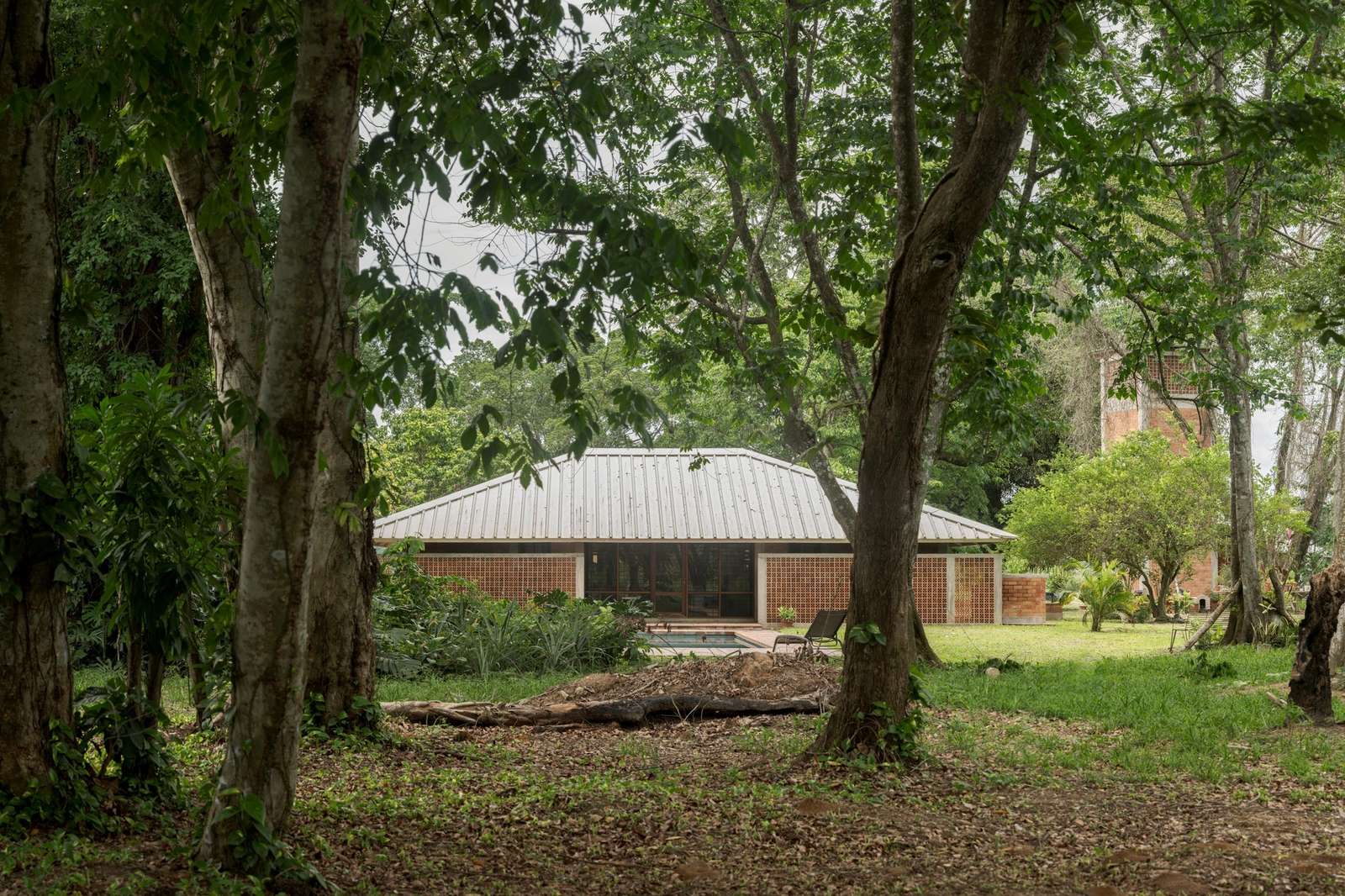
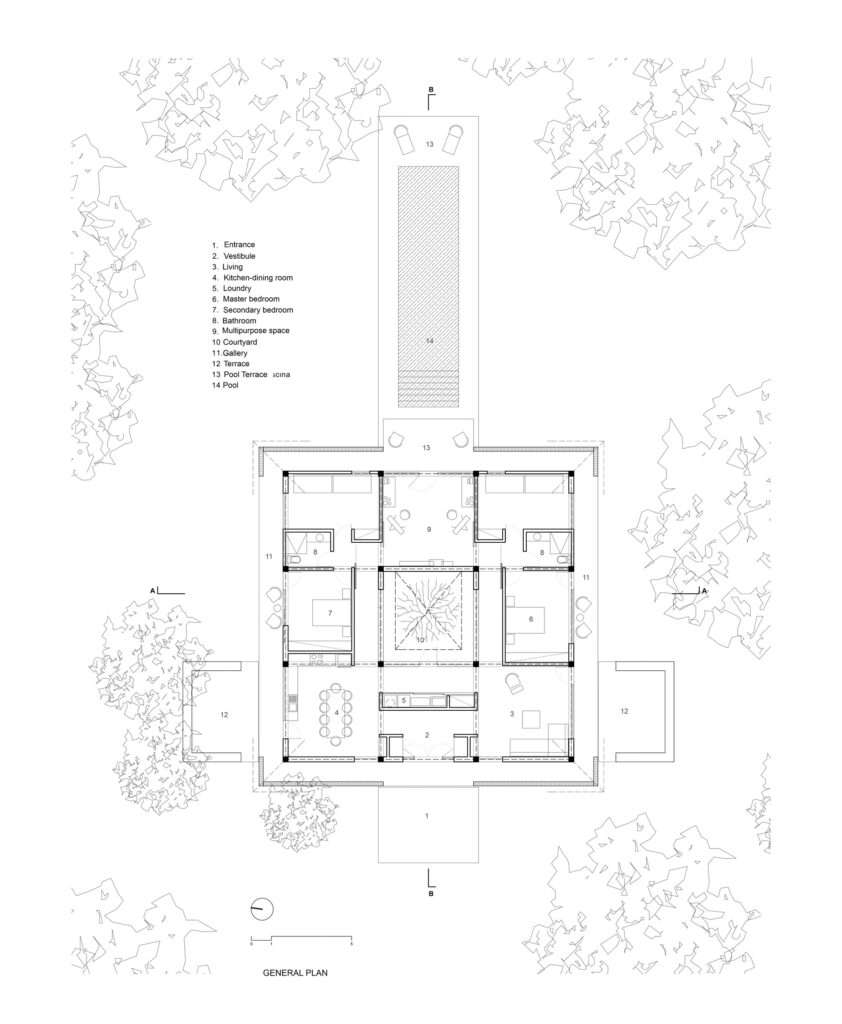
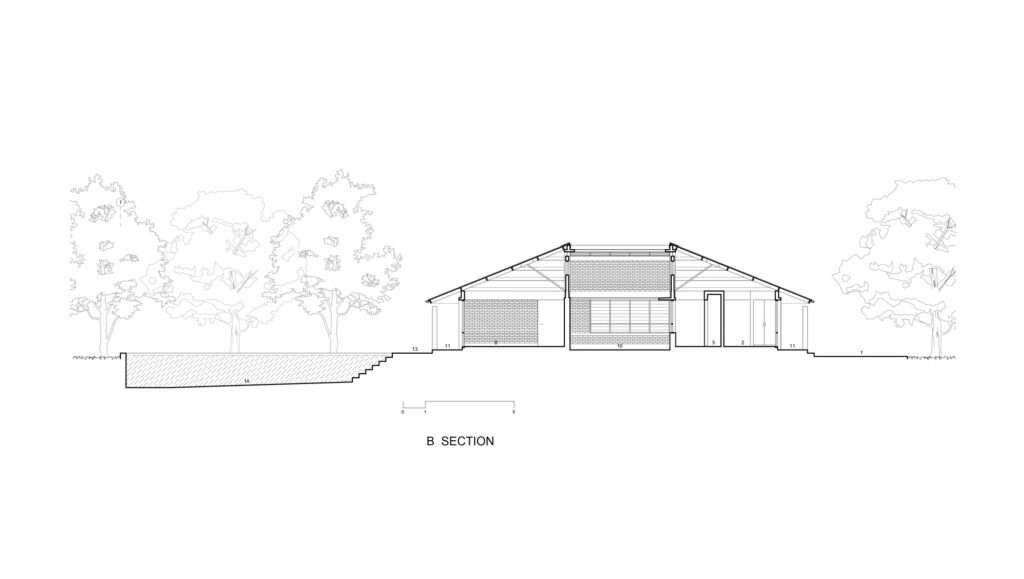
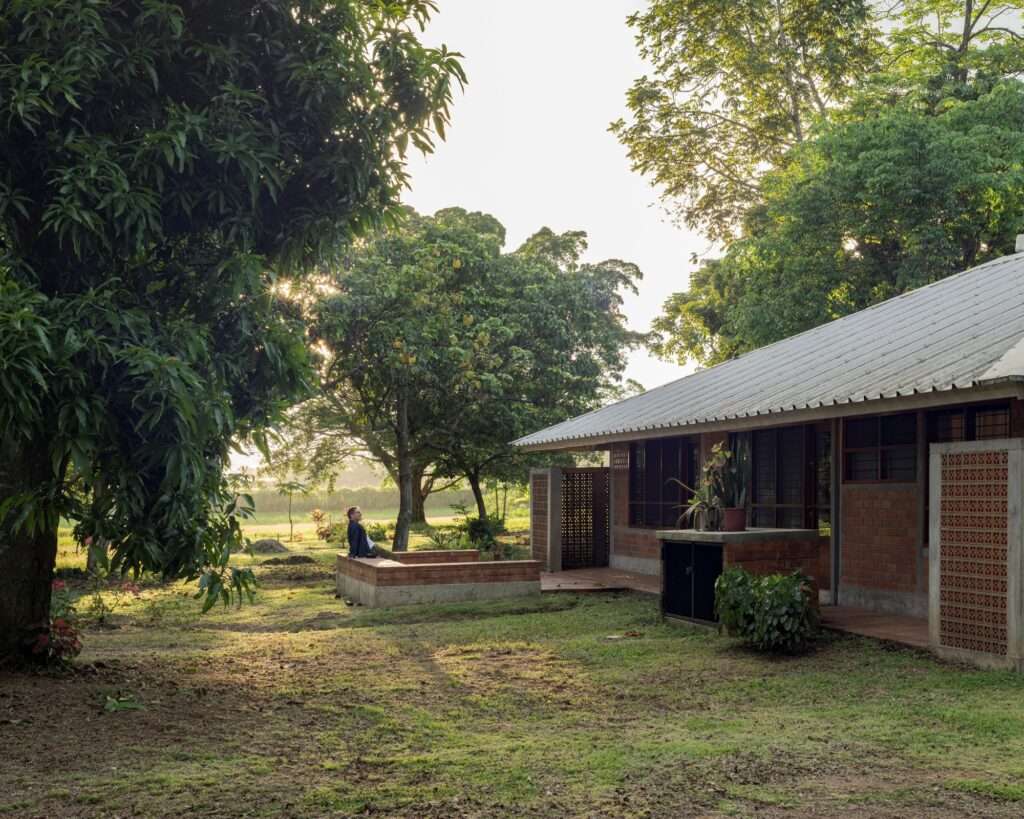
Villa E is established at the urban fringe as a conscious architectural response seeking integration within the Amazon rainforest ecosystem, where the mass transforms into a bridge connecting the daily requirements of an extended family with the surrounding wilderness. This interaction is manifested through the adoption of strategies inspired by vernacular architecture and the use of materials that combine the natural and the industrial, reflecting a design characterized by simplicity and efficiency. The building relies on a rational structural system defined by symmetry, which contributes to reducing construction time and logistical complexity in a sensitive environment, while simultaneously providing an engineering solution that organizes spatial relationships between two sub-family units, achieving a precise balance between individual privacy and shared communal areas.
Spatial Experience and Climatic Scenography
The human experience within the space is shaped through a design language that transforms architecture into an environment that breathes with the Amazonian climate and interacts dynamically with the movement of nature. The user experiences a fluid transition beginning from the moment of entry inward, where the psychological and material impact of materials becomes evident, binding the building to the surrounding “red earth.” Solid and open masses are transformed into a tool for directing solar paths and composing shadow intersections within the living spaces. Engineering permeability enables efficient guidance of natural airflow, creating a thermally comfortable environment that enhances the richness of the visual scene and turns living within the villa into a continuous sensory experience that captures the transformations of light and the Amazonian climate throughout the day.
Materiality of Composition and Connection to the Earth
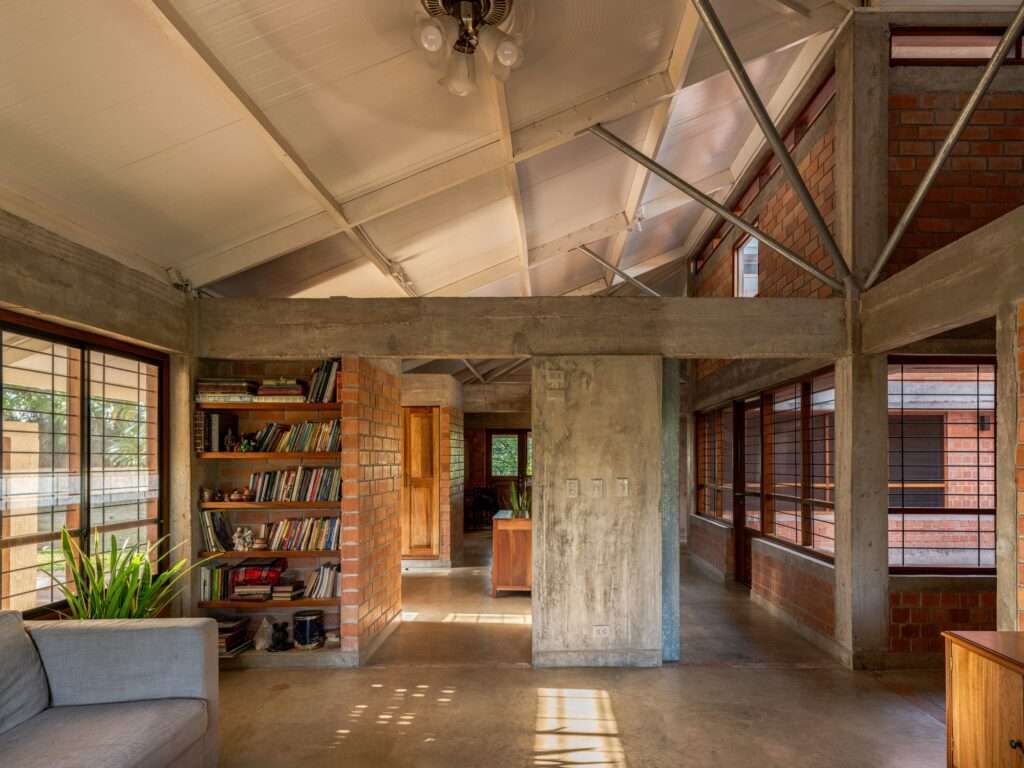
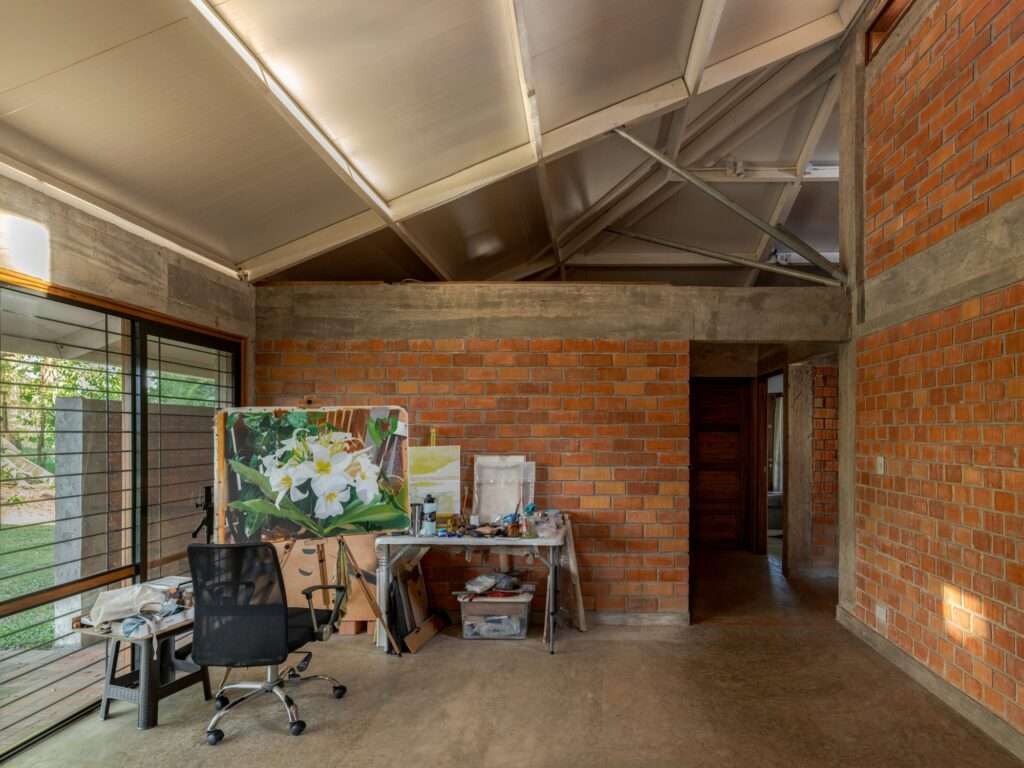
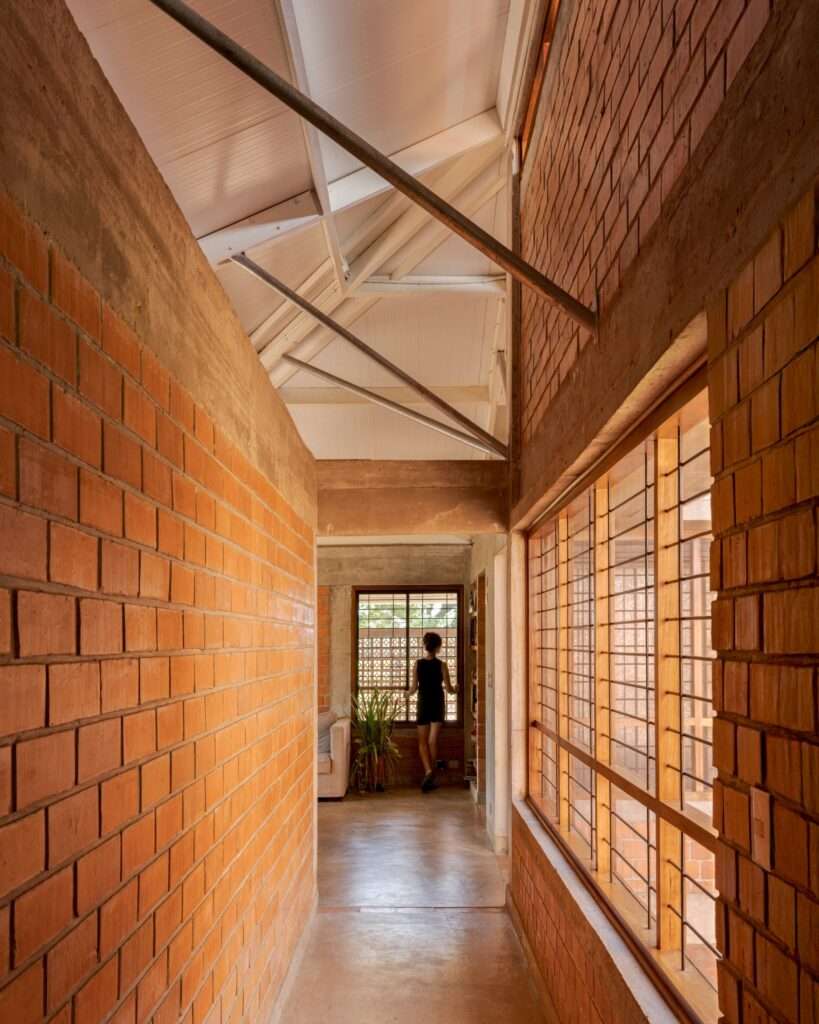
The walls and exterior floors acquire their visual and material identity from locally sourced reddish clay extracted less than 800 meters from the site, reflecting a deep connection to the identity of the city of Pucallpa (“Puca-allpa”), or the “red earth.” This material choice reinforces a sense of belonging and primal rootedness in the site, supported by a structural system in which wooden columns and beams leave their visible imprints on concrete surfaces. This visual continuity is completed by polishing the interior floors directly during the casting process, achieving a smooth spatial transition that integrates with the warmth of locally sourced wood used in doors, windows, and fixed furniture, forming a sustainable architectural composition emerging from the details of its environment.
Thermal Scenography and Spatial Contrast
The large roof, made of a multi-layered aluzinc sheet, governs the dynamics of light and thermal insulation, performing both covering and enclosure functions efficiently; its white exterior surface reflects tropical solar radiation, while its interior surface enhances the diffusion of natural light within the shared spaces. In contrast to the vitality of the exterior materials, the bedrooms and bathrooms are treated with a different architectural approach based on smooth white surfaces, generating a psychological effect characterized by calmness and contemplation. In these private zones, windows become geometric frames cutting through the building’s walls to frame the external landscape, balancing visual permeability with climatic protection.
Façade Protection and Climatic Orientation
The eastern and western façades of the house are subjected to a precise environmental treatment through a brick mashrabiya envelope, functioning as both a visual and climatic filter that effectively reduces the intensity of direct solar radiation while maintaining continuous natural ventilation. The orientation of bedrooms toward the north and south is a deliberate planning strategy to avoid excessive thermal loads, ensuring a balanced indoor thermal environment. These engineering solutions regulate the efficiency of the building’s external envelope, transforming façades into dynamic elements that respond to solar movement and seasonal winds to ensure user comfort.
The Courtyard as a Sensory Chamber and Acoustic Scenography
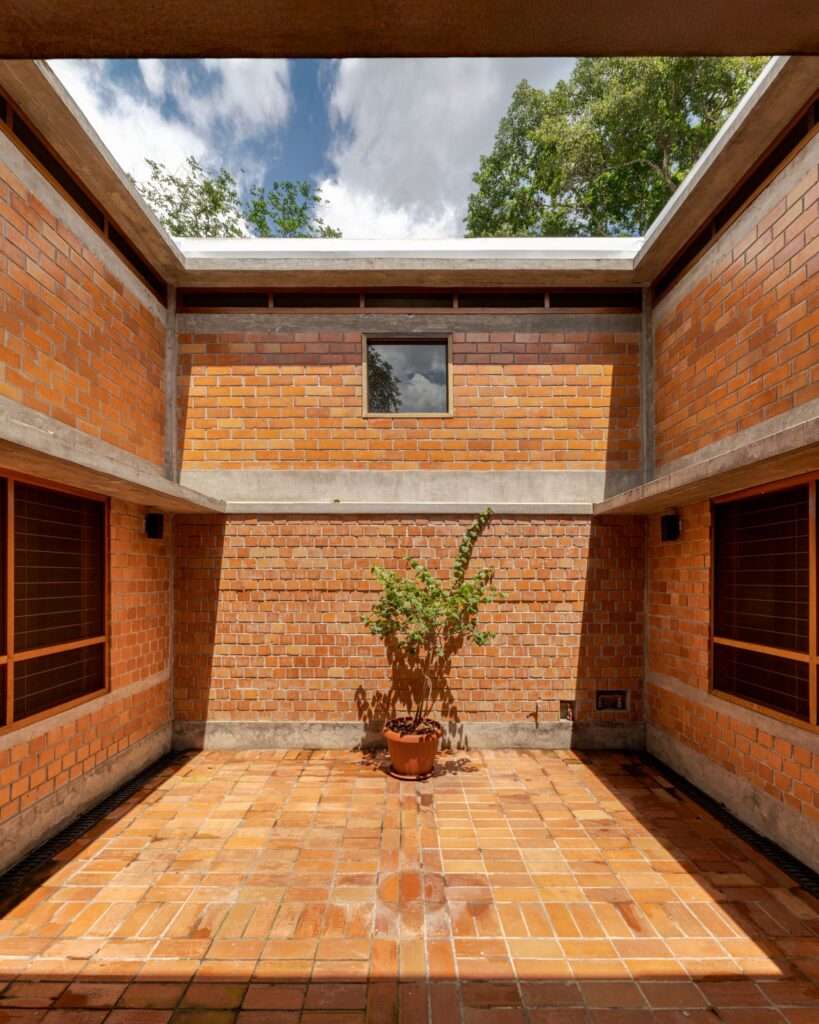
The central courtyards go beyond their traditional function of providing light and cross-ventilation, becoming vital architectural elements that measure the passage of daytime and frame the transformations of light and shadow. Spatially, the courtyard functions as a resonant chamber that reconfigures the relationship between interior and exterior, amplifying surrounding acoustic phenomena such as rain, wind movement, birds, and insects characteristic of the Amazon rainforest. This dynamic interaction creates a profound psychological and material effect that strengthens the inhabitant’s connection to their environment, completing the sensory and scenographic experience of the dwelling by merging spatial phenomena with the acoustic dimension of the natural world.
✦ ArchUp Editorial Insight
This project articulates the problem of housing in remote regions through the formulation of a balanced shelter positioned at the critical intersection between wilderness and urban expansion. By employing strict structural symmetry and relying on local construction techniques, the design seeks to accommodate volatile tropical microclimates. It proposes contemporary architecture not as an isolated shelter, but as an open environmental machine that seamlessly integrates natural dynamics into standardized spatial configurations.
In contrast, this excessive reliance on the “truth of tectonics” overlooks the harsh material realities of rapidly growing cities. The romanticization of artisanal mashrabiyas as a climatic defensive shield gives a nostalgic character to low-tech resilience. In reality, rainforest edges face increasing urban density and environmental degradation, making passive cooling insufficient on its own unless integrated into a broader and more robust municipal energy network.